Einführung
Der Name klingt nach etwas, das man in einem Tante-Emma-Laden finden würde. In der Investmentwelt ist „Boomer Candy“ ein farbenfroher Spitzname für eine wachsende Gruppe von optionsbasierten Exchange-Traded Funds, die darauf ausgelegt sind, das Engagement am Aktienmarkt für Anleger, die besonders um Verluste besorgt sind, überschaubarer zu machen.
Im Mittelpunkt dieser Diskussion stehen Buffered ETFs (auch bekannt als Puffer-ETFs).
Was also ist ein Buffered ETF, und warum sollte ein Anleger eine Begrenzung der potenziellen Gewinne im Austausch für einen gewissen Abwärtsschutz akzeptieren? Die Antwort liegt in Optionen, einem definierten Ergebniszeitraum und einem sehr spezifischen Kompromiss zwischen Risiko und Ertrag. Buffered ETFs können versuchen, einen Teil eines Marktabschwungs abzufedern, während sie den Anlegern dennoch ermöglichen, an Gewinnen teilzuhaben, aber der Schutz ist an Bedingungen geknüpft und hat seinen Preis.
Hier erfahren Sie, wie Buffered ETFs funktionieren, woher der Spitzname „Boomer Candy“ stammt und was Anleger verstehen müssen, bevor sie beurteilen, ob diese Struktur für sie sinnvoll ist.
Was ist ein Buffered ETF?
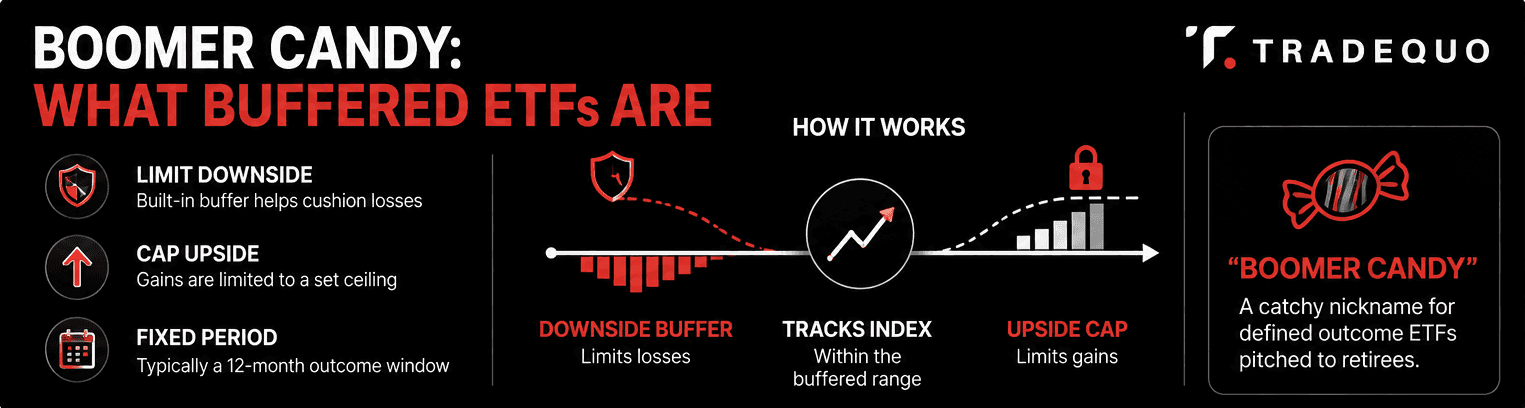
Ein Buffered ETF ist ein börsengehandelter Fonds, der Optionen nutzt, um ein definiertes Maß an Abwärtsschutz anzustreben, während er gleichzeitig die Teilnahme an den Gewinnen eines Basiswerts, in der Regel eines Aktienindex oder eines anderen ETF, ermöglicht. Diese Fonds werden auch häufig als Defined Outcome Funds (Fonds mit definiertem Ergebnis) oder Structured Outcome ETFs (strukturierte Ergebnis-ETFs) bezeichnet.
Die Grundidee ist recht einfach. Ein Buffered ETF legt einen Puffer (Buffer) fest, also den Teil eines Marktabschwungs, den der Fonds über einen bestimmten Ergebniszeitraum auffangen soll. Er legt auch eine Obergrenze (Cap) fest, d. h. die maximale Aufwärtsrendite, die mit dem zugrunde liegenden Referenzwert während dieses Zeitraums vor Abzug anfallender Gebühren und Aufwendungen erzielt werden kann.
Dadurch entsteht eine definierte Spanne potenzieller Ergebnisse.
Stellen Sie sich einen ETF vor, der an den S&P 500 gekoppelt ist. Seine Struktur könnte darauf abzielen, den ersten Teil eines Rückgangs abzufedern, während Gewinne bis zu einer vorgegebenen Obergrenze ermöglicht werden. Steigt der Index über diese Obergrenze hinaus, erhält der Anleger nicht den gesamten zusätzlichen Aufwärtsertrag. Fällt der Index über den geschützten Bereich hinaus, kann der Anleger immer noch Verluste erleiden, die über den Puffer hinausgehen.
Der genaue Puffer, die Obergrenze, der Referenzwert, die Gebühren und der Ergebniszeitraum variieren von Fonds zu Fonds. Einige Produkte nutzen jährliche Ergebniszeiträume, während andere kürzere Zeiträume wie drei oder sechs Monate anbieten.
Dieser letzte Punkt ist wichtig, da Buffered ETFs um ein bestimmtes Zeitfenster herum konzipiert sind. Der auf einer Fondsseite angezeigte Hauptschutz gilt nicht automatisch in gleicher Weise für jemanden, der in der Mitte des Zyklus kauft.
Warum werden Buffered ETFs als „Boomer Candy“ bezeichnet?
„Boomer Candy“ ist eher ein Jargon der Finanzbranche als eine offizielle Anlagekategorie.
Der ETF-Analyst von Bloomberg Intelligence, Eric Balchunas, gilt weithin als Schöpfer dieses Begriffs, um optionsbasierte ETFs zu beschreiben, die sich an Anleger richten, die weiterhin in Aktien investiert bleiben möchten, während sie gleichzeitig einige der mit Marktabschwüngen verbundenen Unannehmlichkeiten reduzieren wollen. Das Wall Street Journal half später dabei, den Ausdruck in der Berichterstattung über Fonds zu popularisieren, die Rentner und Menschen kurz vor dem Ruhestand anziehen.
Der demografische Bezug ist recht offensichtlich. Viele ältere Anleger haben jahrzehntelang von Aktien profitiert, reagieren jedoch mit zunehmendem Alter und herannahendem Ruhestand empfindlicher auf große Markteinbrüche. Eine Strategie, die eine gewisse Beteiligung an Aktien bietet und gleichzeitig versucht, einen Teil des Abwärtsrisikos zu begrenzen, kann daher attraktiv klingen.
Hier kommt der „Candy“-Teil (Süßigkeit) ins Spiel. Der Ausdruck suggeriert etwas Attraktives und leicht Konsumierbares. In Wirklichkeit beinhaltet die Struktur ein klares Tauschgeschäft. Anleger erhalten ein definiertes Maß an Abwärtsschutz, verzichten dafür jedoch auf ein gewisses Aufwärtspotenzial. Das Produkt mag sich einfacher anfühlen, weil das Ergebnis in Form eines Puffers und einer Obergrenze dargestellt wird, aber die zugrunde liegende Optionsstrategie kann erheblich komplexer sein.
Wie funktionieren Buffered ETFs?
Um zu verstehen, wie Buffered ETFs funktionieren, muss man mit den Optionen im Inneren des Fonds beginnen.
Ein typischer Buffered ETF verwendet Optionen, die an einen Referenzwert gekoppelt sind, wie z. B. einen ETF, der den S&P 500 abbildet. Der Fonds kann Put-Optionen nutzen, um seinen Abwärtspuffer aufzubauen, und Call-Optionen, um die Aufwärtsobergrenze festzulegen. Einige Strukturen nutzen zusätzliche Optionen, um das präzise Auszahlungsprofil zu erstellen.
Stellen Sie sich den Prozess in drei Phasen vor.
Erstens stellt der Fonds das Marktengagement her.
Der ETF ist an einen Referenzwert gekoppelt, dessen Wertentwicklung das grundlegende Renditeprofil bestimmt. Der Referenzwert kann ein breiter Aktienindex, ein Wachstumsindex oder eine andere Marktbenchmark sein.
Zweitens schafft der Fonds den Puffer.
Put-Optionen können verwendet werden, um Schutz gegen einen bestimmten Teil der Verluste des Referenzwerts zu suchen. Der Puffer bedeutet nicht, dass die gesamte Anlage vor Verlusten geschützt ist. Er deckt nur den angegebenen Bereich und unter den in den Fondsdokumenten beschriebenen Bedingungen ab.
Drittens legt der Fonds die Obergrenze fest.
Die Strategie kann Call-Optionen verkaufen und Optionsprämien erhalten, die zur Finanzierung des Schutzes beitragen. Der Verkauf dieser Calls begrenzt, wie viel Aufwärtspotenzial der Fonds oberhalb eines bestimmten Niveaus ausschöpfen kann.
Dies ist das zentrale Abkommen hinter Buffered ETFs. Der Anleger verzichtet auf ein gewisses Aufwärtspotenzial im Gegenzug für ein definiertes Maß an Abwärtsschutz.
Der Ergebniszeitraum ist ebenso wichtig. Viele Buffered ETFs nutzen einen Ergebniszeitraum von etwa 12 Monaten. Beispielsweise könnte ein Fonds am ersten Tag eines Monats einen neuen Ergebniszeitraum beginnen und seine Optionsstruktur am Ende dieses Zeitraums zurücksetzen. Einige Fonds nutzen stattdessen vierteljährliche oder andere Pläne.
Der beworbene Puffer und die Obergrenze beschreiben im Allgemeinen das, was der Fonds liefern soll, wenn ein Anleger zu Beginn des Ergebniszeitraums einsteigt und bis zu dessen Ende investiert bleibt. Der Kauf oder Verkauf während des Zeitraums kann zu einem anderen Ergebnis führen, da sich der Marktwert des Fonds, die verbleibende Obergrenze und der verbleibende Schutz ändern können.
Diese Timing-Frage ist eines der wichtigsten Details, die man vor dem Kauf eines Buffered ETFs verstehen muss.
Buffered ETFs vs. Covered Call ETFs vs. Traditionelle Index-ETFs
Diese drei ETF-Strukturen können alle ein Engagement am Aktienmarkt bieten, nutzen jedoch sehr unterschiedliche Ansätze.
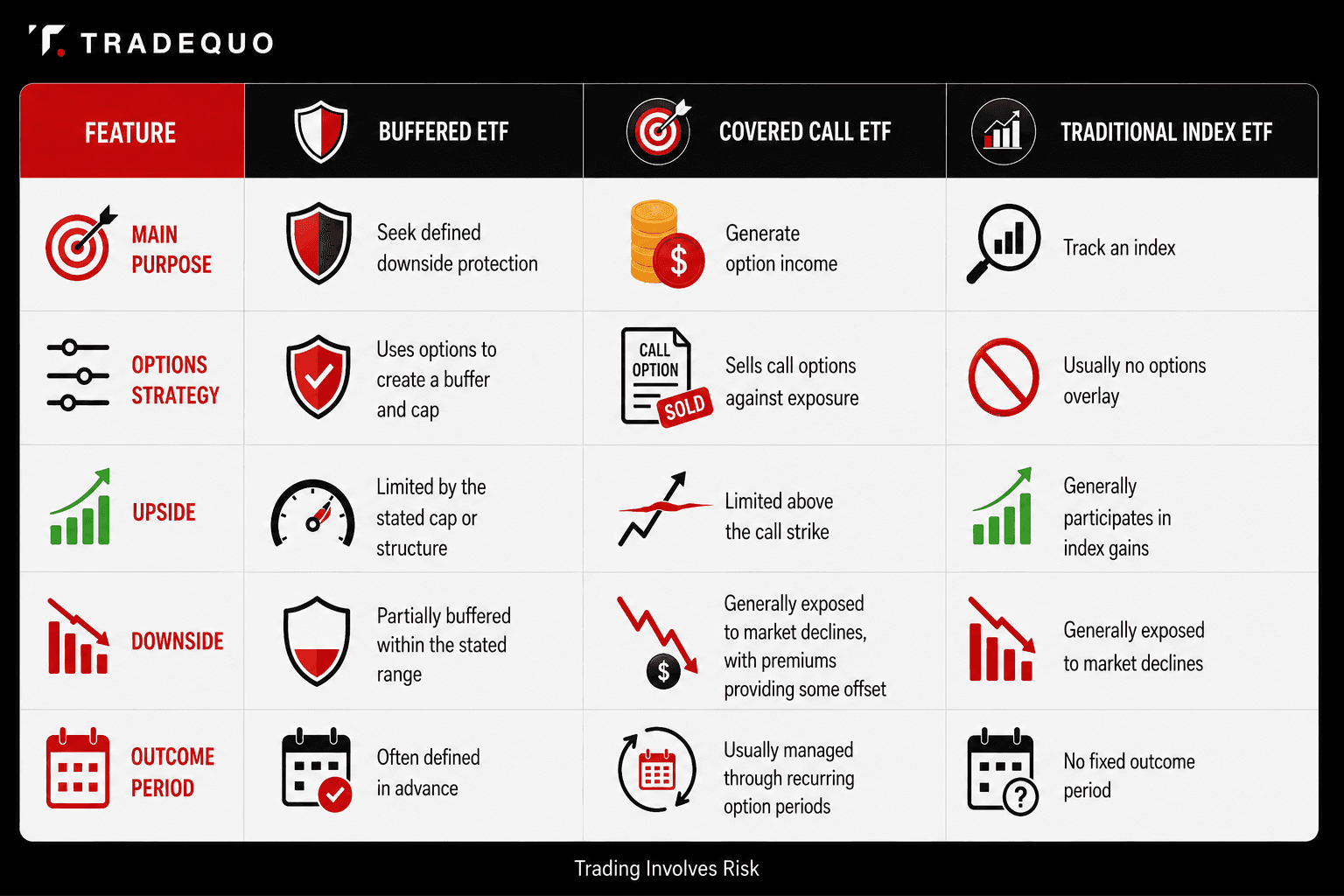
Ein Covered Call ETF basiert in erster Linie auf Erträgen aus dem Verkauf von Call-Optionen. Die Prämien können für einen Cashflow sorgen, während die Strategie auf ein gewisses Aufwärtspotenzial verzichtet, wenn der Basiswert über den Basispreis der Option steigt. Die Prämien können zwar einige Verluste abfedern, bieten jedoch nicht den gleichen definierten Abwärtspuffer, der in einem typischen Buffered ETF zu finden ist.
Ein traditioneller Index-ETF schlägt einen viel einfacheren Weg ein. Er versucht im Allgemeinen, die Wertentwicklung eines Index abzubilden, ohne eine vorgegebene Obergrenze oder einen Puffer durch eine Optionsstruktur zu schaffen.
Buffered ETFs positionieren sich an einer anderen Stelle dieses Spektrums. Ihr Zweck ist es, die Spanne der möglichen Ergebnisse über einen bestimmten Zeitraum zu gestalten.
Vor- und Nachteile von Buffered ETFs

Die Attraktivität von Buffered ETFs wird leichter verständlich, wenn man die Vor- und Nachteile gemeinsam betrachtet.
Ein potenzieller Vorteil ist das begrenzte Abwärtsrisiko innerhalb des Puffers. Wenn der Referenzwert einen Rückgang innerhalb des geschützten Bereichs erfährt und der Anleger die Bedingungen der Strategie erfüllt, ist der Fonds so konzipiert, dass er diesen Teil des Rückgangs auffängt, bevor die Verluste den Anleger erreichen.
Ein weiterer potenzieller Vorteil ist die kontinuierliche Marktteilnahme. Anleger können mit einer Aktienbenchmark verbunden bleiben und gleichzeitig eine Optionsstruktur nutzen, um das normale Risiko- und Renditeprofil zu verändern.
Für jemanden, der über große kurzfristige Marktschwankungen besorgt ist, kann diese Struktur auch zu einer weniger volatilen Erfahrung führen als das direkte Halten des zugrunde liegenden Aktienengagements. Der Grad des Schutzes variiert jedoch von Fonds zu Fonds erheblich.
Der Kompromiss ist die Aufwärtsobergrenze (Cap).
Wenn der Referenzwert stark über die Obergrenze des Fonds hinaus steigt, erhält der Anleger im Allgemeinen nur die Rendite, die bis zu dieser Obergrenze vor Gebühren und Kosten zur Verfügung steht. Ein starker Markt kann einen Buffered ETF daher hinter dem zugrunde liegenden Index zurücklassen.
Es sind auch Gebühren und Kosten zu berücksichtigen. Buffered ETFs können höhere Kostenquoten aufweisen als viele traditionelle Index-ETFs, da die Optionsstrategie ein zusätzliches Portfoliomanagement und Trading erfordert.
Schließlich stellt sich die Frage des Timings. Ein Anleger, der einsteigt, nachdem ein Ergebniszeitraum bereits begonnen hat, erhält möglicherweise nicht die gleiche Kombination aus Schutz und Aufwärtspotenzial, die zu Beginn verfügbar war.
Die Risiken verstehen
Das wichtigste Risiko bei Buffered ETFs wird leicht übersehen, weil das Wort „Puffer“ beruhigend klingt.
Ein Puffer ist ein begrenzter Schutz, keine Garantie gegen Verluste.
Angenommen, ein Fonds ist so konzipiert, dass er den ersten Teil eines Rückgangs auffängt. Wenn der Referenzwert unter diesen geschützten Bereich fällt, trägt der Anleger die Verluste jenseits des Puffers. Die Fondsdokumente machen zudem deutlich, dass Gebühren und Kosten das tatsächliche Ergebnis mindern können.
Hinzu kommt das Punkt-zu-Punkt-Bewertungsrisiko.
Das Ergebnis wird im Allgemeinen zwischen einem Startpunkt und einem Endpunkt gemessen. Was zwischen diesen Daten geschieht, kann für einen Anleger, der während des Zeitraums kauft oder verkauft, von großer Bedeutung sein. Ein Fonds könnte eine größere Marktbewegung durchlaufen, sich später wieder erholen und den Ergebniszeitraum nahe seinem Ausgangsniveau beenden. Jemand, der zu einem anderen Zeitpunkt ein- oder ausgestiegen ist, könnte eine völlig andere Rendite erzielen.
Die Obergrenze schafft einen weiteren wichtigen Kompromiss.
Wenn der Markt substanziell steigt, kann ein traditioneller Index-ETF weiterhin an diesem Anstieg partizipieren. Ein Buffered ETF kann die Teilnahme einstellen, sobald seine Obergrenze erreicht ist. Über mehrere Ergebniszeiträume hinweg kann ein wiederholtes Engagement in gedeckelten Gewinnen zu Renditen führen, die hinter dem zugrunde liegenden Index zurückbleiben, insbesondere in starken Bullenmärkten.
Es besteht auch das Risiko der Obergrenzen-Zurücksetzung (Cap Reset). Die Obergrenzen können sich von einem Ergebniszeitraum zum nächsten ändern, da sie von den Marktbedingungen und den verfügbaren Optionen bei Beginn des neuen Zeitraums beeinflusst werden. Eine Obergrenze, die heute attraktiv aussieht, ist nicht unbedingt die Obergrenze, die Anleger im nächsten Zyklus erhalten werden.
Anleger sollten auch den Verkaufsprospekt des Fonds bezüglich Handelskosten, Liquiditätsaspekten, steuerlicher Behandlung, Optionsrisiken und anderer fondsspezifischer Details lesen. Die genaue Struktur ist wichtig, da nicht alle Buffered ETFs auf die gleiche Weise aufgebaut sind.
Definiertes Ergebnis vs. flexibler Marktzugang
Buffered ETFs sind um ein definiertes Ergebnisfenster herum konzipiert. Das gibt dem Anleger einen klaren Rahmen für den beabsichtigten Puffer und die Obergrenze, macht das Timing jedoch auch zu einem wichtigen Teil der Strategie.
Andere Marktinstrumente funktionieren anders.
Beispielsweise erlauben CFDs im Allgemeinen das Öffnen und Schließen von Positionen während der Handelszeiten des jeweiligen Marktes und weisen keinen integrierten 12-monatigen Ergebniszeitraum auf. Ihr Wert ändert sich mit dem zugrunde liegenden Markt, während das Ergebnis des Anlegers auch von Faktoren wie Hebelwirkung, Finanzierungskosten und dem Timing der Position abhängt.
Dadurch entsteht ein klarer struktureller Unterschied. Ein Buffered ETF ist um eine bestimmte optionsbasierte Auszahlung über einen Ergebniszeitraum herum aufgebaut. Ein CFD bietet ein flexibles Marktengagement ohne dieses vordefinierte Ergebnisfenster.
Fazit
Buffered ETFs bieten ein sehr spezifisches Tauschgeschäft: Anleger können einen teilweisen Abwärtsschutz über einen definierten Zeitraum anstreben, während sie eine Obergrenze für potenzielle Gewinne akzeptieren. Der Spitzname „Boomer Candy“ bringt auf den Punkt, warum diese Produkte die Aufmerksamkeit älterer und vorsichtigerer Anleger auf sich gezogen haben, sagt jedoch wenig darüber aus, wie die Fonds tatsächlich funktionieren. Die wichtigen Details sind der Puffer, die Obergrenze, die Optionsstruktur, die Gebühren und der Ergebniszeitraum. Das Verständnis dieser Mechanismen ist weitaus wichtiger als der Spitzname.
Risikohinweis: CFDs sind komplexe Instrumente und bergen aufgrund der Hebelwirkung ein hohes Risiko, schnell Geld zu verlieren. Sie sollten sich überlegen, ob Sie verstehen, wie CFDs funktionieren, bevor Sie investieren.
FAQs
Was ist ein Buffered ETF in einfachen Worten?
Ein Buffered ETF ist ein börsengehandelter Fonds, der Optionen nutzt, um Schutz vor einem bestimmten Teil der Verluste eines Basiswerts zu suchen, während er gleichzeitig die potenziellen Gewinne durch eine Aufwärtsobergrenze begrenzt. Die meisten Produkte sind um einen definierten Ergebniszeitraum herum aufgebaut, der oft etwa 12 Monate beträgt, obwohl auch kürzere Zeiträume verfügbar sind.
Wie funktionieren Buffered ETFs?
Buffered ETFs nutzen Optionen, um ihr beabsichtigtes Auszahlungsprofil zu erstellen. Put-Optionen können den Abwärtspuffer bieten, während der Verkauf von Call-Optionen helfen kann, diesen Schutz zu finanzieren und die Aufwärtsobergrenze festzulegen. Die genaue Struktur variiert je nach Fonds. Der angegebene Puffer und die Obergrenze gelten im Allgemeinen dann am direktesten, wenn ein Anleger zu Beginn des Ergebniszeitraums kauft und bis zu dessen Ende hält.
Was sind die Hauptrisiken von Buffered ETFs?
Zu den Hauptrisiken gehören Verluste über den geschützten Puffer hinaus, gedeckeltes Aufwärtspotenzial, Gebühren und Kosten sowie unterschiedliche Ergebnisse für Anleger, die während eines Ergebniszeitraums ein- oder aussteigen. Die Obergrenze kann sich auch ändern, wenn ein neuer Ergebniszeitraum beginnt. Buffered ETFs streben definierte Ergebnisse an, aber diese Ergebnisse sind nicht gleichbedeutend mit einer Garantie gegen Verluste.
Sind Buffered ETFs eine gute Anlage?
Es gibt keine universelle Antwort. Buffered ETFs sind für einen bestimmten Kompromiss zwischen Abwärtsschutz und Aufwärtspotenzial konzipiert. Ihre Ergebnisse hängen vom Basiswert, der Größe des Puffers, der Obergrenze, den Gebühren, den Marktbedingungen und den Ein- und Ausstiegspunkten des Anlegers ab. Die Schlüsselfrage ist, ob die spezifische Struktur mit dem Ergebnis übereinstimmt, das ein Anleger zu erzielen versucht.
Warum werden Buffered ETFs als „Boomer Candy“ bezeichnet?
„Boomer Candy“ ist ein informeller Begriff, der dem ETF-Analysten von Bloomberg Intelligence, Eric Balchunas, zugeschrieben und später durch die Berichterstattung in den Finanzmedien popularisiert wurde. Er bezieht sich allgemein auf optionsbasierte ETFs, die für Anleger attraktiv sind, die weiterhin an den Märkten investiert bleiben möchten, während sie gleichzeitig einen Teil des Abwärtsrisikos oder der Volatilität reduzieren wollen, die mit traditionellen Aktienanlagen verbunden sind. Der Ausdruck ist eher ein Medienjargon als eine offizielle ETF-Klassifizierung.