
Introducción:
El mercado de criptomonedas ofrece algo que las finanzas tradicionales nunca pudieron: la oportunidad de operar las 24 horas del día, los 365 días del año, con una volatilidad que puede convertir una posición modesta en algo sustancial en un período de tiempo sorprendentemente corto. Pero esa misma volatilidad funciona en ambos sentidos. Sin un enfoque disciplinado, el mercado tiene una forma de separar a los principiantes de su capital mucho más rápido de lo que anticipaban.
La diferencia entre los operadores exitosos y los que se agotan a menudo se reduce a una cosa: tener una estrategia antes de hacer clic en el botón de compra. Para cualquier persona que se inicie en el trading de CFD de criptomonedas, el objetivo no es perseguir cada vela verde. Es encontrar un enfoque que se adapte a su horario, su tolerancia al riesgo y su temperamento, y luego ejecutarlo con constancia.
La base de una estrategia sólida de trading de CFD de criptomonedas
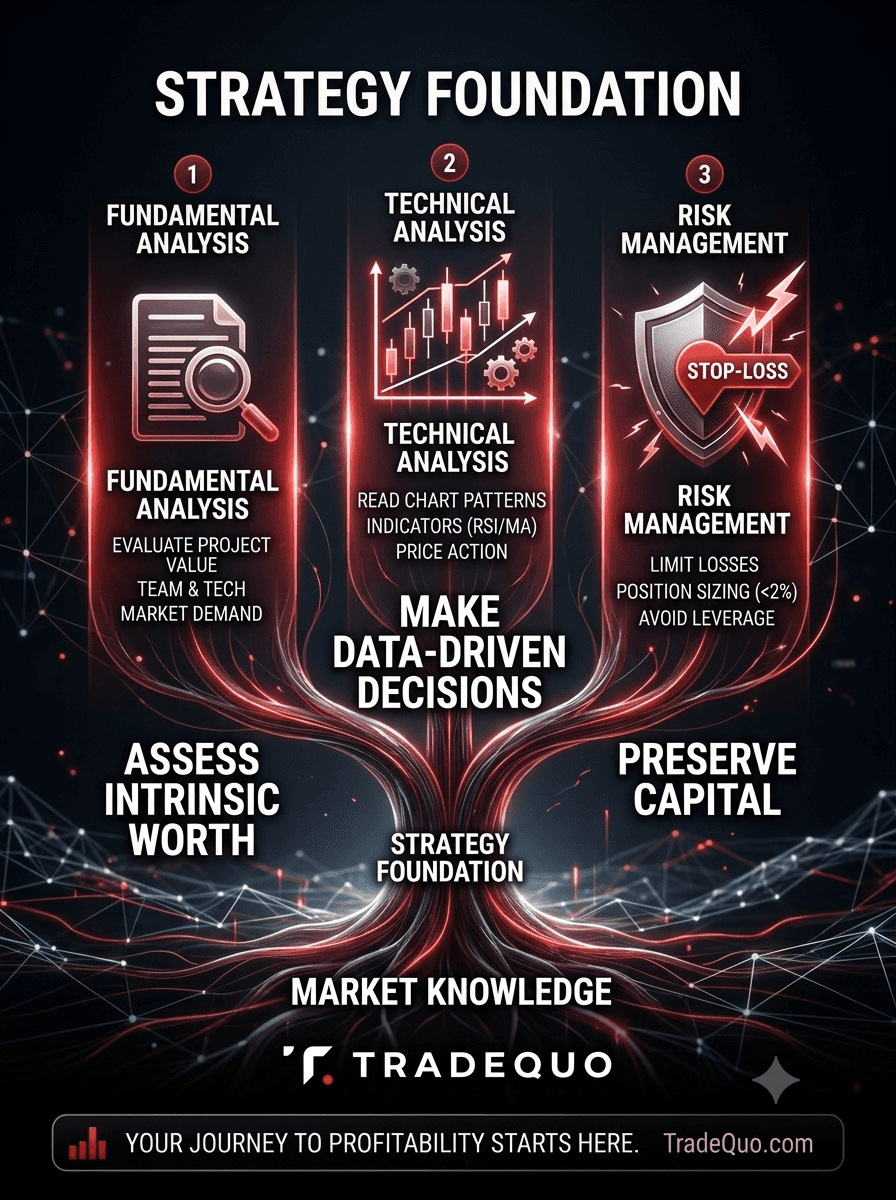
Es fundamental entender que cualquier estrategia de trading de CFD de criptomonedas eficaz se construye sobre una base de análisis técnico y análisis fundamental. Mientras que el análisis fundamental ayuda a evaluar el valor intrínseco de un proyecto al observar su tecnología, equipo y demanda del mercado, el análisis técnico es la columna vertebral del trading intradiario activo.
Al aprender a leer gráficos de velas y reconocer el comportamiento de los precios, puede tomar decisiones basadas en datos en lugar de confiar en corazonadas. Ya sea que esté analizando monedas de gran capitalización como Bitcoin o altcoins más pequeñas, el objetivo es encontrar un proceso repetible que se adapte a su estilo de vida y apetito por el riesgo.
Promedio de costo en dólares para la inversión a largo plazo
Si prefiere un enfoque pasivo que ignore los movimientos de precios a corto plazo, el promedio de costo en dólares, o DCA (por sus siglas en inglés), a menudo se considera el estándar de oro para los operadores minoristas. Esta estrategia consiste en invertir una cantidad fija de dinero a intervalos regulares, independientemente del precio actual.
Cómo funciona el DCA en mercados financieros volátiles
La principal ventaja del DCA es que reduce el impacto de la volatilidad del mercado. Cuando los precios son altos, su inversión fija compra menos unidades; cuando los precios bajan, usted compra más automáticamente. Con el tiempo, esto reduce su precio promedio de compra. Esto es particularmente eficaz para la inversión a largo plazo en activos de buena reputación como Bitcoin o Ethereum, que históricamente han mostrado resiliencia a pesar de las fluctuaciones de precios significativas.
Por qué los principiantes eligen este camino
El DCA elimina el estrés de intentar calcular el momento perfecto para entrar al mercado. La mayoría de los principiantes fracasan porque intentan "comprar la caída" y terminan esperando un suelo que nunca llega, o compran en el pico debido al FOMO (miedo a perderse algo). Al automatizar sus compras en un exchange de CFD de criptomonedas, construye una posición de manera constante. Es tanto una victoria psicológica como financiera, ya que evita la codicia y el miedo que a menudo conducen a malas decisiones de trading.
Swing Trading: Capturando tendencias a medio plazo
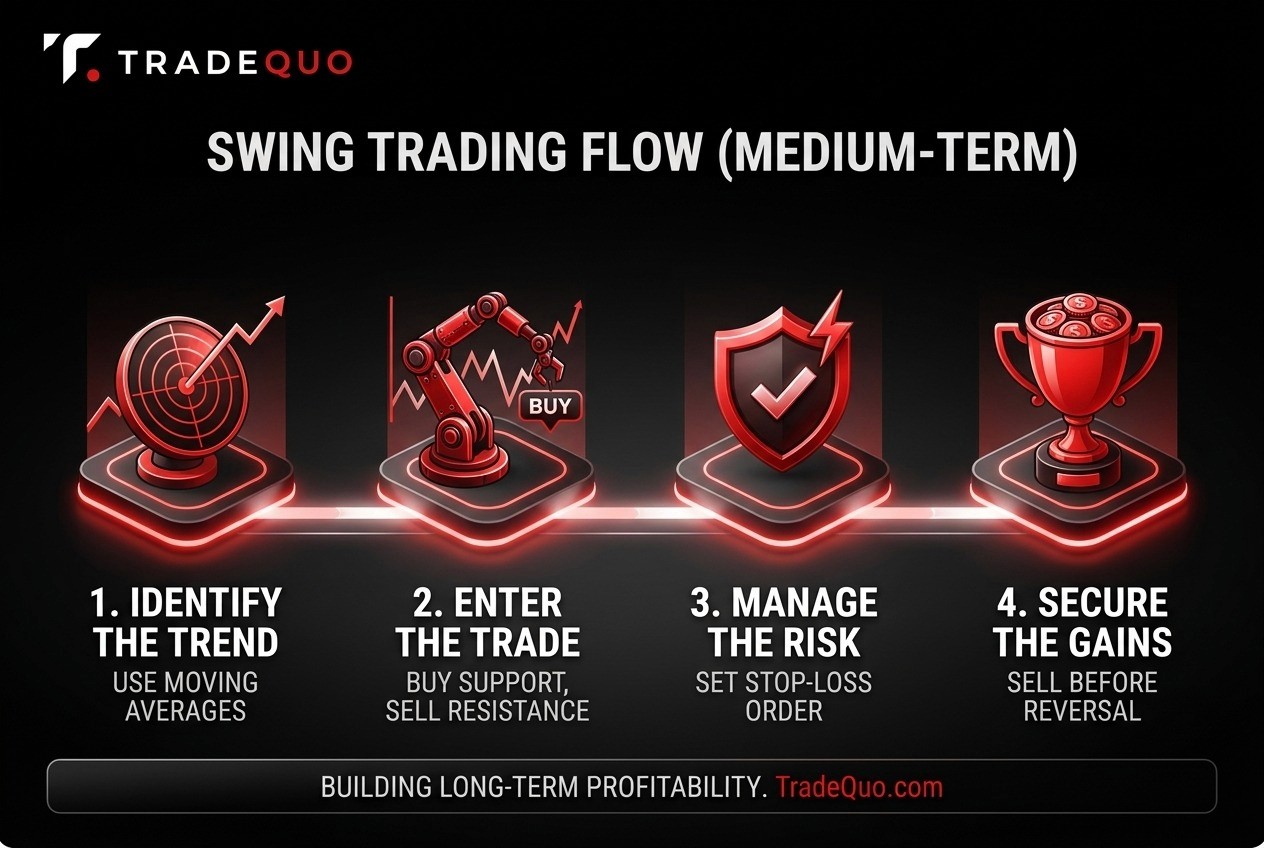
Para aquellos que quieren estar más activos que un inversor a largo plazo pero no pueden comprometerse a mirar pantallas todo el día, el swing trading es un excelente término medio. Los swing traders tienen como objetivo capturar movimientos que se desarrollan durante varios días o unas pocas semanas.
Uso de indicadores técnicos para predecir el mercado
En el swing trading, no se preocupa por las fluctuaciones minuto a minuto. En su lugar, busca tendencias a medio plazo. Las herramientas comunes utilizadas aquí incluyen medias móviles, que rastrean los precios promedio durante un período de tiempo específico para revelar la dirección general del mercado. Muchos operadores también utilizan el Índice de Fuerza Relativa o RSI para identificar el impulso y determinar si un activo se encuentra en condiciones de mercado de sobrecompra o sobreventa.
Pros y contras del enfoque Swing
La principal ventaja es la flexibilidad. Puede analizar gráficos por la tarde y configurar sus operaciones para la semana. Sin embargo, la desventaja es que está expuesto al riesgo nocturno. Dado que los mercados de criptomonedas siempre están abiertos, un evento noticioso importante puede cambiar el precio mientras usted no está. Usar niveles de soporte y resistencia para establecer sus puntos de entrada y salida es crucial aquí para asegurarse de comprar cuando la tendencia del mercado esté a su favor y vender antes de una reversión.
Trading de ruptura: Identificando movimientos significativos de precios
El trading de ruptura es una estrategia centrada en los momentos en que el mercado finalmente "rompe" un rango. Los precios a menudo se consolidan dentro de una banda estrecha antes de realizar un movimiento violento en una dirección.
Detectar la señal
Una ruptura ocurre cuando el precio se mueve por encima de un nivel de resistencia definido o por debajo de un nivel de soporte. Cuando esto sucede con un volumen alto, sugiere que el mercado ha llegado a un consenso y está comenzando una nueva tendencia. Los principiantes pueden buscar patrones como triángulos o rectángulos en un gráfico. Si el precio rompe el límite superior, es una señal para ir en largo; si rompe el límite inferior, puede indicar un mayor retroceso.
Gestión de los riesgos de falsas rupturas
El mayor desafío para los operadores minoristas en el trading de ruptura es la "falsa ruptura", donde el precio rompe brevemente un nivel solo para revertirse rápidamente. Para gestionar el riesgo, los operadores experimentados a menudo esperan a que una vela cierre por encima de la línea de resistencia o buscan una nueva prueba de ese nivel antes de comprometer capital real. Requiere paciencia y la capacidad de actuar rápidamente una vez que se confirma el movimiento.
Seguimiento de tendencias: Cabalgando el impulso del mercado
El trading de tendencias se basa en la filosofía simple de que "la tendencia es tu amiga". En lugar de intentar predecir cuándo terminará una tendencia, simplemente sigue el camino existente de menor resistencia hasta que los datos le indiquen lo contrario.
Indicadores para el seguimiento de tendencias
Los seguidores de tendencias utilizan herramientas como las medias móviles de 50 y 200 días para ver el panorama general. Si el precio se mantiene constantemente por encima de estas medias, la tendencia es alcista. Otra herramienta útil es el Índice de Fuerza Relativa para confirmar que el impulso sigue siendo fuerte. Esta estrategia funciona mejor en mercados con tendencia, pero puede dar resultados variables cuando el mercado se mueve lateralmente.
La salida disciplinada
La clave para seguir la tendencia no es solo saber cuándo entrar, sino tener la disciplina para mantenerse dentro hasta que la tendencia se rompa oficialmente. Se trata de capturar la parte principal de un movimiento. Si bien no comprará exactamente en el mínimo ni venderá exactamente en el máximo, puede asegurar ganancias aprovechando los movimientos de precios sostenidos que caracterizan al mercado de criptomonedas.
Gestión de riesgos para principiantes en el mercado de CFD de criptomonedas
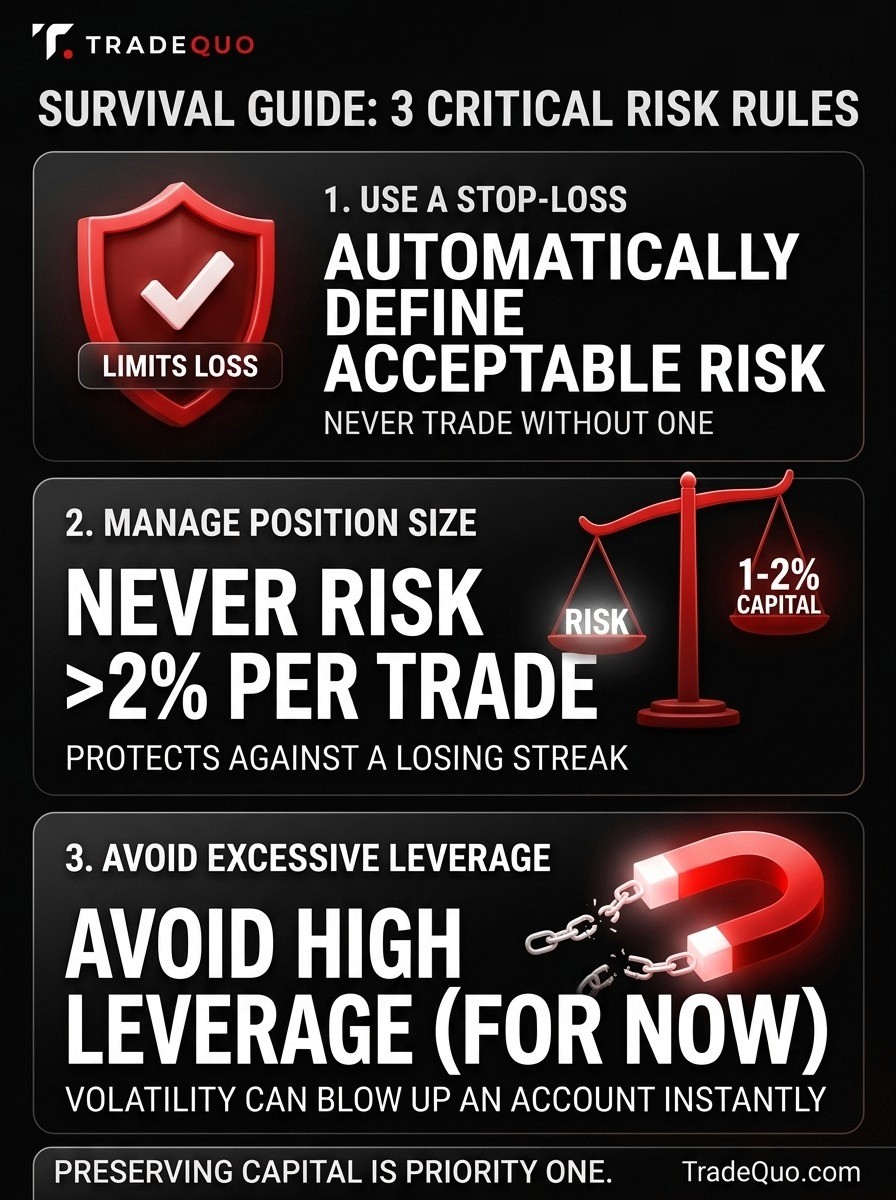
Cada estrategia analizada anteriormente puede generar rendimientos con el tiempo. Pero sin una gestión de riesgos sólida, incluso la mejor estrategia de trading de CFD de criptomonedas puede provocar pérdidas catastróficas. Los operadores experimentados enfatizan constantemente un principio por encima de todos los demás: preservar el capital es más importante que buscar ganancias.
Órdenes de Stop-Loss y tamaño de la posición
Una orden de stop-loss cierra automáticamente una operación una vez que el precio alcanza un nivel predefinido, lo que limita la pérdida potencial en esa posición. Para los principiantes, esto no es opcional. Es la primera línea de defensa para evitar que una pequeña pérdida se convierta en una que destruya la cuenta. Establecer límites claros para las pérdidas aceptables antes de entrar en una operación elimina la emoción de la ecuación cuando las cosas van en su contra.
El tamaño de la posición es igualmente importante. Una directriz ampliamente referenciada entre los operadores conscientes del riesgo es nunca arriesgar más del uno al dos por ciento de su capital real en un solo día de trading. Esto significa que incluso una racha de operaciones perdedoras no devastará su cuenta, lo que le dará espacio para aprender, ajustar y recuperarse sin verse obligado a salir del mercado.
Apalancamiento, diversificación y disciplina emocional
El apalancamiento amplifica tanto las ganancias como las pérdidas. Para los principiantes, utilizar posiciones apalancadas en mercados volátiles es una de las formas más rápidas de arruinar una cuenta. Las llamadas de margen en el trading de CFD de criptomonedas pueden llegar sin previo aviso durante fuertes movimientos de precios, sin dejar tiempo para reaccionar. Hasta que tenga un historial sólido y una comprensión profunda de cómo interactúa el apalancamiento con la volatilidad del mercado, es mejor evitarlo o mantenerlo al mínimo extremo.
Diversificar su cartera en múltiples activos también puede ayudar a protegerse contra el riesgo de que un solo mercado se mueva bruscamente en su contra. En lugar de poner todo en una sola moneda, distribuir la exposición en unos pocos activos criptográficos diferentes con alta liquidez reduce el riesgo de concentración. Por último, la psicología del trading importa tanto como la habilidad técnica. El FOMO, el miedo a perderse algo, a menudo impulsa a los operadores minoristas a entrar en posiciones cuando los precios ya se han extendido significativamente, creando configuraciones deficientes de riesgo-recompensa. Reconocer estas trampas emocionales y tener un plan que elimine las conjeturas es lo que separa a quienes perduran en este mercado de quienes no.
Conclusión
Las mejores estrategias de trading de criptomonedas para principiantes comparten una cosa en común: son fáciles de aprender, repetibles y se basan en la gestión de riesgos. El promedio de costo en dólares le brinda una entrada de bajo estrés en la inversión a largo plazo. El swing trading abre la puerta a la participación activa sin exigir una atención constante. El trading de ruptura ofrece configuraciones de alta convicción cuando el comportamiento del precio confirma el impulso. Y el seguimiento de tendencias lo mantiene alineado con la dirección dominante del mercado en lugar de luchar contra ella.
Ninguna de estas estrategias garantiza ganancias consistentes, y cualquiera que le diga lo contrario no está siendo sincero. Lo que sí proporcionan es un marco para tomar decisiones de trading informadas y disciplinadas en lugar de emocionales. Antes de comprometer capital real, pruebe sus entradas, stops y tamaño de posición en una cuenta de demostración. Utilice exchanges de buena reputación que minimicen los riesgos de seguridad y ofrezcan las herramientas que necesita. Invierta en educación continua porque el mercado de criptomonedas evoluciona rápidamente, y también debería hacerlo su comprensión del mismo. Comience de manera sencilla, sea constante y deje que su experiencia guíe la complejidad que agregue con el tiempo.
Preguntas frecuentes
¿Cuál es la mejor estrategia de trading de CFD de criptomonedas para principiantes?
El promedio de costo en dólares se considera ampliamente el enfoque más adecuado para principiantes porque elimina la necesidad de predecir el mercado y reduce la presión emocional del trading de CFD de criptomonedas. A medida que crezcan sus conocimientos, se pueden incorporar el swing trading o el seguimiento de tendencias. Evite las estrategias de alta frecuencia como el scalping hasta que tenga una experiencia sustancial, ya que requieren decisiones rápidas y habilidades de análisis técnico profundo.
¿Cuánto dinero necesito para empezar a operar con CFD de criptomonedas?
No existe un mínimo universal y muchos exchanges le permiten comenzar con cantidades muy pequeñas. Más importante que la cifra inicial es cómo la gestiona. Seguir la directriz de riesgo por operación del uno al dos por ciento significa que el tamaño de sus posiciones debe reflejar su capital real de manera realista. Es muy recomendable comenzar con poco mientras aprende, y usar una cuenta de demostración antes de comprometer fondos reales le permite perfeccionar su enfoque sin riesgo financiero.
¿El trading de CFD de criptomonedas es lo mismo que el trading de acciones tradicional?
Existen similitudes significativas, particularmente en torno a las herramientas de análisis técnico y gestión de riesgos. Pero a diferencia de los mercados tradicionales, los mercados de criptomonedas nunca cierran, operan con una volatilidad significativamente mayor y son mucho más sensibles al sentimiento del mercado y a los ciclos de noticias. Los marcos regulatorios también difieren, y la dinámica del mercado de los activos digitales puede cambiar más rápidamente que la de las acciones o materias primas establecidas.
¿Qué indicadores técnicos deberían aprender primero los principiantes?
Comience con las medias móviles y el Índice de Fuerza Relativa (RSI). Las medias móviles le ayudan a identificar la dirección general del mercado y los posibles cambios de tendencia, mientras que el RSI le brinda una lectura sobre el impulso y si un activo puede estar sobrecomprado o sobrevendido. Una vez que se sienta cómodo con estos, los niveles de soporte y resistencia y el análisis de volumen son los siguientes pasos naturales. Combinar múltiples indicadores técnicos proporciona una imagen más completa de las condiciones del mercado que confiar en una sola señal.
¿Cómo gestiono el riesgo al operar con CFD de criptomonedas?
La gestión de riesgos eficaz en el trading de CFD de criptomonedas se reduce a tres prácticas principales: use siempre órdenes de stop-loss para definir su pérdida máxima aceptable antes de entrar en una operación, mantenga el tamaño de las posiciones individuales en proporción a su capital total utilizando la regla del uno al dos por ciento, y evite el apalancamiento excesivo, particularmente en mercados volátiles. Diversificar en múltiples activos, operar en exchanges de buena reputación y evaluar continuamente su tolerancia al riesgo también son hábitos esenciales para el éxito a largo plazo en el mercado de criptomonedas.