Introduzione
Fare trading su un intero mercato attraverso un'unica posizione può essere un modo più semplice per seguire il sentiment generale del mercato rispetto alla scelta di singole azioni una ad una. L'S&P 500, il NASDAQ 100 e il DAX offrono ciascuno ai trader un'esposizione a una parte diversa del mercato azionario globale, e queste differenze sono importanti quando si decide come fare trading sugli indici.
Concentriamoci su ciò che distingue questi tre principali indici, inclusi la loro esposizione settoriale, i fattori trainanti del mercato, la volatilità e le sessioni di trading, e spieghiamo come fare trading sul S&P 500, come fare trading sul NASDAQ e come approcciare il DAX attraverso i CFD sugli indici.
Cosa sono gli indici?
Un indice azionario è un benchmark che traccia un gruppo selezionato di società. Invece di seguire una sola società, il trading sugli indici offre un'esposizione alla performance combinata di più aziende all'interno di un mercato o segmento definito.
Per i trader, questo può rendere un indice utile quando una particolare visione di mercato è più forte di un'opinione su una singola azione. La domanda importante è quale indice corrisponda meglio a tale visione.
S&P 500, NASDAQ e DAX - Cosa rende ognuno diverso
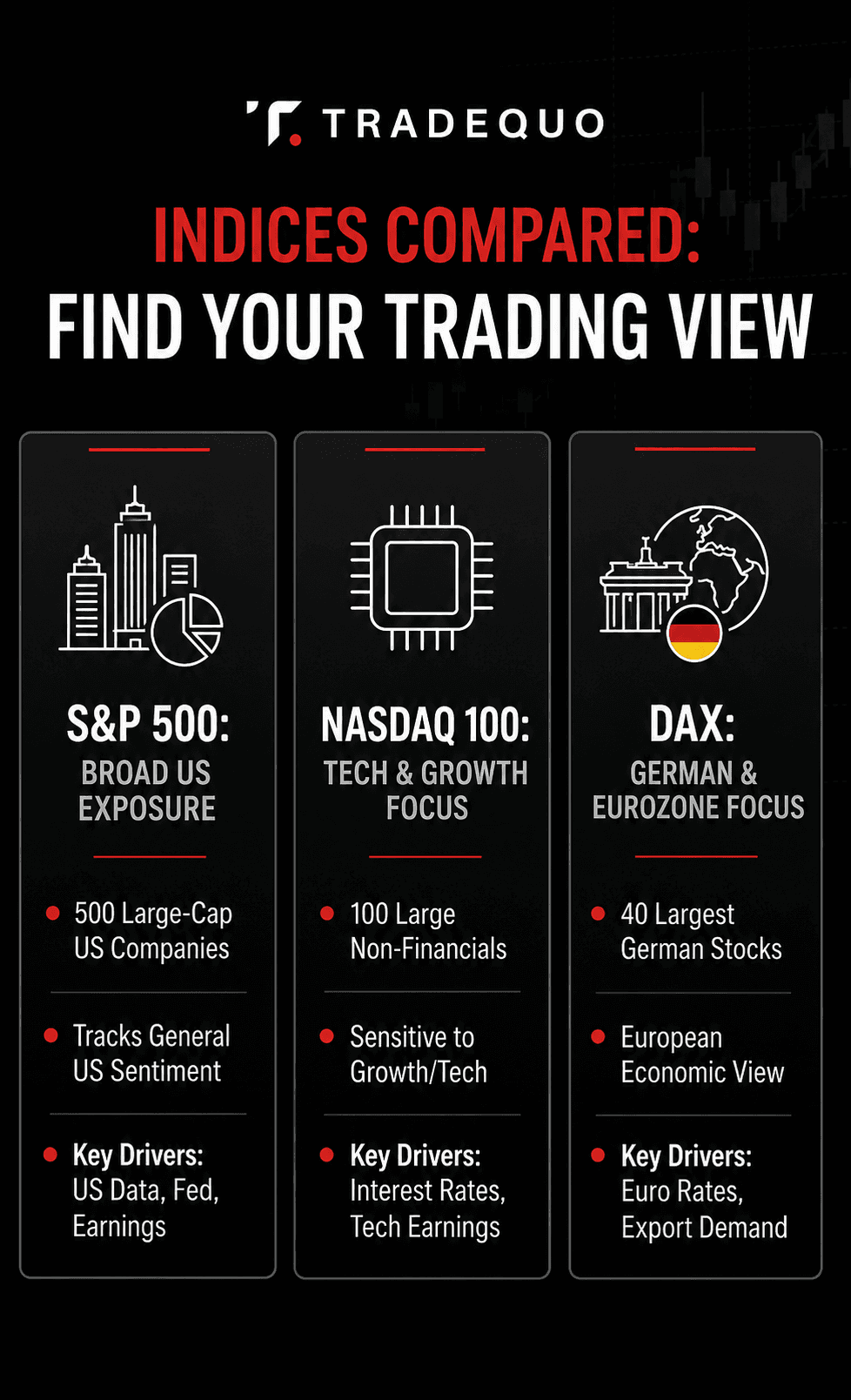
L'S&P 500, il NASDAQ 100 e il DAX possono muoversi tutti con il sentiment di rischio globale, ma rispondono a forze economiche e societarie diverse.
S&P 500: ampia esposizione al mercato statunitense
L'S&P 500 è ampiamente considerato come un indicatore leader delle azioni statunitensi a grande capitalizzazione. Comprende 500 società leader e rappresenta circa l'80% della capitalizzazione di mercato disponibile negli Stati Uniti. Il suo mix settoriale spazia tra tecnologia, finanza, servizi di comunicazione, società di consumo, sanità, industria e altre parti dell'economia.
Questa ampia esposizione rende l'S&P 500 un benchmark utile per i trader che desiderano seguire il sentiment generale delle azioni statunitensi piuttosto che concentrarsi su un unico settore.
L'indice è comunque influenzato pesantemente dai suoi costituenti più grandi perché è ponderato per la capitalizzazione di mercato modificata in base al flottante. Tuttavia, la sua più ampia copertura settoriale gli conferisce un carattere diverso rispetto al più concentrato NASDAQ 100.
Quando considerano come fare trading sui CFD dell'S&P 500, i trader monitorano comunemente i dati economici statunitensi, le decisioni della Federal Reserve, gli utili societari e i cambiamenti nell'appetito complessivo per il rischio degli investitori.
NASDAQ 100: più concentrato in crescita e tecnologia
Il NASDAQ 100 traccia 100 delle più grandi società non finanziarie quotate sul Nasdaq Stock Market. I suoi costituenti coprono diversi settori, ma la tecnologia e altre aziende orientate alla crescita hanno un'influenza importante sull'indice.
Ciò rende il NASDAQ particolarmente sensibile agli sviluppi che interessano le grandi società in crescita. Le aspettative sui tassi d'interesse possono essere importanti perché i cambiamenti nei tassi influenzano il modo in cui gli investitori valutano gli utili societari futuri. Anche i principali utili del settore tecnologico, i dati economici e i cambiamenti nelle aspettative del mercato possono produrre movimenti di prezzo significativi.
Per i trader che studiano come fare trading sull'indice NASDAQ, la distinzione chiave risiede nella sua concentrazione. Rispetto all'S&P 500, il NASDAQ 100 offre un'esposizione più diretta alle grandi società di crescita non finanziarie.
DAX: il principale benchmark azionario della Germania
Il DAX misura la performance di 40 delle più grandi società sul mercato azionario tedesco e rappresenta circa l'80% della capitalizzazione di mercato delle società per azioni tedesche quotate. È il principale benchmark per le azioni tedesche.
I suoi fattori trainanti possono quindi differire da quelli dei principali indici statunitensi. Le aspettative sui tassi d'interesse europei, i costi energetici, la domanda di esportazioni, i dati economici tedeschi e le condizioni più ampie dell'Eurozona possono tutti influenzare il sentiment di mercato intorno al DAX.
Il DAX offre inoltre ai trader un modo per seguire il sentiment del mercato europeo prima dell'inizio della sessione azionaria principale degli Stati Uniti. Per chi sta valutando come fare trading sul DAX, i comunicati economici europei e l'apertura dei mercati di Francoforte meritano una particolare attenzione.
Quale indice si adatta a quale visione di mercato?
Non esiste un unico indice migliore da scambiare per ogni situazione.
L'S&P 500 può essere adatto a un trader che cerca un'ampia esposizione azionaria statunitense. Il NASDAQ 100 può essere più rilevante quando le grandi società tecnologiche e di crescita sono al centro della storia del mercato. Il DAX offre una prospettiva europea, con una maggiore sensibilità agli sviluppi economici tedeschi e dell'Eurozona.
Anche gli orari di trading contano. Il programma di un trader potrebbe rendere un mercato più pratico di un altro, mentre le differenze di volatilità possono influenzare la quantità di movimento dei prezzi che si è disposti a gestire.
Come fare trading sugli indici su TradeQuo
TradeQuo fornisce accesso a 16 indici nella sua offerta di trading, inclusi l'S&P 500, il NASDAQ 100 e il DAX. Gli strumenti disponibili e le specifiche devono sempre essere verificati rispetto al conto pertinente e alla pagina dello strumento.
Per i conti Standard, Raw e Zero, TradeQuo pubblica la leva dinamica per gli indici e gli strumenti Mini Index. La struttura attuale è di 1:500 da 0 a 5 lotti, 1:250 per lotti da più di 5 a 10, e 1:100 sopra i 10 lotti.
Il conto LIMITLESS ha una struttura di leva finanziaria separata per indici selezionati, inclusi SPXUSD, NDXUSD e DAXEUR. Per questi strumenti, la scala pubblicata è 1:∞ da 0 a 0,5 lotti, 1:1.500 per lotti da più di 0,5 a 1 lotto, 1:750 per lotti da più di 1 a 2 lotti, 1:333 per lotti da più di 2 a 20 lotti, e 1:100 sopra i 20 lotti.
La leva finanziaria modifica il margine richiesto per una posizione e può anche aumentare la velocità con cui si sviluppano le perdite. Il livello di leva pubblicato deve quindi essere trattato come una condizione del conto, non come un obiettivo per il dimensionamento della posizione.
Per i clienti idonei che utilizzano i CFD sugli indici di TradeQuo, il processo è lineare.
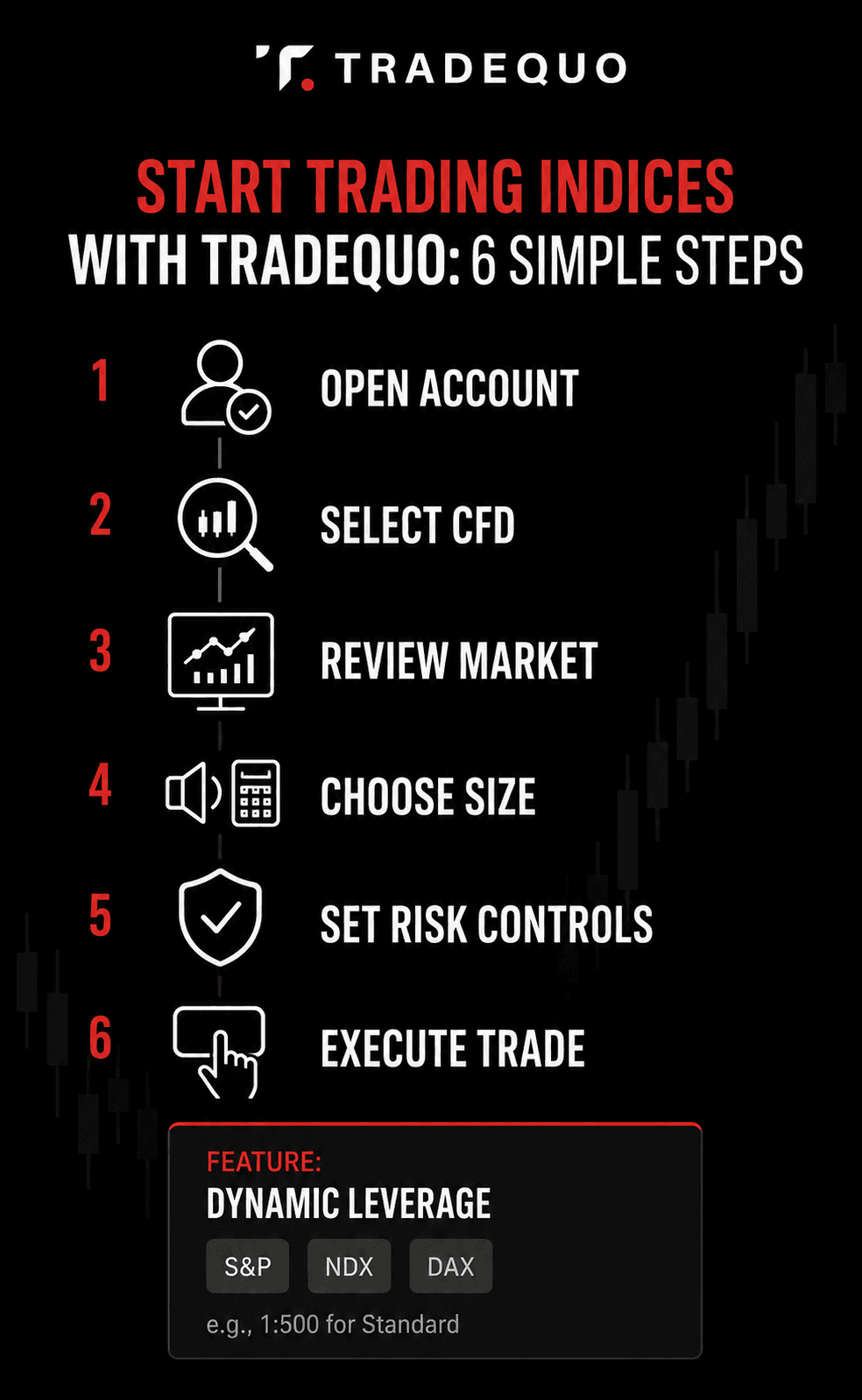
Apri un conto di trading idoneo. Scegli un tipo di conto e completa il processo di registrazione e verifica richiesto.
Seleziona il CFD sull'indice. Sulla piattaforma di trading, individua lo strumento pertinente per l'S&P 500, il NASDAQ 100 o il DAX. I simboli degli strumenti possono variare a seconda della piattaforma e del broker, quindi verifica il simbolo esatto visualizzato sul tuo conto.
Esamina le condizioni di mercato. Prima di inserire una posizione, verifica il prezzo attuale, lo spread, la sessione di trading e gli eventi economici rilevanti.
Scegli la dimensione della posizione. La dimensione della posizione determina l'esposizione dell'operazione ai movimenti di prezzo. Dovrebbe essere considerata insieme al margine disponibile e alla potenziale perdita sulla posizione.
Imposta i controlli di rischio. Dove appropriato, uno stop loss può definire un livello di uscita predeterminato, mentre un take profit può essere utilizzato per chiudere una posizione a un obiettivo selezionato.
Esegui l'operazione. TradeQuo supporta sia MT4 che MT5. Una volta esaminati lo strumento, la dimensione della posizione e i parametri dell'ordine, l'ordine può essere inviato tramite la piattaforma.
Lo stesso processo generale si applica quando si impara a fare trading sugli indici su MT4 o MT5, sebbene l'interfaccia esatta e gli strumenti disponibili possano variare tra i diversi tipi di conto.
I CFD sono prodotti a leva e possono comportare rapide perdite. Comprendere il margine, la leva finanziaria, le specifiche del contratto e i rischi dello strumento specifico è essenziale prima di fare trading.
Orari di trading e quando ogni indice è più attivo
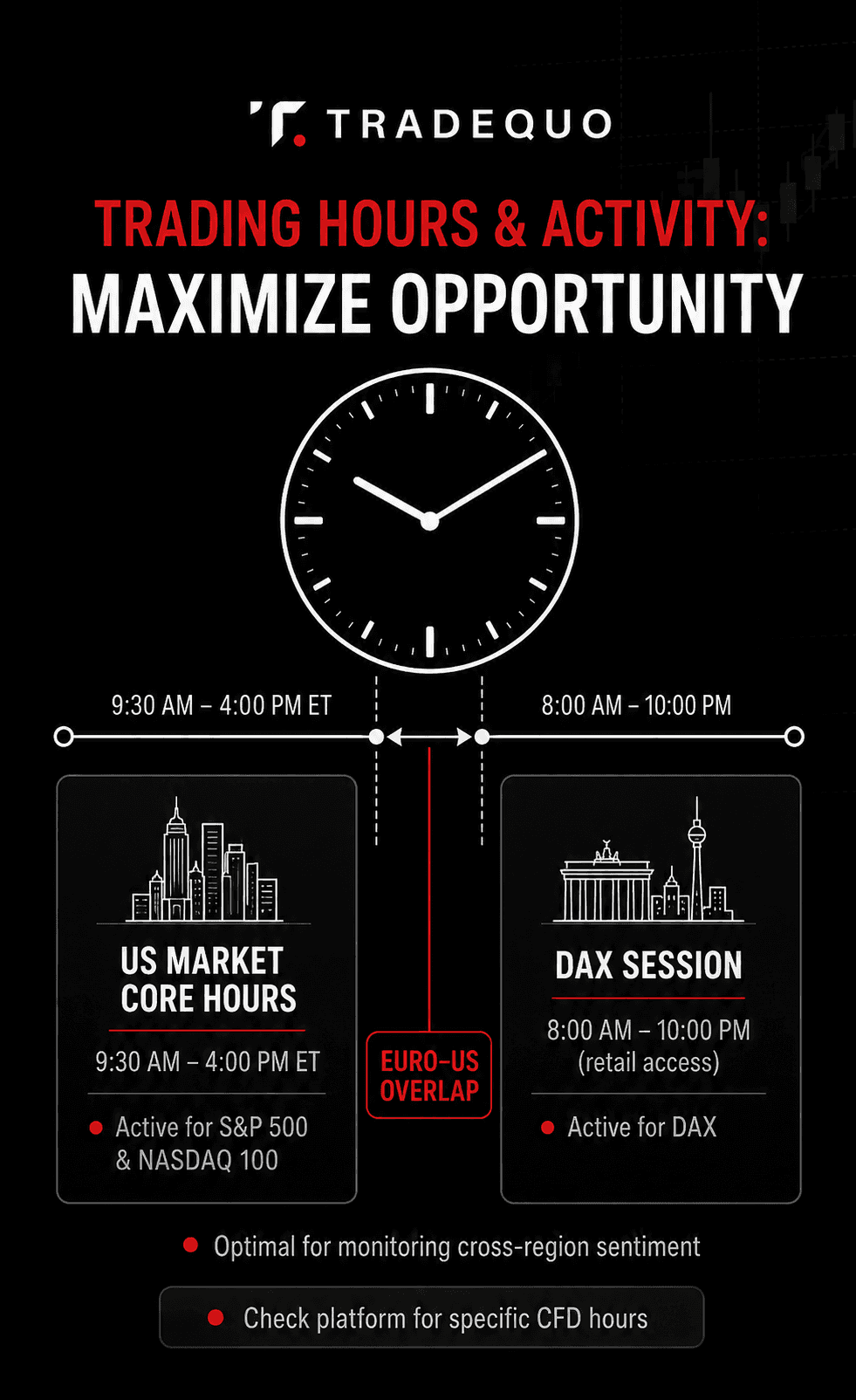
I mercati azionari sottostanti a questi indici operano durante sessioni regionali diverse.
I mercati azionari statunitensi hanno orari di trading principali dalle 9:30 alle 16:00, ora della costa orientale (Eastern Time). Questa è quindi la sessione regolare chiave per l'S&P 500 e il NASDAQ 100.
Il DAX è legato al mercato azionario tedesco. Xetra, la piattaforma di trading elettronico di Deutsche Börse, ha esteso l'accesso al trading al dettaglio dalle 8:00 alle 22:00 da dicembre 2025 per le banche e i broker partecipanti, mentre la sessione principale tradizionale era dalle 9:00 alle 17:30.
Per i trader di CFD, gli orari esatti offerti da un broker possono differire dal programma della borsa sottostante. Controlla sempre gli orari di trading dello strumento sulla piattaforma prima di inserire un ordine.
Un periodo particolarmente importante è la transizione tra le sessioni europee e statunitensi. I mercati europei sono già attivi quando apre la sessione statunitense, creando un periodo in cui i trader possono monitorare gli sviluppi in entrambe le regioni. Questo può essere utile per capire come il sentiment europeo stia reagendo all'inizio delle contrattazioni negli Stati Uniti.
Conclusione
L'S&P 500, il NASDAQ 100 e il DAX offrono tre modi distinti per seguire i principali mercati azionari.
L'S&P 500 offre un'ampia esposizione al mercato statunitense, il NASDAQ 100 è più concentrato nelle grandi società di crescita non finanziarie e il DAX offre una prospettiva sul mercato europeo e tedesco. Comprendere queste differenze è più utile che chiedersi semplicemente quale indice sia il migliore per fare trading.
La tua scelta dipende in ultima analisi dal mercato che desideri seguire, dai fattori economici che comprendi e dagli orari di trading che si adattano al tuo programma. Se sei idoneo a fare trading di CFD nella tua giurisdizione e decidi di esplorare il trading di indici con TradeQuo, esamina il conto pertinente, lo strumento e le specifiche di rischio prima di aprire una posizione.
FAQ
Qual è il deposito minimo per fare trading sugli indici?
Il deposito minimo per fare trading sugli indici su TradeQuo è di $ 1, lo stesso di ogni altro tipo di conto e strumento sulla piattaforma.
Quando posso fare trading sull'S&P 500 come CFD?
Il CFD sull'S&P 500 segue gli orari del mercato azionario statunitense, quindi la finestra di trading più attiva coincide con la sessione di New York; il calendario economico di TradeQuo mostra gli orari esatti di apertura e chiusura giornalieri.
Qual è la differenza tra il trading di azioni e di indici?
Fare trading su un'azione significa assumere una posizione su una sola società, mentre fare trading su un indice significa assumere una posizione su un paniere di società contemporaneamente, il che distribuisce l'esposizione su un intero mercato o settore invece che su una singola impresa.
Il NASDAQ 100 è disponibile come CFD?
Sì, il NASDAQ 100 è disponibile come CFD su TradeQuo, insieme all'S&P 500, al DAX e ad altri 13 indici su MT4 e MT5.
Quali sono gli indici più popolari per fare trading?
L'S&P 500, il NASDAQ e il DAX sono tra gli indici più attivamente scambiati a livello globale, insieme a benchmark come il FTSE 100 e il Dow Jones, ognuno dei quali offre un'esposizione a un'economia o a un settore differente.
Dichiarazione di non responsabilità: I CFD sono strumenti complessi e comportano un rischio elevato di perdere denaro rapidamente a causa della leva finanziaria. Dovresti considerare se comprendi come funzionano i CFD prima di investire.