
I CFD sono strumenti complessi e comportano un elevato rischio di perdere rapidamente denaro a causa della leva finanziaria. Dovresti considerare se comprendi come funzionano i CFD prima di investire.

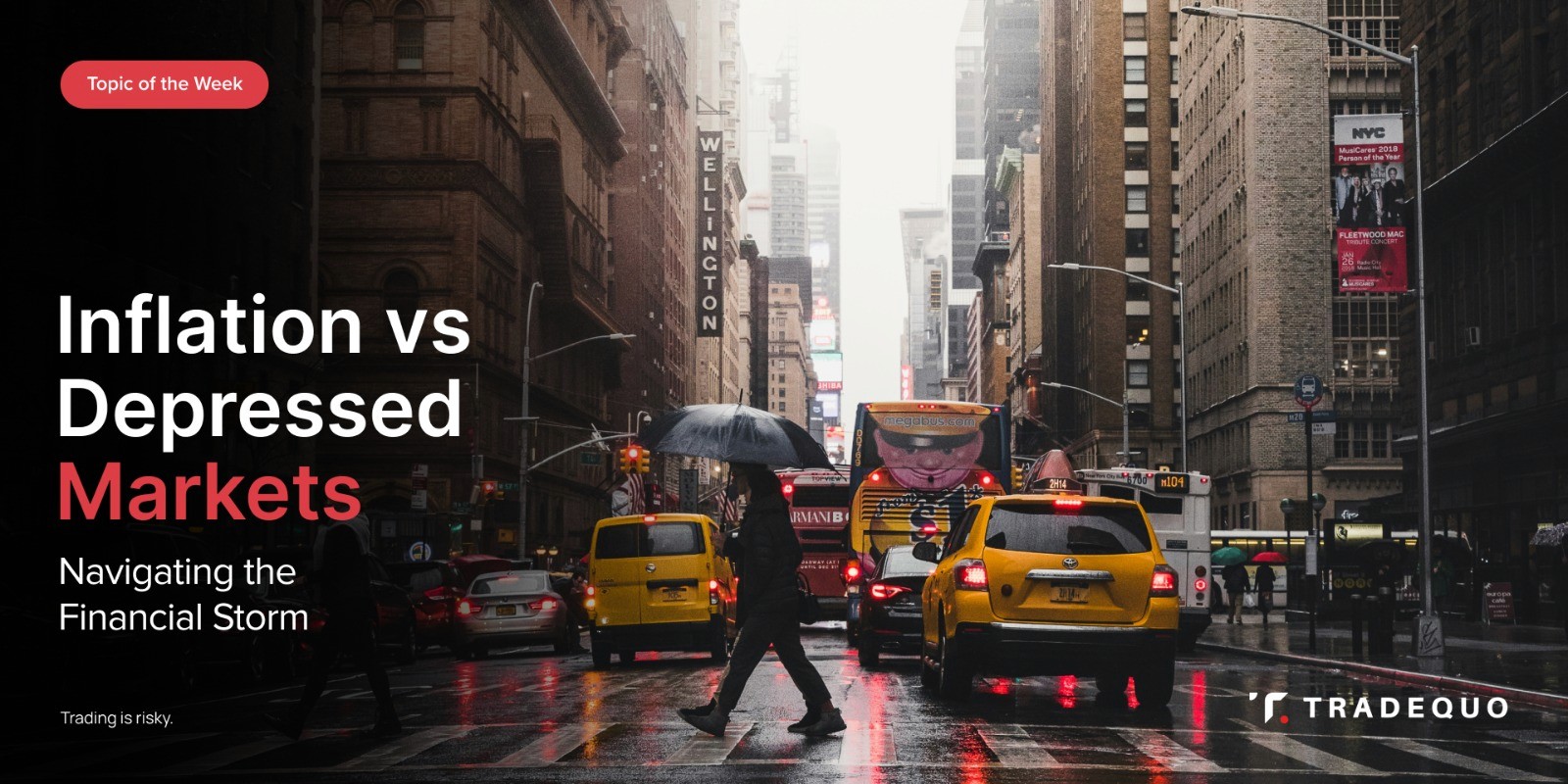
Mercati inflazionistici vs mercati depressi

Introduzione 

Orientarsi nel mercato finanziario richiede una conoscenza approfondita di molti fattori economici e delle loro ripercussioni. I trader incontrano frequentemente due scenari importanti: mercati inflazionistici e mercati depressi. Queste diverse situazioni economiche richiedono tattiche specializzate per ottimizzare i risultati di trading.

Mercati inflazionistici 

I mercati inflazionistici sono definiti da un aumento continuo dei prezzi, che può essere causato da una varietà di fattori, tra cui un aumento della massa monetaria o una maggiore domanda dei consumatori. Quando l’inflazione cresce, il potere d’acquisto di una valuta diminuisce, con conseguente potenziale deflazione. Le indicazioni chiave dei mercati inflazionistici sono:

  • Aumento dei prezzi al consumo: il costo di beni e servizi aumenta, svalutando la valuta.

  • Svalutazione della valuta: un’inflazione più alta comporta generalmente una valuta più debole, poiché il suo potere d’acquisto diminuisce.

  • Aggiustamenti dei tassi di interesse: le banche centrali possono aumentare i tassi di interesse per regolare l’inflazione, influenzando i mercati FX.

Strategie di trading nei mercati inflazionistici 

  1. Concentrarsi sulle valute più forti: i trader dovrebbero scegliere valute di Paesi con tassi di inflazione più bassi, poiché hanno maggiori probabilità di ottenere buone performance.

  2. Operazioni sui tassi di interesse: prevedere le decisioni delle banche centrali sui tassi di interesse può essere utile. Tassi di interesse più elevati possono attirare investimenti esteri, aumentando il valore della valuta.

  3. Valute legate alle materie prime: i periodi di prezzi elevati sono spesso favorevoli per materie prime come oro e petrolio. Le valute legate alle materie prime, come il Dollaro australiano (AUD) e il Dollaro canadese (CAD), possono offrire opportunità di trading.

Mercati depressi 

I mercati depressi si verificano durante le recessioni, che sono caratterizzate da una riduzione dell’attività dei consumatori e delle imprese. In tali contesti, l’economia non riesce a prosperare, risultando in numerose caratteristiche fondamentali:

  • Calo dei prezzi degli asset: azioni, immobili e altri asset perdono frequentemente valore.

  • Apprezzamento della valuta: la deflazione, spesso nota come inflazione negativa, può far aumentare il potere d’acquisto di una valuta.

  • Tassi di interesse più bassi: le banche centrali possono ridurre i tassi di interesse per stimolare l’attività economica, il che influisce sui valori delle valute.

Strategie di trading nei mercati depressi 

  1. Valute rifugio: durante i rallentamenti economici, gli investitori si rivolgono spesso a valute rifugio come il Dollaro statunitense (USD), il Franco svizzero (CHF) e lo Yen giapponese (JPY).

  2. Titoli di Stato: l’aumento della domanda di titoli di Stato potrebbe indicare il sentiment del mercato. I titoli sono generalmente considerati investimenti più sicuri durante i periodi di caos economico.

  3. Opportunità di vendita allo scoperto: i trader dovrebbero cercare opportunità per vendere allo scoperto valute di regioni economicamente più deboli, concentrandosi sui potenziali ribassi.

Conclusione 

Comprendere le dinamiche dei mercati inflazionistici e depressi è essenziale per i trader forex. Riconoscendo le caratteristiche e implementando strategie adeguate, i trader possono orientarsi in queste condizioni economiche in modo più efficace e capitalizzare sui movimenti di mercato.
 

Amato dalle persone

Affidabile per i mercati

Premio 2025
Premio 2025
Premio 2025

© 2026 Trade Quo. All rights reserved.


This website provides content by group of companies, which include:


Tradequomarkets LTD (2023/C0024). Located at #8 Jepson Lane, St. George, Goodwill, Commonwealth of Dominica

Trade Quo Global Ltd, a securities dealer firm that is authorized and regulated by the Seychelles Financial Services Authority (FSA) with license number SD140.

Quo Markets LLC, registered with Financial Services Authority FSA: 3171 LLC 2024. Registered address: Suite 305, Griffith Corporate Centre, Beachmont, Kingstown, SVG.


TQBG Ltd, registered in Cyprus with registration number HE438084, registered address Archiespiskopou Makariou III 160 1st floor, 3026, Limassol, Cyprus. Is apointed payment agent, and does not engage in any regulated activities.


Risk Warning: CFDs are complex instruments and come with a high risk of losing money rapidly due to leverage. 72.6% of retail investor accounts lose money when trading CFDs with this provider. You should consider whether you understand how CFDs work and whether you can afford to take the high risk of losing your money.

Regional Restrictions: This website including the information and materials contained in it, is not directed at, or intended for distribution to or use by, any person or entity who is a citizen or resident of the following countries: USA, Israel, Iran, Iraq, Canada, Russia, Afghanistan, Cuba, Cyprus, Eritrea, Liberia, Libya, Somalia and Syria or any jurisdiction where such distribution, publication, availability or use would be contrary to applicable law or regulation.


TradeQuo and its affiliates do not target EU/EEA/UK clients.

Amato dalle persone

Affidabile per i mercati

Premio 2025
Premio 2025
Premio 2025

© 2026 Trade Quo. All rights reserved.


This website provides content by group of companies, which include:


Tradequomarkets LTD (2023/C0024). Located at #8 Jepson Lane, St. George, Goodwill, Commonwealth of Dominica

Trade Quo Global Ltd, a securities dealer firm that is authorized and regulated by the Seychelles Financial Services Authority (FSA) with license number SD140.

Quo Markets LLC, registered with Financial Services Authority FSA: 3171 LLC 2024. Registered address: Suite 305, Griffith Corporate Centre, Beachmont, Kingstown, SVG.


TQBG Ltd, registered in Cyprus with registration number HE438084, registered address Archiespiskopou Makariou III 160 1st floor, 3026, Limassol, Cyprus. Is apointed payment agent, and does not engage in any regulated activities.


Risk Warning: CFDs are complex instruments and come with a high risk of losing money rapidly due to leverage. 72.6% of retail investor accounts lose money when trading CFDs with this provider. You should consider whether you understand how CFDs work and whether you can afford to take the high risk of losing your money.

Regional Restrictions: This website including the information and materials contained in it, is not directed at, or intended for distribution to or use by, any person or entity who is a citizen or resident of the following countries: USA, Israel, Iran, Iraq, Canada, Russia, Afghanistan, Cuba, Cyprus, Eritrea, Liberia, Libya, Somalia and Syria or any jurisdiction where such distribution, publication, availability or use would be contrary to applicable law or regulation.


TradeQuo and its affiliates do not target EU/EEA/UK clients.

Amato dalle persone

Affidabile per i mercati

Premio 2025
Premio 2025
Premio 2025

© 2026 Trade Quo. All rights reserved.


This website provides content by group of companies, which include:


Tradequomarkets LTD (2023/C0024). Located at #8 Jepson Lane, St. George, Goodwill, Commonwealth of Dominica

Trade Quo Global Ltd, a securities dealer firm that is authorized and regulated by the Seychelles Financial Services Authority (FSA) with license number SD140.

Quo Markets LLC, registered with Financial Services Authority FSA: 3171 LLC 2024. Registered address: Suite 305, Griffith Corporate Centre, Beachmont, Kingstown, SVG.


TQBG Ltd, registered in Cyprus with registration number HE438084, registered address Archiespiskopou Makariou III 160 1st floor, 3026, Limassol, Cyprus. Is apointed payment agent, and does not engage in any regulated activities.


Risk Warning: CFDs are complex instruments and come with a high risk of losing money rapidly due to leverage. 72.6% of retail investor accounts lose money when trading CFDs with this provider. You should consider whether you understand how CFDs work and whether you can afford to take the high risk of losing your money.

Regional Restrictions: This website including the information and materials contained in it, is not directed at, or intended for distribution to or use by, any person or entity who is a citizen or resident of the following countries: USA, Israel, Iran, Iraq, Canada, Russia, Afghanistan, Cuba, Cyprus, Eritrea, Liberia, Libya, Somalia and Syria or any jurisdiction where such distribution, publication, availability or use would be contrary to applicable law or regulation.


TradeQuo and its affiliates do not target EU/EEA/UK clients.