Capire il modello di piattaforma di trading White-Label
Costruire un broker da zero è costoso, richiede tempo ed è tecnicamente complesso. Per la maggior parte delle start-up e dei broker emergenti, è anche del tutto non necessario. Una piattaforma di trading white-label offre una via più intelligente per accedere al mercato: un'infrastruttura di brokeraggio completamente sviluppata e collaudata sul campo che concedi in licenza, personalizzi con il tuo marchio e implementi senza dover scrivere una sola riga di codice proprietario.
In termini pratici, una soluzione di brokeraggio white-label è una piattaforma di trading già pronta, realizzata da un fornitore di tecnologia e messa a disposizione di imprese terze sotto la propria identità di marchio. Il motore sottostante rimane lo stesso. Ciò che cambia è il nome, il logo e l'esperienza del cliente. Per i broker e le start-up fintech che desiderano entrare nel settore del trading senza i costi fissi dello sviluppo personalizzato, questo modello è diventato il punto di partenza standard.
Come funziona una piattaforma di trading White-Label
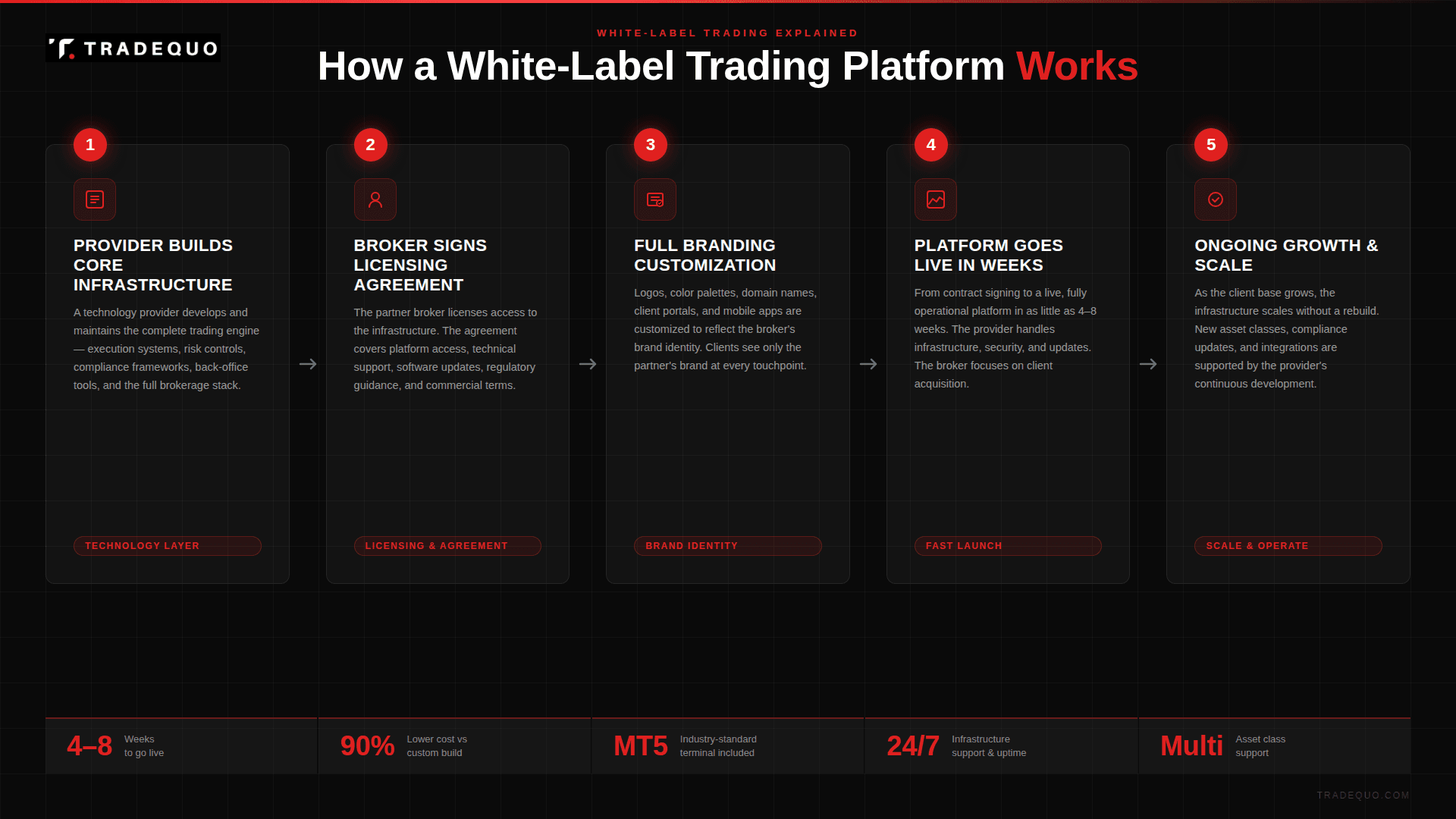
La relazione tra un fornitore di piattaforme di trading white-label e il suo partner si basa su licenze, integrazione e collaborazione continua. Ecco come funziona tipicamente in pratica.
Un fornitore di tecnologia sviluppa e mantiene l'infrastruttura di trading principale. Questa include il motore di trading, i sistemi di esecuzione, i controlli di rischio, i framework di conformità e gli strumenti di back-office. La società partner, sia essa un nuovo broker, una start-up fintech o una società di servizi finanziari consolidata, ottiene in licenza l'accesso a questa infrastruttura. Dal punto di vista del cliente, tutto appare e si percepisce come un prodotto del partner stesso.
L'accordo di licenza copre generalmente l'accesso alla piattaforma, il supporto tecnico, gli aggiornamenti software e, in molti casi, la guida normativa. Il partner paga una tariffa di licenza fissa, un accordo di condivisione dei ricavi, un modello di condivisione degli utili o una combinazione di questi, a seconda della struttura dei prezzi del fornitore. Fornitori diversi strutturano i termini commerciali in modo differente. Ad esempio, alcuni fornitori di infrastrutture moderne, tra cui EnterTrade, operano utilizzando modelli di condivisione degli utili progettati per allineare gli incentivi tra il broker e il partner tecnologico. Questo è ciò che rende il software di trading white-label finanziariamente accessibile rispetto alla costruzione di un sistema proprietario, dove i soli costi di sviluppo possono raggiungere cifre a sette zeri prima ancora che il primo cliente effettui l'accesso.
Il branding è l'aspetto in cui il partner white-label assume la piena proprietà. Dal portale clienti all'interfaccia dell'app mobile, loghi, palette di colori e nomi di dominio sono personalizzati per riflettere l'identità del partner. I clienti interagiscono con il marchio del partner in ogni punto di contatto, senza alcuna visibilità sul livello tecnologico sottostante.
Il supporto continuo è una caratteristica distintiva di questo modello. Il fornitore gestisce la manutenzione dei server, le patch di sicurezza, gli aggiornamenti normativi e i miglioramenti tecnici. Il broker si concentra sull'acquisizione dei clienti, sulla fidelizzazione e sullo sviluppo del business, anziché sulla gestione di un team di sviluppo software. Questa divisione delle responsabilità è proprio il motivo per cui l'adozione delle piattaforme forex white-label è cresciuta così rapidamente sia nei mercati emergenti che in quelli consolidati.
Le soluzioni di brokeraggio chiavi in mano più affidabili offrono anche assistenza per l'implementazione, onboarding di conformità e integrazione con strumenti di terze parti come processori di pagamento, sistemi CRM e fornitori di liquidità. Dalla firma del contratto alla piattaforma attiva, la finestra di implementazione può ridursi a poche settimane, rispetto ai 12-24 mesi solitamente richiesti da uno sviluppo personalizzato.
Componenti chiave di una soluzione di brokeraggio White-Label
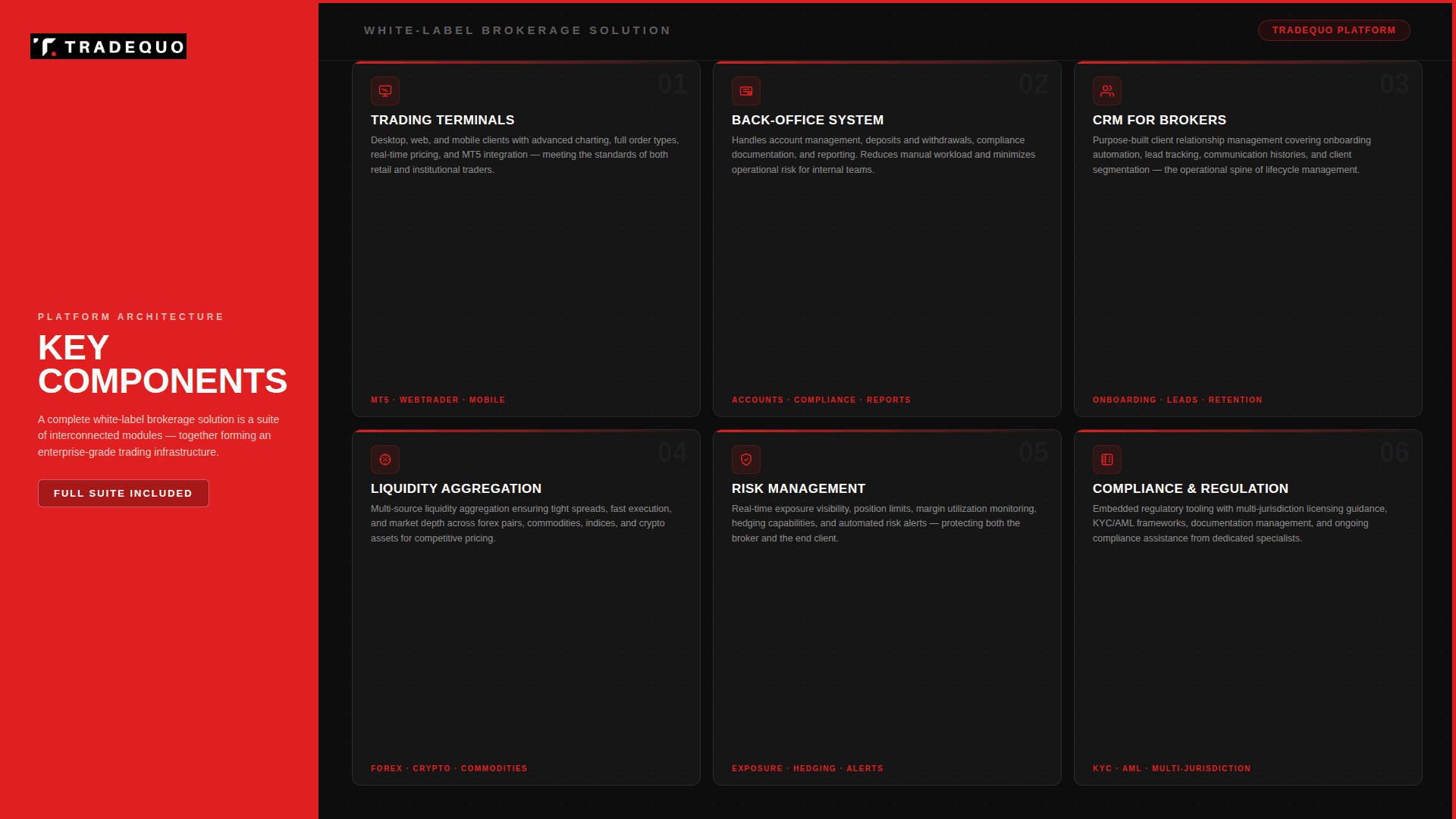
Una piattaforma di trading white-label credibile non è un singolo prodotto. Si tratta di una suite di moduli interconnessi che insieme formano un'infrastruttura di brokeraggio completa.
Terminali di trading
Il front-end include client di trading desktop, web e mobile. I terminali di livello professionale supportano grafici avanzati, tipi di ordine, feed di prezzo in tempo reale e un'interfaccia utente pulita che soddisfa le aspettative sia dei trader al dettaglio che di quelli istituzionali. Molti fornitori offrono l'integrazione white-label di MT5 come offerta principale, data l'ampia adozione di MetaTrader 5 in tutta la comunità di trading globale.
Sistema di gestione del Back-Office
Dietro ogni piattaforma rivolta ai clienti c'è un sistema di back-office che gestisce l'amministrazione dei conti, i depositi e i prelievi, la documentazione di conformità e la reportistica. Un solido sistema di back-office riduce il carico di lavoro manuale e riduce al minimo il rischio operativo per il team interno del broker.
CRM per broker
Un sistema CRM (Customer Relationship Management) appositamente progettato gestisce l'automazione dell'onboarding dei clienti, il tracciamento dei lead, la cronologia delle comunicazioni e la segmentazione. Per un broker, questo non è un optional. È la colonna vertebrale operativa della gestione del ciclo di vita del cliente.
Aggregazione della liquidità
L'accesso a prezzi competitivi dipende dai fornitori di liquidità. Una forte infrastruttura di brokeraggio white-label aggrega la liquidità da più fonti, garantendo spread ridotti, esecuzione rapida e profondità di mercato su coppie forex, materie prime e indici. Questa capacità di piattaforma di trading multi-asset è ciò che separa le soluzioni di livello professionale dalle offerte base.
Strumenti di gestione del rischio
Gli strumenti integrati di gestione del rischio offrono ai broker visibilità in tempo reale sull'esposizione, sui limiti di posizione e sull'utilizzo del margine. Sistemi sofisticati di esecuzione degli ordini, capacità di copertura e avvisi di rischio automatizzati proteggono sia il broker che il cliente finale.
Insieme, questi componenti forniscono una soluzione di infrastruttura di brokeraggio che richiederebbe anni e capitali considerevoli per essere costruita in modo indipendente.
Vantaggi di una piattaforma di trading White-Label per broker e start-up
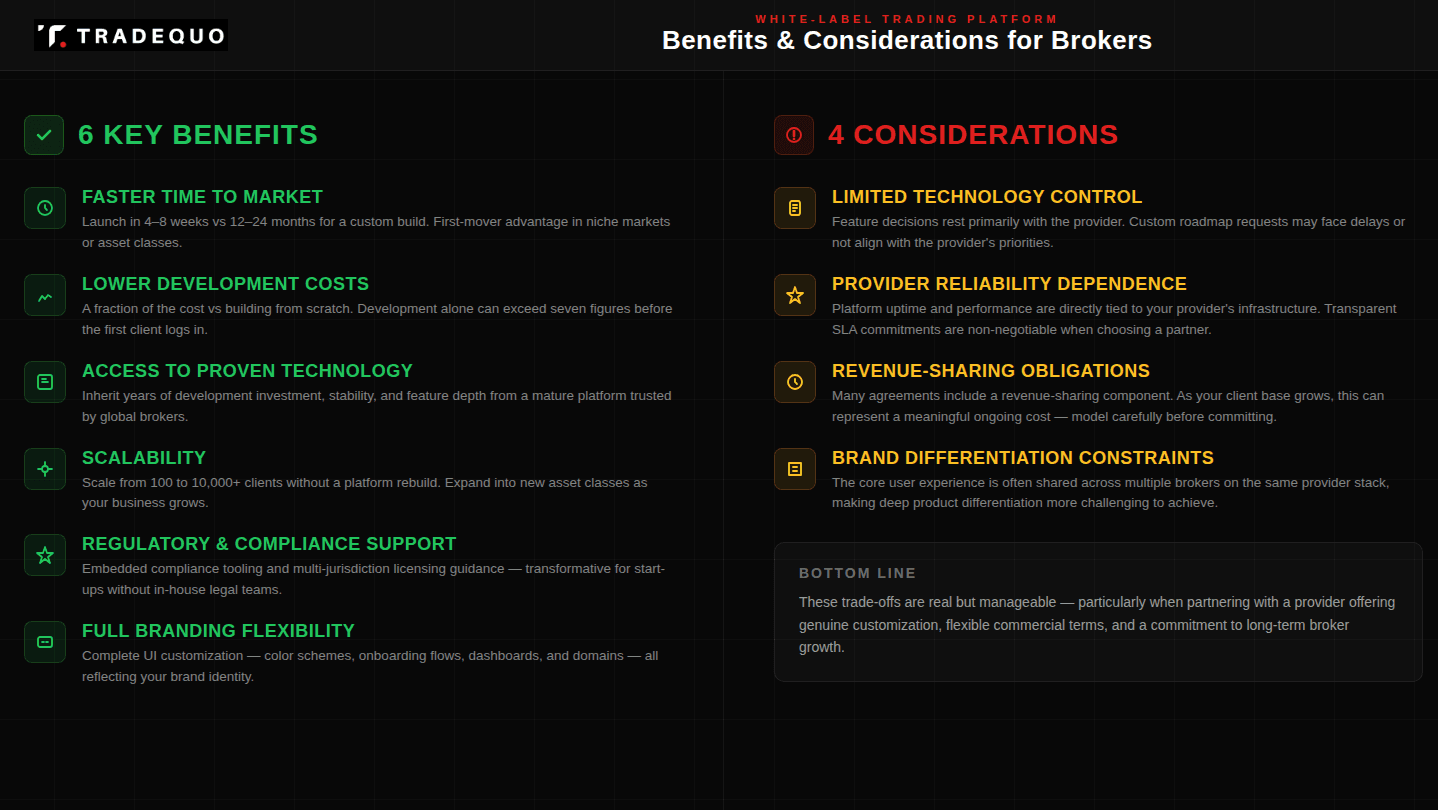
La validità commerciale e operativa del trading white-label è indiscutibile, specialmente per le imprese che devono muoversi rapidamente senza sacrificare la qualità.
Minori costi di sviluppo
I modelli commerciali variano notevolmente tra i fornitori. Sebbene molti applichino costi di attivazione e canoni di licenza ricorrenti, altri offrono strutture alternative. Ad esempio, EnterTrade opera su un modello di profit-share basato sul PNL netto, consentendo ai broker di avviare l'attività senza pagare costi di licenza separati per ciascun componente dell'infrastruttura.
Invece di assumere team di sviluppo, ingegneri del controllo qualità, specialisti di conformità e architetti dell'infrastruttura, un broker paga una tariffa di licenza per accedere a un sistema completamente operativo. Per una start-up che lavora con un capitale limitato, questo singolo fattore può determinare se l'attività sia fattibile o meno.
Time-to-market più rapido
Quando ci si chiede come avviare un broker utilizzando la tecnologia white-label, la risposta di solito inizia con la velocità. Una soluzione di brokeraggio chiavi in mano può ridurre il tempo necessario dal concetto alla piattaforma attiva da oltre un anno a un periodo compreso tra quattro e otto settimane. In un panorama competitivo in cui essere i primi sul mercato in una regione di nicchia o con una specifica classe di asset crea vantaggi duraturi, tale compressione della tempistica di lancio è significativa.
Accesso a tecnologie consolidate
I fornitori che offrono le migliori piattaforme di trading white-label hanno già investito anni di sviluppo nella loro infrastruttura. Quando un broker ottiene la licenza per tale piattaforma, eredita la stabilità, le prestazioni e la ricchezza di funzionalità di un prodotto maturo. Ciò è particolarmente rilevante nel trading, dove l'affidabilità della piattaforma influisce direttamente sulla fiducia e sulla fidelizzazione dei clienti.
Scalabilità
Una soluzione di broker forex white-label ben progettata scala con la tua attività. Sia che tu stia registrando 100 clienti o 10.000, l'infrastruttura può adattarsi alla crescita senza richiedere una ricostruzione della piattaforma. Questa scalabilità si estende anche alle classi di asset. Un broker può iniziare con il forex, per poi aggiungere materie prime o azioni man mano che l'attività cresce.
Supporto normativo e di conformità
Navigare in un quadro normativo di conformità per piattaforme di trading è uno degli aspetti più complessi dell'avvio di un broker. I fornitori white-label consolidati integrano strumenti di conformità direttamente nelle loro piattaforme e spesso offrono orientamento sui requisiti di licenza in molteplici giurisdizioni. Per una start-up senza un team legale interno, questo tipo di supporto normativo integrato può essere determinante.
Flessibilità del branding
Le odierne soluzioni di brokeraggio white-label offrono un elevato livello di personalizzazione dell'interfaccia utente (UI) e del branding. Schemi di colori, flussi di onboarding, dashboard di trading e materiali di marketing possono riflettere l'identità del broker partner. I clienti sperimentano un ambiente personalizzato senza accorgersi della tecnologia sottostante.
L'effetto combinato di questi vantaggi spiega perché i fornitori di piattaforme di trading white-label siano diventati centrali nell'ecosistema globale delle start-up di brokeraggio.
Potenziali svantaggi da considerare
Nessun modello di business è privo di compromessi e il trading white-label comporta una serie di vincoli reali che ogni potenziale broker dovrebbe valutare onestamente.
Controllo limitato sulla tecnologia
Quando costruisci la tua piattaforma, controlli ogni funzionalità, ogni aggiornamento e ogni decisione d'integrazione. Con una soluzione white-label, tale controllo spetta principalmente al fornitore. Se hai bisogno di una funzionalità a cui il fornitore non ha dato priorità, potresti dover attendere a lungo o scoprire che la tua richiesta non si allinea con la roadmap di sviluppo del prodotto del fornitore.
Dipendenza dall'affidabilità del fornitore
Il tempo di attività (uptime), la sicurezza e le prestazioni della tua piattaforma sono direttamente legati all'infrastruttura del tuo fornitore. Un'interruzione del servizio del fornitore è un'interruzione del tuo servizio. Scegliere un fornitore di piattaforme di trading white-label con una comprovata esperienza, impegni trasparenti sui livelli di servizio (SLA) e solidi protocolli di ripristino d'emergenza non è solo opzionale, ma fondamentale per la continuità aziendale.
Obblighi di condivisione dei ricavi
Molti accordi white-label includono una componente di condivisione dei ricavi, il che significa che una percentuale dei ricavi di trading torna al fornitore. Nel tempo, con la crescita della tua clientela, questo può rappresentare un costo significativo. I broker dovrebbero calcolare attentamente questo aspetto prima di impegnarsi in un accordo di licenza a lungo termine.
Limiti alla differenziazione del marchio
Sebbene le moderne piattaforme white-label offrano una notevole flessibilità di branding, l'esperienza utente principale è spesso condivisa tra più broker che utilizzano lo stesso fornitore. Ottenere un'esperienza di prodotto realmente differenziata può essere difficile se si lavora all'interno dello stesso framework di esperienza utente (UX) di base di decine di altri broker sulla stessa tecnologia.
Queste sono considerazioni reali. Sono tuttavia gestibili, in particolare quando si collabora con un fornitore che offre reali opzioni di personalizzazione, termini commerciali flessibili e un autentico impegno per la crescita a lungo termine del broker.
Perché scegliere la soluzione White-Label di EnterTrade
Il programma white-label di EnterTrade è pensato per i broker che desiderano un'infrastruttura seria, scalabile e conforme, senza i costi fissi legati alla sua costruzione. La piattaforma fornisce un'infrastruttura di brokeraggio completamente gestita che consente ai partner di avviare l'attività sotto il proprio marchio senza creare tecnologia da zero. Anziché concentrarsi esclusivamente su un terminale di trading, EnterTrade offre un ecosistema integrato che copre esecuzione, conformità, gestione dei clienti, reportistica e operazioni dei partner.
L'infrastruttura comprende ambienti di trading personalizzati supportati da grafici TradingView ed esecuzione integrata degli ordini, insieme a connettività di liquidità, strumenti di gestione del rischio e un'infrastruttura di finanziamento progettata per supportare operazioni di brokeraggio multi-asset. I broker possono inoltre accedere a funzionalità aggiuntive come il social trading, il copy trading, la gestione degli Introducing Broker (IB), la gestione delle relazioni con i clienti (CRM) e l'infrastruttura di supporto attraverso i pacchetti di servizi ampliati di EnterTrade.
Il supporto alla conformità è integrato direttamente nell'infrastruttura tramite flussi di lavoro di verifica KYC/KYB integrati, aiutando i broker a snellire i processi di onboarding e normativi. Il team di EnterTrade collabora con i partner per navigare tra licenze, documentazione e requisiti normativi pertinenti ai loro mercati di riferimento.
EnterTrade offre inoltre ai broker la possibilità di scegliere tra pacchetti di implementazione Lite e Pro, consentendo alle aziende di iniziare con un'infrastruttura di trading principale e aggiungere funzionalità avanzate di CRM, social trading e supporto man mano che l'attività cresce.
Una delle caratteristiche distintive di EnterTrade è la sua struttura commerciale. Anziché addebitare tariffe separate per ogni componente della piattaforma, l'azienda opera su un modello di profit-share basato sul PNL netto, allineando il proprio successo con la crescita e la redditività dei suoi broker partner. Questo approccio può essere interessante per le aziende che desiderano ridurre i costi infrastrutturali iniziali mantenendo al contempo l'accesso a un ecosistema di brokeraggio completo.
Considerazioni finali
Una piattaforma di trading white-label non è una scorciatoia. Si tratta di una scelta strategica e, per la maggior parte dei broker e delle start-up fintech, è quella giusta. Costi inferiori, implementazione più rapida, accesso a un'infrastruttura collaudata e supporto integrato per la conformità rendono il modello di brokeraggio white-label un percorso pratico e scalabile per costruire un'attività di trading credibile.
La chiave è scegliere il partner giusto. I fornitori di tecnologia variano notevolmente per la qualità delle loro piattaforme, la profondità del loro supporto e la loro capacità di crescere insieme alla tua attività. Per i broker che desiderano questa combinazione di affidabilità, flessibilità ed esperienza, la soluzione white-label di EnterTrade offre un punto di partenza chiaro e convincente. Contatta il team di sviluppo commerciale di EnterTrade per scoprire come potrebbe configurarsi una partnership per la tua azienda.
FAQ
Cos'è una piattaforma di trading white-label?
Un sistema di brokeraggio già pronto, realizzato da un fornitore e personalizzato con il marchio di un'altra società, che include strumenti di trading, CRM, liquidità e gestione del rischio.
Come funzionano i broker white-label?
Ottengono in licenza una tecnologia di trading esistente, la personalizzano con il proprio marchio e si concentrano sui clienti e sulle operazioni, mentre il fornitore gestisce il back-end.
Il trading white-label è legale?
Sì. È un modello standard del settore, ma i broker devono comunque ottenere le licenze richieste nelle regioni in cui operano.
Quanto costa un broker white-label?
I costi variano in modo significativo a seconda del fornitore, delle funzionalità della piattaforma e del modello commerciale. Alcuni fornitori richiedono costi di attivazione e canoni di licenza mensili, mentre altri utilizzano accordi di condivisione dei ricavi o degli utili. Ad esempio, EnterTrade utilizza una struttura di profit-share basata sul PNL netto anziché addebitare tariffe separate per ogni componente dell'infrastruttura.
Le start-up possono utilizzare soluzioni di trading white-label?
Sì. Sono ideali per le start-up, in quanto offrono un lancio rapido e costi inferiori senza dover costruire la tecnologia da zero.
Cosa dovrebbero cercare i broker in un fornitore white-label?
I broker dovrebbero valutare la qualità della tecnologia, l'infrastruttura di esecuzione, le capacità di conformità, la scalabilità, gli strumenti di gestione dei clienti, i servizi di supporto e i termini commerciali. Alcuni fornitori, come EnterTrade, offrono un ecosistema di brokeraggio completo che combina infrastruttura di trading, soluzioni di conformità, funzionalità CRM, gestione dei partner e modelli commerciali basati sulla condivisione degli utili.