Spis treści
Wprowadzenie: Dlaczego złoto jest w centrum uwagi w 2026 roku
Handel złotem a inwestowanie w złoto: Zrozumienie różnicy
Dlaczego warto inwestować w złoto w 2026 roku?
Różne sposoby zakupu złota
Dostęp do złota w różnych regionach
Handel złotem za pomocą kontraktów CFD: Zrozumienie rynku XAUUSD
Jak handlować złotem: Przewodnik krok po kroku
Co wpływa na ceny złota?
Najlepsze strategie handlu złotem na rok 2026
Zarządzanie ryzykiem w handlu złotem
Typowe błędy w handlu złotem, których należy unikać
Czy złoto to dobra inwestycja w 2026 roku?
Najczęściej zadawane pytania
Wprowadzenie: Dlaczego złoto jest w centrum uwagi w 2026 roku
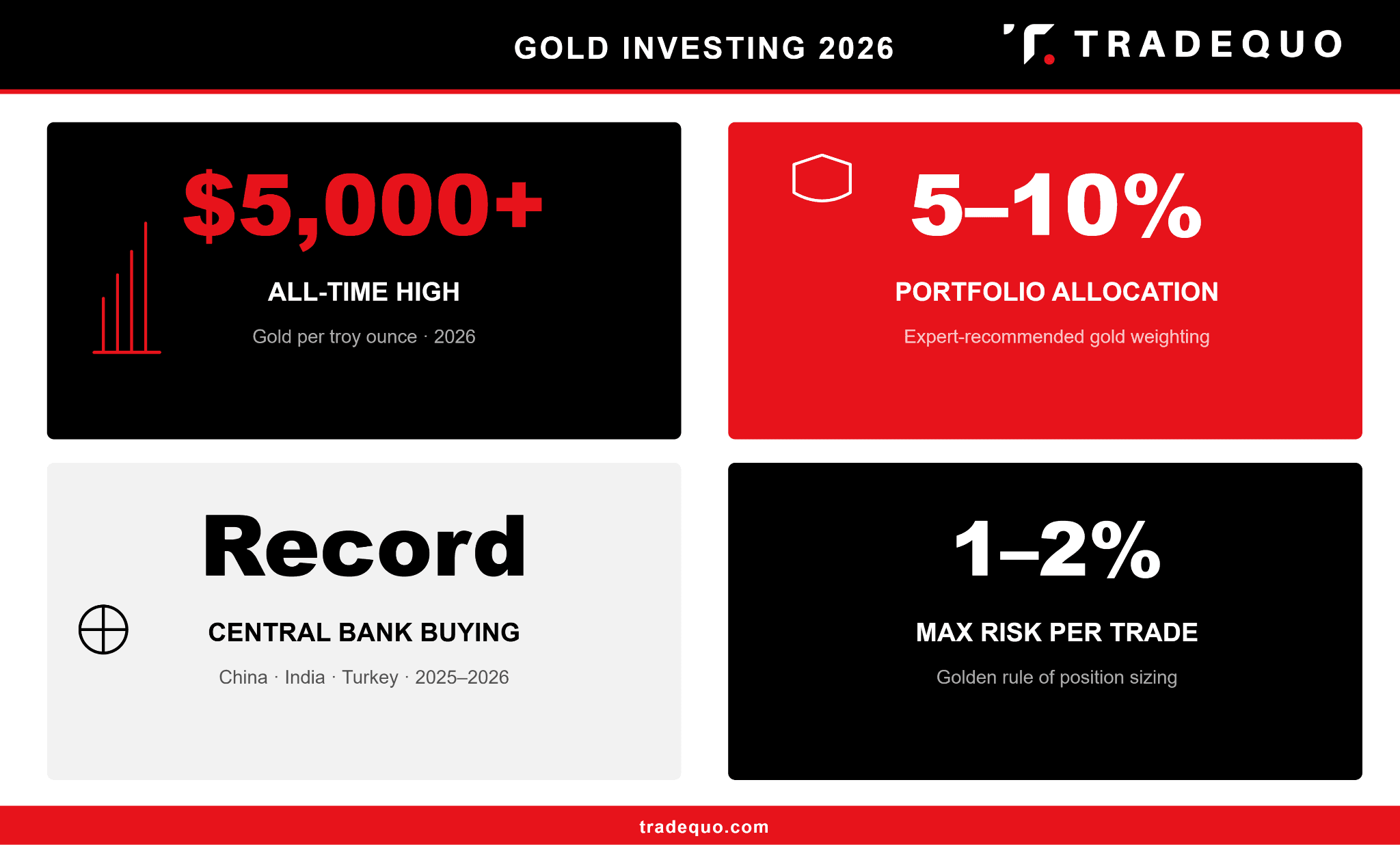
Złoto zawsze kryło w sobie pewną tajemnicę, prawda? Jest coś wyjątkowego w posiadaniu cząstki historii, namacalnego aktywa, które od tysięcy lat reprezentuje bogactwo. W 2026 roku ta historia przybrała nowy obrót. Na początku tego roku cena złota po raz pierwszy w historii przekroczyła granicę 5 000 USD za uncję – to kamień milowy, który trafił na pierwsze strony gazet i przyciągnął na rynek nową falę inwestorów.
Globalna gospodarka przeszła ostatnio spore zmiany. Od wahających się stóp procentowych po napięcia geopolityczne, które trzymają rynki w napięciu – złoto pozostaje aktywem typu „bezpieczna przystań”, do którego lgną inwestorzy.
Przyjrzyjmy się wszystkiemu, co musisz wiedzieć: czym właściwie jest handel złotem, jakie są różne sposoby na uzyskanie ekspozycji, co wpływa na cenę złota, jak zawrzeć pierwszą transakcję oraz jakie strategie i zasady zarządzania ryzykiem odróżniają zdyscyplinowanych traderów od tych impulsywnych.
Handel złotem a inwestowanie w złoto
Kupowanie (posiadanie) złota i handel złotem to nie to samo, nawet jeśli w obu przypadkach chodzi o ekspozycję na jego cenę.
Kupowanie złota w tradycyjnym sensie oznacza jego nabywanie i posiadanie, często poprzez bezpośredni zakup fizycznego złota, takiego jak sztabki lub monety, bądź też za pośrednictwem instrumentów finansowych, takich jak fundusze ETF. Zakup fizycznego złota zapewnia bezpośrednią ekspozycję na ruchy cen złota, dając inwestorom natychmiastowy i namacalny kontakt z rynkiem. Celem jest zazwyczaj długoterminowe zabezpieczenie kapitału. Nie próbujesz wstrzelić się w każdy ruch na rynku złota. Po prostu posiadasz aktywo, które z czasem ma tendencję do utrzymywania swojej wartości.
Z kolei handel złotem oznacza aktywne spekulowanie na krótkoterminowych ruchach cenowych. Traderzy używają instrumentów takich jak kontrakty CFD lub kontrakty terminowe na złoto, aby czerpać zyski zarówno ze wzrostów, jak i spadków cen. To podejście wymaga większej wiedzy technicznej, jasnej strategii i dyscypliny w zarządzaniu ryzykiem.
W praktyce wielu inwestorów łączy oba te podejścia. Posiadają złoto jako pozycję długoterminową, a jednocześnie dokonują transakcji krótkoterminowych, gdy warunki rynkowe stwarzają wyraźne ku temu okazje. Zrozumienie, do której kategorii się zaliczasz lub które z tych rozwiązań najbardziej Ci odpowiada, jest punktem wyjścia dla każdej rozsądnej strategii inwestowania w złoto.
Najpopularniejszym instrumentem handlu złotem w świecie forex i CFD jest XAUUSD, który reprezentuje cenę jednej uncji trojańskiej złota wyrażoną w dolarach amerykańskich. Jeśli kiedykolwiek widziałeś ten symbol na platformie handlowej, to jest to właśnie złoto.
Dlaczego warto inwestować w złoto w 2026 roku?
Możesz zadawać sobie pytanie: „Czy złoto to teraz dobra inwestycja?”. Historycznie złoto nie wypłaca dywidend ani odsetek. Dlaczego więc Wall Street tak bardzo je kocha?
Po pierwsze, złoto to ostateczna bezpieczna przystań. Kiedy rynek akcji chwieje się lub rosną napięcia geopolityczne (co obecnie obserwujemy na całym świecie), inwestorzy uciekają w bezpieczne miejsca. Złoto ma tendencję do utrzymywania swojej wartości, a nawet drożeje, gdy inne rynki tracą na wartości. Nie wiąże się z nim ryzyko kredytowe; jest to wartościowe aktywo, które nie zależy od obietnic żadnego rządu ani korporacji.
Po drugie, stanowi ono potężną ochronę przed inflacją. W przeciwieństwie do papierowej waluty, którą banki centralne mogą drukować w nieskończoność (obniżając wartość Twoich oszczędności), złoto jest dobrem rzadkim. Ponieważ globalna podaż złota jest ograniczona i rośnie powoli dzięki wydobyciu, jego wartość ma tendencję do wzrostu, gdy waluty powiernicze słabną. Ta odwrotna zależność sprawia, że złoto jest niezawodnym zabezpieczeniem przed inflacją w długim okresie. Nawet banki centralne na całym świecie są posiadaczami ogromnych ilości sztabek złota, używając ich do zabezpieczania swoich rezerw i ochrony przed wahaniami cen rynkowych.
Po trzecie, zapewnia dywersyfikację portfela. Ponieważ złoto często porusza się w kierunku przeciwnym do dolara amerykańskiego i wykazuje niską korelację z akcjami, dodanie inwestycji w złoto do swojego portfela może uzupełnić inne inwestycje, takie jak akcje i obligacje, zwłaszcza w okresach zmienności na rynkach dłużnych. Inwestycje w złoto mogą pomóc w zarządzaniu ryzykiem i zapewnić stabilność, gdy tradycyjne aktywa doświadczają rynkowego stresu. Eksperci zazwyczaj sugerują przeznaczenie od 5% do 10% całego portfela inwestycyjnego na złoto.
Wreszcie, oferuje ono wiele możliwości wejścia na rynek. W przeciwieństwie do niektórych alternatywnych aktywów, złoto jest dostępne dla praktycznie każdego inwestora, niezależnie od budżetu czy doświadczenia. Możesz kupić ułamkową część funduszu ETF na złoto za kilka dolarów lub otworzyć konto handlowe i zacząć od skromnego depozytu.
Co więcej, złoto służy jako aktywo namacalne. W przeciwieństwie do akcji czy aktywów cyfrowych, fizyczne złoto ma wartość wewnętrzną. Dla wielu inwestorów to psychologiczne bezpieczeństwo ma takie samo znaczenie, jak zwrot finansowy.
Różne sposoby zakupu złota
Nie ma jednego, właściwego sposobu na inwestowanie w złoto. Najlepsza metoda zależy od Twoich celów inwestycyjnych, tolerancji ryzyka oraz tego, jak bezpośrednią ekspozycję na cenę tego kruszcu chcesz uzyskać.
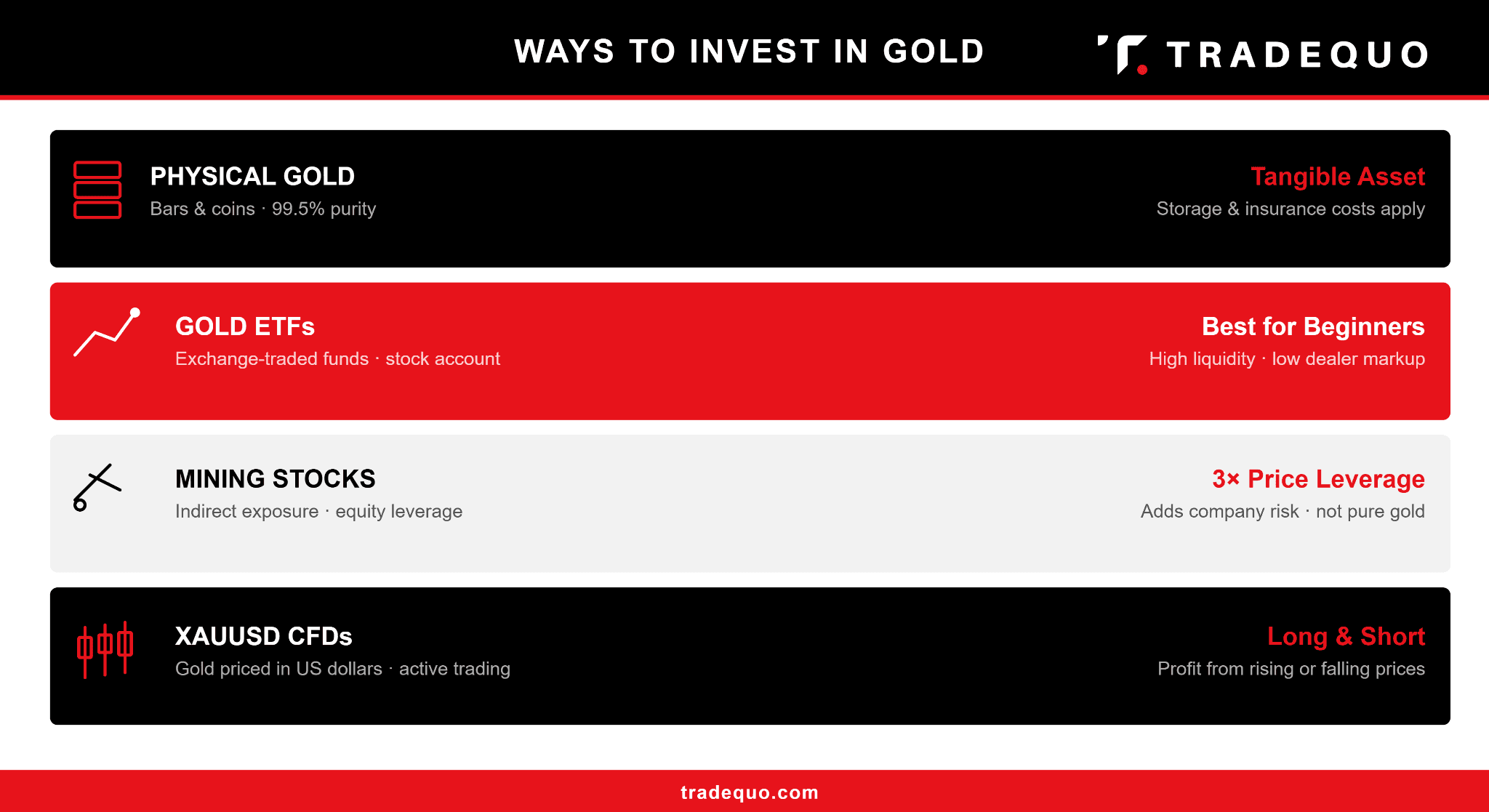
Kupowanie fizycznego złota: Sztabki i monety
Wybierz fizyczne złoto, jeśli zależy Ci na absolutnym spokoju ducha.
Złoto inwestycyjne to złoto o wysokiej czystości (zazwyczaj 99,5% lub wyższej) w postaci sztabek lub monet bulionowych. Sztabki złota występują w różnych rozmiarach – od małych, jedno gramowych sztabek po większe sztabki instytucjonalne o wadze 400 uncji trojańskich. Monety są często emitowane przez rządy państw i zazwyczaj ich cena zawiera premię wynoszącą około 1% do 5% powyżej wartości samego złota, co odzwierciedla koszty bicia i dystrybucji. Monety bulionowe, takie jak Amerykański Orzeł czy Kanadyjski Liść Klonowy, cieszą się popularnością, ponieważ są łatwe w odsprzedaży i mają gwarancję rządową.
Istnieją jednak również minusy. Musisz zapłacić marżę sprzedawcy (narzut na cenę rynkową), koszty przechowywania (sejfy lub skrytki bankowe) oraz koszty ubezpieczenia. Kiedy sprzedajesz złoto, cena odkupu jest często nieco niższa od ceny rynkowej ze względu na marże pośredników.
Fundusze ETF i fundusze inwestycyjne powiązane ze złotem
Jeśli chcesz mieć ekspozycję na cenę bez kłopotów związanych z przechowywaniem ciężkiego metalu, popularną opcją są fundusze giełdowe ETF. Fundusze te przechowują fizyczne złoto w bezpiecznych skarbcach, a Ty po prostu kupujesz ich udziały. Fundusze ETF na złoto są przedmiotem obrotu dokładnie tak samo jak akcje na standardowym koncie maklerskim, oferując wysoką płynność i niskie koszty w porównaniu z marżami dealerów, eliminując przy tym obawy o kradzież.
Dla większości początkujących osób, które chcą po raz pierwszy zainwestować w złoto, fundusze ETF są najrozsądniejszym punktem wejścia.
Akcje spółek wydobywających złoto
Jest to ekspozycja pośrednia. Zamiast posiadać sam kruszec, posiadasz udziały w firmach, które wydobywają go z ziemi. Duże spółki wydobywcze notowane na międzynarodowych giełdach oferują pośrednią ekspozycję na złoto i dźwignię operacyjną. Jeśli cena złota wzrośnie o 10%, zyski firmy wydobywczej mogą wzrosnąć o 30% (lub spaść o 30%, jeśli wzrosną koszty).
Niemniej jednak wiąże się to z „ryzykiem korporacyjnym”. Kopalnia może zostać zalana, pracownicy mogą rozpocząć strajk, a zarząd może podjąć błędne decyzje. To gra giełdowa na cenie złota, a nie czyste posiadanie kruszcu. Dla inwestorów, którzy czują się komfortowo z analizą akcji, takie spółki mogą przynieść dodatkowy potencjał zysku. Dla czystej ekspozycji na cenę złota, fundusze ETF lub kontrakty CFD są zazwyczaj bardziej bezpośrednim instrumentem.
Dostęp do złota w Twoim regionie
Złoto jest aktywem uniwersalnym, ale to, jak ludzie je kupują i jak nim handlują, zależy w dużej mierze od tego, gdzie mieszkają, a na wielu rynkach dostęp cyfrowy sprawił, że cały ten proces jest szybszy i prostszy niż kiedykolwiek wcześniej.
W ZEA rynek złota w Dubaju jest jednym z najbardziej aktywnych na świecie. Chociaż fizyczne złoto nadal ma swoje miejsce, inwestorzy detaliczni coraz chętniej wybierają handel za pośrednictwem brokerów licencjonowanych przez SCA. Bez przechowywania, bez marż dealerów, tylko bezpośrednia ekspozycja na ceny złota na żywo.
W Indonezji zakupy fizycznego emas (złota) są nadal bardzo bliskie lokalnym nabywcom, jednak handel na XAUUSD szybko zyskuje na popularności wśród młodszych inwestorów detalicznych, którzy poszukują niższych kosztów wejścia i większej elastyczności.
W Tajlandii złoto jest dosłownie wpisane w codzienne życie. Jest wręczane jako prezent ślubny, przekazywane z pokolenia na pokolenie jako oszczędności i uważnie śledzone przez zwykłych ludzi, a nie tylko profesjonalistów. TradeQuo obsługuje konta denominowane w bahtach tajskich (THB), dzięki czemu tamtejsi inwestorzy mogą uczestniczyć w rynku bez ponoszenia kosztów przewalutowania.
W Kolumbii i całej Ameryce Łacińskiej złoto jest zaufaną kotwicą na rynkach, gdzie zmienność lokalnej waluty może po cichu uszczuplać oszczędności. Konsekwentnie plasuje się ono wśród najbardziej pożądanych klas aktywów w tym regionie.
Dla traderów na wszystkich tych rynkach najbardziej elastycznym i opłacalnym sposobem dostępu do złota jest handel kontraktami CFD na XAUUSD u regulowanego brokera, co szczegółowo omówimy poniżej.
Handel złotem za pomocą kontraktów CFD: Rynek XAUUSD
Dla aktywnych traderów kontrakty CFD (Contracts for Difference) na XAUUSD (symbol reprezentujący cenę złota wyrażoną w dolarach amerykańskich) stanowią najbardziej bezpośredni i elastyczny sposób na handel ruchami cen złota. Kiedy handlujesz XAUUSD na platformie takiej jak TradeQuo, handlujesz kontraktem CFD.
Nie posiadasz fizycznego metalu. Zamiast tego spekulujesz na temat zmiany jego ceny. Ogromną zaletą w tym przypadku jest dźwignia finansowa. Możesz kontrolować dużą pozycję przy użyciu niewielkiej ilości kapitału, a co kluczowe, możesz sprzedawać złoto (otwierać krótką pozycję), jeśli uważasz, że ceny będą spadać.
To podejście odpowiada traderom, którzy chcą zarabiać na krótkoterminowych wahaniach cen i rozumieją mechanikę handlu z depozytem zabezpieczającym. Jest to jednak instrument o wysokim stopniu ryzyka. Użycie dźwigni finansowej potęguje zarówno potencjalne zyski, jak i potencjalne straty.
Jak handlować złotem: Przewodnik krok po kroku
Przejdźmy teraz do praktyki. Jeśli Twoim celem jest aktywny handel złotem, oto prosty schemat, który możesz zastosować.
Krok 1: Wybierz platformę handlową
Twój broker to fundament Twojego handlu. Potrzebujesz platformy, która oferuje konkurencyjne spready na złocie, niezawodną egzekucję zleceń, dostęp do narzędzi wykresowych oraz jasną strukturę opłat. To właśnie tutaj wyróżnia się TradeQuo.
TradeQuo to prawdziwy broker bez dodatkowych narzutów, oferujący dostęp do ponad 350 rynków z poziomu jednego konta, w tym do złota za pośrednictwem instrumentu XAUUSD. Platforma obsługuje MetaTrader 4 oraz MetaTrader 5 – dwie z najpotężniejszych i najpopularniejszych platform handlowych na świecie.
TradeQuo oferuje również ultra-niskie spready, w tym zerowe spready na złocie, co przekłada się bezpośrednio na niższe koszty transakcyjne dla każdej otwieranej pozycji. Brak wymagań dotyczących minimalnego depozytu sprawia, że jest to niezwykle przystępne miejsce startowe dla inwestorów na każdym poziomie doświadczenia.
Co więcej, TradeQuo obsługuje natychmiastowe wypłaty 24 godziny na dobę, 7 dni w tygodniu, a środki klientów są przechowywane na wydzielonych kontach w globalnych bankach, co zapewnia dodatkowy poziom bezpieczeństwa i pewności.
Krok 2: Otwórz i zasil swoje konto
Po wybraniu brokera proces otwierania konta jest zazwyczaj bardzo prosty. Przesyłasz dokumenty tożsamości w celu spełnienia wymogów regulacyjnych, a następnie wpłacasz środki przy użyciu wybranej metody płatności.
Krok 3: Znajdź instrument XAUUSD na platformie
Na platformie MetaTrader 4 lub 5 złoto jest oznaczone jako XAUUSD. Przejdź do okna obserwacji rynku, wyszukaj XAUUSD i dodaj go do listy obserwowanych. Stamtąd możesz otworzyć wykres, nałożyć wybrane wskaźniki i monitorować ruchy cenowe w czasie rzeczywistym.
Krok 4: Przeanalizuj rynek
Przed zawarciem jakiejkolwiek transakcji musisz mieć ku temu powód rynkowy. Powód ten powinien wynikać z analizy, a nie z przeczucia. Analiza techniczna polega na badaniu wykresów cenowych, poziomów wsparcia i oporu, linii trendu oraz wskaźników takich jak RSI, MACD i średnie kroczące. Analiza fundamentalna z kolei opiera się na śledzeniu czynników ekonomicznych, które poruszają złotem, m.in. danych o inflacji, decyzji w sprawie stóp procentowych, siły dolara amerykańskiego oraz wydarzeń geopolitycznych.
Większość odnoszących sukcesy traderów złota łączy oba te podejścia. Układ techniczny, który współgra z impulsem fundamentalnym, zazwyczaj generuje najsilniejsze okazje inwestycyjne.
Krok 5: Zawrzyj transakcję
Gdy zidentyfikujesz dogodny moment, otwórz okno nowego zlecenia. Określ, czy kupujesz (pozycja długa), czy sprzedajesz (pozycja krótka), wybierz wielkość pozycji i ustaw poziomy stop-loss oraz take-profit przed potwierdzeniem zlecenia. Nigdy nie wchodź na rynek bez uprzednio sprecyzowanego planu wyjścia.
Krok 6: Zarządzaj swoim ryzykiem
Nie pomijaj tego kroku. Przed zatwierdzeniem transakcji ustaw zlecenie Stop Loss. To automatyczna cena wyjścia, która zadziała, jeśli rynek pójdzie w przeciwną stronę niż zakładałeś. Bez tego dźwignia finansowa może błyskawicznie uszczuplić Twoje konto w gorszym dniu.
Chcesz dowiedzieć się więcej o strategiach? Nasz podręcznik handlu złotem na rok 2026 omawia najlepsze z nich, aktualne prognozy cenowe od Goldman Sachs i UBS oraz wyjaśnia, dlaczego tegoroczny rynek złota różni się od innych.
Co wpływa na ceny złota?
Zrozumienie, „dlaczego” ceny się poruszają, jest kluczowe dla każdego, kto uczy się handlu na XAUUSD. Złoto nie funkcjonuje w próżni; jest częścią złożonej, globalnej sieci zależności.
Dolar amerykański: Złoto jest na świecie wyceniane w dolarach. Zazwyczaj, gdy dolar jest silny, złoto staje się droższe dla posiadaczy innych walut, co może spychać jego cenę w dół. I odwrotnie, słaby dolar często napędza wzrosty cen złota.
Rentowności obligacji skorygowane o inflację: Historycznie, gdy realne stopy procentowe (stopy procentowe minus inflacja) są niskie lub ujemne, złoto zyskuje na wartości. Ponieważ złoto nie przynosi dywidend ani odsetek, staje się bardziej atrakcyjne, gdy obligacje nie oferują wysokiego zwrotu. W 2026 roku mamy wyjątkową sytuację: Fed utrzymuje wysokie stopy, ale inflacja pozostaje lepka. To generuje dużą zmienność. Ogólna zasada mówi, że jeśli wierzysz w utrzymanie się wysokiej inflacji, cena złota będzie rosła.
Stabilność geopolityczna: Złoto to ostateczny instrument na czasy niepokoju. W obliczu konfliktów lub niepewności gospodarczej inwestorzy uciekają do stabilnych metali szlachetnych. Obecny krajobraz globalny nadal skłania inwestorów ku metalom szlachetnym jako formie ochrony kapitału.
Popyt ze strony banków centralnych: Zakupy na dużą skalę realizowane przez banki centralne mogą budować poziom wsparcia dla cen, zwłaszcza w okresach dewaluacji walut. W latach 2025 i 2026 banki centralne (szczególnie na rynkach wschodzących) kupowały złoto w rekordowym tempie. Tworzy to silny fundament popytowy, który nie istniał jeszcze dekadę temu.
Dynamika podaży i popytu: Produkcja kopalń, wskaźniki recyklingu oraz popyt na biżuterię, zwłaszcza w kluczowych krajach konsumenckich, również wpływają na ostateczną wycenę złota.
Najlepsze strategie handlu złotem na rok 2026
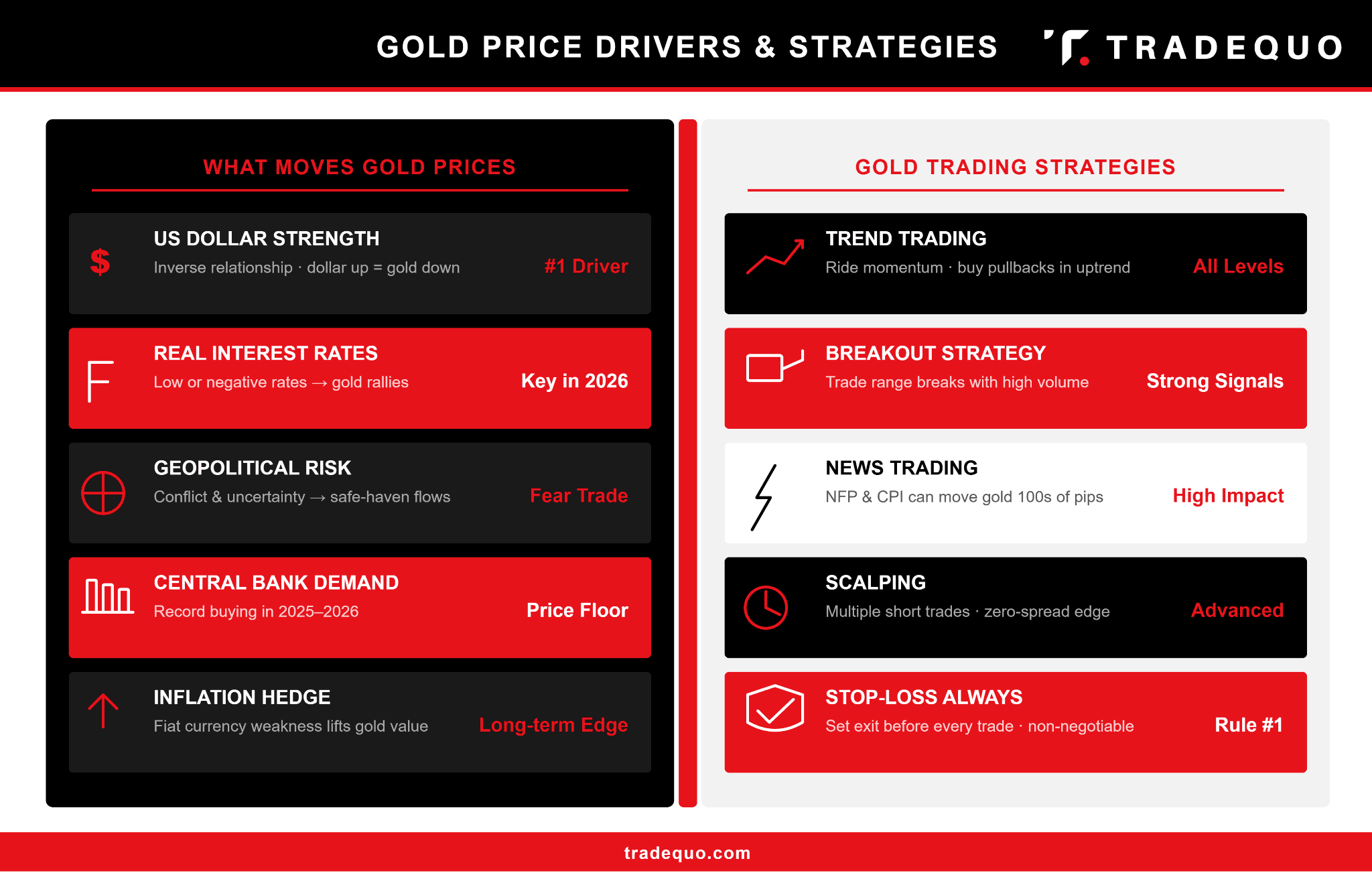
Aby odnieść sukces, potrzebujesz czegoś więcej niż tylko intuicji – potrzebujesz strategii. Oto kilka takich, które przeszły próbę czasu:
Handel z trendem (Trend Trading)
To prawdopodobnie najprostsza strategia handlu złotem. Polega na identyfikacji ogólnego kierunku rynku – wzrostowego lub spadkowego – i otwieraniu pozycji zgodnych z tym pędem. Jeśli ceny złota stale osiągają wyższe szczyty, szukaj okazji do zakupu podczas korekt spadkowych.
Strategia wybicia (Breakout Strategy)
Złoto często spędza długie okresy w konsolidacji, poruszając się w wąskim przedziale cenowym. Strategia wybicia polega na czekaniu, aż cena „wybije się” z tego zakresu przy wysokim wolumenie obrotu. Często sygnalizuje to początek większego ruchu, dając traderom jasny sygnał wejścia.
Handel pod wiadomości (News Trading)
Ze względu na to, że złoto reaguje bardzo dynamicznie na dane makroekonomiczne, wielu traderów koncentruje się na najważniejszych informacjach z rynku. Istotne raporty, takie jak dane o zatrudnieniu w sektorze pozarolniczym (NFP) czy wskaźnik cen konsumpcyjnych (CPI), mogą sprawić, że cena złota przesunie się o setki pipsów w ciągu kilku minut. Wymaga to szybkiego refleksu i dobrego rozumienia zmienności rynkowej.
Scalping
Skalperzy zawierają wiele krótkich transakcji w trakcie jednej sesji, polując na niewielkie ruchy cenowe. Takie podejście wymaga niskich spreadów, natychmiastowej realizacji zleceń oraz pełnej koncentracji. Zazwyczaj nie jest ono zalecane dla początkujących, jednak na platformie takiej jak TradeQuo, gdzie spready na złocie potrafią spaść do zera, efektywność kosztowa czyni ten styl znacznie bardziej opłacalnym.
Zarządzanie ryzykiem w handlu złotem
Rynek złota potrafi przynieść wysokie stopy zwrotu, ale bywa również niezwykle zmienny. Ruchy cen rzędu 1% do 2% podczas jednej sesji nie są rzadkością, a w czasie publikacji ważnych danych wahania mogą być znacznie większe. Bez właściwego zarządzania ryzykiem, nawet dobrze przemyślana transakcja może przynieść dotkliwe straty.
Zasada 1-2%: Ogranicz ryzyko na pojedynczej transakcji do maksymalnie 1% lub 2% swojego całkowitego kapitału handlowego. Dzięki temu nawet seria strat nie wyczyści Twojego konta i pozwoli Ci pozostać na rynku na tyle długo, by Twoja przewaga statystyczna mogła zadziałać.
Zlecenia Stop-Loss są bezdyskusyjne: Każda otwierana pozycja powinna mieć ustawiony Stop Loss jeszcze przed jej realizacją. Stop Loss automatycznie zamyka pozycję, jeśli rynek pójdzie przeciwko Tobie o określoną wartość. To Twoja siatka bezpieczeństwa. Traderzy rezygnujący ze zleceń zabezpieczających często przetrzymują stratne pozycje znacznie dłużej niż powinni, licząc na odwrócenie rynku, które może nigdy nie nastąpić.
Ostrożnie z dźwignią finansową: Dźwignia potęguje zarówno zyski, jak i straty. Chociaż pozwala ona na kontrolowanie większych pozycji na mniejszym kapitale, drastycznie podnosi również ryzyko dotkliwej straty. Początkujący powinni podchodzić do dźwigni bardzo konserwatywnie, dopóki dobrze nie zrozumieją, jak wpływa ona na ich ekspozycję na ryzyko.
Świadomość godzin handlu: Godziny handlu złotem mają ogromne znaczenie. Najbardziej płynne i zmienne okresy dla instrumentu XAUUSD zbiegają się z nakładaniem się sesji londyńskiej i nowojorskiej. W czasie ważnych wydarzeń informacyjnych spready mogą się rozszerzać i może dochodzić do poślizgów cenowych – są to czynniki kluczowe zwłaszcza dla traderów stosujących ciasne zlecenia stop-loss.
Konto ZERO w TradeQuo zostało zaprojektowane z myślą o redukcji kosztów handlu na złocie, co ma kluczowe znaczenie głównie dla traderów korzystających z ciasnych poziomów zabezpieczeń.
Typowe błędy, których należy unikać
Nawet doświadczeni traderzy popełniają błędy. Wczesne rozpoznanie tych schematów zachowań może zaoszczędzić Ci mnóstwo frustracji i kapitału.
Przelewarygowanie (Overleveraging)
Korzystanie z maksymalnej dźwigni finansowej na samym początku to najkrótsza droga do wyczyszczenia rachunku. Wysoka dźwignia daje mnóstwo emocji, gdy rynek idzie po Twojej myśli, ale jest bezlitosna, gdy tak się nie dzieje. Zacznij od małych kroków i zwiększaj kapitał w miarę budowania pewności i powtarzalności wyników.
Inwestowanie bez planu
Wchodzenie na rynek bez zdefiniowanych kryteriów wejścia, poziomu stop-loss oraz docelowego zysku (take-profit) nie jest tradingiem. Każda pozycja powinna opierać się na logicznych przesłankach – technicznych, fundamentalnych lub obu z nich – zanim zaryzykujesz kapitał.
Ignorowanie zmienności
Złoto potrafi poruszać się gwałtownie i nagle. Jeśli nie bierzesz pod uwagę jego standardowej dziennej zmienności podczas ustawiania zleceń stop-loss i wielkości transakcji, narażasz się na przedwczesne zamknięcia pozycji i irytujące wyniki. Dobrze poznaj instrument, zanim zaczniesz nim handlować.
Inwestowanie pod wpływem emocji
Odgrywanie się po stracie, impulsywne zwiększanie pozycji po udanej serii lub odchodzenie od strategii pod wpływem przeczuć zamiast sygnałów – oto nawyki, które różnią regularnie tracących inwestorów od tych, którzy systematycznie zarabiają. W tradingu dyscyplina znaczy znacznie więcej niż sam intelekt.
Czy złoto to dobra inwestycja w 2026 roku?
Krótka odpowiedź brzmi: tak, choć z pewnymi zastrzeżeniami. Jeśli szukasz szybkiego zysku, handel wymaga sporych umiejętności. Jeśli natomiast zależy Ci na ochronie kapitału, zakup złota w tym momencie ma głęboki sens.
Argumenty strukturalne przemawiające za złotem pozostają aktualne: popyt ze strony banków centralnych utrzymuje się na stałym poziomie, inflacja nie została w pełni opanowana, a niepewność geopolityczna wciąż stymuluje napływ kapitału do bezpiecznych przystani.
Zacznij od mniejszych pozycji, poznaj zachowanie rynku i skup się na ograniczaniu ryzyka. Platformy takie jak TradeQuo upraszczają dostęp do handlu złotem poprzez instrument XAUUSD, nawet przy mniejszym kapitale początkowym.
Pamiętaj, kluczem jest konsekwencja. Złoto nagradza cierpliwość, dyscyplinę i precyzyjną strategię.
FAQ
Co powoduje wahania cen złota?
Ceny złota zależą głównie od kursu dolara amerykańskiego (zależność odwrotna), realnych stóp procentowych (niższe stopy wspierają wzrosty złota), zakupów dokonywanych przez banki centralne, oczekiwań inflacyjnych oraz ryzyka geopolitycznego. W 2026 roku popyt ze strony banków centralnych takich państw jak Chiny, Indie czy Turcja stworzył strukturalny poziom wsparcia rynkowego, który nie istniał dziesięć lat temu.
Czy handel złotem jest ryzykowny dla początkujących?
Tak, cena złota może przesunąć się o 100 USD lub więcej podczas jednej sesji, szczególnie w trakcie komunikatów Fed, publikacji CPI czy wydarzeń geopolitycznych. Ryzyko jest realne, ale można nim zarządzać. Rozpoczęcie od konta demo, korzystanie z mikrolotów (0,01) oraz każdorazowe ustawianie poziomu stop-loss przed zawarciem transakcji pozwala znacznie ograniczyć ryzyko.
Jaka jest najlepsza pora dnia na handel złotem?
Nakładanie się sesji w Londynie i Nowym Jorku (13:00 - 16:00 GMT) to najbardziej aktywny i płynny czas dla instrumentu XAUUSD. Spready są wtedy najwęższe, wolumeny najwyższe, a w tym przedziale publikowana jest większość istotnych danych makroekonomicznych z USA, które kształtują ceny złota. Sesja azjatycka jest spokojniejsza i lepiej nadaje się do strategii opartych na konsolidacji.
Jaką wielkość pozycji powinien wybrać początkujący na XAUUSD?
Zacznij od pozycji o wielkości 0,01 lota (mikrolot). Przy pozycji 0,01 na XAUUSD każdy pips ma wartość około 0,10 USD, co pozwala utrzymać straty na minimalnym poziomie podczas nauki specyfiki rynku. Zwiększaj wielkość transakcji dopiero po wypracowaniu stabilnej strategii i zamknięciu przynajmniej 20 pozycji na koncie demo lub realnym.
Jakiego spreadu należy się spodziewać przy handlu CFD na złoto?
Na koncie ZERO w TradeQuo spready na złocie mogą spadać do 0 pipsów w godzinach największej aktywności rynkowej. Konta typu Standard posiadają niewielki spread wliczony bezpośrednio w koszt transakcji. Zawsze monitoruj spready na żywo przed otwarciem pozycji – koszty te mogą rosnąć poza głównymi godzinami handlu oraz przy ważnych publikacjach, takich jak dane NFP czy decyzje FOMC.