Altın hiçbir zaman modasını gerçekten kaybetmedi. Piyasalar sakin de olsa, dünya adeta dikiş yerlerinden sökülüyormuş gibi de hissettirse, yatırımcılar istikrarlı bir şekilde altına yöneliyor ve sığınacak bir liman arıyor. Ancak bugün birçok bireysel yatırımcının kafasını karıştıran soru şu: Altından yararlanmak için gerçekten fiziki altına sahip olmanız gerekiyor mu?
Kısa cevap hayır. Altın CFD'leri gibi enstrümanlar sayesinde, tek bir külçe veya madeni para tutmak zorunda kalmadan altın fiyat hareketlerinde işlem yapabilirsiniz. Yine de fiziki altın, gerçekten dokunup güvenceye alabildikleri şeylere değer veren uzun vadeli yatırımcılar arasında derin bir sadakat görmeye devam ediyor. Dolayısıyla, konu altın CFD'sine karşı fiziki altın olduğunda, seçim hangisinin evrensel olarak daha iyi olduğu ile ilgili değildir. Seçim; hedeflerinize, risk iştahınıza ve zaman tünelinize hangisinin uygun olduğu ile ilgilidir.
Gelin, her ikisini de dürüstçe analiz edelim.
Altın CFD'si Nedir ve Nasıl Çalışır?
Bir altın CFD'si veya Fark Sözleşmesi, dayanak varlığın mülkiyetini almadan altın fiyatı üzerinde spekülasyon yapmanıza olanak tanıyan bir finansal türevdir. Bir altın CFD pozisyonu açtığınızda, işlemi başlattığınız nokta ile işlemden çıktığınız nokta arasındaki altın fiyatı farkını takas etmek için bir aracı kurumla anlaşma yapmış olursunuz.
Uygulamada bu, genellikle XAU/USD olarak kote edilen spot altın fiyatını gerçek zamanlı olarak takip ettiğiniz anlamına gelir. Altının yükseleceğine inanıyorsanız uzun (long) pozisyon alırsınız. Fiyatın düşeceğini düşünüyorsanız kısa (short) pozisyon alırsınız. Kârınız veya zararınız, bu fiyat hareketinin büyüklüğü ile pozisyonunuzun çarpılmasına göre hesaplanır.
Altın CFD'leri genellikle kaldıraçlı olarak işlem görür; bu da bir pozisyon açmak için toplam sözleşme değerinin yalnızca küçük bir kısmını teminat olarak yatırmanız gerektiği anlamına gelir. Bir aracı kurum %5 veya %10 marj talep edebilir ve bu da size başlangıç sermayenizin normalde izin vereceğinden çok daha büyük bir pozisyona erişim sağlar.
Bu, altın külçesi veya madeni para satın almaktan temelde farklıdır. Fiziki teslimat, kasa ve emanetçi yoktur. Aracı kurumunuzun platformu aracılığıyla, işlemlerinizi yönetmek için zarar durdur emirleri, kâr al seviyeleri ve gerçek zamanlı altın piyasası analizi gibi araçları kullanarak tamamen piyasa ile etkileşime girersiniz.
Kısa vadeli fiyat spekülasyonu ile ilgilenen bireysel yatırımcılar veya portföylerindeki diğer pozisyonları hedge etmek (riskten korunmak) isteyenler için altın CFD'leri, fiziki mülkiyetin kesinlikle eşleşemeyeceği bir esneklik düzeyi sunar.
Altın CFD İşlemlerinin Avantajları
Kaldıraç Piyasa Etkinizi Artırır
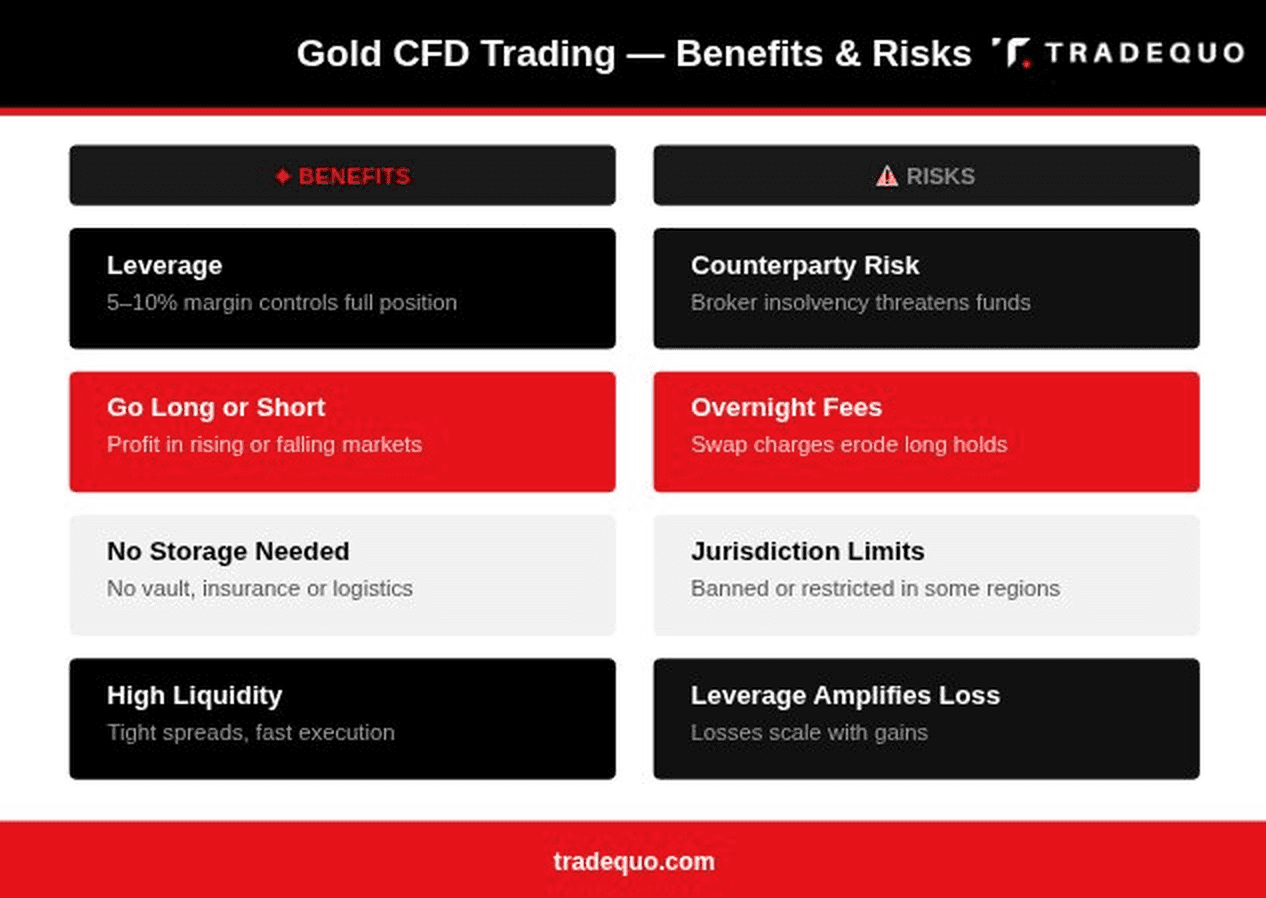
Yatırımcıların altın CFD işlemlerine yönelmesinin en cazip nedenlerinden biri kaldıraçtır. Bir altın pozisyonunun tam piyasa değerini taahhüt etmek yerine, daha küçük bir marj yatırımı ile daha büyük bir sözleşme boyutunu kontrol edersiniz. Bu, XAU/USD'deki mütevazı fiyat hareketlerinin bile yatırdığınız sermayede anlamlı getirilere dönüşebileceği anlamına gelir.
Aktif yatırımcılar için bu verimlilik önemlidir. Tam değerli altın mülkiyetine bağlanmayan sermaye, başka bir yerde değerlendirilebilir veya sadece düşüşe karşı bir tampon olarak tutulabilir.
Her İki Yönde de Kâr Edebilirsiniz
Fiziki altın size yalnızca fiyatı yükseldiğinde para kazandırır. Altın CFD'leri size uzun veya kısa pozisyon alma olanağı tanır; bu da altın yükselirken de düşerken de potansiyel olarak kâr edebileceğiniz anlamına gelir. Oynak bir altın piyasasında bu iki yönlü özgürlük gerçek bir stratejik avantajdır.
Jeopolitik gelişmeler, Federal Rezerv politika değişiklikleri veya güvenli liman talebinin değişmesiyle tetiklenen altın oynaklığı dönemlerinde, kısa bir pozisyon en az uzun bir pozisyon kadar kârlı olabilir.
Depolama Yok, Sigorta Yok, Lojistik Yok
Altın CFD'leri ile işlem yaptığınızda, tüm fiziki lojistik zincirini devre dışı bırakmış olursunuz. Güvenli depolama ayarlamanıza, sigorta primleri ödemenize veya satın aldığınız şeyin orijinalliği konusunda endişelenmenize gerek yoktur. Pozisyonunuz tamamen işlem platformunda mevcuttur ve piyasa saatleri içinde saniyeler içinde açabilir veya kapatabilirsiniz.
Dar Makas Aralıkları ve Yüksek Likidite
Altın CFD'leri, küresel altın piyasasının derin likiditesinden yararlanır. Büyük platformlardaki makas aralıkları (spreadler) genellikle dardır ve işlem gerçekleştirme hızı yüksektir. İster bir pozisyona kademeli olarak girip çıkıyor olun, ister son dakika haberlerine tepki veriyor olun, altın CFD piyasalarındaki likidite bireysel yatırımcılar için nadiren bir sorun teşkil eder.
Altın CFD İşlemlerinin Dezavantajları
Karşı Taraf Riski Gerçektir
Altın CFD işlemi yaptığınızda altın tutmuş olmazsınız. Aracı kurumunuzla bir sözleşme tutmuş olursunuz. Bu aracı kurum iflas ederse veya operasyonel sorunlarla karşılaşırsa, fonlarınız ve açık pozisyonlarınız risk altına girer. Bu karşı taraf riski, altın CFD'si ile altın külçesi arasındaki en önemli farklardan biridir.
Denetlenen ve sermayesi güçlü bir aracı kurum seçmek bu riski önemli ölçüde azaltır ancak hiçbir zaman tamamen ortadan kaldırmaz. Hesap açmadan önce her zaman regülasyon durumunu doğrulayın.
Gecelik Finansman Ücretleri Birikir
Kaldıracın bir bedeli vardır. Gece boyunca açık tutulan altın CFD pozisyonları genellikle swap ücretlerine, diğer adıyla gecelik finansman ücretlerine tabidir. Bu ücretler günlük olarak birikir ve uzun süreler boyunca tutulan pozisyonlardaki kârları anlamlı ölçüde aşındırabilir. Kısa vadeli yatırımcılar için bu etki minimum düzeydedir. Altın CFD pozisyonunu haftalarca veya aylarca tutmayı düşünen herkes için bu ücretler, maliyet hesaplamalarında ciddi bir ilgiyi hak etmektedir.
Bazı Yargı Alanlarında Yasaklanmış veya Sınırlandırılmıştır
Her yatırımcının altın CFD'lerine erişimi yoktur. Belirli ülkelerde, bireysel CFD işlemleri, bireysel yatırımcıları kaldıraç riskinden korumak isteyen finansal düzenleyiciler tarafından büyük ölçüde kısıtlanmıştır veya tamamen yasaklanmıştır. Altın CFD işlemlerini keşfetmeye başlamadan önce, bu enstrümanın bölgenizde yasal olarak mevcut olup olmadığını teyit edin.
Kaldıracın Psikolojik Baskısı
Kaldıraç kazançları artırır ancak kayıpları da aynı şekilde artırır. Altın oynaklığını hafife alan deneyimsiz yatırımcılar, kendilerini çok hızlı bir şekilde beklediklerinden daha fazlasını kaybederken bulabilirler. Zarar durdur emirlerinin kullanılması ve pozisyon büyüklüklerinin uygun şekilde ayarlanması da dahil olmak üzere doğru risk yönetimi, kaldıraç söz konusu olduğunda isteğe bağlı bir seçenek değildir.
Fiziki Altın Yatırımının Avantajları
Gerçekten Somut Bir Şeye Sahip Olursunuz
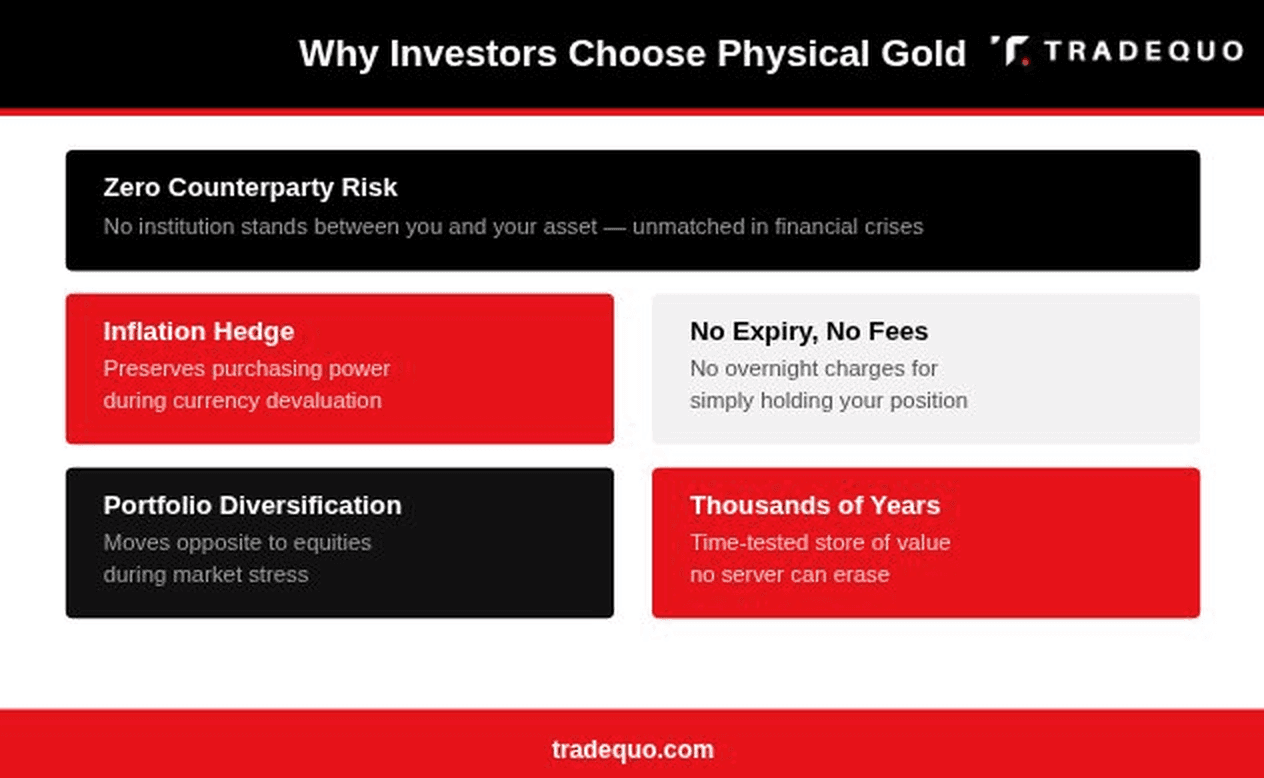
Fiziki altın tutmanın temel bir psikolojik ve finansal rahatlığı vardır. İster külçe altın ister madeni para olsun, insan uygarlığının binlerce yılı boyunca değerini korumuş bir varlığa sahip olursunuz. Hiçbir şifre, sunucu kesintisi veya aracı kurum iflası bunu elinizden alamaz.
Karşı Taraf Riski Yoktur
Fiziki altın, tanımı gereği sıfır karşı taraf riski taşır. Bir CFD, banka mevduatı veya hisse senedi sertifikasının aksine, güvenli bir kasadaki altın külçesi değerini hiçbir kuruma borçlu değildir. Bu durum, bankalara ve finansal aracılara olan güvenin sarsılma eğiliminde olduğu finansal kriz dönemlerinde özellikle anlamlıdır.
Kanıtlanmış Bir Enflasyon Koruması
Altın, fiat (itibari) para birimleri değer kaybettiğinde satın alma gücünü korumanın bir yolu, yani bir enflasyon koruması olarak uzun süredir kabul edilmektedir. Tarihsel olarak, altın fiyatları yüksek enflasyon veya para biriminin değer kaybettiği dönemlerde yükselme eğiliminde olmuştur. On yıllar boyunca servetlerinin gerçek değeri konusunda endişelenen uzun vadeli yatırımcılar için fiziki altın yatırımı, zaman içinde test edilmiş bir koruma katmanı sunar.
Portföy Çeşitlendirmesi
Fiziki altın, hisse senetleri ve tahvillerden farklı davranır. Altın, piyasa stresinin yaşandığı dönemlerde genellikle hisse senetlerinin tersi yönünde hareket ettiğinden, bunu çeşitlendirilmiş bir portföye eklemek genel oynaklığı azaltabilir. Bu durum, saf bir varlık tahsisi perspektifinden bakıldığında, altın işlemleri ile altın yatırımı karşılaştırmasında altını anlamlı bir araç haline getirir.
Vade Sonu Yok, Sadece Elde Tutmak İçin Ücret Yok
CFD'lerin aksine, fiziki altının vadesi dolmaz ve gecelik finansman ücreti biriktirmez. Satın alındıktan sonra maliyet tabanınız sabittir. Yapacağınız herhangi bir depolama veya sigorta düzenlemesi dışında, sadece onu elinizde tuttuğunuz için devam eden hiçbir ücret ödemezsiniz.
Fiziki Altın Yatırımının Dezavantajları
Depolama ve Sigorta Gerçek Maliyetlerdir
Altın kendi kendine bakamaz. Evde, bir bankanın kiralık kasasında veya uzman bir kasa servisinde saklasanız da, bununla ilgili maliyetler vardır. Sigorta da başka bir masraf katmanı ekler. Zamanla bu maliyetler, özellikle altın fiyatlarının uzun süre sabit kalması durumunda net getirinizi aşındırır.
Kaldıraç Olmaması Daha Yavaş Sermaye Büyümesi Demektir
Fiziki altın size altının sunduğu getirinin tam olarak aynısını verir, ne fazlasını ne de eksiğini. Kazançları artırmak veya daha büyük bir risk için daha küçük miktarda sermaye kullanmak isteyen yatırımcılar için bu durum, altın CFD'lerindeki marjlı işlemlere kıyasla gerçek bir sınırlamadır.
Likidite Daha Yavaş Olabilir
Fiziki altın satmak, bir CFD pozisyonunu kapatmak kadar anlık değildir. Altını nerede ve nasıl sakladığınıza bağlı olarak, altını nakde çevirmek zaman alabilir. Satıcılar spot fiyatın altında fiyatlar sunabilir ve teslimat veya teslim alma ile ilgili lojistik düzenlemeler, dijital işlemlerde kesinlikle var olmayan bir pürüz yaratır.
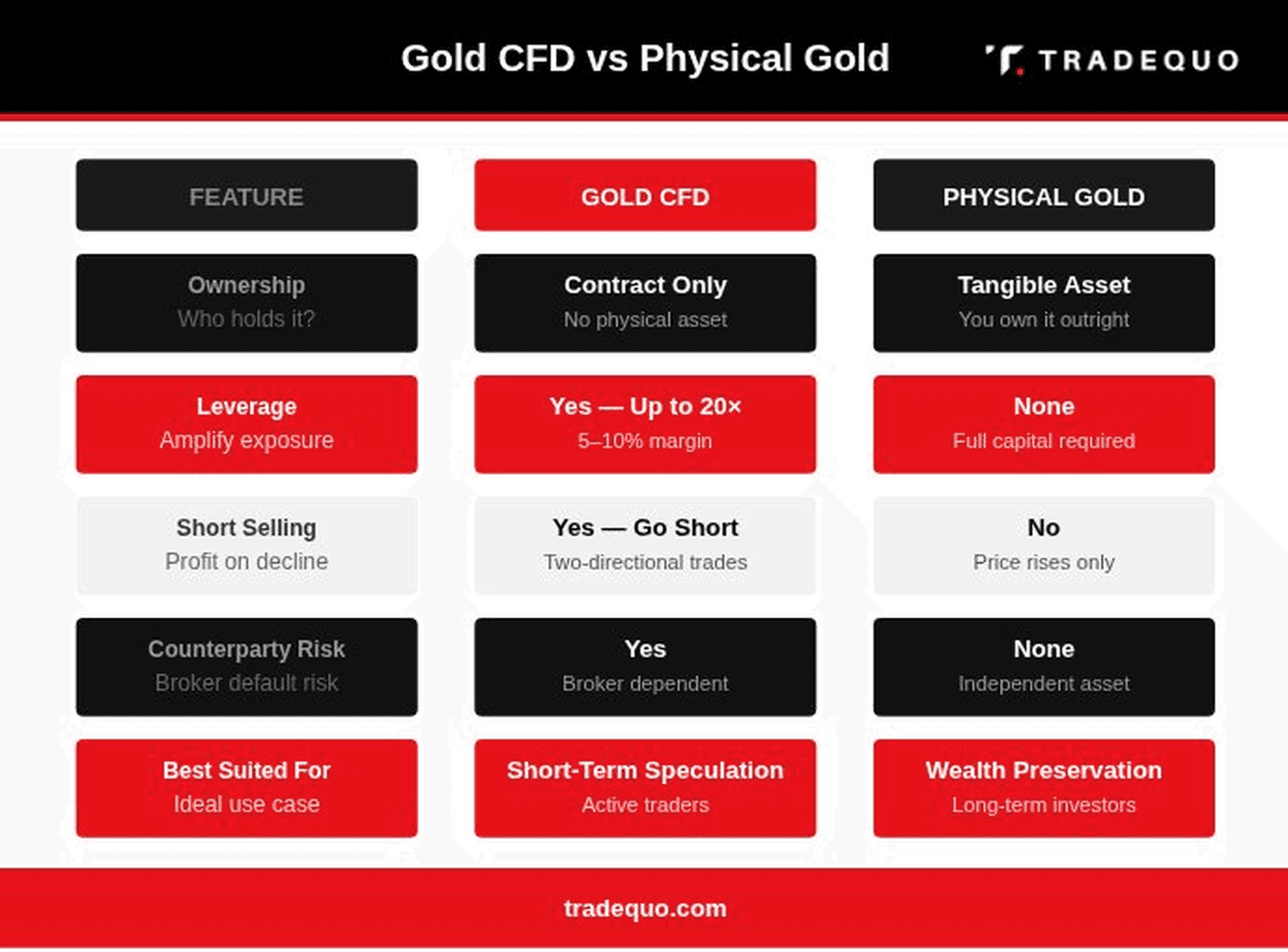
Karşılaştırma Tablosu: Altın CFD'si vs Fiziki Altın
Hangisini Seçmelisiniz?
Dürüst cevap, ne altın CFD'lerinin ne de fiziki altının evrensel olarak üstün olmadığıdır. Gerçekten farklı amaçlara hizmet ederler ve bu farkı anlamak, durumunuz için doğru kararı vermenin anahtarıdır.
Kısa vadeli altın fiyat hareketlerinden yararlanmak, Fed'in faiz indirimi döngüsünde uzun pozisyon almak veya riskten kaçınma döneminde bir hisse senedi pozisyonunu hedge etmek isteyen aktif bir bireysel yatırımcıysanız, altın CFD işlemleri ihtiyacınız olan araçları sunar: kaldıraç, iki yönlü işlem ve depolama karmaşıklığı olmadan hızlı yürütme.
Serveti korumaya, enflasyona karşı korunmaya odaklanmış veya sadece herhangi bir finansal kurumdan bağımsız olarak var olan bir varlık isteyen uzun vadeli bir yatırımcıysanız, fiziki altın yatırımı daha uygun bir seçenektir. Spekülasyon için tasarlanmamıştır. İstikrar için tasarlanmıştır.
Pek çok deneyimli yatırımcı, fiziki altını temel bir uzun vadeli hedge olarak kullanırken, altın CFD'lerini daha kısa vadeli taktiksel riskler için kullanarak her ikisini birden elinde tutar. Kendi risk profilinize göre ayarlanan bu kombinasyon genellikle en dengeli yaklaşımı temsil eder.
Seçeneklerinizi keşfedin, hedeflerinizi anlayın ve her pozisyonun arkasında net bir stratejiyle işlem yapın.
FAQs
Altın satın almak mı yoksa CFD işlemi yapmak mı daha iyidir?
Bu sizin hedefinize bağlıdır. Fiziki altın uzun vadeli servet koruması için uygunken, CFD'ler kaldıraçla kısa vadeli işlemler için daha iyidir. Birçok yatırımcı her ikisini birden kullanır.
Altın CFD işlemlerinin temel riskleri nelerdir?
Temel riskler arasında aracı kurum (karşı taraf) riski, gecelik ücretler ve kaldıraç kaynaklı artan kayıplar yer alır. Düzenlemeler de erişimi kısıtlayabilir.
CFD işlemi yaparken gerçekten altına sahip oluyor musunuz?
Hayır. Fiziki altına sahip olmak yerine fiyat hareketleri üzerinde spekülasyon yapıyorsunuz.
Yeni başlayanlar güvenli bir şekilde altın CFD işlemi yapabilir mi?
Evet, ancak dikkatli bir şekilde. Bir demo hesabı ile başlayın, zarar durdur seviyelerini kullanın ve öğrenirken küçük miktarlarla işlem yapın.
Fiziki altın uzun vadeli iyi bir yatırım mıdır?
Evet. Gelir getirmese de geleneksel bir değer koruma aracı ve enflasyon korumasıdır.