Рекордне ралі золота у 2026 році
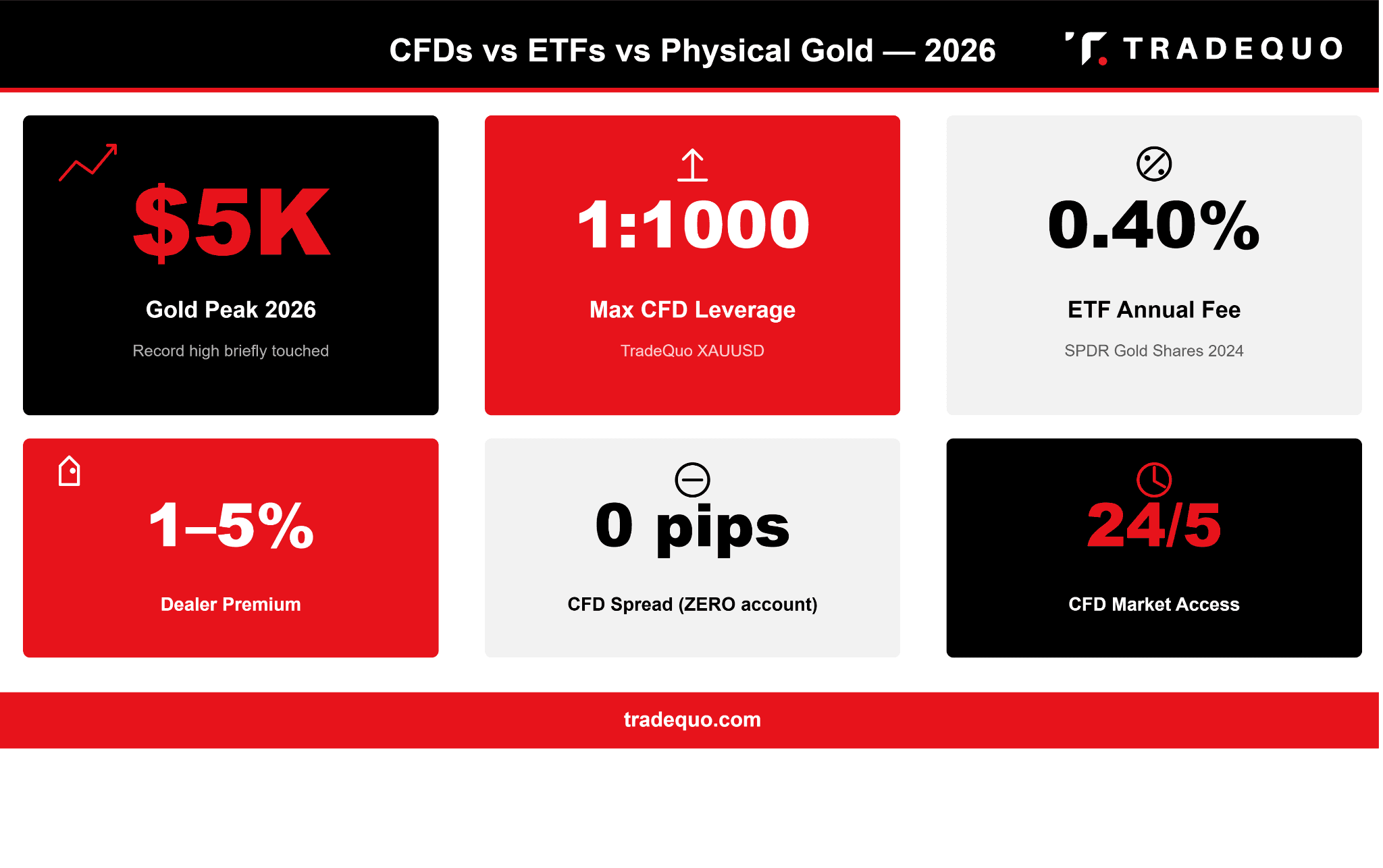
Золото переживає ще один видатний рік. Після зльоту до рекордних максимумів і короткочасного досягнення рівня $5,000 у 2026 році перед різким відкатом, жовтий метал залишається одним із найпильніше відстежуваних активів на світових ринках. Зростання інфляційних очікувань, купівля центральними банками, геополітична напруженість та постійна волатильність ринку тримають ціни на золото у фокусі уваги інвесторів та трейдерів.
Але сильний ринок золота викликає важливе питання: який найкращий спосіб отримати доступ до золота?
Деякі люди віддають перевагу володінню фізичним золотом у вигляді злитків та монет. Інші обирають біржові фонди (ETF) для зручності. Активні трейдери часто звертаються до торгівлі XAUUSD та CFD на золото, щоб заробити на короткострокових коливаннях цін.
Реальність полягає в тому, що універсальної відповіді немає. Правильний вибір залежить від ваших цілей, терпимості до ризику, стилю торгівлі та того, наскільки активно ви плануєте брати участь у ринку золота.
Цей посібник чесно порівнює фізичне золото, золоті ETF та CFD на золото, а потім допомагає вам вирішити, який варіант найкраще відповідає вашій ситуації.
Фізичне золото: аргументи «за» та «проти»
Фізичне золото залишається одним із найдавніших і найнадійніших способів збереження багатства. Задовго до існування електронних ринків люди використовували золоті злитки, монети та ювелірні вироби для збереження вартості протягом поколінь.
Коли сьогодні говорять про фізичне золото, зазвичай мають на увазі золоті злитки, випущені урядом монети або розподілені рахунки зберігання, де певна кількість золота утримується на їхнє ім'я.
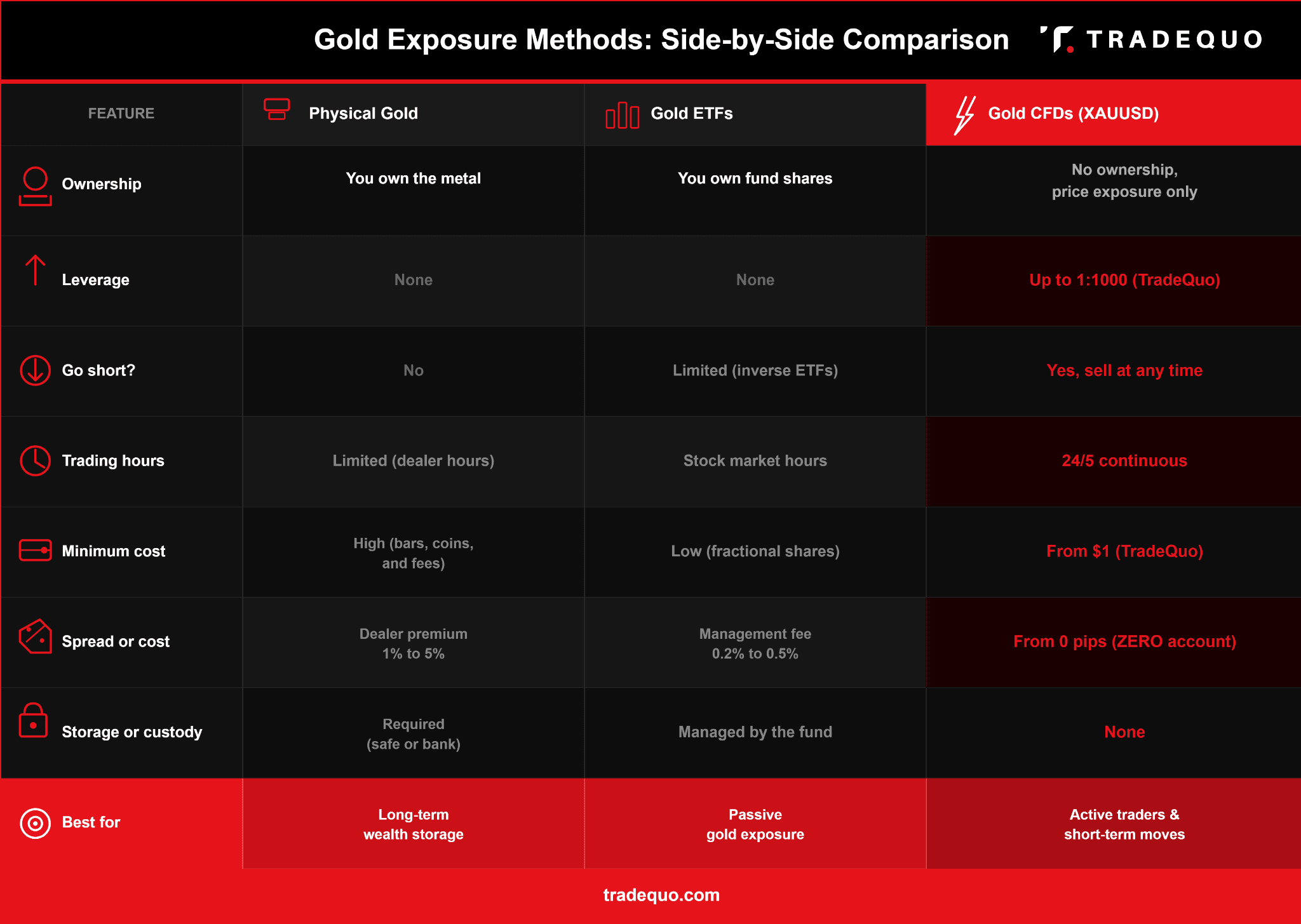
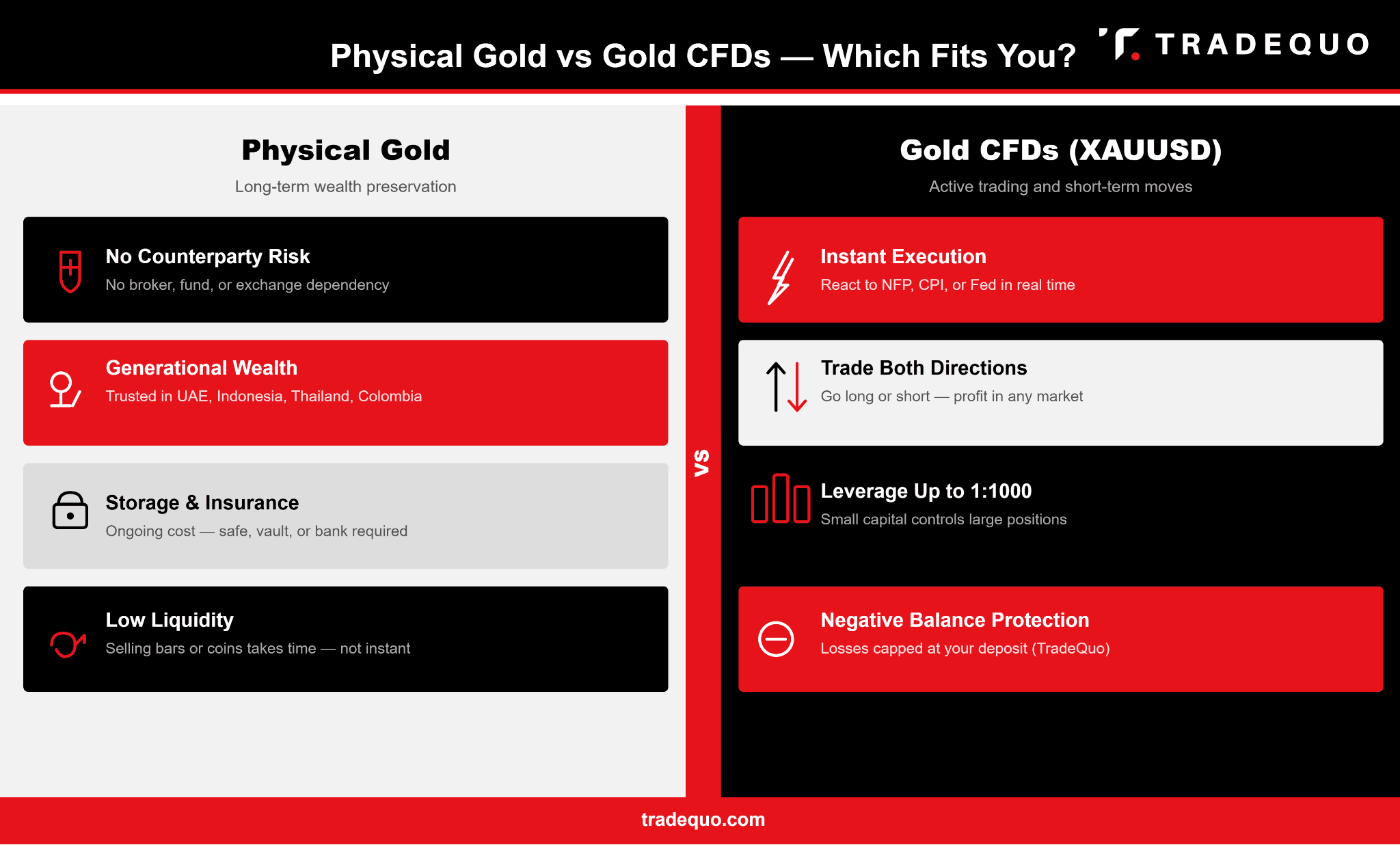
Найсильніший аргумент на користь володіння золотом простий. Ви дійсно володієте матеріальним активом. Немає залежності від брокера, біржі чи керуючого фондом. Фізичне золото не несе прямого ризику контрагента і століттями зберігає свій статус активу-притулку.
У багатьох частинах світу, зокрема в ОАЕ, Індонезії, Таїланді та Колумбії, купівля золота глибоко вкорінена у фінансову культуру. Сім'ї часто накопичують золото як варіант довгострокових заощаджень, передаючи його у спадок або використовуючи як захист від нестабільності валюти.
Однак активні трейдери стикаються з кількома обмеженнями при роботі з фізичним золотом.
По-перше, це витрати. Комісії та премії дилерів часто становлять від 1% до 5% вище за спотову ціну. Витрати на зберігання та страхування додають постійних витрат, особливо для великих обсягів. Торгівля фізичним золотом також може вимагати автентифікації та організації безпечного зберігання.
По-друге, ліквідність може бути проблемою. На відміну від фінансових ринків, де позиції можна відкривати чи закривати миттєво, продаж фізичних злитків чи монет потребує часу. Ви не можете реагувати на раптові зміни ринкових умов за лічені секунди.
По-третє, фізичне золото не пропонує кредитного плеча. Ви повинні заплатити повну вартість металу, який купуєте. Короткі продажі також неможливі, що означає, що ви не можете отримати прибуток, коли ціни на золото падають.
Для збереження багатства протягом років або десятиліть з фізичним золотом важко посперечатися. Для трейдерів, які прагнуть отримати прибуток від щоденних та щотижневих рухів цін, обмеження є суттєвими.
Золоті ETF: золота середина
Для багатьох інвесторів золотий ETF представляє баланс між зручністю та отриманням ринкового доступу.
Золотий ETF — це фонд, який володіє фізичним золотом і торгується на фондових біржах так само, як звичайні акції. Популярними прикладами є SPDR Gold Shares та iShares Gold Trust. Ці фонди часто використовуються як орієнтири при обговоренні інвестиційних продуктів у золото, хоча вони не є рекомендаціями.
Золоті ETF забезпечують доступ до ціни золота без необхідності для інвесторів зберігати фізичні злитки чи монети. Інвестори можуть купувати та продавати акції через брокерський рахунок у години роботи ринку, що робить їх надзвичайно доступними.
Однією з головних переваг є економічна ефективність. Комісія за управління зазвичай становить від 0.2% до 0.5% на рік. Наприклад, найбільший золотий ETF, SPDR Gold Shares ETF, мав коефіцієнт витрат приблизно 0.40% у середині 2024 року. Таким чином, інвестиція в розмірі $20,000 коштуватиме приблизно $80 на рік у вигляді комісій за управління.
Золоті ETF є високоліквідними, їх легко купувати та продавати в робочі години ринку. Вони усувають клопоти зі зберіганням, забезпечуючи при цьому регульований доступ до дорогоцінних металів. Покращена ліквідність ETF та зростання автоматизації податкової звітності також зробили біржові фонди дедалі привабливішими для інвесторів до 2026 року.
Проте активні трейдери можуть зіткнутися з обмеженнями.
Торгівля ETF обмежена годинами роботи фондового ринку, а не майже безперервним графіком, доступним на світовому ринку золота. Кредитне плече зазвичай відсутнє, а короткі продажі часто вимагають спеціалізованих продуктів, таких як зворотні ETF, що може створити додаткові складнощі.
Золоті ETF також не забезпечують прямого доступу до XAUUSD. Їхні результати загалом відстежують ціни на золото, але досвід торгівлі відрізняється від активної торгівлі спотовим золотом.
Доступність може створити ще одну перешкоду. На таких ринках, як Індонезія, ОАЕ, Колумбія та Таїланд, доступ до ETF, зареєстрованих у США, може вимагати відкриття міжнародного брокерського рахунку, що створює додаткові труднощі для роздрібних інвесторів.
ETF є правильним вибором для пасивного довгострокового інвестування в золото. Вони не створені для трейдерів, які хочуть реагувати на понеділкові дані NFP або п'ятничні геополітичні новини.
CFD на золото: чому активні трейдери обирають цей шлях
Як працюють CFD на золото
CFD на золото дозволяє трейдерам спекулювати на цінах на золото без володіння фізичним золотом. Торгуючи XAUUSD, ви торгуєте вартістю золота проти долара США. Інструмент тісно відстежує спотову ціну золота та дає трейдерам можливість отримувати прибуток як на зростаючих, так і на падаючих ринках.
Припустимо, золото торгується на рівні $3,200 за унцію. Ви купуєте один стандартний лот XAUUSD на рахунку Standard, оскільки очікуєте вищих цін. Якщо золото зростає до $3,250 і ви закриваєте позицію, ви фіксуєте рух у $50 за унцію, що еквівалентно $5,000 на стандартний лот.
Той самий принцип працює, коли ринки падають. Якщо ви очікуєте зниження цін на золото, ви можете відкрити позицію на продаж і потенційно отримати прибуток від падіння.
Ця гнучкість є однією з причин, чому торгівля CFD на золото стала кращим вибором серед досвідчених трейдерів та проп-трейдингових фірм. Якщо ви новачок у XAUUSD і хочете отримати покрокову інструкцію щодо здійснення першої угоди, почніть з нашого «Посібника з торгівлі золотом для початківців».
Кредитне плече: перевага та ризик
Кредитне плече дозволяє трейдерам контролювати більші позиції з меншим обсягом капіталу. При кредитному плечі 1:100 трейдер, використовуючи $1,000 маржі, може контролювати позицію у $100,000. Це суттєво збільшує потенційний прибуток, що є однією з причин, чому багато активних трейдерів обирають CFD замість фізичного золота чи ETF.
Однак кредитне плече працює в обох напрямках.
Збитки збільшуються разом із прибутками, особливо в періоди високої волатильності. Щоденні коливання цін на золото можуть перевищувати $150–$200 за екстремальних ринкових умов, а за звичайний торговий день золото часто проходить від 150 до 300 піпсів.
Кредитне плече — це причина, чому досвідчені трейдери віддають перевагу CFD, і причина, чому початківці повинні ставитися до нього з дисципліною.
Ефективне управління ризиками є вкрай важливим. Ордери стоп-лосс, визначення розміру позиції та ретельні практики ризик-менеджменту допомагають трейдерам контролювати ризики в умовах волатильного ринку.
Торговий доступ 24/5
На відміну від ETF, ринок золота працює майже безперервно протягом усього торгового тижня.
Торгівля XAUUSD починається в неділю ввечері та триває до закриття у п'ятницю. Така гнучкість дозволяє трейдерам у всьому світі миттєво реагувати на свіжі економічні дані, заяви центральних банків, несподівані показники інфляції та геополітичні події.
Лондонська та Нью-Йоркська сесії зазвичай пропонують найвищу ліквідність та найважливіші торгові можливості. Перекриття Лондона та Нью-Йорка є особливо важливим, оскільки в цей період активні великі інституційні учасники.
Для трейдерів у Дубаї, Джакарті, Бангкоку та інших світових фінансових центрах безперервний доступ усуває потребу чекати відкриття фондових бірж.
Можливість відкривати короткі позиції
Однією з найбільших відмінностей між CFD і фізичним золотом та багатьма структурами ETF є можливість отримувати прибуток від падаючих ринків.
Золото пережило різкі корекції на початку 2026 року, включаючи періоди, коли ціни знижувалися більш ніж на 12% за одну сесію. Трейдери, які утримували короткі позиції по XAUUSD, могли потенційно отримати вигоду від цих рухів. Власники фізичного золота та багато інвесторів ETF мали просто змиритися з падінням.
Можливість торгувати як на зростання, так і на падіння ринку дає активним трейдерам набагато більше гнучкості при адаптації до мінливої структури та умов ринку.
Розуміння торгових витрат
Торгівля CFD на золото пов'язана з кількома потенційними витратами.
Вони можуть включати спреди, комісії та комісії за перенесення позиції на наступний день (свопи) для позицій, що утримуються довше однієї торгової сесії. Різні брокери структурують ці витрати по-різному.
Деякі брокери пропонують рахунки з нульовим спредом і стягують комісію за кожен проторгований лот. Інші повністю закладають витрати в ширші спреди. Для трейдерів, які щотижня застосовують кілька стратегій торгівлі золотом, ці відмінності можуть суттєво вплинути на загальний результат.
Для трейдерів, які хочуть швидко реагувати, торгувати в обох напрямках і тримати витрати під контролем, CFD на золото є найпрактичнішим інструментом.
Хто який метод повинен обрати?
Якщо ви мислите категоріями років, а не днів, і вас не турбує думка про оплату сховища чи страховки, фізичне золото все одно важко перевершити. У таких місцях, як ОАЕ, Індонезія та Таїланд, це не просто інвестиція; це частина того, як сім'ї створюють і передають багатство, і така довіра не береться з цінового графіка.
Якщо у вас уже є брокерський рахунок і ви просто хочете, щоб золото тихо лежало у вашому портфелі, ETF, ймовірно, буде вашим найпростішим варіантом. Вам не доведеться постійно стежити за ним. Купіть його, забудьте на місяць, перевірте знову, коли забажаєте. У цьому, власне, і полягає вся привабливість.
Але якщо ви з тих, хто хоче реально діяти на коливаннях золота, а не просто перечікувати їх, то CFD — саме те місце, де це відбувається. Ви можете зреагувати на рішення центрального банку в момент його оголошення, змінити свою позицію на протилежну, коли заголовки новин обернуться проти вас, і використовувати кредитне плече, щоб навіть менші рухи мали значення. Проте ця сила має свій нюанс: те саме кредитне плече, яке збільшує ваші прибутки, може так само швидко збільшити ваші збитки, тому цей шлях вимагає від вас більшого натомість.
Як почати торгувати CFD на золото
Коли ви вирішили, що CFD є найкращим способом торгівлі золотом у 2026 році, наступним кроком є вибір правильного торгового середовища.
Почніть з вибору регульованого брокера, який пропонує конкурентні спреди та прозоре ціноутворення. Рахунок ZERO account від TradeQuo пропонує спреди на золото від 0 піпсів, забезпечуючи суттєву перевагу у витратах для трейдерів, які відкривають кілька позицій по золоту щотижня.
Професійна платформа є не менш важливою. MetaTrader 5 надає доступ до 21 таймфрейму, передових технічних індикаторів, підтримки автоматизованої торгівлі та детальних інструментів аналізу графіків золота.
Прибуткові стратегії торгівлі золотом також залежать від підготовки. Моніторинг економічного календаря допомагає трейдерам відстежувати засідання Федеральної резервної системи, публікації CPI, звіти про зайнятість та інші економічні дані, які регулярно впливають на ціну золота. Для повного аналізу стратегій торгівлі золотом у 2026 році, включаючи трендову торгівлю, сетапи на пробій та торгівлю на новинах, дивіться наш «Посібник із стратегій торгівлі золотом на 2026 рік».
Перед торгівлею реальним капіталом приділіть час практиці на демо-рахунку. Розуміння того, як XAUUSD реагує на ринкову волатильність, інфляційні очікування, реальну прибутковість та геополітичну напруженість, може суттєво покращити процес прийняття рішень.
Золото у 2026 році є одним із найактивніших торгованих інструментів у світі; питання не в тому, чи варто мати ринковий доступ, а в тому, яка форма доступу найкраще підходить для вашого стилю торгівлі.
FAQ
Чи торгівля CFD на золото краща, ніж купівля золотого ETF?
Чесно кажучи, все зводиться до того, наскільки активно ви хочете брати участь у процесі. CFD дають вам кредитне плече, можливість відкривати короткі позиції та ринок, який відкритий майже цілодобово, що чудово підходить, якщо ви дійсно торгуєте, а не просто утримуєте актив. ETF є більш спокійним вибором, створеним для людей, які хочуть мати золото у своєму портфелі без щоденного ризику кредитного плеча. Тож якщо ви проводите багато часу за графіками в пошуках короткострокових рухів, CFD підійдуть вам більше.
Чи можу я втратити більше, ніж внесений депозит при торгівлі CFD на золото?
Ні, якщо ваш брокер забезпечує захист від негативного балансу, як-от TradeQuo на кожному типі рахунку. Це означає, що ваші збитки обмежуються вашим депозитом, і крапка. Без такого захисту кредитне плече теоретично може вивести вас у мінус за межі внесеної суми, тому варто перевірити це перед початком торгівлі з будь-яким брокером.
Яка мінімальна сума потрібна для початку торгівлі CFD на золото?
Це дійсно залежить від того, з ким ви торгуєте. TradeQuo не встановлює мінімуму, тому технічно ви могли б почати з одного долара. Але реалістично, сума від $200 до $500 дає вам достатньо простору для правильного визначення розміру угод від 0.01 лота, не піддаючи занадто великому ризику будь-яку окрему позицію.
Які найкращі стратегії торгівлі золотом на ринку золота у 2026 році?
Немає єдиного прийому, який працює щоразу, але деякі з них демонструють хороші результати. Трендова торгівля дозволяє слідувати за чітким рухом, тоді як стратегії на пробій допомагають ловити коливання на ранній стадії. Багато трейдерів також спираються на ковзні середні та середній істинний діапазон (ATR) для оцінки ризику перед входом у ринок. Що б ви не обрали, довгострокові стратегії будуються на ретельному управлінні ризиками, а не просто на вдалому вході.
Чи є купівля золота через ETF тим самим, що й купівля фізичного золота?
Не зовсім, хоча кінцева мета виглядає схожою. Коли ви купуєте золото через щось на кшталт SPDR Gold Shares або iShares Gold Trust, ви не забираєте злиток додому; ви володієте акціями біржового фонду, який володіє золотом для вас. SPDR Gold Shares є найбільшим золотим ETF у світі, що багато говорить про те, наскільки інвестори довіряють цьому шляху. Це простіший спосіб отримати доступ до дорогоцінних металів без необхідності самостійно діставати золото із сейфа для продажу.