
Зміст
Чому торгівля золотом процвітає у 2026 році
Що таке торгівля золотом і як вона працює?
Прогноз ціни на золото на 2026 рік
Як торгувати золотом: покрокове керівництво
Найкращі стратегії торгівлі золотом у 2026 році
Ризики торгівлі золотом
Який розмір лота слід використовувати новачкові для XAUUSD?
Найкращий час для торгівлі золотом
Чому саме TradeQuo для торгівлі золотом?
Чи варто все ще торгувати золотом у 2026 році?
Часті запитання
Золото знову повсюди. Не в ностальгічному сенсі «пам’ятаєте, коли золото мало значення», а в дуже реальному та безпосередньому ключі «що щойно сталося з ринками». Після років перебування на других ролях після криптовалюти та акцій зростання, найдавніший грошовий актив на землі переживає свій зоряний час. Власне, це навіть більше, ніж просто момент.
Торгівля золотом у 2026 році зовсім не схожа на те, що було навіть два роки тому. Щоденні коливання цін, що перевищують 100 доларів, стали звичною справою. Метал подолав бар’єр у 5000 за унцію. Центральні банки купують золото темпами, які аналітики називають «структурною необхідністю», а не тактичним кроком. І, мабуть, найцікавіше те, що золото не завжди поводиться як золото. Воно діє інакше, і саме тому вам потрібно зрозуміти, як торгувати ним просто зараз.
Незалежно від того, чи ви зовсім новачок у цьому, чи торгуєте золотом роками, ринок 2026 року вимагає нового підходу. Давайте розберемося, що насправді відбувається, чому це важливо і як ви можете підійти до торгівлі золотом у цих умовах, не піддаючись ажіотажу та не потрапляючи під каток ринкової волатильності.
Чому торгівля золотом процвітає у 2026 році
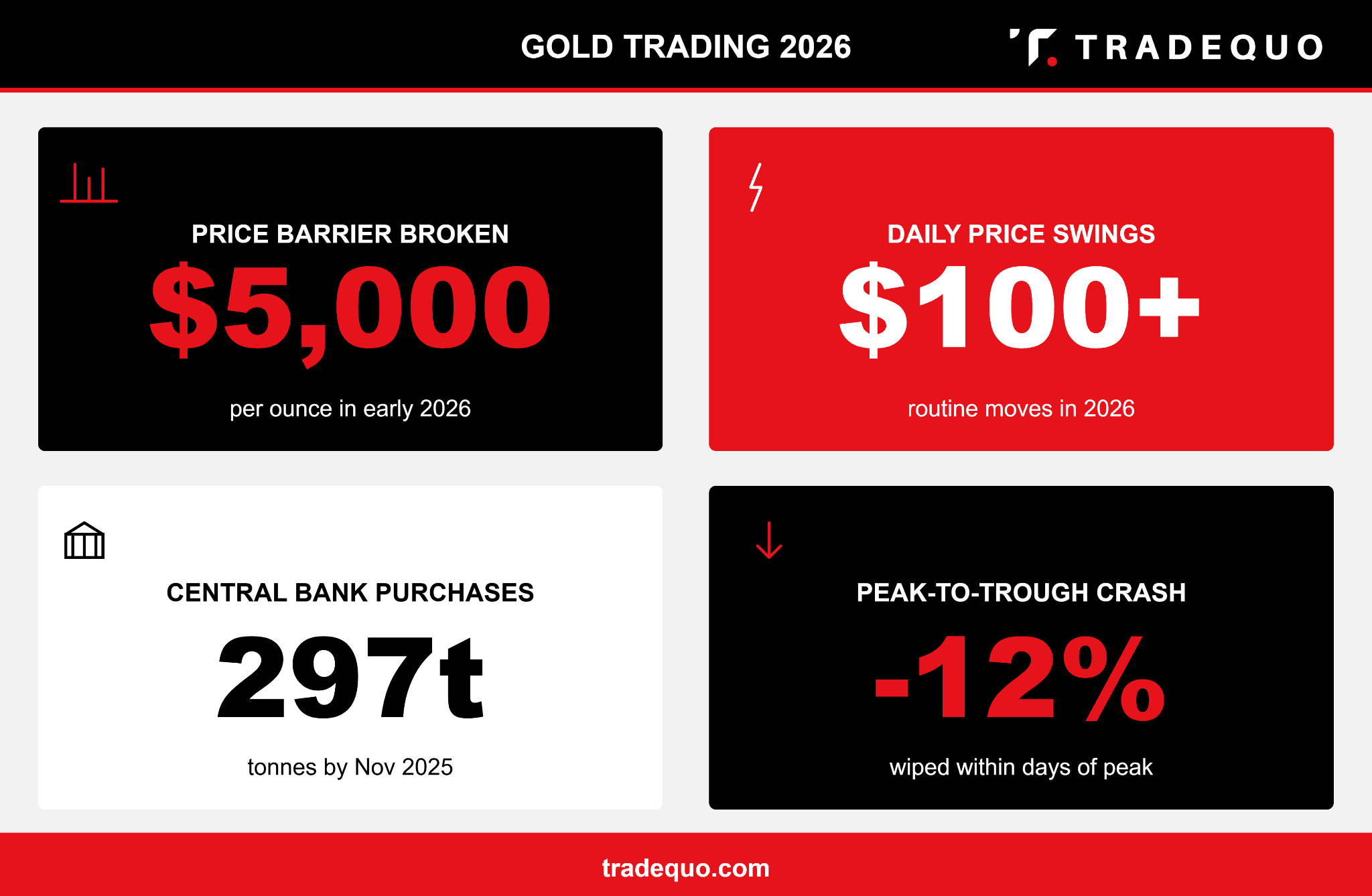
Почнемо з цифр, які все пояснюють. Лише за перші кілька тижнів 2026 року золото додало понад 1000 доларів. Це не друкарська помилка. XAUUSD піднявся вище 5000 і продовжив рух із денними діапазонами, які ще кілька років тому здавалися б неможливими. Для контексту, денні рухи золота у 2026 році регулярно досягали 3–4 відсотків, що є величезним показником для активу, відомого своєю відносною стабільністю. Хоча за цим зростанням майже одразу послідував один із найрізкіших одноденних обвалів за останні десятиліття, який за кілька днів знищив понад 12% від піку.
Що за цим стоїть? Насправді три речі, і всі вони відбуваються одночасно.
По-перше, інфляція та процентні ставки створюють ідеальне тло для золота. Зв'язок простий: коли реальна доходність знижується, альтернативна вартість володіння золотом падає, а ціни зазвичай зростають. Ми спостерігаємо це в реальному часі. Але давайте обговоримо нюанс, який робить 2026 рік особливим. Історично склалося так, що золото дешевшало, коли доходність зростала. Зараз це відбувається не так, як раніше, і це підводить нас до другого чинника.
Центральні банки фундаментально змінили структуру попиту на золото. За даними Всесвітньої золотої ради, закупівлі центральних банків до листопада 2025 року досягли 297 тонн, що стало одним із найсильніших періодів попиту в історії спостережень. Країни, включаючи Китай, Індію, Туреччину та Польщу, систематично диверсифікують свої активи від долара, і вони роблять це незалежно від ціни.
Крім того, існує геополітичний фактор. Конфлікт на Близькому Сході чинить тривалий висхідний тиск на ціни золота та волатильність. На відміну від попередніх конфліктів, коли золото різко дорожчало, а потім втрачало позиції, нинішні умови відчуваються інакше, оскільки вони накладаються на структурний попит центральних банків. Старий сценарій, за яким золото різко зростає під час кризи, а потім відступає, як тільки напруженість спадає, більше не працює повною мірою. Ми бачили це у 2022 році під час вторгнення Росії в Україну, і ми бачимо це знову зараз, але посилено новою динамікою попиту.
На початку 2026 року HSBC зробив спостереження, яке відображає всю складність моменту. За певних умов золото почало поводитися радше як ризиковий актив. Це вражаюче зауваження для дорогоцінного металу, який століттями вважався безпечною гаванню. Вони мають на увазі те, що роздрібні потоки та потоки з кредитним плечем визначають значну частину руху, що створює більшу волатильність та менш передбачувані кореляції, ніж історично очікували інституційні інвестори.
Що таке торгівля золотом і як вона працює?
Перш ніж рухатися далі, давайте чітко визначимося, про що саме йдеться. Торгівля золотом означає спекуляцію на зміні ціни золота, а не володіння фізичним металом. Ви не купуєте золоті монети чи злитки. Ви відкриваєте угоди на основі того, куди, на вашу думку, піде ціна, і можете отримувати прибуток незалежно від того, зростає вона чи падає.
На онлайн-платформах золото позначається символом XAUUSD. XAU — це хімічний символ золота, USD — це долар США, а пара представляє ціну однієї тройської унції золота в доларах. Коли ви торгуєте XAUUSD, ви торгуєте за спотовою ціною, тобто за поточною ринковою ціною з негайним розрахунком.
Існує кілька способів отримати доступ до ринку:
Спотова торгівля є найбільш прямою, де ви по суті спекулюєте на поточній ціні.
Ф’ючерсні контракти на золото дозволяють узгодити ціну сьогодні для поставки в певну дату в майбутньому.
Опціони дають вам право, але не обов'язок, купити або продати за заздалегідь визначеною ціною.
А також існують CFD, або контракти на різницю цін, які є особливо популярними для онлайн-торгівлі золотом, оскільки дозволяють спекулювати на зміні цін без володіння базовим активом.
Ось простий приклад. Припустимо, золото торгується на рівні 5200 за унцію. Ви вважаєте, що ціни зростуть, оскільки ФРС дала сигнал про зниження ставок. Ви купуєте один контракт CFD за ціною 5200. Через два тижні золото досягає позначки 5400. Ви закриваєте свою позицію та фіксуєте рух у 200 пунктів. Та сама логіка працює і в зворотному напрямку. Якщо ви думаєте, що ціни на золото впадуть, ви можете спочатку продати, а потім викупити за нижчою ціною.
Один важливий нюанс щодо торгівлі CFD полягає в тому, що ви не володієте фізичним активом. Це означає, що ви не отримуєте переваг довгострокового збереження вартості, які дає зберігання реальних золотих злитків. Натомість ви отримуєте кредитне плече, про яке ми поговоримо в розділі про ризики, та можливість торгувати в обох напрямках з відносно невеликим капіталом.
Прогноз ціни на золото на 2026 рік
Прогнозування ціни на золото ніколи не є точним, але поточні ринкові умови пропонують кілька реалістичних сценаріїв, і деякі з прогнозів на початку 2026 року вже пройшли серйозне випробування ринком.
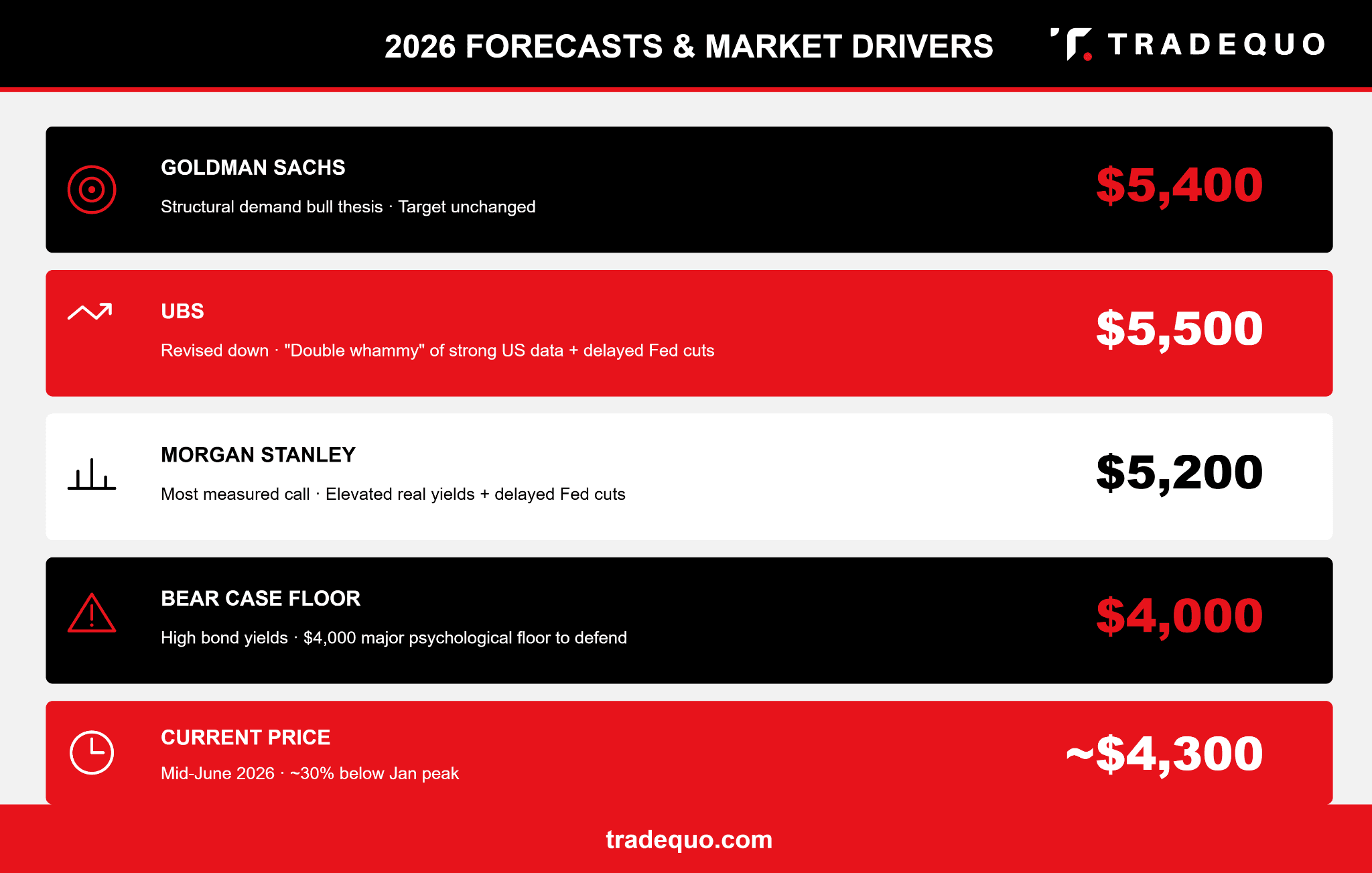
Коли у січні UBS підвищив свій цільовий показник до 6200 доларів за унцію на перші три квартали 2026 року, золото стрімко зростало, і банк прогнозував подальші активні закупівлі з боку центральних банків, збільшення припливу коштів в ETF, а також зростання купівлі злитків і монет через нижчі реальні ставки в США та тривалу світову економічну невизначеність. Цей орієнтир зараз суттєво втратив актуальність. З того часу UBS знизив свій прогноз на кінець 2026 року з 5900 до 5500 доларів за унцію, посилаючись на те, що його стратеги назвали "подвійним ударом": сильнішими економічними даними в США та зміщенням термінів пом'якшення політики ФРС на 2027 рік. Аналітики UBS зазначили, що ринки "заново відкривають для себе концепцію альтернативної вартості", причому відсутність доходності у золота стає більш важливим фактором, оскільки реальні ставки залишаються високими, а попит як на ETF, так і на ф'ючерси значно послабшав.
Станом на середину червня 2026 року золото торгується на рівні близько 4300 доларів за унцію, що приблизно на 30% нижче за цільовий показник UBS на кінець року. Розрив між січневою ейфорією та сьогоднішньою реальністю є корисним нагадуванням про те, як швидко структурні наративи можуть зіткнутися з макроекономічними перешкодами.
Goldman Sachs тримається більш дисципліновано. Аналітики підвищили цільовий показник з 4900 до 5400 доларів у січні 2026 року і з того часу не змінювали його, навіть коли різке березневе зниження випробувало їхню впевненість на міцність. У червні 2026 року Goldman виключив усі очікувані зниження ставок у 2026 році зі свого прогнозу, перенісши очікуване пом'якшення на 2027 рік, проте залишив цільову ціну золота на рівні 5400 доларів незмінною — це максимально чіткий сигнал того, що їхня бича теорія ґрунтується на структурному попиті, а не на політиці ФРС.
Довгостроковий аргумент UBS все ще значною мірою спирається на попит центральних банків, і на цьому фронті дані не показують уповільнення. Банк очікує, що щорічні закупівлі золота центральними банками у 2026 році залишатимуться в межах від 750 до 1000 метричних тонн. Попередні травневі дані свідчать, що Народний банк Китаю поповнив свої резерви на 10 метричних тонн, тоді як центральний банк Узбекистану придбав майже 9 метричних тонн у тому ж місяці.
Morgan Stanley переглянув свій цільовий показник на другу половину року у бік зниження з 5700 до 5200 доларів до четвертого кварталу 2026 року, посилаючись на високу реальну доходність та відтермінування зниження ставок ФРС — це найбільш зважений прогноз серед великих банків, але він все одно залишається висхідним за своїм спрямуванням.
Ведмежі аргументи посилилися з січня. Стійко висока доходність облігацій знижує відносну привабливість золота. Деякі аналітики зараз очікують зниження ціни на золото до діапазону від 4370 до 3816 доларів до кінця року на тлі триваючої геополітичної невизначеності та можливості подальших кроків ФРС щодо ставок. Рівень 4000 доларів став головним психологічним порогом, який бикам необхідно втримати.
Чесне резюме напередодні другої половини 2026 року: структурні аргументи, попит центральних банків, інфляція, яку не вдалося приборкати повністю, та невизначеність щодо долара залишаються в силі. Але у січні ціна вже сильно випередила ці чинники, і ринок усе ще перетравлює цей надмірний стрибок. Трейдерам слід розглядати як цільовий орієнтир Goldman у 5400 доларів, так і ведмежий сценарій з рівнем підтримки 4000 доларів як цілком реальні варіанти розвитку подій, а не просто як фоновий шум.
Як торгувати золотом: покрокове керівництво
Вам не потрібні роки досвіду, щоб почати торгувати золотом онлайн. Вам потрібен чіткий процес, платформа, якій ви довіряєте, і дисципліна в управлінні ризиками, перш ніж ви почнете думати про прибуток.
Крок 1: Виберіть брокера
Не всі брокери ставляться до золота однаково. Шукайте прозоре ціноутворення, вузькі спреди на XAU/USD, регульоване робоче середовище та платформу, яка підходить для вашого стилю торгівлі. TradeQuo став привабливим варіантом для трейдерів золотом. Він побудував свою пропозицію щодо торгівлі золотом навколо нульових спредів на XAU/USD, що дійсно виділяє його в індустрії, де приховані торгові витрати є нормою. Додайте до цього доступ до MT4 та MT5, мультиязичну підтримку, швидке виконання та відсутність вимог до мінімального депозиту, і ви отримаєте платформу, створену для трейдерів будь-якого рівня, які серйозно налаштовані на зменшення транзакційних витрат та максимізацію своєї переваги.
Крок 2: Виберіть інструмент для торгівлі золотом
Для більшості роздрібних трейдерів CFD на золото на парі XAU/USD є найбільш практичною точкою входу. Вони пропонують кредитне плече, торгівлю у двох напрямках та ціноутворення в реальному часі без складнощів, притаманних ф’ючерсним контрактам. Якщо ви віддаєте перевагу підходу з меншим рівнем ризику, золоті ETF (біржові фонди) дають вам можливість заробляти на зміні ціни з меншим ризиком перенесення позицій через ніч.
Крок 3: Проаналізуйте ринок
Поєднуйте технічний та фундаментальний аналіз. З технічного боку зверніть увагу на 50-денну та 200-денну ковзні середні, щоб оцінити напрямок тренду, використовуйте RSI для визначення перекупленості чи перепроданості та стежте за рівнями корекції Фібоначчі для потенційних точок входу під час відкатів. З фундаментального боку слідкуйте за календарем засідань ФРС, публікацією даних про інфляцію в США та будь-якими геополітичними подіями, які можуть спровокувати приплив капіталу в активи-сховища.
Крок 4: Відкрийте угоду
Визначте ціну входу, встановіть рівень стоп-лоссу для обмеження збитків та визначте ціль тейк-профіту ще до відкриття позиції. Досвідчені трейдери зазвичай обмежують свій ризик лише 1%–2% від балансу рахунку на одну угоду, незалежно від того, наскільки сильною є їхня впевненість.
Крок 5: Активно керуйте ризиками
Під час важливих новинних подій золото може проходити сотні доларів за одну сесію. Завжди використовуйте стоп-лосси. Якщо угода йде проти вас, не усереднюйте позицію в надії, що ринок розвернеться. Дотримуйтесь свого плану, прийміть збиток, якщо спрацював стоп, і збережіть капітал для наступної можливості.
Найкращі стратегії торгівлі золотом у 2026 році
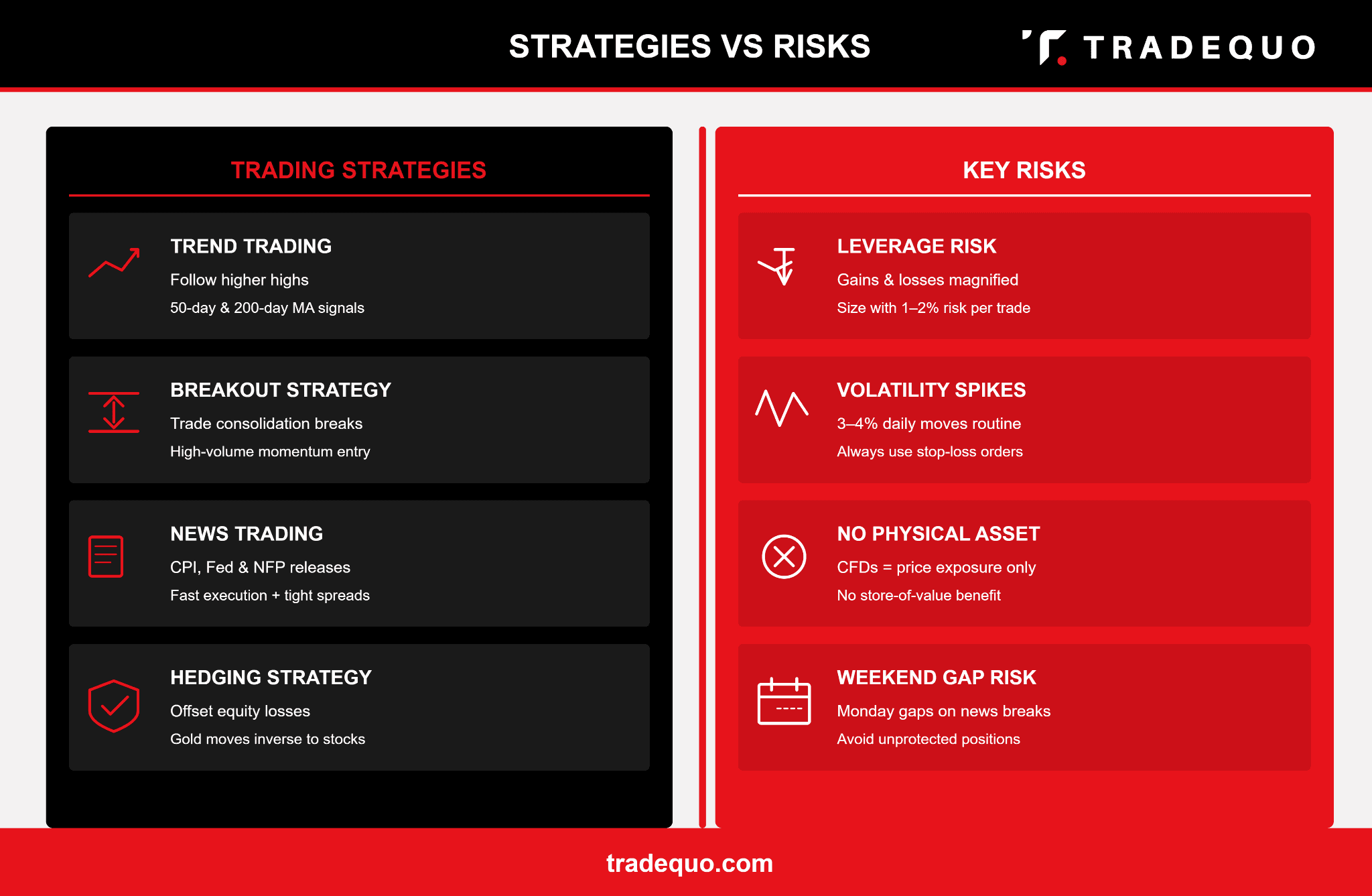
Успіх на ринку золота вимагає плану. Ось найефективніші стратегії, які використовують професіонали цього року.
Трендова торгівля
Трендова торгівля будується на одній простій ідеї: ціна рухається у стійких напрямках, і йти за цими напрямками надійніше, ніж боротися з ними. Використовуючи лінії тренду та ковзні середні, трейдери залишаються на правильному боці ринкових рухів. Якщо ціна послідовно оновлює максимуми, тренд є висхідним, і трейдери шукають можливості «купувати на відкатах».
Стратегія прориву
Золото часто консолідується у вузькому діапазоні протягом кількох тижнів, перш ніж стрімко вирватися в одному з напрямків. Стратегія прориву передбачає розміщення ордерів трохи вище або нижче цих зон консолідації. Коли ринок починає рухатися, це часто відбувається на великих обсягах, що дозволяє трейдерам зловити початок нової хвилі імпульсу.
Торгівля на новинах
Оскільки золото чутливе до даних про інфляцію та заяв Федеральної резервної системи, багато трейдерів фокусуються виключно на цих подіях. Це передбачає відкриття угод на основі розбіжності між фактичними економічними даними та очікуваннями ринку. Ця стратегія вимагає швидкого виконання, вузьких спредів та залізної дисципліни щодо виставлення стоп-лоссів. Середовище виконання у TradeQuo чудово підходить для такого підходу завдяки своїй моделі ціноутворення.
Стратегія хеджування
Багато інвесторів використовують золото для хеджування втрат у своїх портфелях акцій. Оскільки золото часто рухається в протилежному напрямку до акцій під час обвалів ринку, утримання позиції по золоту може компенсувати втрати в інших активах, захищаючи загальну вартість диверсифікованого портфеля.
Ризики торгівлі золотом
Давайте поговоримо про ризики відверто, адже занадто багато статей обходять їх стороною.
Золото може бути вкрай волатильним, особливо на тлі рішень центральних банків та геополітичних подій. На початку квітня 2026 року метал впав більш ніж на 8% всього за кілька днів, коли напруженість на Близькому Сході частково спала, а долар отримав певну підтримку. Трейдери, які не захистили себе стоп-лоссами, гостро відчули цей рух.
Кредитне плече значно посилює цей ризик. Торгівля золотом з маржею означає контроль великої позиції за допомогою відносно невеликого депозиту. Перевага полягає в тому, що прибутки збільшуються. Зворотний бік — збитки також збільшуються, і позиція може бути примусово закрита ще до того, як ринок розвернеться на вашу користь, якщо ви неправильно розрахували обсяг угоди.
При торгівлі CFD на золото ви не володієте базовим металом. Це означає, що ви втрачаєте властивість довгострокового збереження вартості, яка робить фізичні золоті злитки привабливими для інвесторів, націлених на збереження капіталу. CFD — це інструменти для заробітку на коливаннях цін, а не для накопичення матеріальних активів.
Нарешті, слід зважати на ризики маніпулювання ринком на товарно-сировинних майданчиках. Вони існують, хоча останніми роками регулятори стали більш активними. Торгівля через належним чином регульованого брокера, використання лімітних ордерів, де це можливо, та уникнення неліквідних годин торгівлі — все це знижує ваш вплив цього ризику.
Який розмір лота слід використовувати новачкові для XAUUSD?
Розрахунок розміру позиції — це те, на чому більшість нових трейдерів золотом тихо зливають свої рахунки. Не через поганий аналіз, а через торгівлю обсягами, які перетворюють звичайний ринковий шум на катастрофічні збитки.
Почніть з мікролота: 0.01. При такому розмірі кожен пункт руху XAUUSD коштує приблизно 0,10 долара. На стандартному рахунку з кредитним плечем 1:100 відкриття позиції обсягом 0.01 лота вимагає близько 5 доларів маржі. Це навмисно малий обсяг, оскільки золото у 2026 році регулярно проходить від 300 до 500 пунктів за одну сесію. При обсязі 0.01 лота рух у 200 пунктів проти вас коштуватиме 20 доларів, а не 200. Цей розрив і є різницею між корисним досвідом та злитим депозитом.
Правило просте: не збільшуйте обсяги, доки не відкриєте, не проаналізуєте та не розберете щонайменше 20 угод поспіль. Не 20 прибуткових угод. А просто двадцять угод, у яких ви чітко дотримувалися свого плану, виставили стоп-лосс та зафіксували результат.
Після цього масштабуйтеся поступово: 0.01 → 0.05 → 0.10, збільшуючи обсяг лише тоді, коли це дозволяють розмір вашого рахунку та відсоток успішних угод. Рахунок ZERO від TradeQuo особливо добре підходить для такого підходу, пропонуючи вигідні умови, які роблять торгівлю малими лотами дійсно життєздатною з першого дня.
Найкращий час для торгівлі золотом
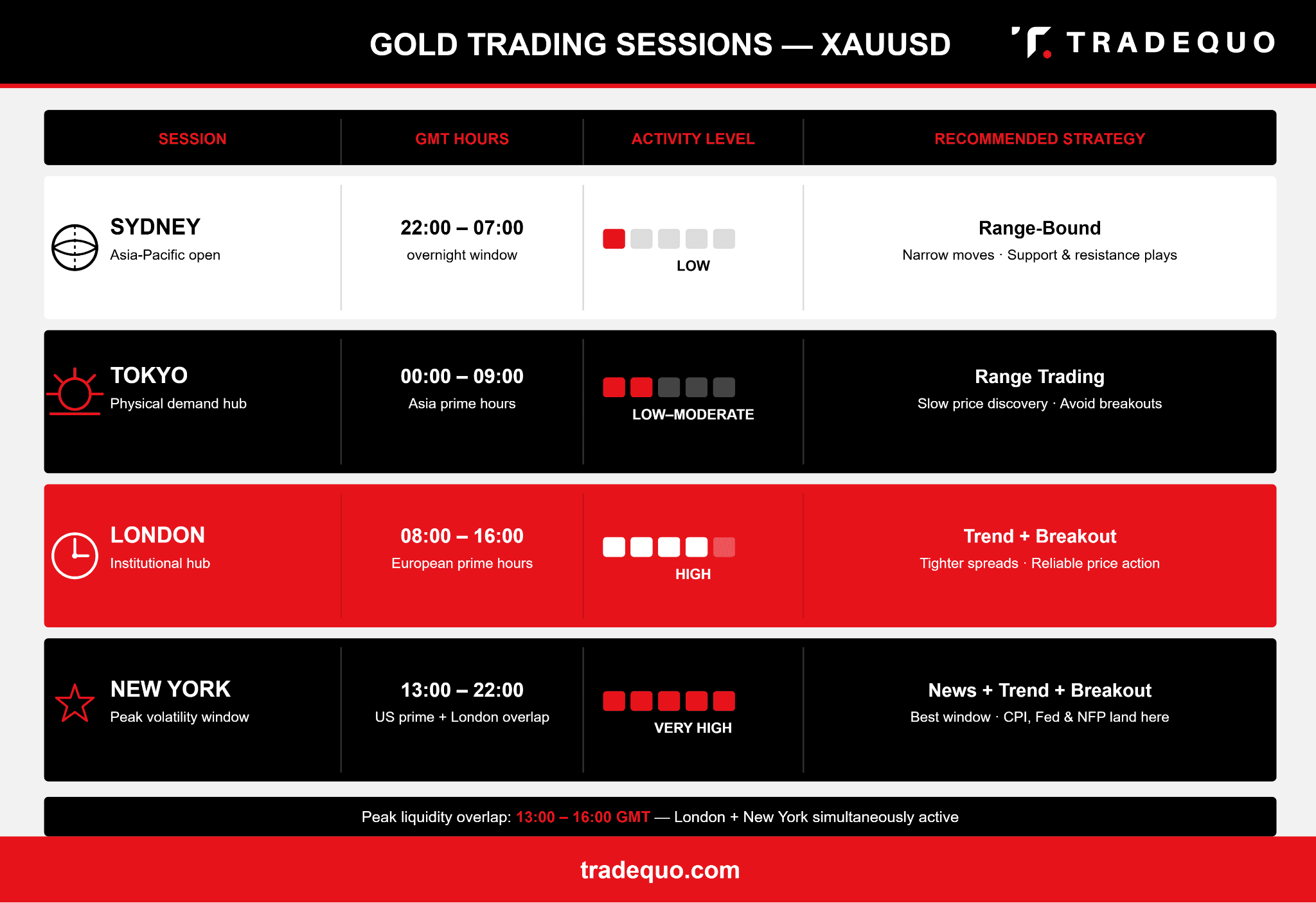
Ринки золота відкриті 24 години на добу, п'ять днів на тиждень, але не всі години однаково ефективні.
Лондонська сесія, яка триває приблизно з 8:00 до 16:00 за Гринвічем (GMT), — це час, коли обсяги інституційної торгівлі золотом суттєво зростають. Європейські банки, сировинні департаменти та фонди стають активними, що забезпечує вужчі спреди та більш прогнозований рух ціни.
Найбільш сприятливе вікно — це перетин Нью-Йоркської та Лондонської сесій, зазвичай з 13:00 до 16:00 за Гринвічем (GMT). Обидва великі фінансові центри активні одночасно, ліквідність досягає свого піку, і саме в цей період публікуються важливі економічні дані США. Якщо ви можете приділяти торгівлі лише кілька годин на день, це найкращий час для спостереження за ринком.
Азійська сесія, хоч і активна з точки зору фізичного попиту на золото, особливо з боку Китаю та Індії, зазвичай характеризується вужчими діапазонами та повільнішим формуванням ціни на ф'ючерсному та спотовому ринках. Вона може добре підходити для діапазонних стратегій, але менш надійна для торгівлі на прорив або за трендом.
Уникайте торгівлі в останні години перед закриттям ринку на вихідні, якщо у вас немає для цього вагомих причин. На відкритті в наступний понеділок золото може відкритися з гепом (розривом ціни), якщо на вихідних відбудуться важливі події, і утримання позицій без захисту в цей період є невиправданим ризиком.
Чому саме TradeQuo для торгівлі золотом?
Вибір платформи має більше значення в торгівлі золотом, ніж на будь-якому іншому ринку. Коли XAUUSD проходить 400 пунктів за годину, різниця між брокером з вузькими спредами та брокером без них може стати різницею між прибутковою угодою та закриттям у нуль.
Ось що саме TradeQuo пропонує трейдерам золотом.
Рахунок ZERO скасовує спред на XAUUSD в активні ринкові години. Для ринку, де ви часто відкриваєте та закриваєте угоди кілька разів за сесію, це усуває витрати, які швидко накопичуються протягом торгового місяця.
Ліквідність надходить через LMAX, майданчик інституційного рівня без втручання дилінгового центру (No Dealing Desk). Це означає, що ціна, яку ви бачите, — це ціна, яку ви отримуєте, без реквот або штучного проковзування під час виходу важливих новин, саме тоді, коли якість виконання має найбільше значення.
Платформа працює на базі MetaTrader 5, що дає трейдерам золотом доступ до 21 таймфрейму, повного набору технічних індикаторів та вбудованої підтримки торгових роботів (Expert Advisors), якщо ви використовуєте автоматизовані стратегії.
Спеціально для трейдерів на новинах інтегрований Економічний календар дозволяє відстежувати засідання ФРС, публікації CPI та дані NFP безпосередньо в платформі. Золото різко реагує на всі ці три події.
Мінімальний депозит у розмірі $1 робить рахунок дійсно доступним для будь-якого старту, а миттєве зняття коштів у режимі 24/7 усуває затримки, які часто підривають довіру до більшості роздрібних брокерів.
Це практичні причини, чому трейдери золотом обирають саме цю платформу серед інших альтернатив.
Чи варто все ще торгувати золотом у 2026 році?
Золото у 2026 році — це не тиха гавань для пасивних інвестицій, як для попереднього покоління. Це активний ринок із багатими технічними можливостями та потужними фундаментальними чинниками, який винагороджує за підготовку та карає за самовпевненість. Базові структурні чинники залишаються переконливими: центральні банки продовжують закупівлі, інфляцію не приборкано повністю, геополітична нестабільність не демонструє ознак швидкого вирішення, а долар стикається з довгостроковими викликами, від яких золото безпосередньо виграє.
Вперше на ринку золота і хочете почати з самих азів? Наше керівництво для початківців проведе вас через кожен крок — від вибору способу інвестування до відкриття першої угоди по XAUUSD.
Торгуйте розумно, контролюйте свої ризики, і цей благородний метал ще зможе вас здивувати.
Часті запитання
Який найкращий час доби для торгівлі золотом?
Найкраще торгове вікно — це перетин сесій у Лондоні та Нью-Йорку, приблизно з 13:00 до 16:00 за Гринвічем (GMT). Обидва великі фінансові центри активні одночасно, ліквідність знаходиться на піку, і в цей період виходять економічні дані США, які безпосередньо рухають золото. Уникайте торгівлі в останню годину перед закриттям ринку на вихідні.
Який розмір лота слід використовувати новачкові для XAUUSD?
Почніть з 0.01 лота (мікролот). На парі XAUUSD кожен пункт при обсязі 0.01 лота коштує приблизно 0,10 долара. Це дозволяє утримувати ризики під контролем, поки ви вивчаєте характер руху золота. Переходьте до лотів 0.05 або 0.10 лише після більш ніж 20 стабільних угод за чіткою стратегією.
Якого спреду мені слід очікувати на CFD на золото?
Спреди залежать від типу рахунку та ринкових умов. На рахунку ZERO від TradeQuo спреди на золото стартують від 0 пунктів в активні години роботи ринку (Лондонська та Нью-Йоркська сесії). У неробочий час або під час подій з високою волатильністю, таких як публікація NFP, спреди можуть тимчасово розширюватися. Завжди перевіряйте поточні спреди перед відкриттям позиції.
Які найбільші ризики при торгівлі золотом?
Основними ризиками при торгівлі золотом є використання кредитного плеча, волатильність на новинах (золото може проходити понад $100 за одну сесію) та спокуса пересиджувати збиткові позиції без стоп-лоссу. Рішення центральних банків, дані щодо CPI в США та геополітичні події можуть викликати різкі та швидкі рухи, які застають зненацька непідготовлених трейдерів.
Як центральні банки впливають на ціни на золото?
Центральні банки зараз є найбільшими структурними покупцями золота у світі. Коли центральні банки здійснюють масштабні закупівлі, як це роблять Китай, Індія, Туреччина та Польща, вони створюють стійкий попит, який підтримує ціновий мінімум незалежно від короткострокових ринкових настроїв. Всесвітня золота рада повідомила про 297 тонн закупівель центральними банками до листопада 2025 року.