مقدمة: الحقيقة وراء نسخ التداول
لقد جعل نسخ التداول الوصول إلى الأسواق أسهل من أي وقت مضى. فببضع نقرات فقط، يمكنك محاكاة تحركات المتداولين ذوي الخبرة، وتجاوز منحنى التعلم الصعب، وتنمية رأس مالك نظريًا بينما يقوم شخص آخر بالتحليل. يبدو الأمر مريحًا للغاية، وهذا هو مكمن المشكلة بالضبط.
الحقيقة هي أن مخاطر نسخ التداول حقيقية ومتعددة الطبقات، وغالبًا ما يستهين بها المبتدئون الذين تجذبهم الملفات الشخصية المصقولة على وسائل التواصل الاجتماعي ومخططات العوائد المثيرة للإعجاب. إن فهم هذه المخاطر ليس سببًا لتجنب نسخ التداول تمامًا، بل هو الأساس للقيام بذلك بشكل صحيح. وقبل أن تخصص دولارًا واحدًا لأي مزود خدمة، عليك أن تعرف ما الذي توافق عليه بالفعل وكيف تحمي نفسك عندما تسوء الأمور.
لا توجد ضمانات للنجاح في نسخ التداول

أحد أهم الأسئلة التي يجب على أي شخص يدخل هذا المجال أن يطرحها هو: هل يمكن لنسخ التداول أن يضمن تحقيق الأرباح؟ الإجابة هي لا قاطعة، وأي منصة أو مؤثر يوحي بغير ذلك يضللك.
الأداء السابق هو أحد أكثر المقاييس التي يتم الاستشهاد بها ولكنها الأكثر فهمًا بشكل خاطئ في التداول. فالمزود الذي حقق عوائد بنسبة 40% على مدى الأشهر الستة الماضية فعل ذلك في ظل ظروف سوق محددة، ومزيج أصول معين، وفي نقطة متميزة من الدورة الاقتصادية. ولا يوجد ضمان لتكرار أي من هذه المتغيرات. فالأسواق تتقلب، والاستراتيجيات التي تزدهر في الاتجاهات الواضحة تنهار في الأسواق الجانبية أو المتقلبة. والمتداول الذي بدا بارعًا في الربع الماضي قد يتراجع بشكل كبير في هذا الربع.
ما يجعل هذا الأمر صعبًا للغاية على التابعين هو أنك تشارك في تلك الخسائر في الوقت الفعلي. فعندما تفشل استراتيجية المزود، يعكس حسابك هذا الفشل بشكل تناسبي. ولا يمكنك الانتظار أو اتخاذ قرارات مستقلة في تلك اللحظة؛ إذ يتم تنفيذ الصفقة، وتسجيل الخسارة، وتكتشف ذلك بعد فوات الأوان.
هذا ليس عيبًا في مفهوم نسخ التداول في حد ذاته، بل هي ببساطة طبيعة الأسواق المالية. فلا توجد استراتيجية، مهما كانت متطورة، تربح إلى الأبد. إن التوقعات الواقعية في نسخ التداول تعني فهم أن التراجعات ليست استثناءات، بل هي جزء من رحلة كل متداول. وما يميز نسخ التداول المستدام عن المضاربة المتهورة هو مدى استعدادك لهذه الحتمية قبل حدوثها.
انظر إلى ما هو أبعد من العوائد الرئيسية. ادرس النسبة المئوية للحد الأقصى للتراجع لدى المزود، ومعدل فوزه في ظروف السوق المختلفة، ومدى طول فترات التعافي تاريخيًا. تخبرنا هذه المقاييس بقصة أكثر صدقًا بكثير من شهر واحد مثير للإعجاب.
عدم توافق القدرة على تحمل المخاطر: شرح لأحد أكبر مخاطر نسخ التداول
يعد عدم توافق القدرة على تحمل المخاطر أحد أكثر المشكلات شيوعًا والأقل مناقشة في نسخ التداول، ويتسبب في قدر كبير من التوتر والأضرار المالية التي يمكن تجنبها.
وإليك كيف يحدث ذلك: تكتشف مزودًا لديه سجل حافل استثنائي. عوائده الشهرية ملفتة للنظر، وعدد متابعيه مثير للإعجاب، ومقاييس المنصة تبدو قوية. ما لا تظهره الأرقام دائمًا على الفور هو أن هذا المزود يعمل برافعة مالية عالية، ويتخذ أحجام صفقات كبيرة مقارنة بحقوق ملكية الحساب، ويتعامل مع التراجعات بنسبة 20 إلى 30 بالمائة كجزء طبيعي من استراتيجيته. بالنسبة له، فإن نسبة المخاطرة إلى العائد هذه مقبولة. أما بالنسبة لك، فقد تكون كارثية.
هذا هو جوهر عدم توافق القدرة على تحمل المخاطر: فالاستراتيجية التي تناسب نفسية أحد المتداولين ووضعه المالي قد تكون غير متوافقة تمامًا مع متداول آخر. يمكن لمتداول ذي خبرة ولديه حساب كبير وسنوات من التكيف أن يتحمل تراجعًا بنسبة 25% بهدوء. أما الشخص الجديد في الأسواق، أو الذي يعمل برأس مال لا يمكنه تحمل خسارته، فقد يصاب بالذعر، ويخرج في أسوأ لحظة ممكنة، أو يعاني من ضرر مالي حقيقي.
والعكس صحيح أيضًا. فالمتداولون المحافظون الذين ينسخون استراتيجيات منخفضة المخاطر ومنخفضة العائد قد يجدون أنفسهم محبطين بسبب التقدم البطيء وينجرون وراء ملاحقة المزودين ذوي الأداء الأعلى دون فهم ما يقدمون عليه.
قبل أن تنسخ متداولًا، اسأل نفسك: ما هو أقصى تراجع تعرض له هذا المزود تاريخيًا؟ ما هي الرافعة المالية التي يستخدمها عادةً؟ كيف تقارن متوسط خسارته لكل صفقة بمتوسط مكاسبه؟ هل استراتيجيته مبنية على أرباح صغيرة متكررة أم أرباح كبيرة غير متكررة؟ تساعدك هذه الأسئلة على تقييم ما إذا كان نهجه يتوافق بالفعل مع قدرتك على تحمل المخاطر، وليس فقط مع طموحاتك في العوائد.
تبدأ أفضل إدارة للمخاطر للمبتدئين في نسخ التداول بعملية المواءمة هذه. طابق الملفات الشخصية للمزودين مع قدرتك الفعلية على تحمل المخاطر، وليس مع القدرة التي تتخيلها لنفسك في سوق قوية. إن اختيار مزود يمكنك تحمل أسوأ سيناريوهاته عاطفيًا وماليًا لا يقل أهمية عن اختيار مزود تجذبك أفضل سيناريوهاته. ويعد التنويع بين العديد من المزودين بأساليب ومستويات مخاطر مختلفة إحدى الطرق لبناء تعرض أكثر توازنًا، وهو ما سنعود إليه في قسم أفضل الممارسات.
تتيح لك منصة TradeQuo فحص إحصاءات المزود التفصيلية قبل الالتزام، مما يمنحك الشفافية اللازمة لإجراء هذا النوع من المقارنة المستنيرة.
مخاطر المنصة والتنفيذ في نسخ التداول
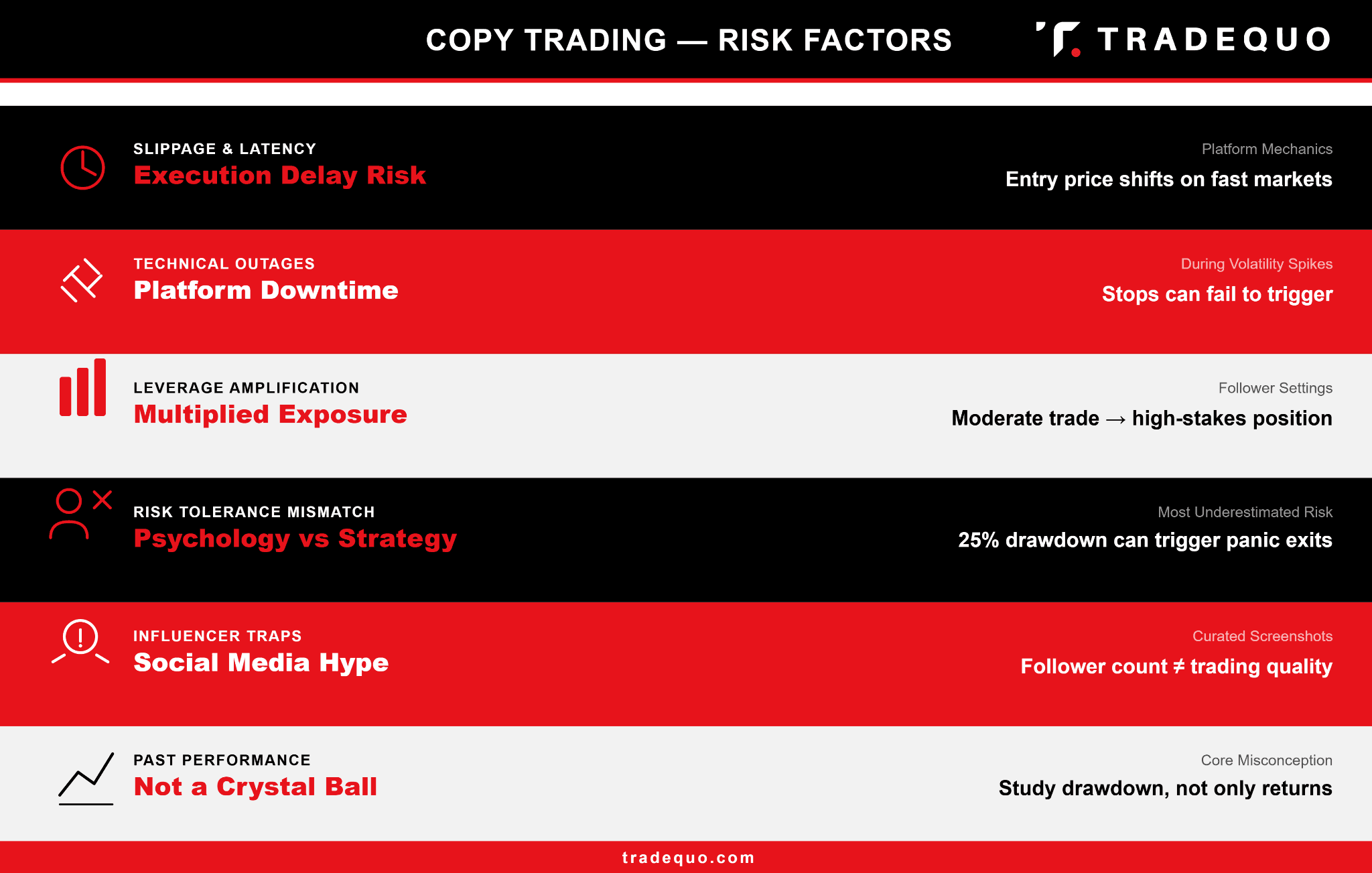
حتى عندما تختار المزود المناسب وتكون ظروف السوق مواتية، فإن هناك مخاطر هيكلية تقع تمامًا خارج نطاق سيطرة المتداول: وهي آليات التنفيذ نفسها.
الانزلاق السعري وزمن الاستجابة
لا يتم تنفيذ نسخ التداول بتزامن تام مع صفقة المزود. هناك دائمًا تأخير بين لحظة تنفيذ الأمر الأصلي ولحظة معالجة أمرك المنسوخ. وفي الأسواق سريعة الحركة، قد يكون زمن الاستجابة هذا كافيًا لتغيير سعر دخولك بشكل ملموس. هذا هو الانزلاق السعري، وعلى الرغم من أنه غالبًا ما يكون صغيرًا، إلا أنه يتراكم عبر العديد من الصفقات ويمكن أن يلتهم بصمت الأداء الذي بدا أكثر وضوحًا في حساب المزود نفسه.
الأعطال الفنية وفترات التوقف
لا توجد منصة محصنة ضد الأعطال. إذا حال عطل فني دون تنفيذ صفقاتك المنسوخة في لحظات حرجة، سواء كان ذلك بسبب فشل تفعيل أمر وقف الخسارة أو تأخر الدخول أثناء الاختراق، فقد تكون العواقب وخيمة. ويكتسب هذا الأمر أهمية خاصة أثناء الأحداث الإخبارية الكبرى أو فترات التقلب الشديد عندما يرتفع حجم الحركة على المنصة.
تضخيم الرافعة المالية
تسمح العديد من منصات نسخ التداول للمتابعين بتطبيق إعدادات الرافعة المالية الخاصة بهم بالإضافة إلى صفقات المزود. يخلق هذا موقفًا تصبح فيه صفقة المزود ذات المخاطر المتوسطة مركزًا عالي المخاطر للمتابع الذي قام برفع الرافعة المالية دون مراعاة حجم التعرض للمخاطر بشكل كامل. ومن الضروري فهم كيفية تعامل منصتك مع توارث الرافعة المالية وما تصبح عليه مخاطرتك الفعلية لكل صفقة بموجب هذه الإعدادات.
ما يمكنك فعله
اختر المنصات التي تتمتع ببنية تحتية قوية، وسياسات تنفيذ شفافة، وإفصاحات واضحة حول كيفية معالجة الصفقات المنسوخة. راجع تقارير التنفيذ الخاصة بك بانتظام، وليس فقط رصيدك الإجمالي. إن الوعي بمخاطر نسخ التداول مقابل التداول اليدوي يعني إدراك أنك كمتابع، تتحمل طبقة إضافية من المخاطر الفنية التي لا يواجهها المتداولون اليدويون بنفس الطريقة. تم تصميم أدوات TradeQuo لمنحك رؤية واضحة لجودة التنفيذ حتى لا تمر هذه المشكلات دون أن تلاحظها.
فخاخ المؤثرين ووسائل التواصل الاجتماعي في نسخ التداول
أصبحت وسائل التواصل الاجتماعي واحدة من أقوى أدوات جذب المستخدمين وأكثرها خطورة في مجال نسخ التداول. وقبل أن تتبع أي متداول يوصى به من خلال المواد التسويقية أو محتوى المؤثرين، يجدر بك فهم كيفية عمل هذه الأنظمة بالضبط.
غالبًا ما تتميز عروض المؤثرين الترويجية بمتداولين حققوا نتائج استثنائية قصيرة المدى، ولحظات شاشة منسقة، وشهادات مصممة لإثارة الحماس بدلاً من تقديم معلومات مدروسة. قد يكون المتداولون الذين يتم الترويج لهم ماهرين، ولكن نادرًا ما يتم تقديم السياق الكامن وراء هذه النتائج. هل تم تحقيق المكاسب خلال طفرة سوقية مواتية بشكل غير عادي؟ ما مقدار التراجع خلال تلك الفترة نفسها؟ كيف كان أداء المتداول في الظروف المعاكسة؟
تتضمن أخطاء نسخ التداول التي يجب تجنبها دائمًا تقريبًا التصرف بناءً على آراء الآخرين دون إجراء تحقق مستقل. فالمتداول الذي لديه 50,000 متابع ليس بالضرورة أكثر جدارة بالثقة أو كفاءة من آخر لديه 500 متابع. تعكس أعداد المتابعين ميزانيات التسويق والانتشار الاجتماعي، وليس جودة التداول.
هذا لا يعني أن كل متداول يتم الترويج له هو اختيار سيئ. بل يعني أن عبء التحقق يقع بالكامل على عاتقك. انظر إلى تاريخ التداول الكامل للمزود على المنصة نفسها، وليس إلى المقتطفات المشتركة على القنوات الخارجية. قارن إحصاءاتهم عبر أطر زمنية متعددة. وفكر فيما إذا كانت الاستراتيجية التي يتم الترويج لها تتماشى مع أهدافك أم أن الجاذبية عاطفية في المقام الأول، وهو ما يمثل علامة خطر في أي سياق مالي.
يعني الأداء الشفاف للتداول وجود بيانات قابلة للتحقق على فترات زمنية ذات مغزى، وليس سلسلة انتصارات لمدة ثلاثين يومًا معروضة دون سياق. تعامل بنفس القدر من الشك مع العروض الترويجية للتداول كما تفعل مع أي منتج مالي.
أفضل الممارسات لنسخ تداول آمن
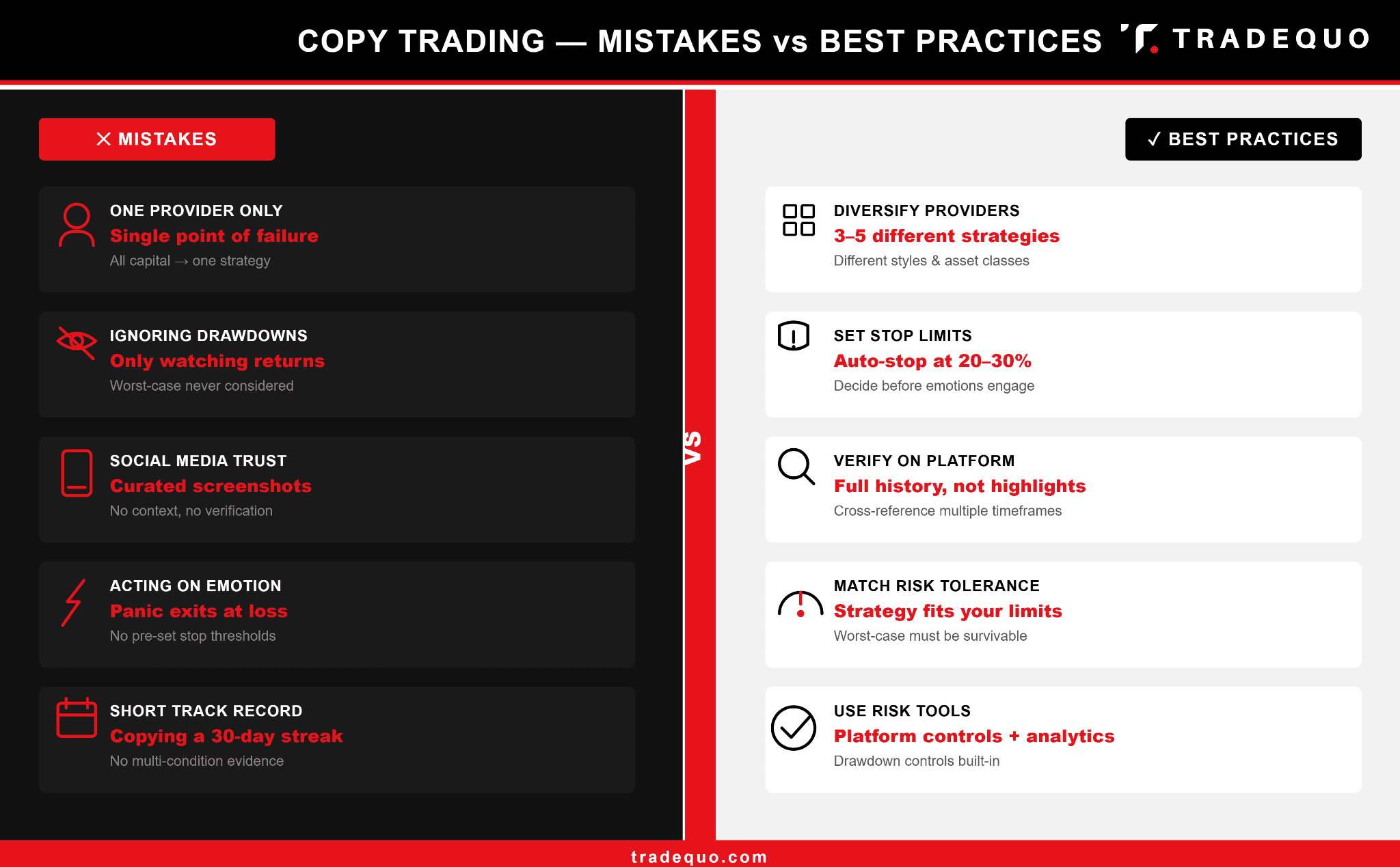
إن معرفة المخاطر ليست سوى نصف المعادلة. والنصف الآخر يتلخص في بناء عادات وأنظمة تسمح لك بالمشاركة في نسخ التداول بذكاء واستدامة.
تنويع مقدمي الخدمات
يؤدي تركيز كامل مخصصات نسخ التداول على مزود واحد إلى خلق نقطة فشل واحدة. فإذا تعرض هذا المزود لتراجع مستمر أو غير استراتيجيته، فإن محفظتك ستتحمل التأثير الكامل. إن توزيع رأس المال على ثلاثة إلى خمسة مزودين بأساليب تداول وفئات أصول ومستويات مخاطر مختلفة يقلل من هذا التعرض بشكل كبير. فنادرًا ما يتم بناء استراتيجية نسخ تداول صديقة للمبتدئين على رهان واحد، مهما كنت واثقًا منه.
تعيين معايير إيقاف النسخ
تتيح لك معظم المنصات ذات السمعة الطيبة تحديد حدود تتوقف عندها تلقائيًا عن نسخ مزود الخدمة. استخدمها. قرر مسبقًا، وقبل أن تتدخل العواطف، عند أي مستوى تراجع ستنهي علاقتك بالمزود. ومن الأساليب الشائعة الاستشهاد بها تحديد حد أقصى للتراجع يتراوح بين 20 إلى 30 بالمائة من رأس المال المخصص لأي مزود واحد. وعند الوصول إلى هذا الحد، يتوقف النظام عن النسخ تلقائيًا، مما يحميك من شلل اتخاذ القرار الذي غالبًا ما يؤدي إلى خسائر أكبر.
مراقبة الأداء بانتظام
إن نسخ التداول ليس نظامًا تضبطه ثم تنساه. فالأسواق تتغير، والمزودون يطورون استراتيجياتهم، وما نجح في بيئة ما قد لا ينجح في البيئة التالية. حدد مواعيد لمراجعات منتظمة، أسبوعية أو نصف شهرية، لتقييم أداء كل مزود مقارنة بتوقعاتك ومعايير المخاطر الخاصة بك. وانظر إلى اتجاهات التراجع الأخيرة، وليس فقط العوائد التراكمية.
تحديد سقف مخصصات رأس المال لكل مزود
ما مقدار المال الذي يجب أن تستثمره في نسخ التداول مع أي مزود واحد؟ النهج العملي هو عدم تخصيص أكثر من 10 إلى 20 بالمائة من إجمالي رأس مال نسخ التداول الخاص بك لأي مزود واحد. يضمن هذا ألا تحدد جولة تداول سيئة واحدة نتيجتك الإجمالية.
استخدام أدوات مخاطر المنصة
توفر TradeQuo ميزات مدمجة لإدارة المخاطر مصممة خصيصًا لمتداولي النسخ: ضوابط التراجع، ومحفزات إيقاف النسخ، وتحليلات الأداء التي تمنحك البيانات اللازمة لاتخاذ قرارات مستمرة ومستنيرة. هذه ليست إضافات اختيارية، بل هي بنية تحتية أساسية لأي شخص جاد بشأن كيفية إدارة مخاطر نسخ التداول على المدى الطويل.
القيام بالعناية الواجبة في كل مرة
تتلخص كيفية اختيار المتداولين لنسخهم بأمان في عادة واحدة متسقة: البحث قبل التخصيص، وليس بعده. راجع ما لا يقل عن ستة أشهر من بيانات الأداء المعتمدة، وافحص العوائد المعدلة حسب المخاطر بدلاً من النسب المئوية الرئيسية، وتأكد من أن وصف استراتيجية المزود يتطابق مع ما يظهره تاريخ تداوله بالفعل.
الاقتراب من نسخ التداول بالوضوح الذي يستحقه
نسخ التداول هو أداة مشروعة ومفيدة حقًا. فهو يفتح الأبواب للأشخاص الذين يريدون الانكشاف على السوق دون امتلاك الوقت أو الخبرة لإدارة كل صفقة يدويًا. ولكن هذه الأبواب تفتح على أسواق حقيقية ذات مخاطر حقيقية، وليس على تدفق دخل مضمون.
إن أكبر المخاطر في نسخ التداول، سواء كانت عدم توافق القدرة على تحمل المخاطر، أو مشكلات تنفيذ المنصة، أو جاذبية الضجيج الإعلامي، تشترك كلها في أمر واحد: وهو أنها تميل إلى الضرب بقوة أكبر عندما يشارك الناس دون استعداد. والمتداولون الذين يبنون نتائج مستدامة في هذا المجال ليسوا هم الذين وجدوا أفضل مزود في اليوم الأول، بل هم الذين فهموا ما يسجلون فيه، وبنوا نهجًا منضبطًا، واستخدموا الأدوات المتاحة لهم باستمرار.
ميزات إدارة المخاطر من TradeQuo موجودة لدعم هذا النوع من المشاركة المنضبطة بالتحديد. استخدمها كخط أساس لك، وليس كخيار بديل أخير.
الأسئلة الشائعة (FAQ)
هل نسخ التداول آمن للمبتدئين؟
نعم، إذا تم التعامل معه بحذر. ابحث عن المزودين، ونوع، واستخدم ضوابط المخاطر، وابدأ برأس مال صغير.
ما هو أكبر خطر في نسخ التداول؟
افتراض تكرار النجاح السابق. يمكن أن تفشل الاستراتيجيات، وقد تختلف النتائج عن نتائج المزود.
كيف تقلل من مخاطر نسخ التداول؟
نوع المزودين، واضبط حدود الوقف، وراقب الأداء، واستخدم أدوات إدارة المخاطر.
هل يمكن لنسخ التداول أن يضمن الأرباح؟
لا. الأسواق لا يمكن التنبؤ بها، والأداء السابق ليس ضمانًا للنتائج المستقبلية.
كم من المال يجب أن تستثمره في نسخ التداول؟
عادةً، من 10 إلى 20% لكل مزود، واستثمر فقط ما يمكنك تحمل خسارته.