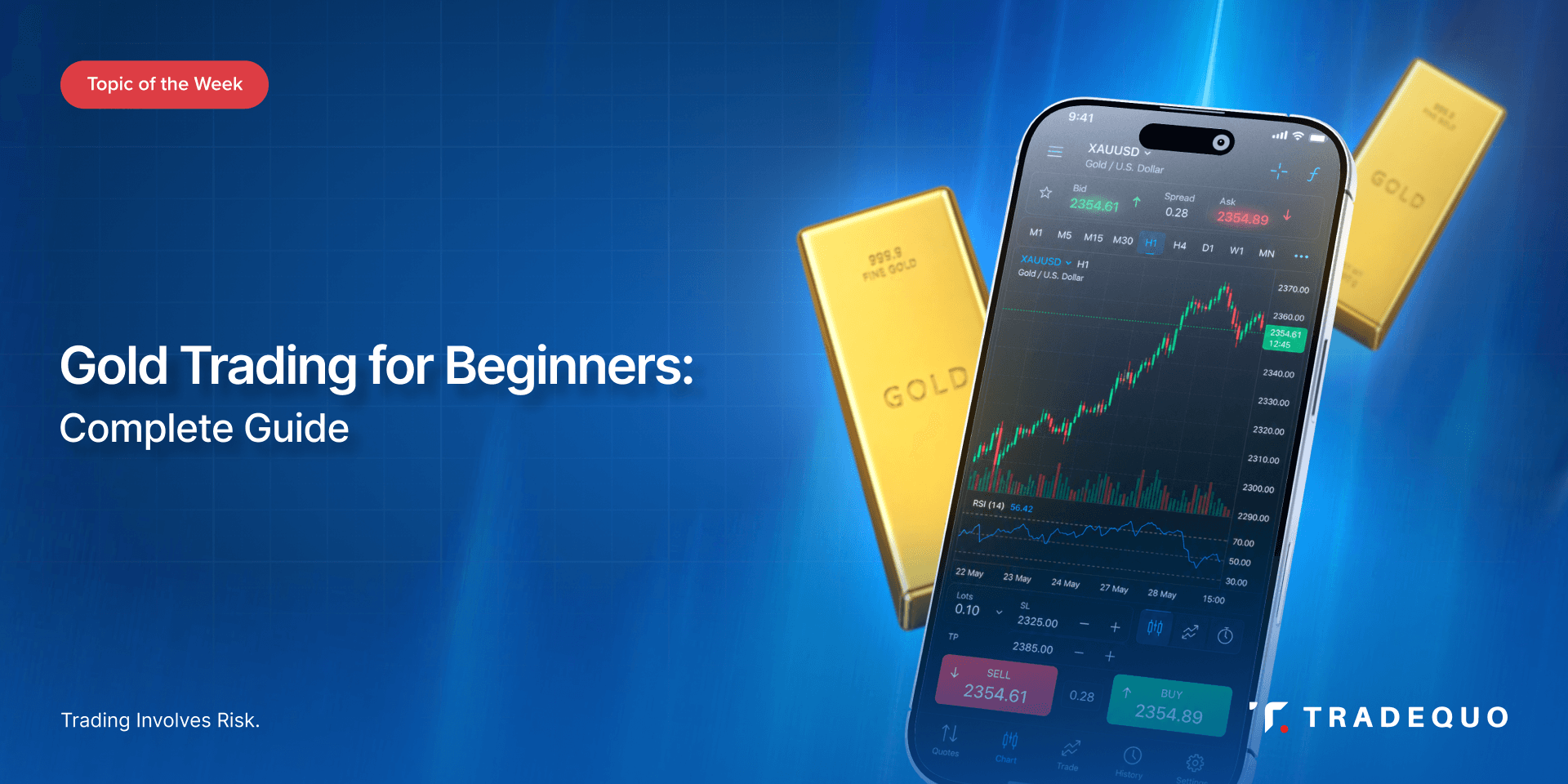
Warum Goldhandel in den heutigen Märkten immer noch eine Rolle spielt
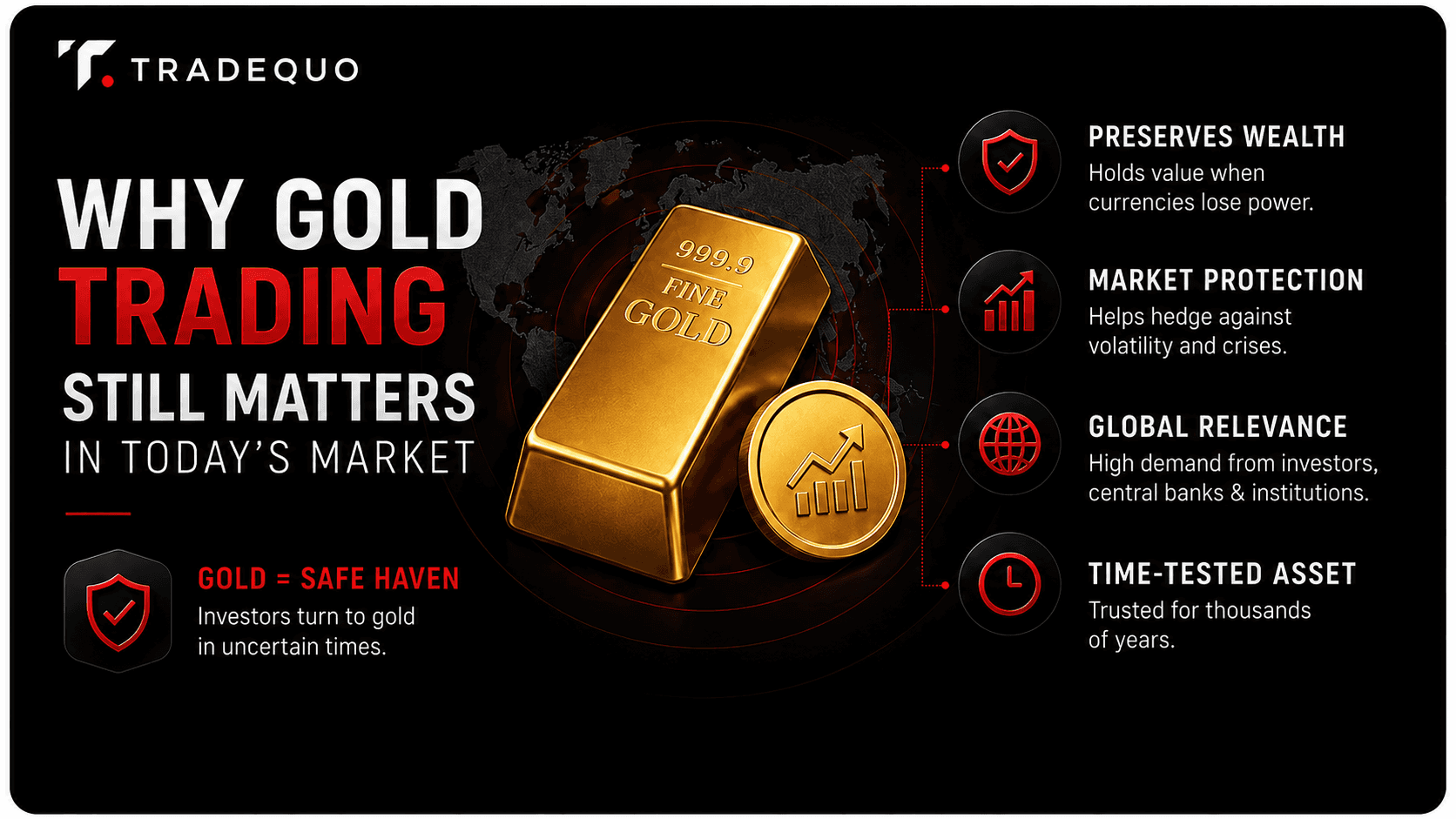
Gold hat Imperien überdauert, Finanzkrisen überstanden und ist einer der begehrtesten Vermögenswerte in der Geschichte der Menschheit geblieben. Diese Beständigkeit ist kein Zufall. Seit Jahrtausenden nutzten Zivilisationen vom alten Ägypten bis zum Römischen Reich Gold als Währung, Wertspeicher und Statussymbol für Wohlstand. Heutzutage betreiben Händler auf der ganzen Welt Goldhandel – nicht aus Tradition, sondern weil Gold weiterhin einen sehr realen finanziellen Nutzen erfüllt.
Wenn Aktienmärkte ins Wanken geraten, Währungen an Kaufkraft verlieren oder geopolitische Spannungen zunehmen, tendieren Anleger dazu, Geld in Gold umzuschichten. Dieses Verhalten hat ihm den Titel eines sicheren Hafens eingebracht. Zu verstehen, warum Menschen mit Gold handeln, und – was noch wichtiger ist – wie man dies effektiv tut, bildet das Fundament für jeden soliden Leitfaden für den Goldhandel.
Egal, ob Sie völlig neu an den Finanzmärkten sind oder einen Hintergrund im Forex-Handel mitbringen: Dieser Leitfaden zum Goldhandel führt Sie durch alles, was Sie wissen müssen.
Was die Goldpreise auf dem Goldmarkt bewegt
Inflation, Deflation und Kaufkraft
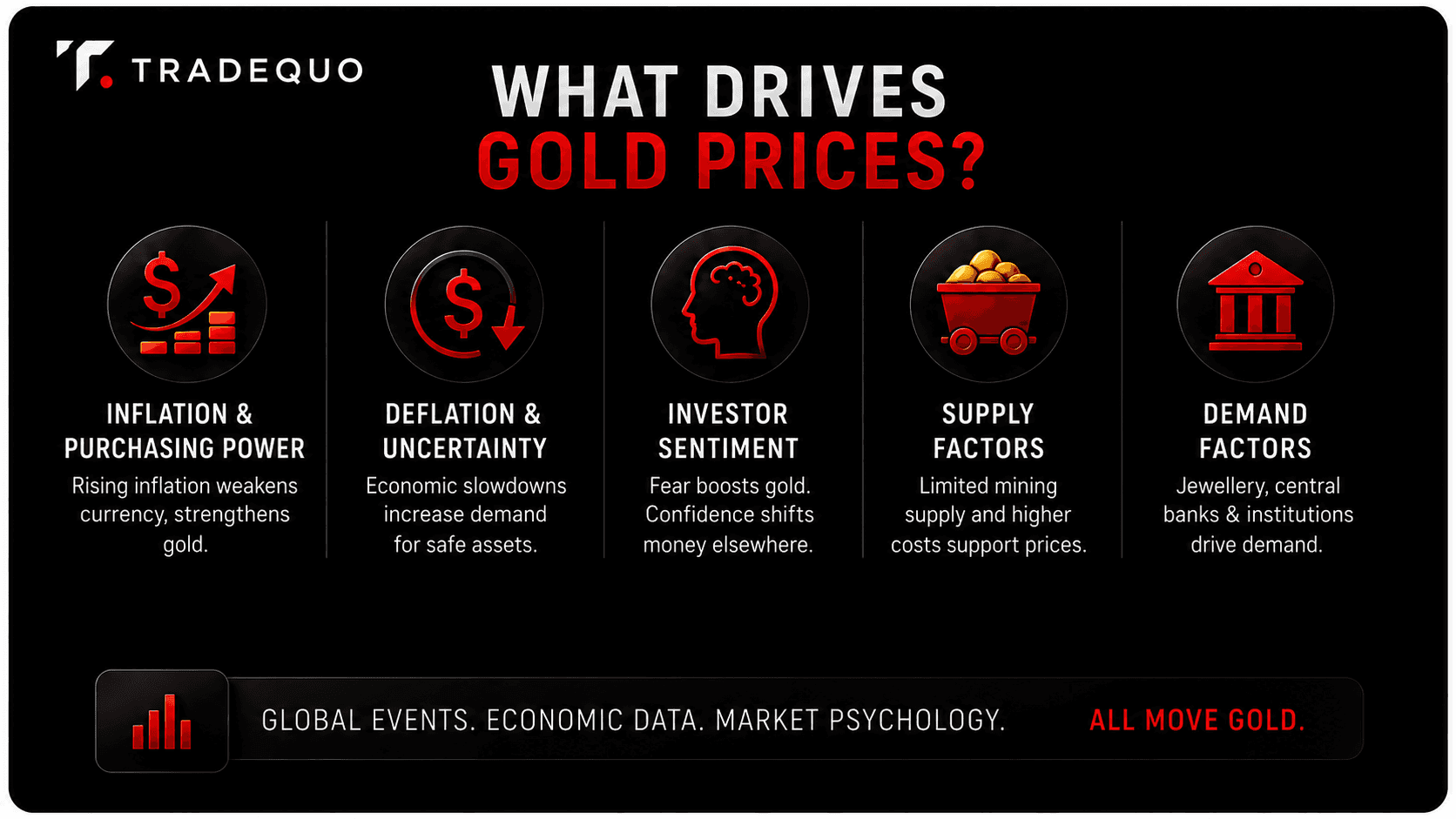
Einer der beständigsten Treiber der Goldpreisentwicklung ist die Inflation. Wenn die Inflation steigt, sinkt die Kaufkraft von Papiergeld, und Anleger wenden sich instinktiv dem Gold zu, da sein Wert nicht an eine einzelne Regierung oder Geldpolitik gebunden ist. Historisch gesehen fungiert Gold als Inflationsschutz, der den Wohlstand sichert, wenn Fiat-Währungen an Wert verlieren.
Auch eine Deflation kann die Nachfrage nach Gold ankurbeln, wenn auch aus anderen Gründen. In einem deflationären Umfeld, in dem die Wirtschaftsaktivität stark schrumpft, suchen Anleger oft die Sicherheit und Liquidität, die Gold bietet, anstatt Vermögenswerte zu halten, die an angeschlagene Unternehmen oder an Wert verlierende Rohstoffe gebunden sind.
Anlegerstimmung: Angst, Gier und globale Unsicherheit
Gold reagiert äußerst empfindlich auf die Stimmung der Anleger. In Zeiten globaler wirtschaftlicher Unsicherheit – sei es durch eine Finanzkrise, eine Pandemie oder einen eskalierenden geopolitischen Konflikt – steigt die Nachfrage nach Gold in der Regel sprunghaft an. Händler betrachten das Gold-Dollar-Paar XAU/USD oft als Barometer für die Marktangst. Wenn Angst herrscht, steigt der Goldpreis. Kehrt das Vertrauen zurück und steigt die Risikobereitschaft, schichten Händler häufig von Gold in Aktien oder renditestärkere Anlagen um.
Dieses Wechselspiel zwischen Angst und Gier ist ein Grund dafür, warum die Bewegungen des Goldpreises selbst für erfahrene Händler abrupt und manchmal unvorhersehbar sein können.
Grundlagen von Angebot und Nachfrage
Auf der Angebotsseite spielt die Minenproduktion eine wesentliche Rolle. Gold ist eine endliche Ressource, und die Kosten sowie die Komplexität des Abbaus tragen dazu bei, eine Untergrenze für den Preis festzulegen. Wenn die Produktion sinkt oder teurer wird, verknappt sich das Angebot, und die Preise können entsprechend steigen.
Die Nachfrage hingegen kommt aus verschiedenen Richtungen. Schmuck ist weltweit nach wie vor einer der größten Abnehmer von physischem Gold, wobei Indien und China einen erheblichen Teil der jährlichen Nachfrage ausmachen. Ein weiterer wichtiger Faktor sind die Käufe der Zentralbanken. In den letzten Jahren haben die Zentralbanken der Schwellenländer ihre Goldreserven aufgestockt, um die Abhängigkeit vom US-Dollar zu verringern, und große institutionelle Käufe können die Marktdynamik erheblich beeinflussen. Zusammen machen diese Angebots- und Nachfragefaktoren den Goldhandelsmarkt zu einem ausgesprochen komplexen und vielschichtigen Umfeld.
Möglichkeiten des Goldhandels: Die Instrumente erklärt
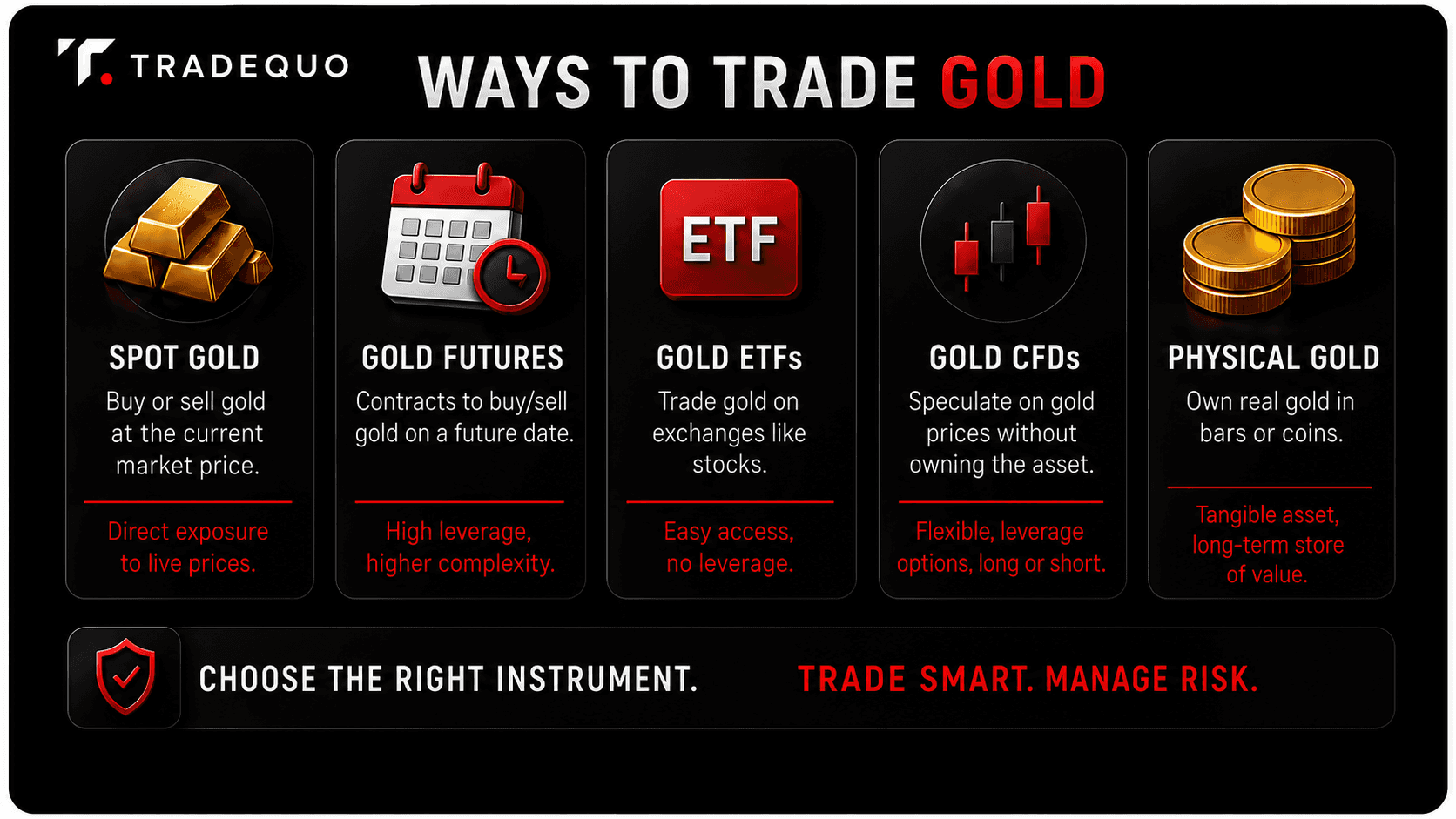
Kassa-Goldhandel (Spot Gold)
Der Kassa-Goldhandel beinhaltet den Kauf oder Verkauf von Gold zum aktuellen Marktpreis mit sofortiger Abwicklung. Es ist der direkteste Weg, an der Goldpreisentwicklung zu partizipieren, und ist auf Online-Handelsplattformen weit verbreitet. Der Kassahandel bietet Ihnen direkten Zugang zu Live-Preisen, erfordert jedoch in der Regel mehr Kapital, da er nicht über integrierte Hebelstrukturen verfügt, wie es bei einigen anderen Instrumenten der Fall ist.
Gold-Futures-Handel
Gold-Futures-Kontrakte sind Vereinbarungen zum Kauf oder Verkauf einer bestimmten Menge Gold zu einem im Voraus festgelegten Preis an einem zukünftigen Datum. Futures werden hauptsächlich von institutionellen Händlern und gewerblichen Hedgern genutzt, stehen aber auch Kleinanlegern offen. Sie bieten eine erhebliche Hebelwirkung, die sowohl potenzielle Gewinne als auch Verluste verstärkt, und sie haben Verfallsdaten, die Händler sorgfältig im Auge behalten müssen. Der Futures-Handel ist komplexer und eignet sich im Allgemeinen besser für Händler, die bereits Erfahrung mit Rohstoff-Handelsstrategien haben.
Gold-ETF-Handel
Gold-ETFs (Exchange Traded Funds) bilden den Goldpreis ab und werden wie Aktien an den Börsen gehandelt. Sie sind beliebt bei Anlegern, die in Gold investieren möchten, ohne die Logistik des Besitzes von physischem Metall bewältigen zu müssen. ETFs sind in der Regel kostengünstiger, leicht zugänglich und erfordern keine Fachkenntnisse über die Mechanismen von Futures. Allerdings bieten sie in der Regel keine Hebelwirkung, was sie für aktive, kurzfristige Trader, die von täglichen Goldpreisschwankungen profitieren möchten, weniger attraktiv macht.
Gold-CFD-Handel
CFDs (Contracts for Difference) ermöglichen es Händlern, auf die Preisentwicklung von Gold zu spekulieren, ohne den zugrunde liegenden Vermögenswert zu besitzen. Der Gold-CFD-Handel ist im Online-Goldhandel weit verbreitet, da er eine flexible Hebelwirkung, die Möglichkeit, Long- oder Short-Positionen einzugehen, und relativ niedrige Einstiegskosten bietet. Plattformen, die CFDs auf XAU/USD anbieten, ermöglichen Händlern den Zugang zu den Echtzeit-Goldmärkten mit integrierten Tools wie Stop-Losses und Echtzeit-Charts. Es ist jedoch zu beachten, dass der gehebelte Handel mit CFDs das Risiko ebenso wie die Gewinnchancen vergrößert, was ein Risikomanagement von Anfang an unerlässlich macht.
Fundamentalanalyse in der Goldhandelsstrategie
Fundamentalanalyse im Goldhandel bedeutet, die umfassenderen wirtschaftlichen und politischen Kräfte zu untersuchen, die den Preis beeinflussen. Hier werden makroökonomische Indikatoren zu Ihren wichtigsten Werkzeugen.
Realzinsen und Zentralbankpolitik
Das Verhältnis zwischen Gold und Realzinsen ist eine der wichtigsten Dynamiken auf dem Goldmarkt. Realzinsen sind die Nominalzinsen abzüglich der Inflation. Wenn die Realzinsen niedrig oder negativ sind, sinken die Opportunitätskosten für das Halten von Gold, da Anleihen und Sparkonten nur minimale Renditen abwerfen. Gold wird vergleichsweise attraktiv. Wenn die Realzinsen steigen, gerät Gold oft unter Abwärtsdruck, da renditeträchtige Vermögenswerte an Attraktivität gewinnen.
Die Politik der Zentralbanken ist direkt damit verknüpft. Entscheidungen der US-Notenbank Federal Reserve, der Europäischen Zentralbank und anderer großer Institutionen haben spürbare Auswirkungen auf die Goldmärkte. Eine restriktive Haltung (hawkish), die auf höhere Zinsen hindeutet, belastet in der Regel den Goldpreis. Eine lockerere Geldpolitik (dovish) stützt ihn tendenziell.
Zu beobachtende makroökonomische Indikatoren
Händler, die der Fundamentalanalyse folgen, behalten Indikatoren wie den US-Verbraucherpreisindex für Inflationsdaten, die Beschäftigtenzahlen außerhalb der Landwirtschaft (Non-Farm Payrolls) für die Stärke des Arbeitsmarktes und die BIP-Wachstumszahlen genau im Auge. Auch der US-Dollar-Index ist von entscheidender Bedeutung, da Gold weltweit in Dollar bepreist wird. Ein stärkerer Dollar übt im Allgemeinen Druck auf den Goldpreis aus, während ein schwächerer Dollar ihn tendenziell stützt.
Geopolitische Entwicklungen wie Handelskonflikte, bewaffnete Auseinandersetzungen oder plötzliche politische Richtungswechsel großer Regierungen können alle anderen Fundamentaldaten vorübergehend außer Kraft setzen und zu starken Käufen im sicheren Hafen führen, die eine rein technische Analyse nicht vorhergesagt hätte.
Technische Analyse für den Goldhandel
Für Händler, die sich auf den optimalen Zeitpunkt für Ein- und Ausstiege konzentrieren, bietet die technische Analyse eine strukturierte Methode, um Gold-Charts zu lesen und kurzfristige Bewegungen zu prognostizieren.
Gleitende Durchschnitte und Trendidentifikation
Gleitende Durchschnitte gehören zu den am häufigsten verwendeten Handelsindikatoren auf dem Goldmarkt. Die gleitenden Durchschnitte der 50-Tage- und 200-Tage-Linie werden von institutionellen und privaten Händlern besonders aufmerksam beobachtet. Wenn der Goldpreis die 200-Tage-Linie nach oben durchbricht, interpretieren dies viele Händler als bullisches Signal. Ein Durchbrechen nach unten signalisiert oft ein bärisches Momentum. Das Zusammenspiel zwischen kurz- und langfristigen gleitenden Durchschnitten, wie das Golden Cross oder Death Cross, kann ein nützlicher Ausgangspunkt für die Bestimmung der Trendrichtung sein.
RSI und Momentum-Indikatoren
Der Relative Strength Index (RSI) misst auf einer Skala von 0 bis 100, ob ein Vermögenswert überkauft oder überverkauft ist. Ein Wert über 70 deutet darauf hin, dass Gold vor einer Korrektur stehen könnte, während ein Wert unter 30 auf eine potenzielle Kaufgelegenheit hinweisen kann. Der RSI funktioniert am besten in Kombination mit anderen Indikatoren und nicht isoliert. Da Gold zu ausgeprägten Trends neigt, können überkaufte Bedingungen länger anhalten als in anderen Märkten.
Fibonacci-Retracements und Chartmuster
Fibonacci-Retracement-Levels werden von Goldhändlern häufig verwendet, um potenzielle Unterstützungs- und Widerstandszonen während Preiskorrekturen zu identifizieren. Nach einer deutlichen Rallye oder einem Ausverkauf korrigiert der Preis oft bis zu wichtigen Fibonacci-Marken wie 38,2 %, 50 % oder 61,8 %, bevor er seinen Trend fortsetzt.
Chartmuster wie symmetrische Dreiecke, steigende Kanäle und Schulter-Kopf-Schulter-Formationen tauchen regelmäßig auf Gold-Charts auf und können Händlern helfen, Ausbrüche oder Trendwenden vorwegzunehmen. Die Kombination dieser Tools mit klaren Unterstützungs- und Widerstandsniveaus liefert Ihnen ein vollständigeres Bild davon, wohin sich der Preis als Nächstes bewegen könnte.
Risikomanagement im Goldhandel
Zu wissen, wie man mit Gold handelt, ist nur die halbe Miete. Das Risikomanagement in einem volatilen Rohstoffmarkt unterscheidet die Händler, die langfristig erfolgreich sind, von denen, die es nicht sind.
Positionsgrößenbestimmung
Setzen Sie bei einem einzelnen Trade niemals mehr Kapital ein, als Sie sich zu verlieren leisten können. Ein gängiger Ansatz besteht darin, bei jeder einzelnen Position nicht mehr als ein bis zwei Prozent Ihres gesamten Handelskontos zu riskieren. Das bedeutet, dass Sie Ihre Positionsgröße basierend darauf berechnen, wo Sie Ihren Stop-Loss platzieren möchten, anstatt einfach einen festen Betrag einzusetzen und auf das Beste zu hoffen.
Stop-Losses
Ein Stop-Loss ist ein im Voraus festgelegtes Preisniveau, bei dem Ihr Trade automatisch geschlossen wird, um weitere Verluste zu begrenzen. Im Goldhandel, wo Preisschwankungen von zehn bis zwanzig Dollar in einer einzigen Sitzung keine Seltenheit sind, ist das Handeln ohne Stop-Loss ein unnötiges Risiko. Das Setzen eines Stop-Loss vor dem Einstieg in einen Trade erzwingt Disziplin und schützt Ihr Kapital davor, dass ein einziger schlechter Trade einen erheblichen Teil Ihres Kontos aufzehrt.
Diversifikation und realistische Erwartungen
Selbst erfahrene Trader stecken nicht ihr gesamtes Kapital in Gold. Die Diversifizierung von Vermögenswerten über verschiedene Instrumente und Märkte hinweg reduziert die Auswirkungen einzelner Verlustpositionen. Gold kann als Absicherung gegen allgemeinere Portfoliorisiken dienen, sollte jedoch als ein Bestandteil einer Strategie und nicht als die gesamte Strategie fungieren.
Es lohnt sich auch, eine Frage zu beantworten, die sich viele Anfänger stellen: Ist der Goldhandel profitabel? Die ehrliche Antwort lautet: Er kann es sein, erfordert aber stetigen Aufwand, Weiterbildung und Disziplin. Die Händler, die ihn als eine zu entwickelnde Fähigkeit und nicht als Abkürzung zu schnellem Geld betrachten, erzielen meist langfristige Ergebnisse.
Starten Sie Ihre Goldhandelsreise richtig
Gold bleibt einer der dynamischsten und am aktivsten gehandelten Vermögenswerte an den globalen Finanzmärkten. Sein Preis wird von Inflationserwartungen, Zentralbankentscheidungen, geopolitischen Ereignissen, der Schmucknachfrage und der Anlegerstimmung geprägt – Faktoren, die auf eine Weise zusammenwirken, die aufmerksame, gut vorbereitete Händler belohnt.
Die verschiedenen verfügbaren Instrumente, von Kassa-Gold und Futures bis hin zu ETFs und CFDs, bedeuten, dass Sie einen Ansatz wählen können, der zu Ihrer Erfahrung, Ihrem Kapital und Ihren Handelszielen passt. Unabhängig davon, ob Sie die Fundamentalanalyse, die technische Analyse oder eine Mischung aus beiden bevorzugen: Der Aufbau einer beständigen Routine rund um Recherche, Praxis und diszipliniertes Risikomanagement ist der zuverlässigste Weg nach vorn.
Der klügste erste Schritt für jeden Anfänger ist die Eröffnung eines Demokontos, auf dem Sie alles in diesem Leitfaden Gelernte anwenden können, ohne echtes Kapital zu riskieren. TradeQuo macht diesen Schritt einfach – mit echten Marktbedingungen, integrierten Risikomanagement-Tools und der gesamten Palette an Goldhandelsinstrumenten, um Ihr Vertrauen aufzubauen, bevor Sie echtes Geld einsetzen. Zudem bietet es Ihnen die Flexibilität, Gold auch am Wochenende zu handeln, sodass marktbewegende Nachrichten nie bis Montag warten müssen.
FAQ
Ist der Goldhandel für Anfänger profitabel?
Das kann er sein, aber nur mit ständiger Praxis, diszipliniertem Risikomanagement und der Bereitschaft, ihn als eine Fähigkeit und nicht als Abkürzung zu schnellen Gewinnen zu betrachten.
Was ist der beste Weg, um mit dem Goldhandel zu beginnen?
Die meisten Anfänger beginnen mit CFDs oder ETFs, da diese weniger Kapital und Komplexität erfordern als Futures. Unabhängig vom Instrument ist ein Demokonto jedoch immer der sicherste erste Schritt.
Was bewegt den Goldpreis am meisten?
Realzinsen, die Stärke des US-Dollars, Inflationsdaten und die Politik der Zentralbanken sind kurz- bis mittelfristig die größten Treiber, während geopolitische Erschütterungen all diese Faktoren vorübergehend außer Kraft setzen können.
Ist Goldhandel besser als eine Goldanlage?
Der Handel (über CFDs oder Futures) eignet sich für diejenigen, die kurzfristige Preisbewegungen mit Hebelwirkung nutzen möchten, während die Anlage (über ETFs oder physisches Gold) für diejenigen geeignet ist, die eine langfristige Vermögenssicherung anstreben.
Wie viel Geld brauche ich, um mit dem Gold-CFD-Handel zu beginnen?
Dies variiert je nach Broker, aber CFDs haben dank flexibler Hebelwirkung im Allgemeinen niedrigere Einstiegskosten als der Kassa- oder Futures-Handel. Überprüfen Sie vor dem Start die Mindesteinzahlungs- und Margin-Anforderungen Ihrer Plattform.
Kann ich Gold am Wochenende handeln?
Die regulären Kassa- und Futures-Märkte schließen am Wochenende, aber einige Broker, darunter TradeQuo, bieten den Goldhandel am Wochenende an, sodass Sie nicht handlungsunfähig sind, wenn außerhalb der Marktzeiten wichtige Nachrichten veröffentlicht werden.