You close a trade, feel pretty good about it, and two weeks later, you can't remember why you entered it in the first place. Was it a technical setup? A news catalyst? Pure gut feeling? Without a reliable record, even the most experienced traders find themselves repeating mistakes they swore they'd never make again.
That's where trading journals come in. Not the dusty notebook kind, but purpose-built tools designed to track every detail of your trades, identify what's working, and spotlight the patterns you might be missing. Whether you're a day trader executing dozens of positions daily or a swing trader working a few setups per month, there's a journal built specifically for your needs.
Let me walk you through the best trading journals available right now, breaking down what each one offers, what it costs, and which type of trader will get the most value from it.
Key Takeaways
A modern trading journal helps improve your trading by tracking trade details, analyzing trading performance, and revealing hidden patterns across different asset classes.
Tools with automated journaling and advanced analytics give traders worldwide a real trading edge, reducing manual work and boosting clarity.
Importing trades directly from brokers saves time and makes your trade history far more accurate.
The best journal is the one you’ll use consistently; choose based on your workflow, preferred trading platforms, and overall trading plan.
Why You Need a Trading Journal Tool More Than You Think
Before we dive into the reviews, let’s pause for a second. You might be thinking, "Can't I just use a trading journal spreadsheet?"
You absolutely can. But serious traders know that manual entry often leads to fatigue. When you have to type in every entry price, exit price, and commission fee, you start skipping days. And when you skip days, you lose the data that could save your portfolio.
Modern trading journal software does the heavy lifting for you. It imports trades directly from your broker, calculates your P&L instantly, and most importantly, uses advanced analytics to show you why you are winning or losing. It transforms random data points into a story about you as a trader.
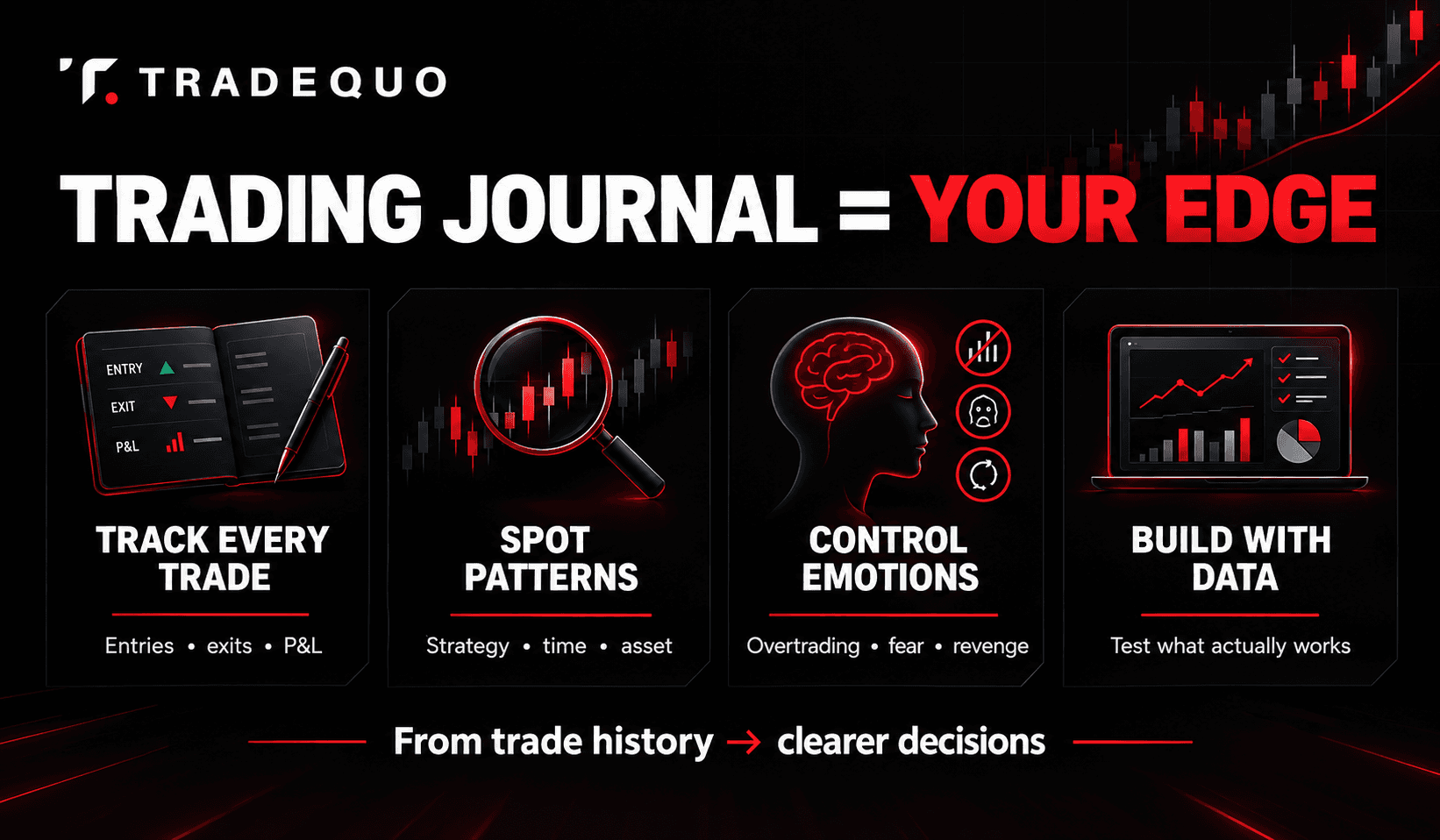
Uncovers Your Hidden Patterns in Trading Strategy:
You might think a trading strategy isn't working, but your journal could reveal it’s an incredibly profitable strategy, but only on Tuesday mornings, or only when a specific indicator confluence appears. Without a journal, that nuance is lost in the noise.
Manages Your Emotional Biases:
Writing down your rationale before the trade, and your emotional state during it, is powerful. It exposes when you’re revenge trading, overtrading out of boredom, or exiting winners too early out of fear.
Builds an Evidence-Based Edge:
Your edge isn’t a secret formula; it’s a repeatable process that works more often than not. A journal provides the hard evidence of what that process truly is, allowing you to refine it with precision.
Are you terrible at trading on Fridays? Do you lose money between 10 AM and 11 AM? A good journal tells you this without you even asking. It helps you build confidence by proving what works, not just what feels good.
What Makes a Good Trading Journal in 2026
Before diving into specific tools, let’s outline the must-haves and nice-to-haves that separate a “diary” from a “trading edge system”:
Automated trade import & sync: If you trade via brokers or multiple accounts, manually entering every trade quickly becomes a burden. A modern journal should support broker integrations or CSV imports.
Analytics & trading performance reports: Charts, win/loss ratios, average return, drawdowns, expectancy, results per strategy/instrument/day/timeframe: a quality journal helps you spot what works and what doesn’t.
Flexibility for different asset classes: Stocks, options, futures, forex - depending on your trading style.
Psychology & behavioral tracking (optional but powerful): Tags for setups, emotions/trader mindset, risk adherence; this can highlight repeated mistakes beyond pure numbers.
Ease of use & interface: The more intuitive, the more likely you’ll keep journaling consistently.
Scalability: As your trade volume or complexity grows (multiple accounts, higher frequency, several asset classes), the journal should handle the load without breaking.
Depending on your volume and goals, a simple spreadsheet might cut it, but if you want to build a trading edge, specialized software often pays for itself.
A Close Look at the Best Trading Journals for 2026
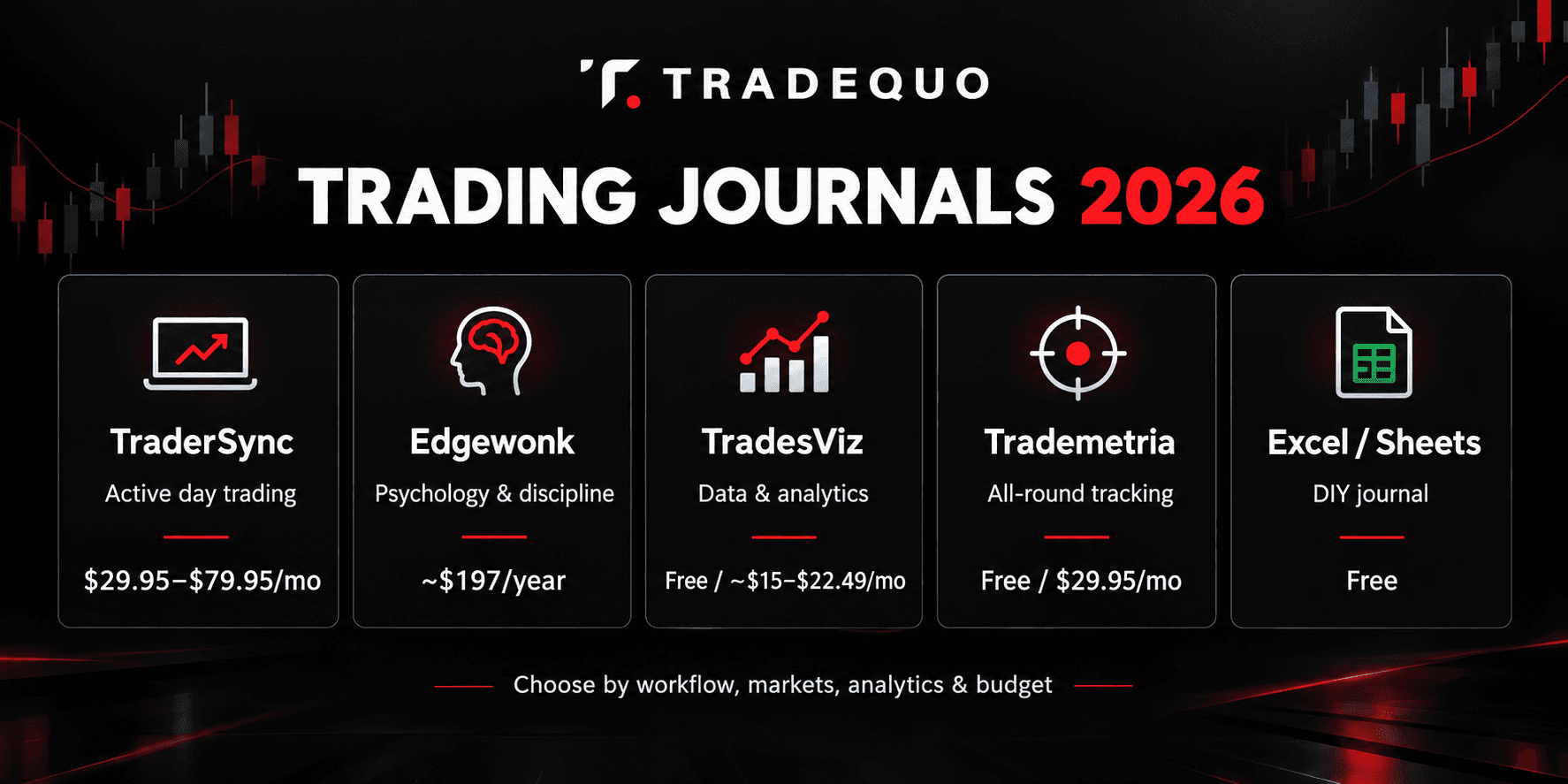
We have tested and analyzed the top contenders for 2026 to see which ones actually deliver on their promises. Here is the breakdown of the best trading journal apps and platforms available right now.
TraderSync: The Day Trader’s Powerhouse
If you are a day trader who executes multiple trades a day, you need speed and depth. TraderSync has established itself as a leader for a reason. It is slick, it is fast, and it feels like it was built by people who actually trade. If you're a professional trader chasing P&L precision, it'll feel like an extension of your trading platform.
Best Use Case: Active day trading (Stocks, Options, Futures). For the trader who wants a powerful, cloud-based journal that works beautifully on both desktop and mobile without a clunky interface.
Key Features:
Market Replay: This is a game-changer. You can replay your trades tick-by-tick to see exactly what the market looked like when you pulled the trigger. It’s like watching game tape for athletes.
AI Insights: The platform analyzes your data to generate AI insights. It might tell you, "You perform 20% better when you go long on tech stocks," or "You consistently lose money on short setups."
Automatic Imports: Seamlessly syncs with over 700 brokers.
Pricing:
Pro: ~$29.95/month (Basic analytics).
Premium: ~$49.95/month (Includes market replay).
Elite: ~$79.95/month (Advanced AI and management tools).
Note: There is often a 7-day trial to test the waters.
Pros & Cons: The interface is beautiful and user-friendly. Handles options trading like a champ. However, the advanced AI features come at a steeper price point compared to some competitors.
Edgewonk Trading Journal: The Master of Trading Psychology
Edgewonk takes a slightly different approach. While it crunches numbers beautifully, its real superpower is focusing on you. It is designed to track your mental state and trading psychology as much as your entry and exit points.
Best Use Case: Best for forex traders or futures pros seeking psychological edges in swing setups. It's like having a trading coach who spots your blind spots. Traders focused on long-term growth - risk management, strategy optimization, emotional discipline, and backtesting - will definitely benefit.
Key Features:
The Mental Journal: You can track your emotions before, during, and after a trade. Were you anxious? Greedy? Bored? Edgewonk correlates these emotions with your performance.
Gamification: It uses "Milestones" and challenges to keep you engaged and improving.
Trade Management Analysis: It shows you "potential performance", i.e., how much you could have made if you hadn't broken your rules.
Pricing: Typically, a yearly license (approx. $197/year). They have moved away from the old one-time fee model to keep the updates flowing.
Pros & Cons: It is fantastic for finding hidden patterns in your behavior. Great for traders who want discipline, psychological insight, and custom performance metrics → ideal for swing traders, forex/futures traders, prop-firm participants. However, it doesn't always support as many automatic broker imports for US stock brokers as TraderSync does, making it sometimes better for forex traders or those willing to do a bit of manual uploading.
TradesViz: The Data Analyst’s Dream
If you love data, I mean, really love data, TradesViz is your playground. It offers arguably the most comprehensive charting and visualization options on the list.
Best Use Case: Power users and budget-conscious traders who want maximum features. Best for day traders and swing traders in diverse markets - imagine dissecting a multi-leg options play or forex pair with historical data overlays. Serious traders love how it turns raw trading data into actionable insights.
Key Features:
Visualization: Over 600 statistics and charts available. You can slice and dice your trading data in ways you didn't know existed.
AI Q&A: You can literally ask the AI queries about your data.
Seasonality Analysis: Helps you understand broader market trends.
Pricing:
Free Tier: Generous free version allowing up to 3,000 stock executions a month (manual/file upload).
Pro: ~$14.99–$22.49/month with yearly subscription.
Pros & Cons: The value for money is unbeatable. Broad asset coverage, AI-powered trade analysis, and that free tier keep casual users hooked. The sheer volume of data can be overwhelming for a beginner, and the interface, while functional, isn't as "cool" as TraderSync. Furthermore, non-stock assets are limited in free mode.
Trademetria: The All-Rounder
Trademetria keeps it simple yet powerful with customizable widgets, like an economic calendar or ticker tape, right on your dashboard. It handles stocks, options, forex, futures, and CFDs, offering reports on everything from win rates to hidden patterns. Import trades easily and export for deeper dives.
Best Use Case: A go-to for swing traders in forex, where custom reports reveal strategy sweet spots. It's less overwhelming for those easing into advanced analytics.
Key Features:
Fundamental Research: It pulls in basic fundamental data for the stocks you trade.
P&L Simulator: Helps you visualize "what if" scenarios.
Metric Tracking: Tracks essential metrics like profit factor and Sharpe ratio clearly.
Pricing:
Basic: Free (limited to 30 orders/month).
Pro: $29.95 monthly or $249 yearly
Pros & Cons: It’s a solid, stable platform. It handles options trading spreads better than some competitors. However, it lacks the flashy "replay" features of the newer platforms. The basic free view lacks polish; volume limits push upgrades.
Excel/Google Sheets: The DIY Approach
Sometimes the perfect journal is the one you build yourself. Trading journal spreadsheets remain popular because they're completely customizable and require zero subscription costs.
You can find excellent free trading journal templates online that provide structured frameworks for logging trades, calculating metrics, and analyzing performance. With some basic spreadsheet skills, you can modify these templates to match your exact trading style and preferences.
The main advantage is flexibility; you decide exactly what data matters and how to display it. Many successful traders prefer this hands-on approach because it forces them to engage with every trade consciously rather than relying on automated imports.
Best for: Budget-conscious traders, those with specific tracking needs, and traders who prefer full control over their data.
Pricing: Free if you use Google Sheets or already own Excel.
Trade-offs: Requires manual data entry, which is time-consuming and prone to errors. No automated analytics or pattern recognition. You'll need to build your own formulas to calculate performance metrics.
If you are just starting and have a zero budget, a free trading journal template in Excel or Google Sheets is a fine place to start. It builds the habit. You can list your ticker symbol, entry, exit, and trade notes.
However, the limitations hit fast. A spreadsheet cannot automatically generate a heat map of your performance by the hour of the day. It cannot replay the market action for you. It cannot automatically calculate your risk limits or drawdown curves without complex coding.
If you are a serious trader looking to scale, trading journal software isn't an expense; it’s an investment in your business. It saves you time on data entry so you can focus on trading strategy testing and trade analysis.
Which Trading Journal Can You Use on TradeQuo?
TradeQuo does not have a built-in, exclusive trading journal. However, because TradeQuo fully supports MetaTrader 4 (MT4), MetaTrader 5 (MT5), and TradingView, you can easily use professional journaling tools in three ways:
Automated Online Journals: Connect your TradeQuo MT4/MT5 account to third-party platforms like TradesViz, Tradervue, or TraderSync. These platforms automatically sync and import your trade data, offering advanced AI analytics and performance metrics.
Free Analytics via Myfxbook: Link your TradeQuo account to Myfxbook using your investor password. It acts as a free, automated trading journal that tracks your win rate, profit factor, and equity curve in real time.
TradingView’s Built-in Journal: If you use TradeQuo with TradingView, you can utilize the native "Trading Journal" tab at the bottom of the interface to write down notes directly while analyzing charts.
How to Choose Your Trading Journal

The honest answer is that the best trading journal is the one you'll actually use consistently. That might sound obvious, but it's critical. A sophisticated platform that intimidates you or takes too long to update won't help your trading, no matter how powerful its features are.
Here's how to think about your choice:
Match the tool to your trading frequency. Day traders executing dozens of trades daily absolutely need automated import capabilities; manual entry would become a part-time job. Swing traders taking a few positions per week can often manage with simpler solutions.
Consider your experience level. Beginning traders benefit from journals with educational components and clear guidance on which metrics matter most. Experienced traders often want more granular control and advanced analysis options.
Think about your goals. If you're working with a coach or sharing trades with an accountability group, platforms with collaboration features make sense. If you're focused solely on personal performance improvement, those features matter less.
Evaluate your technical comfort. Some traders love diving into data and building custom spreadsheets. Others prefer elegant, automated solutions that require minimal setup.
Budget appropriately. Free tiers and spreadsheet solutions work fine for many traders, but if you're generating significant income from trading, investing $30-100 monthly in a proper journal tool is a rounding error that can meaningfully improve your performance.
Final Thoughts
In 2026, the idea of a trading journal has evolved far beyond a “diary.” It’s now a powerful analytics engine, a performance mirror, a behavioral coach, and, when used consistently, one of the most valuable tools a trader can have.
If I were you, starting fresh, I’d begin with a simple spreadsheet or free-tier journal just to build the habit. As trades increase and strategy evolves, I’d graduate to a tool like TradesViz or Edgewonk. That way, by the time I’m juggling multiple instruments, accounts, or aiming for serious growth, I already have years of clean historical data to analyze.
Because in trading, consistency and clarity beat randomness every time. Document your journey, learn from your mistakes, and make 2026 your most profitable year yet.
FAQs
1. Why do traders need a trading journal?
A journal helps you trade smarter by recording trade details, analyzing trading performance, and identifying what works in different market conditions.
2. Which trading journal is best for beginners?
Beginners often start with Excel or Google Sheets, then move to platforms with automated journaling once they need more structure, analytics, and multi–asset support.
3. Can a journal really give me a trading edge?
Yes. Journals highlight patterns in your trade history, helping you identify strengths, weaknesses, and the strategies that genuinely improve your trading.
4. What features matter most?
Look for advanced analytics, imports that sync trades directly from your broker, support for multiple asset classes, and flexible reporting tools.
5. Do trading journals support all trading platforms?
Most major journals integrate with popular trading platforms and brokers, though coverage varies. Always verify compatibility before committing.