El modelo de bróker introductor en el mercado de divisas se ha convertido en una de las formas más populares de crear un negocio en el mercado forex sin ejecutar operaciones ni gestionar los fondos de los clientes. Si usted es un operador, educador, comercializador o emprendedor que busca una nueva fuente de ingresos, comprender cómo funcionan los brókeres introductores puede abrirle oportunidades valiosas.
En esta guía, aprenderá qué es un bróker introductor, cómo se ganan las comisiones, cómo se aplican las normativas y los pasos exactos necesarios para empezar. También exploraremos el potencial de ingresos reales, los desafíos comunes y cómo elegir el programa de IB de forex adecuado.
¿Qué es un bróker introductor en forex?
Para entender qué es un bróker introductor, piense en un IB como el puente entre los operadores y los brókeres de forex. El negocio de un bróker introductor de forex se centra en encontrar y referir clientes a una firma de corretaje a cambio de comisiones generadas por la actividad operativa de esos clientes. Los brókeres introductores suelen operar a través de acuerdos de asociación con firmas de corretaje más grandes.
Un bróker introductor no retiene fondos de clientes, ni procesa depósitos, ni ejecuta operaciones, ni proporciona servicios de compensación. Esas responsabilidades siguen recayendo en el bróker o, en algunos mercados, en un intermediario de comisiones de futuros.
En cambio, el IB se centra en la captación de clientes, la educación, la gestión de relaciones y el soporte continuo, actuando como intermediario para los operadores. Muchos brókeres introductores operan de forma independiente, mientras que otros dirigen pequeñas empresas con equipos dedicados.
Cada cliente referido se conecta al bróker introductor a través de un código de referencia único o sistema de seguimiento. Esto permite al bróker atribuir la actividad operativa y calcular las comisiones con precisión.
En los Estados Unidos, es posible que los brókeres introductores deban registrarse en la NFA y estar regulados bajo las reglas de la CFTC. Los requisitos varían según la jurisdicción, por lo que cualquier persona interesada en convertirse en un IB debe revisar detenidamente las normativas locales.
¿Cómo funciona un bróker introductor de forex?
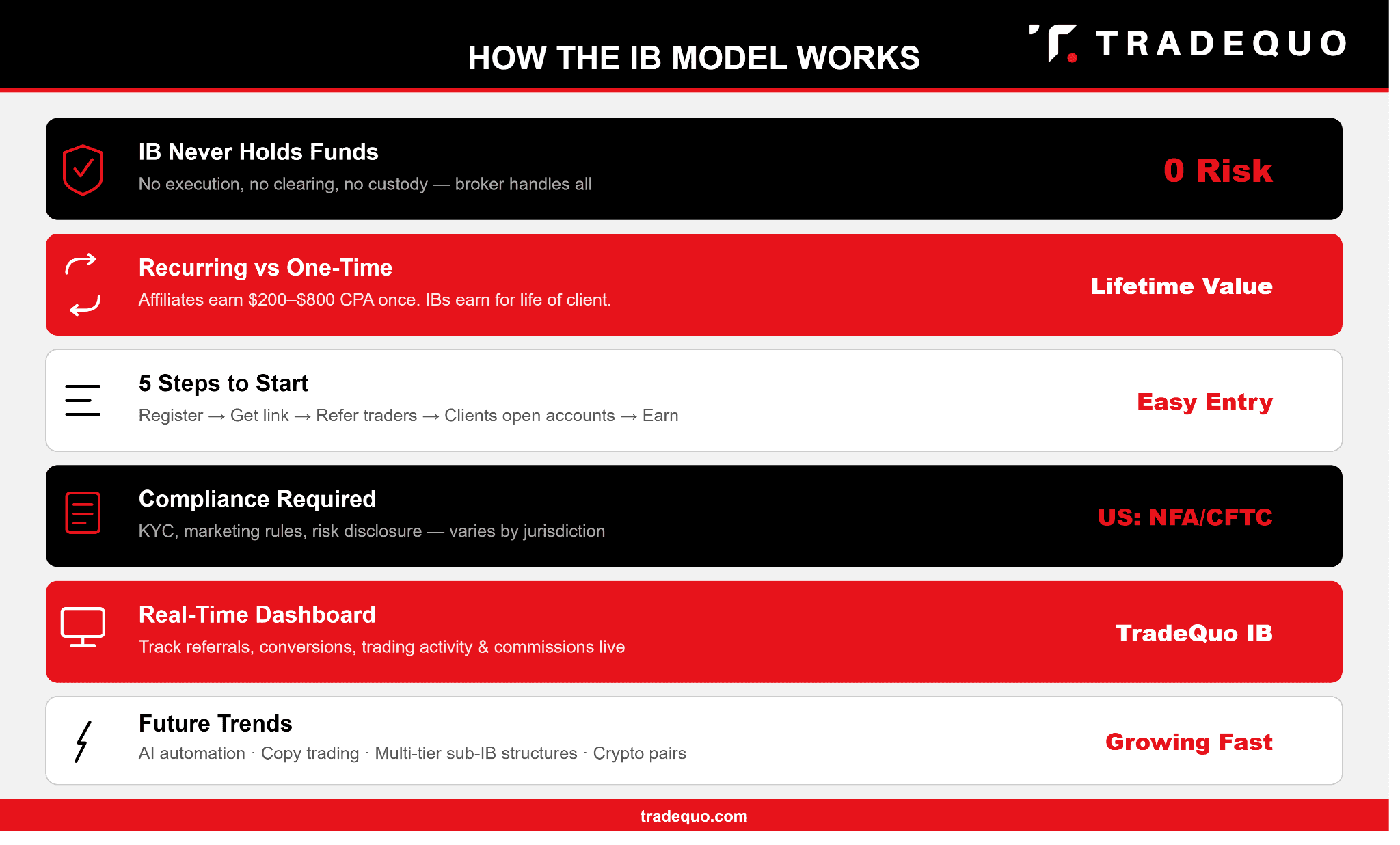
Un bróker introductor de forex normalmente comienza uniéndose a un programa de bróker ofrecido por un corretaje regulado. El proceso suele seguir cinco sencillos pasos:
Registrarse en el programa de IB del bróker.
Recibir un enlace o código de referencia único.
Referir operadores a través de contenido, redes, comunidades o contactos personales.
Los clientes acceden para abrir cuentas utilizando el enlace de referencia.
Ganar comisiones cada vez que esos clientes operen.
Una vez que los clientes se registran, el bróker etiqueta permanentemente esas cuentas en el perfil del IB. A medida que esos operadores participan en el mercado forex, el bróker realiza el seguimiento de la actividad y calcula las comisiones automáticamente.
El bróker se encarga de la ejecución de operaciones, la gestión de cuentas, la seguridad, el cumplimiento y la custodia de los fondos. El IB nunca toca el dinero del cliente.
Comisión de bróker introductor, participación en los ingresos, por lote y modelos híbridos
Las estructuras de comisiones de los brókeres introductores generalmente se dividen en tres categorías.
Participación en los ingresos
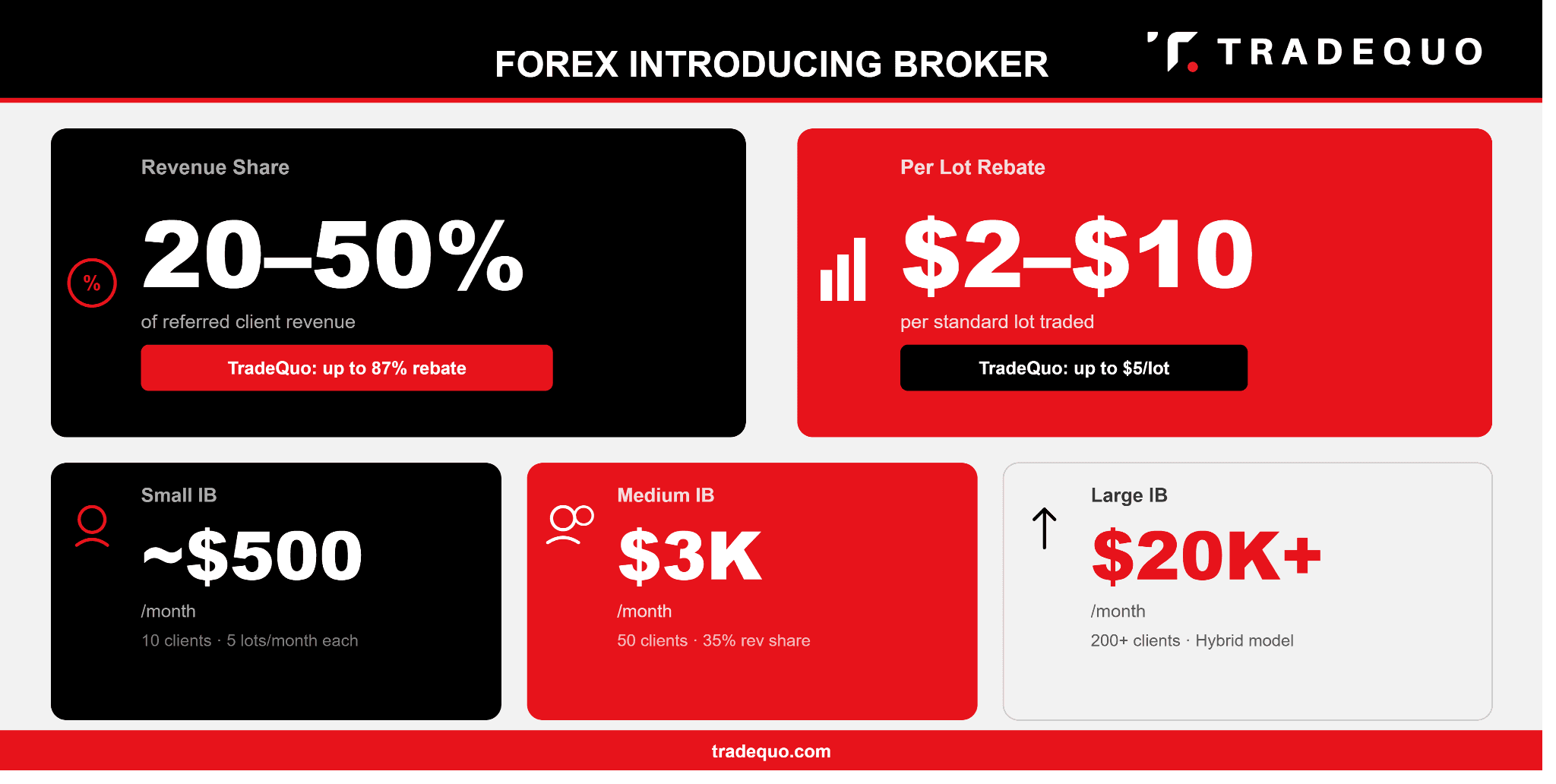
Bajo un acuerdo de participación en los ingresos, el IB recibe un porcentaje de los ingresos generados por los clientes referidos. Los acuerdos de participación en los ingresos varían significativamente entre los brókeres y pueden oscilar entre el 20 % y más del 50 %, dependiendo del bróker, el volumen de operaciones y el acuerdo de asociación.
Este modelo premia la retención de clientes a largo plazo porque los ingresos continúan mientras los operadores permanezcan activos.
Reembolso por lote
Un modelo por lote paga una cantidad fija por cada lote estándar negociado. Las tarifas típicas oscilan entre $2 y $10 por lote. Algunos programas de bróker pueden ofrecer tarifas más altas basadas en el rendimiento y el volumen de operaciones.
Esta estructura facilita la previsión de ingresos porque las comisiones están directamente vinculadas a la actividad.
Modelo híbrido
Una estructura híbrida combina ambos enfoques. Un IB recibe un reembolso fijo por lote negociado y, al mismo tiempo, gana un porcentaje de los ingresos del bróker. Muchos socios experimentados prefieren este modelo porque proporciona múltiples fuentes de ingresos.
Al evaluar la estructura de comisiones de un IB de forex, considere la frecuencia con la que operan sus clientes. Los operadores de alto volumen suelen funcionar mejor bajo acuerdos por lote, mientras que los clientes a largo plazo pueden generar un mayor valor a través de la participación en los ingresos.
Es importante destacar que las comisiones las paga el bróker y no se deducen directamente de la cuenta del operador.
Ingresos reales de un IB: ¿Qué se puede ganar realmente?
Muchas personas se unen a un programa de IB de forex debido a su potencial de ingresos recurrentes. Sin embargo, las ganancias varían significativamente según el volumen de operaciones, la retención de clientes y la estructura de comisiones.
Un pequeño bróker introductor con aproximadamente 10 clientes activos que operan cinco lotes al mes puede generar unos cientos de dólares mensuales.
Una operación de tamaño mediano con alrededor de 50 clientes activos que ganan una participación en los ingresos del 35 % puede generar potencialmente entre $2,000 y $3,000 al mes.
Los negocios más grandes que gestionan más de 200 clientes activos bajo estructuras de comisiones híbridas pueden generar $20,000 o más al mes.
El crecimiento de los ingresos depende principalmente de la actividad operativa más que de simplemente aumentar el número de clientes. Diez operadores activos a menudo pueden generar más ingresos que cincuenta cuentas inactivas.
Aunque sean recurrentes, estos no son ingresos pasivos. Los IB exitosos educan continuamente a los clientes, brindan soporte y fomentan el compromiso a largo plazo.
Programa de bróker introductor de forex frente a programa de afiliados: ¿Cuál es la diferencia?
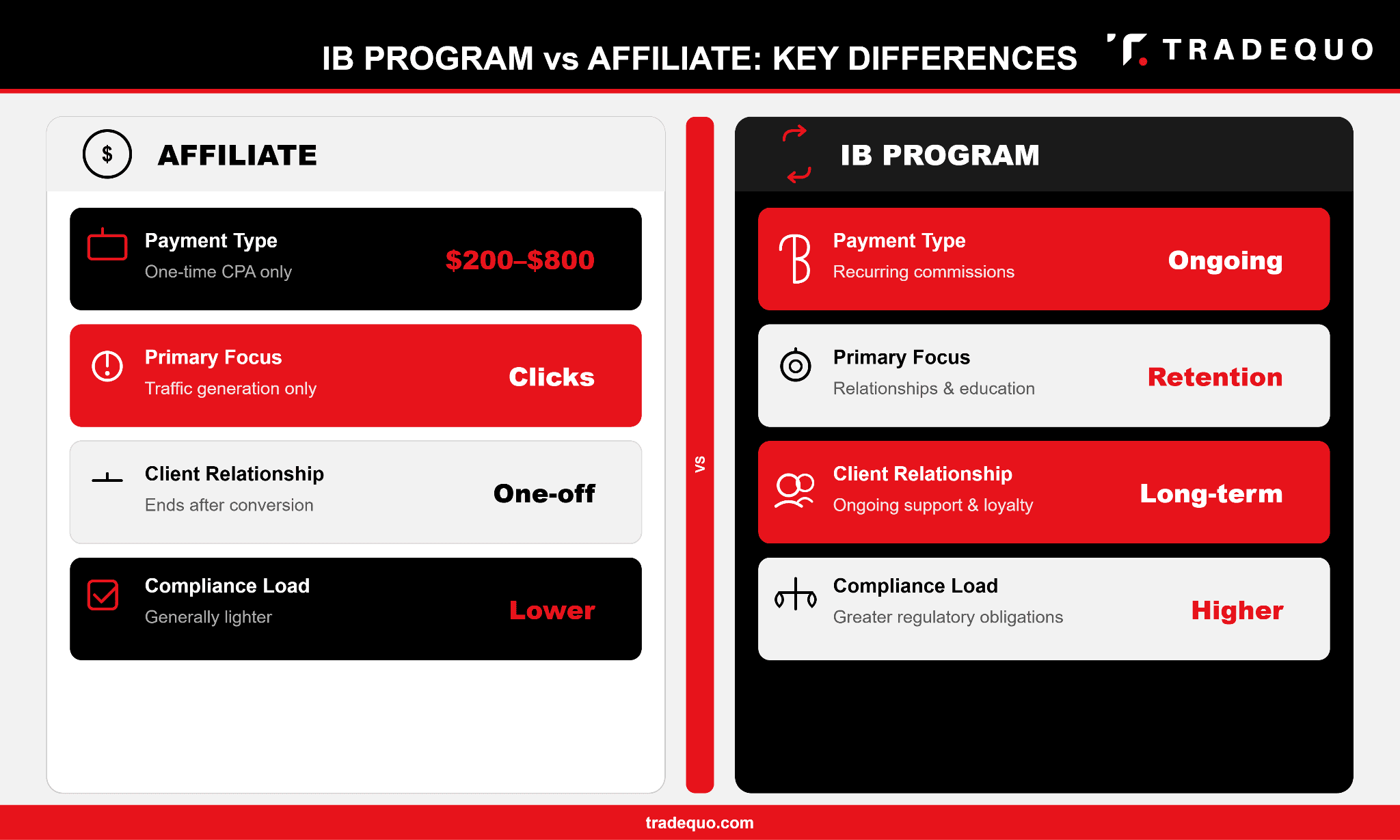
Muchos brókeres ofrecen oportunidades tanto de afiliados como de IB, pero los modelos funcionan de manera diferente. Un afiliado suele recibir un pago único de CPA cuando un cliente se registra y cumple ciertos requisitos. Los pagos a menudo oscilan entre $200 y $800 por cliente calificado. Una vez realizado el pago, la relación generalmente termina.
Un programa de IB de forex adopta un enfoque diferente. En lugar de recibir una recompensa única, el IB gana comisiones recurrentes durante todo el tiempo que el operador referido permanezca activo, lo que puede ayudar a maximizar el valor de por vida de los clientes referidos en comparación con las ofertas de CPA único. Esto hace que la relación se centre mucho más en la retención y el soporte del cliente.
Los afiliados se centran principalmente en la generación de tráfico. Los IB se centran en las relaciones, la educación, la comunicación y en ayudar a los operadores a tener éxito. Como resultado, las obligaciones normativas suelen ser mayores para los IB que para los afiliados.
También es posible que vea el término "programa de socios de forex" utilizado indistintamente con "programa de bróker introductor". Aunque los detalles varían entre los brókeres, ambos términos se refieren generalmente a asociaciones de referencia a largo plazo.
Cómo convertirse en un bróker introductor, paso a paso
Cualquier persona interesada en convertirse en un bróker introductor puede seguir un proceso sencillo.
Paso 1: Elija un bróker regulado
Investigue cuidadosamente a los posibles socios. Céntrese en la regulación y la reputación, ya que un bróker regulado ayuda a crear un entorno más seguro para los clientes y pagos más fiables para los socios, además de plataformas, calidad de ejecución y transparencia en las comisiones.
Paso 2: Complete el registro
Envíe la solicitud requerida y, cuando sea necesario, complete los formularios de cumplimiento y envíe los documentos de identificación y la información de KYC.
Paso 3: Revise los términos de la asociación
Comprenda las estructuras de comisiones, los calendarios de pago, las restricciones y los requisitos de cumplimiento antes de unirse.
Paso 4: Diseñe su estrategia de marketing
Cree contenido, recursos educativos, comunidades, canales sociales, boletines informativos, seminarios web o eventos locales para atraer a operadores, incluida una publicación en redes sociales dirigida a posibles operadores. Adapte esa difusión para atraer a inversores interesados en el comercio de divisas y, cuando corresponda, explique la gama de divisas disponibles a través del bróker.
Paso 5: Supervise y optimice
Utilice el portal del bróker para realizar un seguimiento de las referencias, los depósitos, la actividad operativa y las comisiones. Analice el rendimiento y perfeccione su enfoque con el tiempo.
Los requisitos para convertirse en un bróker introductor varían según el bróker y la jurisdicción.
¿Qué se necesita para tener éxito como bróker introductor de forex?
Los brókeres introductores exitosos suelen combinar tres puntos fuertes: acceso a una audiencia, una sólida comprensión de los mercados de forex y una comunicación constante. Ya sea a través de contenido, comunidades, seminarios web o redes personales, la confianza juega un papel fundamental a la hora de convertir las referencias en clientes a largo plazo.
El éxito también depende de elegir un bróker que ofrezca una experiencia operativa fiable, ya que la satisfacción del cliente afecta directamente a la retención y al crecimiento de las comisiones.
Cómo funciona el programa de IB de TradeQuo
El programa de Bróker Introductor (IB) de TradeQuo está diseñado para personas y empresas que buscan ganar comisiones mediante la referencia de operadores. Ya sea creador de contenido, educador, comercializador, gestor de comunidades o propietario de una empresa, el programa ofrece una forma de monetizar su audiencia sin necesidad de operar usted mismo.
Los socios ganan comisiones continuas basadas en la actividad operativa de sus clientes, con reembolsos de hasta el 87 %, hasta $5 por lote negociado y modelos de comisiones seleccionados que incluyen recompensas de CPA adicionales. También hay bonificaciones de rendimiento mensuales disponibles para los socios que cumplan con los objetivos de referencia.
Para respaldar el crecimiento, TradeQuo proporciona un panel de socios en tiempo real para realizar el seguimiento de las referencias, las conversiones, la actividad operativa y las comisiones. Los socios también reciben acceso a materiales de marketing, recursos promocionales y gestión de cuentas dedicada.
TradeQuo atiende a clientes a nivel global, ofrece soporte tanto a operadores minoristas como institucionales y proporciona múltiples tipos de cuentas, soporte multilingüe y cobertura de mercados internacionales. Para conocer todos los detalles sobre comisiones, requisitos y oportunidades de asociación, visite la página de Brókeres Introductores de TradeQuo.
¿Se necesita una licencia para convertirse en un bróker introductor?
Los requisitos de licencia dependen completamente de la ubicación. En los Estados Unidos, los brókeres introductores que solicitan clientes de forex minoristas pueden necesitar registrarse y cumplir con las reglas de la NFA y la CFTC. En muchas otras regiones, el bróker o FCM posee la licencia principal y puede asumir las principales responsabilidades operativas mientras los socios operan bajo el marco de cumplimiento del bróker.
Independientemente de la ubicación, generalmente se espera que los IB:
Completen los procedimientos de KYC
Sigan las regulaciones de marketing
Eviten afirmaciones engañosas sobre el rendimiento
Divulguen los riesgos de manera adecuada
Cumplan con las normas locales de publicidad
Trabajar con un bróker regulado reduce los riesgos de cumplimiento y ayuda a proteger tanto al IB como a sus clientes. Verifique siempre los requisitos locales antes de lanzar un negocio de bróker introductor.
Desafíos comunes que enfrentan los IB de forex y cómo superarlos
Aunque las recompensas financieras de trabajar como bróker introductor de forex son sustanciales, se encontrará con desafíos específicos en el camino. Un problema común ocurre cuando los clientes dejan de operar debido a las cambiantes condiciones del mercado, lo que provoca que su comisión de bróker introductor caiga inesperadamente. Construir una audiencia leal también requiere un tiempo y esfuerzo sustanciales, lo que significa que las ganancias de su negocio no aparecerán de la noche a la mañana.
Además, se enfrentará a una fuerte competencia de muchos IB que están promocionando las mismas plataformas operativas al público. Las estrictas normas de cumplimiento de marketing también pueden restringir las afirmaciones educativas específicas o las promesas de rendimiento que puede hacer en línea. Para superar estos obstáculos, debe centrarse en proporcionar investigaciones de mercado y contenido educativo genuinamente útiles en lugar de discursos de ventas agresivos.
Invertir tiempo en volver a captar clientes inactivos a través de seminarios web o eventos operativos estabilizará su volumen. Lo más importante es que alinearse con un bróker de confianza garantiza que sus clientes sigan satisfechos con su ejecución, protegiendo su reputación profesional a largo plazo.
El futuro de los programas de IB de forex, tendencias que dan forma al modelo
El panorama de los programas de IB de forex continúa evolucionando.
El copy trading y las plataformas de social trading están creando nuevas oportunidades para asociaciones especializadas.
Las herramientas de inteligencia artificial están ayudando a los IB a automatizar los informes, la comunicación con los clientes y las tareas operativas.
Las estructuras multinivel son cada vez más comunes. Los socios experimentados pueden reclutar sub-IB y ganar comisiones de sus referencias.
La expansión de los pares de trading de criptomonedas también ha aumentado la gama de activos disponibles a través de muchas ofertas de programas de socios de forex, haciendo que un acceso al mercado más amplio sea más atractivo para los futuros socios.
A pesar de estos cambios, el modelo de bróker introductor sigue siendo una de las oportunidades de negocio más accesibles en la industria de forex.
¿Vale la pena convertirse en un bróker introductor de forex?
Convertirse en un bróker introductor puede ser un modelo de negocio atractivo para personas y empresas con acceso a operadores o audiencias centradas en el trading. El éxito depende de generar confianza, aportar valor y asociarse con un bróker de buena reputación.
Aunque los ingresos varían según la actividad del cliente y la estructura de comisiones, el modelo ofrece una forma escalable de generar ingresos sin gestionar los fondos de los clientes ni ejecutar operaciones.
FAQ
¿Qué hace exactamente un bróker introductor?
Un bróker introductor refiere operadores a un bróker de forex, actuando como un intermediario que refiere y apoya a los operadores mientras gana comisiones por su actividad operativa. El bróker se encarga de todo el trading y la gestión de fondos.
¿Cómo gana dinero un IB en forex?
Los IB ganan a través de participación en los ingresos, reembolsos por lote o modelos híbridos. Las comisiones las paga el bróker en función de la actividad operativa del cliente.
¿Necesito una licencia para ser un bróker introductor?
Los requisitos varían según el país. Algunas jurisdicciones exigen que los IB estén registrados en las autoridades pertinentes antes de operar, mientras que otras permiten que los IB operen bajo el marco de cumplimiento del bróker.
¿Cuál es la diferencia entre un IB y un afiliado?
Los afiliados ganan un pago único por referencia. Los IB ganan comisiones recurrentes durante todo el tiempo que sus clientes referidos operen.
¿Cuánto puede ganar un IB de forex al mes?
Los ingresos dependen de la actividad del cliente y de la estructura de comisiones. Las ganancias pueden oscilar entre unos pocos cientos de dólares y miles al mes.
¿Qué hace que un programa de socios de forex sea bueno?
Busque comisiones transparentes, seguimiento en tiempo real, un soporte sólido, beneficios de incorporación y un bróker regulado con condiciones operativas de calidad en un entorno operativo seguro.