Pengantar
Program afiliasi forex terbaik jarang sekali merupakan program dengan angka terbesar di halaman arahan. Pembagian pendapatan 50 persen terdengar mengesankan sampai Anda menyadari bahwa itu dibayarkan pada spread yang tidak pernah bergerak, atau bahwa pembayarannya tertahan dalam peninjauan selama tiga minggu. Bagi mitra introducing broker forex yang bekerja di tahun 2026, tingkat komisi utama hanyalah baris pembuka dari evaluasi yang jauh lebih panjang. Panduan ini mengulas kriteria yang benar-benar membedakan program mitra forex yang andal dengan program yang kinerjanya diam-diam kurang memuaskan.
Perbedaan Antara Afiliasi Forex dan Program Introducing Broker
Sebelum membandingkan tabel komisi, ada baiknya memisahkan dua istilah yang sering digunakan secara bergantian tetapi menggambarkan hubungan yang berbeda. Afiliasi forex biasanya beroperasi secara tidak langsung. Mereka memasang spanduk, membagikan tautan, dan mendapatkan komisi ketika seseorang mengklik tautan tersebut dan membuka akun. Hanya ada sedikit kontak berkelanjutan dengan broker di luar login dasbor.
Hubungan introducing broker forex berjalan lebih jauh. IB secara resmi didaftarkan oleh broker, sering kali melalui proses verifikasi dan perjanjian yang serupa dengan kemitraan bisnis teregulasi lainnya. Alih-alih satu transaksi saja, IB membangun dan mempertahankan basis klien dari waktu ke waktu, dan broker memperlakukan mereka sebagai mitra distribusi jangka panjang alih-alih sumber lalu lintas satu kali.
Perbedaan ini penting karena memengaruhi hal-hal lainnya dalam artikel ini. Program IB forex dibangun berdasarkan retensi dan nilai seumur hidup, sementara program afiliasi forex murni sering kali dibangun berdasarkan volume akuisisi saja. Mengetahui program mana yang Anda evaluasi dapat mencegah ketidaksesuaian antara apa yang Anda tawarkan sebagai mitra dan apa yang diharapkan broker sebagai imbalannya.
Model Komisi: Program CPA, Revenue Share, Rebate Lot, dan Hibrida

Setelah jenis kemitraan jelas, pertanyaan berikutnya adalah bagaimana Anda sebenarnya dibayar. Sebagian besar struktur komisi IB forex terbagi dalam empat kategori, dan masing-masing memberikan imbalan untuk jenis audiens yang berbeda.
CPA, atau cost per acquisition, membayar jumlah tetap setelah klien yang dirujuk memenuhi kondisi kualifikasi, biasanya setoran minimum atau perdagangan pertama. Jika suatu program membayar 200 dolar per klien yang memenuhi kualifikasi dan Anda merujuk sepuluh klien dalam sebulan, perhitungannya sederhana: 200 dikalikan sepuluh sama dengan 2.000 dolar, dibayarkan terlepas dari seberapa banyak klien tersebut melakukan perdagangan selanjutnya. Model ini cocok untuk afiliasi dengan lalu lintas volume tinggi yang menginginkan pembayaran yang cepat dan dapat diprediksi alih-alih bagian jangka panjang dalam aktivitas klien.
Revenue share (pembagian pendapatan) bekerja secara berbeda. Alih-alih biaya tetap, mitra mendapatkan persentase dari spread atau komisi yang dikumpulkan broker dari aktivitas perdagangan klien, selama klien tersebut terus melakukan perdagangan. Model ini tentu saja lebih lambat untuk menghasilkan pembayaran tetapi terakumulasi selama berbulan-bulan dan bertahun-tahun, itulah sebabnya banyak introducing broker menggambarkannya sebagai model yang lebih berkelanjutan setelah basis klien mereka matang.
Rebate lot, yang terkadang dimasukkan ke dalam pembahasan pembagian pendapatan, membayar jumlah tetap per lot yang diperdagangkan alih-alih persentase spread. Model ini mudah dihitung dan mudah diverifikasi terhadap laporan volume perdagangan.
Model hibrida menggabungkan CPA dan pembagian pendapatan, memberikan mitra pembayaran di muka yang lebih kecil ditambah persentase berkelanjutan. Hal ini menarik bagi IB yang menginginkan arus kas segera tanpa melepaskan potensi jangka panjang sepenuhnya. Siklus pembayaran juga bervariasi menurut model. Program CPA umumnya diselesaikan setiap minggu atau bahkan setiap hari setelah klien memenuhi kualifikasi, sementara pembayaran pembagian pendapatan dan rebate lot sering kali dihitung berdasarkan siklus berulang yang terikat dengan volume perdagangan yang ditutup. Siapa pun yang membandingkan struktur komisi IB forex harus bertanya bukan hanya "berapa banyak" tetapi "seberapa sering," karena waktu arus kas memengaruhi kemampuan IB untuk berinvestasi kembali dalam pemasaran afiliasi forex.
Apa yang Membuat Tarif Komisi IB Forex Benar-benar Kompetitif
Komisi IB forex yang sangat gencar diiklankan tidak secara otomatis menghasilkan pendapatan yang lebih tinggi.
Beberapa faktor memengaruhi profitabilitas aktual:
Besar spread
Volume perdagangan
Jenis akun
Cakupan instrumen
Retensi klien
Pertimbangkan contoh EUR/USD. Seorang broker menawarkan spread 0,6 pip dan membayar 0,5 pip kepada IB. Pada satu lot standar, mitra dapat menghasilkan sekitar $5 per lot.
Namun, persentase komisi yang sama dapat menghasilkan hasil yang sangat berbeda tergantung pada struktur akun.
Contoh Akun RAW
Spread: 0,1 pip
Komisi dikenakan secara terpisah
Aktivitas perdagangan yang lebih tinggi dari trader profesional
Contoh Akun Standard
Spread: 1,0 pip
Tanpa komisi tambahan
Sering kali disukai oleh trader ritel
Komisi IB forex yang kompetitif harus dievaluasi berdasarkan perilaku klien yang sebenarnya, bukan hanya angka pemasaran. Retensi trader yang tinggi dan trader yang aktif sering kali menghasilkan pendapatan yang lebih besar daripada persentase komisi yang sedikit lebih tinggi.
Struktur Sub IB, Cara Membangun Jaringan, Bukan Hanya Daftar Rujukan
Satu perbedaan besar antara mitra dengan kinerja rata-rata dan kinerja terbaik adalah kemampuan mereka dalam membangun jaringan. Program mitra forex dengan fungsionalitas sub-IB memungkinkan mitra utama untuk merekrut introducing broker tambahan. Alih-alih hanya menghasilkan dari rujukan langsung, IB utama juga dapat menghasilkan dari aktivitas yang dihasilkan oleh sub-mitra.
Model ini sangat umum di wilayah seperti Asia Tenggara dan wilayah MENA, di mana pengembangan bisnis berbasis hubungan tetap menjadi strategi pertumbuhan yang dominan. Pertimbangkan contoh sederhana ini:
10 sub IB
Setiap sub IB memperkenalkan 100 trader aktif
Setiap trader menghasilkan volume bulanan yang konsisten
Mitra utama menghasilkan dari jaringan yang jauh lebih besar daripada yang secara realistis dapat dikelola sendiri.
Struktur multi-tingkat membantu trader sukses, edukator, manajer investasi, dan pemimpin komunitas untuk menskalakan bisnis mereka secara lebih efisien.
Pelacakan dan Pelaporan: Uji Infrastruktur yang Harus Dijalankan Setiap IB
Struktur komisi tidak ada artinya jika Anda tidak dapat memverifikasi apa yang menjadi hak Anda. Di sinilah banyak perbandingan program afiliasi forex gagal, karena kualitas pelacakan lebih sulit dipasarkan daripada persentase komisi, tetapi sangat penting dalam aktivitas sehari-hari.
Portal mitra yang andal harus menampilkan pelaporan real-time tentang aktivitas klien yang dirujuk, bukan pembaruan batch harian atau mingguan. Portal tersebut harus merinci lot yang diperdagangkan, komisi yang diperoleh, serta saldo tertunda versus saldo yang dibayarkan dengan cukup jelas sehingga IB dapat mencocokkan angka-angka tersebut dengan catatan klien mereka sendiri tanpa harus menghubungi dukungan. Bagi IB yang menjalankan jaringan sub-afiliasi, portal tersebut juga perlu memisahkan komisi pribadi dari komisi override sub-IB, karena mencampur keduanya membuat pemantauan kinerja di setiap tingkat menjadi mustahil dilakukan.
Sebelum bergabung dengan program afiliasi forex apa pun, ada baiknya untuk meminta akses portal atau demo panduan khusus untuk menguji hal ini, alih-alih begitu saja mempercayai teks pemasaran. Pelaporan transparan yang dapat diunduh adalah salah satu dari sedikit fitur yang benar-benar melindungi pendapatan IB.
Keandalan Pembayaran dan Ketentuan Penarikan
Bahkan struktur komisi tertinggi sekalipun memiliki nilai yang kecil jika pembayarannya tidak andal. Saat mengevaluasi program broker, tanyakan:
Apakah pembayaran dilakukan harian, mingguan, atau bulanan?
Apakah ada ambang batas penarikan minimum?
Metode pembayaran apa saja yang tersedia?
Apakah laporan dapat diunduh untuk verifikasi?
Apakah ada biaya tersembunyi?
Mitra profesional sering kali lebih menyukai broker forex yang menawarkan pembayaran otomatis yang didukung oleh sistem pelaporan yang transparan. Metode pembayaran yang umum meliputi:
Transfer bank
Penarikan mata uang kripto
E-wallet
Penarikan yang cepat dan dapat diprediksi membantu mitra mengelola arus kas dan menskalakan upaya pemasaran secara lebih efektif.
Status Regulasi, Mengapa Lisensi Broker Anda Memengaruhi Bisnis Anda
Status regulasi broker secara langsung memengaruhi kepercayaan klien, tingkat konversi, dan stabilitas bisnis jangka panjang. Regulasi menunjukkan bahwa broker beroperasi di bawah standar dan persyaratan kepatuhan yang diakui.
Contohnya meliputi: Financial Services Authority di Seychelles, Financial Sector Conduct Authority di Afrika Selatan, Securities and Commodities Authority di UEA, dll.
Broker teregulasi sering kali berkinerja lebih baik di pasar yang sensitif terhadap kepatuhan seperti UEA, Afrika Selatan, dan yurisdiksi lain di mana trader secara aktif memverifikasi informasi lisensi sebelum membuka akun.
Status regulasi yang kuat membantu melindungi broker dan mitra dari risiko hukum dan reputasi yang tidak perlu.
Apa yang Ditawarkan Program IB TradeQuo di Tahun 2026
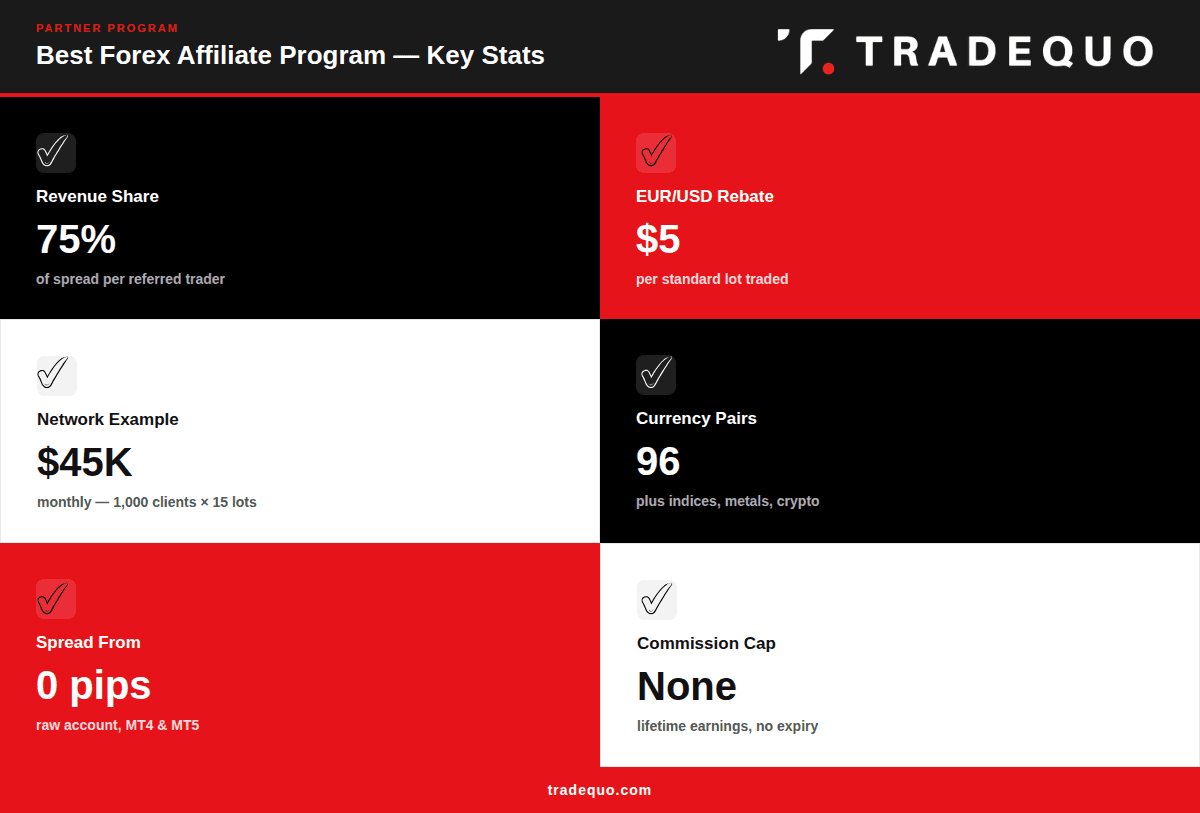
Program IB TradeQuo di tahun 2026 dibangun untuk membantu mitra menciptakan aliran pendapatan jangka panjang sembari memperkenalkan klien ke lingkungan perdagangan modern. Mitra menerima tautan rujukan yang unik, akses ke sumber daya pemasaran, manajer akun khusus, dan dasbor real-time tempat mereka dapat memantau rujukan dan komisi. Klien yang dirujuk mendapatkan akses ke MT4 dan MT5, fitur perdagangan sosial, spread mulai dari 0 pip, dan berbagai macam pasar keuangan, termasuk 96 pasangan mata uang, 13 indeks, logam, energi, saham, indeks sintetis, NDF, dan lebih dari 100 mata uang kripto.
Salah satu keuntungan terbesar dari program ini adalah model pendapatannya. TradeQuo menawarkan kepada IB hingga 75% dari spread yang dihasilkan oleh trader yang dirujuk. Misalnya, dengan spread EUR/USD sebesar 0,6 pip, mitra dapat menghasilkan 0,5 pip, atau sekitar $5 per lot standar yang diperdagangkan. Selain itu, mitra diuntungkan dari komisi seumur hidup, yang berarti mereka terus menghasilkan pendapatan selama klien yang dirujuk tetap aktif. Sistem rebate broker ini dapat menghasilkan pendapatan berulang yang signifikan. Sebagai contoh, 1.000 klien yang memperdagangkan 15 lot per bulan akan menghasilkan total volume sebesar 15.000 lot. Dengan rebate $3 per lot, ini setara dengan pendapatan bulanan sebesar $45,000, dengan pendapatan yang sama terus berlanjut di bulan-bulan mendatang jika aktivitas perdagangan tetap tidak berubah.
TradeQuo juga menonjol melalui struktur kemitraan multi-tingkatnya. Mitra dapat memperkenalkan Sub-IB dan mendapatkan komisi tambahan dari jaringan mereka, menciptakan peluang untuk menskalakan pendapatan jauh melampaui rujukan langsung saja. Dikombinasikan dengan pelacakan komisi real-time, tanpa batas komisi seumur hidup, layanan perdagangan pemenang penghargaan, dukungan pelanggan yang kuat, kemampuan perdagangan sosial, dan berbagai pilihan instrumen yang dapat diperdagangkan, program ini memberi mitra fleksibilitas dan potensi pertumbuhan yang lebih besar daripada banyak program afiliasi pialang tradisional.
Dukungan Pemasaran dan Sumber Daya Mitra
Dukungan pemasaran dapat memengaruhi kinerja mitra secara signifikan. Program berkualitas tinggi menyediakan:
Materi pemasaran bermerek bersama (co-branded)
Halaman arahan
Dukungan webinar
Aset media sosial
Konten promosi lokal
Sumber daya pendidikan
Alat pemasaran yang komprehensif mengurangi waktu persiapan dan memungkinkan mitra untuk fokus menarik klien. Tim dukungan khusus juga dapat membantu mengoptimalkan upaya pemasaran, meningkatkan tingkat konversi, dan berekspansi ke wilayah baru.
Beberapa program menyediakan sumber daya tambahan seperti situs web siap pakai, perpustakaan spanduk, konten video, dan bantuan pengembangan bisnis.
Tanda Peringatan: Tanda-Tanda Program Afiliasi Forex Tidak Layak Diikuti
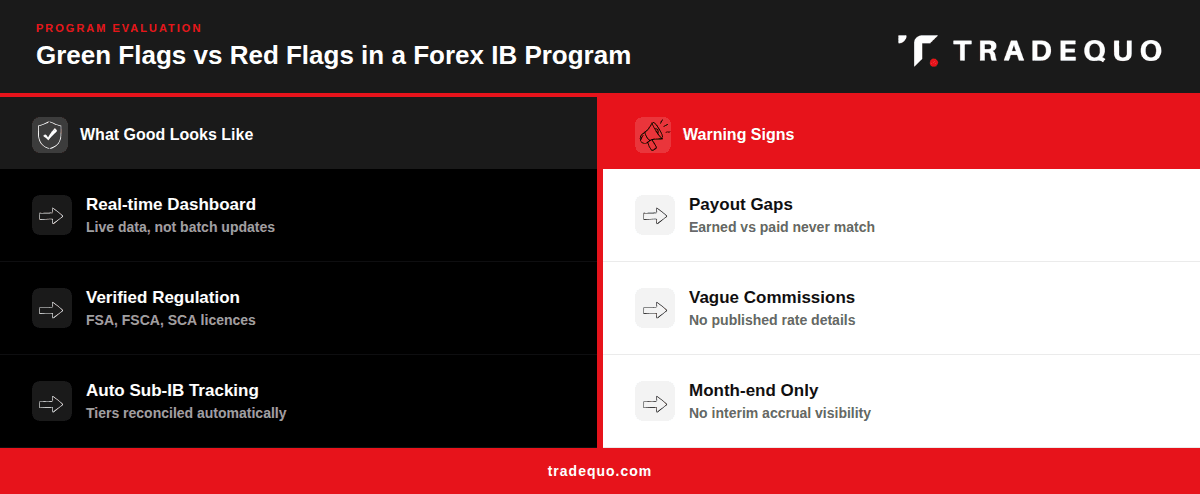
Beberapa tanda peringatan baru terlihat setelah Anda bergabung dalam suatu program, tetapi beberapa pola patut diwaspadai sebelum menandatangani apa pun. Kesenjangan yang terus-menerus antara apa yang ditunjukkan dasbor mitra sebagai pendapatan yang diperoleh dan apa yang sebenarnya diterima dalam pembayaran adalah salah satu tanda peringatan paling jelas di industri ini. Jika angka-angka program tidak cocok dari bulan ke bulan, itu bukanlah masalah administrasi; melainkan masalah struktural.
Pencocokan sub-IB secara manual adalah kekhawatiran lainnya. Jika broker mengharuskan mitra untuk melaporkan atau menyanggah volume sub-IB secara manual alih-alih melacaknya secara otomatis melalui portal, kesalahan dan perselisihan akan menjadi hal yang rutin terjadi dan bukan pengecualian lagi. Demikian pula, program yang hanya menyelesaikan pembayaran di akhir bulan, tanpa visibilitas sementara ke komisi yang diperoleh, membuat IB tidak dapat merencanakan arus kas atau mendeteksi ketidaksesuaian sejak dini. Bahasa yang tidak jelas seputar "komisi kompetitif" tanpa mempublikasikan tarif, dipadukan dengan materi pemasaran yang menjanjikan kecepatan penarikan atau setoran minimum secara berlebihan, sering kali menandakan program tersebut lebih fokus pada akuisisi mitra daripada retensi mitra.
Satu pun dari tanda-tanda ini tidak serta merta membuat program tersebut tidak layak dipilih, tetapi jika ada dua atau lebih tanda yang muncul secara bersamaan, itu adalah alasan yang cukup untuk terus mengevaluasi opsi program mitra forex lainnya sebelum berkomitmen secara eksklusif.
Cara Mengevaluasi Program Mitra Forex Sebelum Menandatangani Perjanjian
Sebelum bergabung dengan program kemitraan apa pun, tinjau daftar periksa berikut:
Konfirmasikan lisensi regulasi dan detail pendaftaran langsung ke daftar publik regulator, bukan hanya klaim broker itu sendiri.
Minta akses demo nyata ke portal mitra sebelum menandatangani apa pun, dan periksa apakah pelaporan bersifat langsung (live) atau pembaruan batch.
Tanyakan metode penghitungan komisi yang tepat, termasuk lebar spread, perbedaan jenis akun, dan apakah tingkat sub-IB tidak dibatasi.
Konfirmasikan frekuensi pembayaran, ambang batas penarikan minimum, dan metode pembayaran yang tersedia secara tertulis, tidak hanya dalam percakapan pendaftaran.
Tinjau materi pemasaran, halaman arahan, dan sertifikasi apa saja yang sebenarnya disediakan, bukan sekadar diasumsikan, setelah Anda menjadi mitra.
Program yang berkinerja baik di kelima area tersebut jauh lebih mungkin untuk mendukung pertumbuhan jangka panjang.
Kesimpulan
Memilih program afiliasi forex terbaik di tahun 2026 bermuara pada empat tema berulang di semua hal yang dibahas di sini: keandalan komisi yang bertahan di bawah perhitungan nyata, infrastruktur sub-IB yang memungkinkan kemitraan berkembang melampaui daftar rujukan satu orang, status regulasi yang melindungi reputasi broker dan IB, serta ritme pembayaran yang benar-benar dapat direncanakan oleh mitra introducing broker forex.
Tarif utama yang tinggi tidak berarti banyak tanpa fondasi ini. Evaluasi strukturnya terlebih dahulu, angkanya kemudian, dan kemitraan tersebut akan bertahan jauh lebih lama daripada promosi yang pertama kali menarik perhatian Anda.
FAQ
Apa Perbedaan Antara Afiliasi Forex dan Introducing Broker (IB)?
Afiliasi forex biasanya mendapatkan komisi satu kali untuk rujukan. Mitra introducing broker forex mendapatkan komisi berkelanjutan dari aktivitas perdagangan klien dan sering kali memberikan dukungan, edukasi, dan panduan pasar forex.
Berapa Banyak yang Dapat Dihasilkan oleh IB Forex per Bulan?
Pendapatan komisi IB forex bergantung pada volume perdagangan dan rujukan aktif. IB dengan 100 klien yang berdagang secara teratur dapat menghasilkan ribuan dolar per bulan, dengan pendapatan yang tumbuh lebih jauh melalui jaringan sub-IB.
Model Komisi Apa yang Terbaik untuk IB Forex Baru?
IB baru sering kali memulai dengan CPA untuk pendapatan yang dapat diprediksi. Seiring berkembangnya basis klien mereka, model pembagian pendapatan atau hibrida dapat menghasilkan pendapatan jangka panjang yang lebih kuat.
Apa yang Harus Saya Periksa Sebelum Bergabung dengan Program Mitra Forex?
Verifikasi lisensi, tinjau ketentuan pembayaran, uji portal mitra, konfirmasikan dukungan sub-IB, dan periksa metode penarikan yang tersedia sebelum bergabung dengan program mitra forex.
Apakah Komisi IB Forex Kedaluwarsa?
Beberapa broker membatasi komisi untuk jangka waktu tertentu, sementara yang lain menawarkan pendapatan seumur hidup. Selalu konfirmasikan kebijakan komisi sebelum bergabung dengan program IB forex.
Dapatkah Saya Menjalankan Jaringan Sub-IB di Bawah Program Afiliasi Forex?
Ya, jika broker mendukung struktur sub-IB. Program ini memungkinkan Anda mendapatkan komisi dari rujukan Anda dan mitra yang Anda rekrut.