Mengapa Memilih Trader yang Tepat untuk Disalin Sangatlah Penting
Mengetahui cara memilih trader untuk disalin adalah keputusan tunggal paling penting yang akan Anda buat sebagai pelaku copy trading. Daya tarik utama dari copy trading adalah Anda dapat mendelegasikan eksekusi kepada seseorang yang berpengalaman sementara Anda menikmati hasil dari kinerja mereka. Namun, kenyamanan hands-off itu memiliki konsekuensi: jika Anda mengikuti trader yang salah, Anda akan menanggung kerugian mereka secara otomatis layaknya keuntungan mereka. Tidaklah cukup hanya melihat angka imbal hasil yang berkilau di bagian atas leaderboard lalu mengeklik ikuti. Pelaku copy trading yang paling sukses memperlakukan pemilihan penyedia seperti proses uji tuntas, memeriksa angka-angka di balik layar, memahami strategi, dan memastikan profil risiko tersebut benar-benar sesuai dengan tujuan finansial mereka sendiri.
Tentukan Tujuan Anda Sebelum Melihat Satu pun Profil
Sebelum Anda membuka satu pun profil trader, Anda harus jujur pada diri sendiri tentang apa yang sebenarnya ingin Anda capai. Copy trading dapat melayani tujuan yang sangat berbeda, dan jenis trader yang cocok untuk satu tujuan bisa jadi sangat tidak tepat untuk tujuan lainnya. Melewatkan langkah ini adalah salah satu kesalahan copy trading paling umum yang harus dihindari.
Mulailah dengan bertanya: Apakah Anda mencari pertumbuhan yang agresif, atau Anda menginginkan imbal hasil yang lebih stabil dan dapat diprediksi? Seorang trader yang mengejar imbal hasil bulanan yang tinggi kemungkinan besar mengambil risiko yang jauh lebih besar, menggunakan leverage yang lebih tinggi, dan menerima flukasi nilai portofolio yang lebih lebar. Hal itu dapat bekerja dengan sangat baik dalam kondisi bull run dan menghancurkan akun dalam kondisi bergejolak atau bearish. Penyedia yang lebih konservatif mungkin membukukan keuntungan yang moderat tetapi konsisten di berbagai lingkungan pasar yang berbeda, yang mungkin lebih selaras dengan horizon investasi yang lebih panjang atau toleransi risiko yang lebih rendah.
Yang tidak kalah penting adalah memahami toleransi drawdown Anda. Drawdown mengacu pada penurunan dari puncak ke titik terendah dalam akun trading sebelum puncak baru tercapai. Beberapa trader merasa nyaman melihat saldo mereka turun 20 persen untuk sementara waktu jika mereka yakin strateginya akan pulih. Yang lain merasa penurunan di atas 10 persen secara psikologis sulit untuk dihadapi. Tidak ada yang salah, tetapi Anda perlu mengetahui ambang batas Anda sebelum mengevaluasi penyedia, bukan setelah Anda sudah menyalin mereka selama rentetan kerugian.
Selain itu, pikirkan tentang horizon waktu Anda. Apakah Anda berencana menyalin seorang trader selama tiga bulan atau tiga tahun? Trader jangka pendek yang melakukan scalping di pasar berkali-kali sehari mungkin menunjukkan hasil jangka pendek yang memukau namun tidak bertahan lama dalam jangka waktu yang lebih panjang. Swing traders yang menahan posisi selama berhari-hari atau berminggu-minggu cenderung menunjukkan rekam jejak jangka panjang yang lebih berarti. Memperjelas jangka waktu, selera risiko, dan ekspektasi imbal hasil memberi Anda filter yang memotong kebisingan pemasaran dan memfokuskan Anda pada penyedia yang benar-benar cocok dengan situasi Anda.
Metrik Kinerja Copy Trading: Apa yang Sebenarnya Dikatakan oleh Angka-Angka
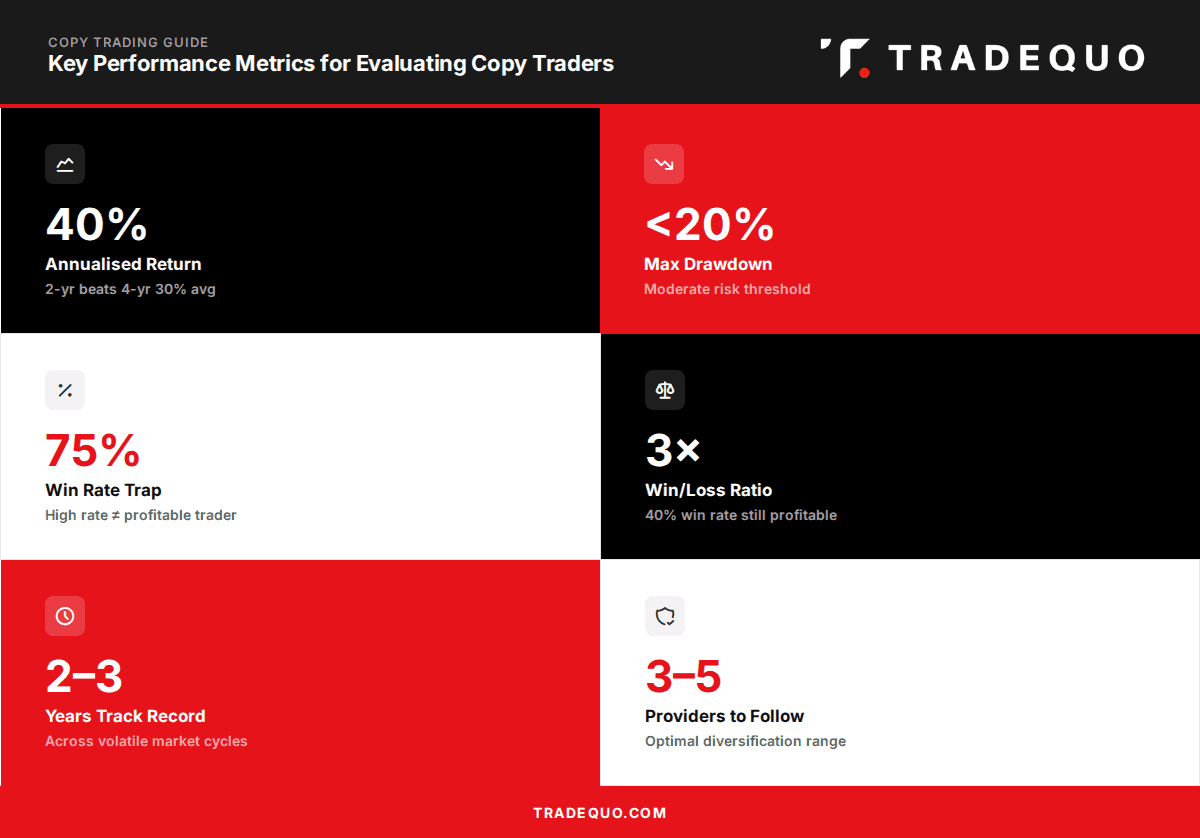
Angka adalah bagian paling objektif dalam mengevaluasi penyedia copy trading apa pun, tetapi angka-angka tersebut memerlukan konteks agar berguna. Berikut adalah rincian metrik kinerja copy trading utama dan cara menafsirkan masing-masing metrik tersebut secara jujur.
Imbal Hasil Total dan Imbal Hasil yang Disetahunkan (Annualised)
Imbal hasil total memberi tahu Anda berapa banyak keuntungan yang telah dihasilkan trader selama seluruh riwayat terlacak mereka di suatu platform. Imbal hasil yang disetahunkan menstandardisasi angka tersebut ke tingkat tahunan, yang membuat perbandingan di antara para trader dengan usia akun yang berbeda menjadi jauh lebih bermakna. Seorang trader yang menunjukkan total imbal hasil 120 persen terdengar mengesankan sampai Anda menyadari bahwa itu diperoleh selama empat tahun, yang menghasilkan imbal hasil tahunan sebesar 30 persen. Trader lain yang menunjukkan 80 persen selama dua tahun disetahunkan sebesar 40 persen dan memiliki kinerja yang lebih unggul. Selalu bandingkan angka yang disetahunkan, bukan total mentahnya.
Win Rate dan Rasio Win/Loss
Win rate mengacu pada persentase trade yang ditutup dengan keuntungan. Berapa win rate yang baik dalam copy trading? Hal itu hampir sepenuhnya bergantung pada ukuran rata-rata profit (win) versus kerugian (loss). Seorang trader dengan win rate 40 persen masih bisa sangat menguntungkan jika rata-rata trade yang menang tiga kali lebih besar daripada rata-rata trade yang merugi. Sebaliknya, trader yang membanggakan win rate 75% masih bisa kehilangan uang secara keseluruhan jika mereka memangkas pemenang dengan cepat dan membiarkan kerugian terus berjalan. Inilah sebabnya mengapa win rate harus selalu dibaca bersamaan dengan faktor profit dan/atau rasio risk-reward, jangan pernah dibaca secara terpisah.
Drawdown Maksimum
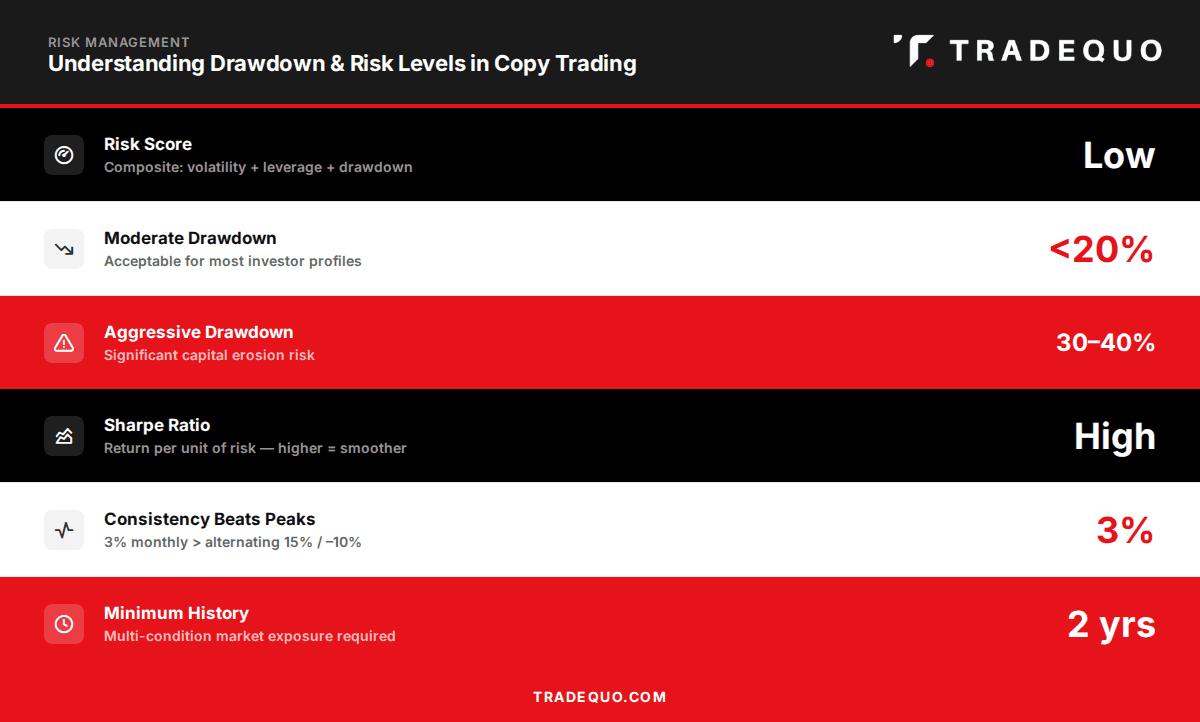
Memahami cara menganalisis drawdown trader bisa dibilang merupakan keterampilan terpenting dalam mengevaluasi penyedia copy trading. Drawdown maksimum mengukur persentase penurunan terbesar dari saldo puncak ke titik terendah sebelum pemulihan. Ini adalah jendela langsung ke risiko skenario terburuk. Berapa drawdown yang baik dalam copy trading? Sebagai tolok ukur umum, penyedia dengan drawdown maksimum di bawah 20 persen dianggap berisiko moderat, sementara mereka yang di atas 30 hingga 40 persen menunjukkan gaya trading agresif yang dapat mengakibatkan erosi modal yang signifikan selama periode kerugian. Selalu tanyakan pada diri Anda: jika drawdown ini terjadi lagi besok, mampukah saya menghadapinya secara finansial dan emosional?
Skor Risiko
Banyak platform copy trading menetapkan skor risiko untuk setiap penyedia berdasarkan volatilitas historis, penggunaan leverage, dan pola drawdown. Anggap saja ini sebagai indikator komposit tentang seberapa agresif trader tersebut beroperasi. Skor risiko yang lebih tinggi tidak berarti seorang trader itu buruk, tetapi itu memberi sinyal bahwa Anda harus mengantisipasi lebih banyak volatilitas dan memastikan alokasi untuk penyedia tersebut disesuaikan ukurannya dalam portofolio Anda yang lebih luas. Trader baru sering kali melakukan kesalahan dengan mengejar profil imbal hasil tertinggi tanpa memeriksa skor risiko yang menyertai imbal hasil tersebut.
Frekuensi Trade dan Rata-Rata Waktu Penahanan
Frekuensi trade dan rata-rata waktu penahanan mengungkapkan gaya trader dan bagaimana hasil mereka dihasilkan. Seorang scalper yang membuka dan menutup puluhan posisi per hari beroperasi dengan sangat berbeda dari seorang position trader yang menahan posisi selama berminggu-minggu. Trading frekuensi tinggi dapat menghasilkan statistik jangka pendek yang mengesankan, tetapi juga lebih sensitif terhadap spread, slippage, dan kondisi platform. Rata-rata waktu penahanan yang lebih lama sering kali berkorelasi dengan pendekatan yang lebih strategis dan digerakkan oleh fundamental. Tidak ada gaya yang secara inheren lebih unggul, tetapi keduanya membawa risiko operasional yang berbeda dan harus sesuai dengan ekspektasi Anda terhadap aktivitas akun.
Rasio Sharpe dan Konsistensi
Jika tersedia, rasio Sharpe adalah metrik yang kuat untuk menilai imbal hasil yang disesuaikan dengan risiko. Metrik ini mengukur seberapa banyak imbal hasil yang dihasilkan trader untuk setiap unit risiko yang diambil. Rasio Sharpe yang lebih tinggi berarti kinerja yang lebih lancar dan konsisten. Konsistensi itu sendiri sangatlah penting: seorang trader yang menghasilkan 3% setiap bulan jauh lebih berharga bagi portofolio daripada trader yang bergantian antara keuntungan 15 persen dan kerugian 10 persen, bahkan jika rata-rata imbal hasilnya berakhir serupa. Volatilitas dalam imbal hasil menciptakan stres psikologis dan membuat Anda lebih sulit merencanakan hasil keuangan Anda sendiri.
Faktor Kualitatif: Apa yang Tidak Dapat Ditunjukkan oleh Angka kepada Anda
Data kuantitatif sangatlah penting, tetapi itu hanya menceritakan sebagian dari kisah tersebut. Sisi kualitatif dalam mengevaluasi penyedia adalah tempat Anda membedakan trader yang benar-benar dapat dipercaya dari mereka yang kebetulan beruntung selama jendela pasar yang menguntungkan.
Mulailah dengan deskripsi strategi trader. Apakah itu benar-benar menjelaskan apa yang mereka lakukan, dengan istilah yang sederhana? Penyedia yang kredibel harus dapat mengartikulasikan apakah mereka melakukan trading mengikuti tren (trend-following), pembalikan rata-rata (mean reversion), strategi breakout, atau posisi yang digerakkan oleh berita. Mereka harus menyebutkan kelas aset yang menjadi fokus mereka, instrumen yang mereka sukai, dan secara kasar bagaimana mereka mengelola risiko. Deskripsi samar seperti "sistem eksklusif" tanpa detail lebih lanjut adalah bendera merah. Jika seorang trader tidak dapat atau tidak mau menjelaskan keunggulan mereka, itu patut Anda waspadai.
Frekuensi komunikasi dan transparansi sama-sama mengungkapkan banyak hal. Apakah penyedia memposting pembaruan rutin ketika kondisi pasar berubah? Apakah mereka mengakui ketika trade tidak berjalan sesuai rencana dan menjelaskan apa yang terjadi? Trader terbaik memperlakukan pengikut mereka sebagai mitra, bukan sebagai pengamat pasif. Komunikasi yang jujur dan teratur membangun kepercayaan dan membantu Anda memahami apakah periode kinerja buruk adalah bagian dari fase drawdown yang diketahui atau sesuatu yang lebih mengkhawatirkan.
Salah satu sinyal kualitatif yang paling berarti adalah apakah seorang trader menginvestasikan modal mereka sendiri menggunakan strategi yang sama. Ketika penyedia memiliki andil nyata dalam permainan (skin in the game), kepentingan mereka dan kepentingan Anda akan selaras. Mereka tidak hanya mengelola risiko orang lain sementara akun mereka sendiri berupa uang tunai. Platform yang menunjukkan apakah penyedia melakukan trading dengan uang mereka sendiri menawarkan lapisan verifikasi penting yang melampaui statistik kinerja.
Terakhir, pertimbangkan panjang dan konteks riwayat trading yang tersedia. Rekam jejak enam bulan yang hanya mencakup pasar bull yang kuat memberi tahu Anda sangat sedikit tentang bagaimana kinerja trader tersebut di bawah tekanan. Riwayat dua hingga tiga tahun yang mencakup periode volatilitas tinggi, koreksi, atau pergeseran dalam rezim pasar jauh lebih informatif. Cari bukti bahwa strategi tersebut telah diuji di berbagai kondisi yang berbeda, tidak hanya dioptimalkan untuk satu periode yang menguntungkan.
Diversifikasi dan Konstruksi Portofolio dalam Copy Trading
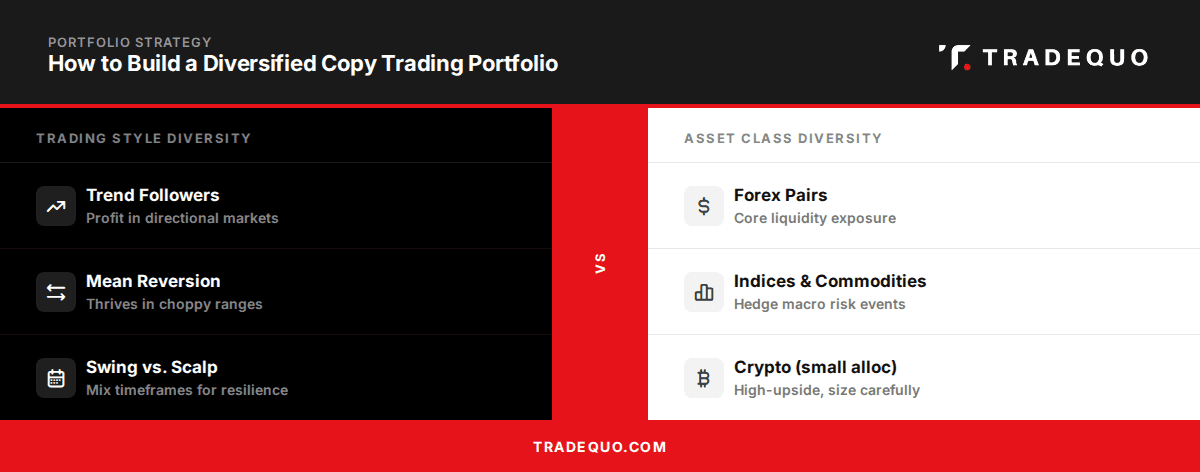
Salah satu kiat copy trading yang paling sering diabaikan adalah memperlakukan koleksi trader yang Anda ikuti sebagai portofolio, bukan serangkaian taruhan independen. Memusatkan semua modal copy trading Anda pada satu penyedia tunggal, tidak peduli seberapa mengesankan rekam jejak mereka, membuat Anda terpapar sepenuhnya pada kekuatan drawdown apa pun yang mereka alami. Pendekatan matang tentang cara mendiversifikasi portofolio copy trading Anda secara dramatis mengurangi risiko tersebut.
Prinsip pertama adalah mendiversifikasi berdasarkan gaya trading. Ikuti campuran trader yang beroperasi pada jangka waktu berbeda dan menggunakan pendekatan analisis yang berbeda. Jika semua penyedia Anda adalah trader momentum yang berkinerja baik di pasar yang sedang tren, seluruh portofolio Anda akan menderita secara bersamaan ketika pasar memasuki fase konsolidasi atau pembalikan arah. Menyeimbangkan pengikut tren dengan trader mean-reversion, atau scalper jangka pendek dengan swing trader jangka panjang, menciptakan ketahanan alami dalam posisi Anda secara keseluruhan.
Prinsip kedua adalah mendiversifikasi berdasarkan fokus aset. Trader yang berspesialisasi dalam pasangan forex, indeks, komoditas, dan kripto sering kali merespons secara berbeda terhadap peristiwa makroekonomi yang sama. Trader yang fokus pada kripto mungkin berkembang pesat selama lingkungan risk-on, sementara trader indeks yang melakukan lindung nilai dengan posisi defensif bertahan lebih baik selama aksi jual. Memiliki eksposur ke penyedia di berbagai kelas aset yang berbeda berarti portofolio Anda kurang berkorelasi dan lebih mungkin memiliki beberapa posisi yang berkinerja baik terlepas dari lingkungan yang lebih luas.
Prinsip ketiga adalah menyesuaikan ukuran alokasi agar sesuai dengan risiko. Penyedia dengan skor risiko atau drawdown maksimum yang lebih tinggi harus menerima alokasi yang lebih kecil dibandingkan dengan trader yang berisiko lebih rendah dan lebih konsisten. Struktur yang masuk akal dapat mengalokasikan sebagian besar modal copy trading Anda ke dua atau tiga pelaku dengan performa konsisten dan berisiko lebih rendah, dengan alokasi yang lebih kecil ke penyedia yang berisiko lebih tinggi dan memiliki potensi keuntungan lebih tinggi. Dengan cara ini, bahkan jika posisi agresif Anda berkinerja buruk, posisi tersebut tidak mengorbankan stabilitas inti portofolio Anda.
Targetkan tiga hingga lima penyedia sebagai titik awal. Terlalu sedikit menciptakan risiko konsentrasi, sementara terlalu banyak mencairkan kemampuan Anda untuk memantau setiap penyedia secara bermakna dan dapat menghasilkan posisi yang bertentangan yang saling membatalkan.
Menggunakan Alat TradeQuo untuk Menemukan dan Membandingkan Penyedia
Platform social trading TradeQuo dibangun untuk memberikan informasi yang dibutuhkan pengikut guna membuat keputusan yang benar-benar cerdas. Alih-alih hanya menampilkan angka imbal hasil teratas, alat analisis dan pemfilteran platform ini dirancang untuk mendukung jenis evaluasi multidimensi yang dijelaskan dalam panduan ini.
Saat Anda mulai mencari penyedia, sistem filter TradeQuo memungkinkan Anda mempersempit kandidat berdasarkan kriteria spesifik alih-alih menggulir daftar yang tidak disortir. Anda dapat memfilter berdasarkan jendela kinerja, ambang batas skor risiko, fokus kelas aset, riwayat trading minimum, dan parameter lain yang selaras langsung dengan kerangka kerja evaluasi yang dibahas di atas. Ini berarti Anda menghabiskan waktu Anda menganalisis penyedia yang telah memenuhi persyaratan dasar Anda alih-alih menyaring profil yang tidak relevan secara manual.
Setelah Anda memiliki daftar pendek, alat perbandingan TradeQuo memungkinkan Anda melihat beberapa penyedia secara berdampingan di berbagai metrik utama, termasuk imbal hasil yang disetahunkan, drawdown maksimum, win rate, skor risiko, dan frekuensi trade. Melihat angka-angka ini dalam format perbandingan terstruktur membuatnya jauh lebih mudah untuk melihat perbedaan yang signifikan di antara para penyedia yang terlihat serupa pada pandangan pertama. Seorang trader yang menunjukkan imbal hasil lebih tinggi disertai dengan drawdown yang jauh lebih tinggi memberi tahu Anda sesuatu yang penting tentang risiko yang terlibat, dan tampilan berdampingan membuat hubungan tersebut langsung terlihat.
TradeQuo juga menyediakan akses ke riwayat trade individu, yang memungkinkan Anda memeriksa bagaimana perilaku penyedia sebenarnya selama periode tekanan pasar di masa lalu. Meninjau trade yang dilakukan selama periode volatilitas tinggi memberi tahu Anda lebih banyak tentang bagaimana seorang trader menangani kesulitan daripada statistik ringkasan apa pun. Dikombinasikan dengan fitur transparansi platform seputar komunikasi penyedia dan deskripsi strategi, alat analisis ini memberi Anda gambaran komprehensif yang mendukung pemilihan penyedia yang penuh percaya diri dan beralasan kuat.
Merangkum Semuanya
Copy trading yang sukses bukanlah tentang menemukan trader dengan angka imbal hasil terbesar lalu menekan tombol ikuti. Ini tentang membangun hubungan yang matang dan didukung penelitian dengan para penyedia yang strategi, profil risiko, dan gaya komunikasinya benar-benar selaras dengan tujuan finansial Anda sendiri. Proses tersebut dimulai dengan kejelasan tentang apa yang Anda inginkan, beralih melalui analisis ketat terhadap metrik kuantitatif dan sinyal kualitatif, dan diperkuat dengan melakukan diversifikasi secara cerdas di beberapa penyedia.
Tidak ada proses evaluasi yang menghilangkan risiko. Copy trading, seperti bentuk partisipasi pasar lainnya, melibatkan ketidakpastian. Namun, para trader yang mendekati pemilihan penyedia dengan disiplin, mengajukan pertanyaan yang tepat, dan menggunakan setiap alat yang tersedia untuk menguji rekam jejak sebelum berkomitmen modal secara konsisten memberi diri mereka peluang yang lebih baik untuk membangun portofolio copy trading yang benar-benar berfungsi. Luangkan waktu Anda, percayalah pada kerangka kerja ini, dan biarkan data memandu keputusan Anda.
FAQ
Apa yang harus saya cari saat melakukan copy trading?
Fokuslah pada metrik utama seperti imbal hasil yang disetahunkan, drawdown, skor risiko, dan konsistensi. Periksa juga apakah trader tersebut menjelaskan strategi mereka dengan jelas, berkomunikasi secara teratur, dan bertransaksi dengan dana mereka sendiri. Selalu sesuaikan tingkat risiko mereka dengan tujuan Anda.
Apakah copy trading menguntungkan di tahun 2026?
Ini bisa menguntungkan, tetapi hasilnya bergantung pada siapa yang Anda salin dan bagaimana Anda mengelola risiko. Memilih trader yang andal dan mendiversifikasi portofolio Anda secara signifikan akan meningkatkan peluang Anda.
Berapa drawdown yang baik dalam copy trading?
Di bawah 20% umumnya merupakan risiko moderat. 20–30% lebih agresif. Di atas 30–40% menunjukkan risiko tinggi dan potensi kerugian besar.
Bagaimana cara menganalisis seorang trader sebelum menyalinnya?
Periksa kinerja jangka panjang (idealnya 2+ tahun), tinjau imbal hasil vs drawdown, skor risiko, dan gaya trading. Kemudian evaluasi strategi, komunikasi, dan perilaku mereka selama periode kerugian.
Bagaimana cara mengurangi risiko dalam copy trading?
Diversifikasikan di antara 3–5 trader dengan gaya dan aset yang berbeda. Alokasikan lebih banyak ke trader yang stabil, lebih sedikit ke trader yang berisiko tinggi, dan pantau kinerja secara teratur.