Spiegazione della Margin Call: Cosa Deve Sapere Ogni Trader con Leva Finanziaria
Il trading con leva apre le porte a posizioni più grandi con una frazione di capitale, ma comporta una serie di regole che possono cogliere completamente alla sprovvista i trader non preparati. Due dei concetti più importanti in questo ambito sono la margin call (richiesta di margine) e il livello di stop-out. Capire cosa significano, come funzionano e come si collegano al livello di margine nel trading fa la differenza tra una gestione intelligente del rischio e il vedere il proprio conto azzerato durante un improvviso movimento di mercato.
Come Vengono Calcolati i Livelli di Margine nel Trading
Prima che una margin call abbia senso, è necessario comprendere cos'è effettivamente il livello di margine e come i broker lo misurano in tempo reale.
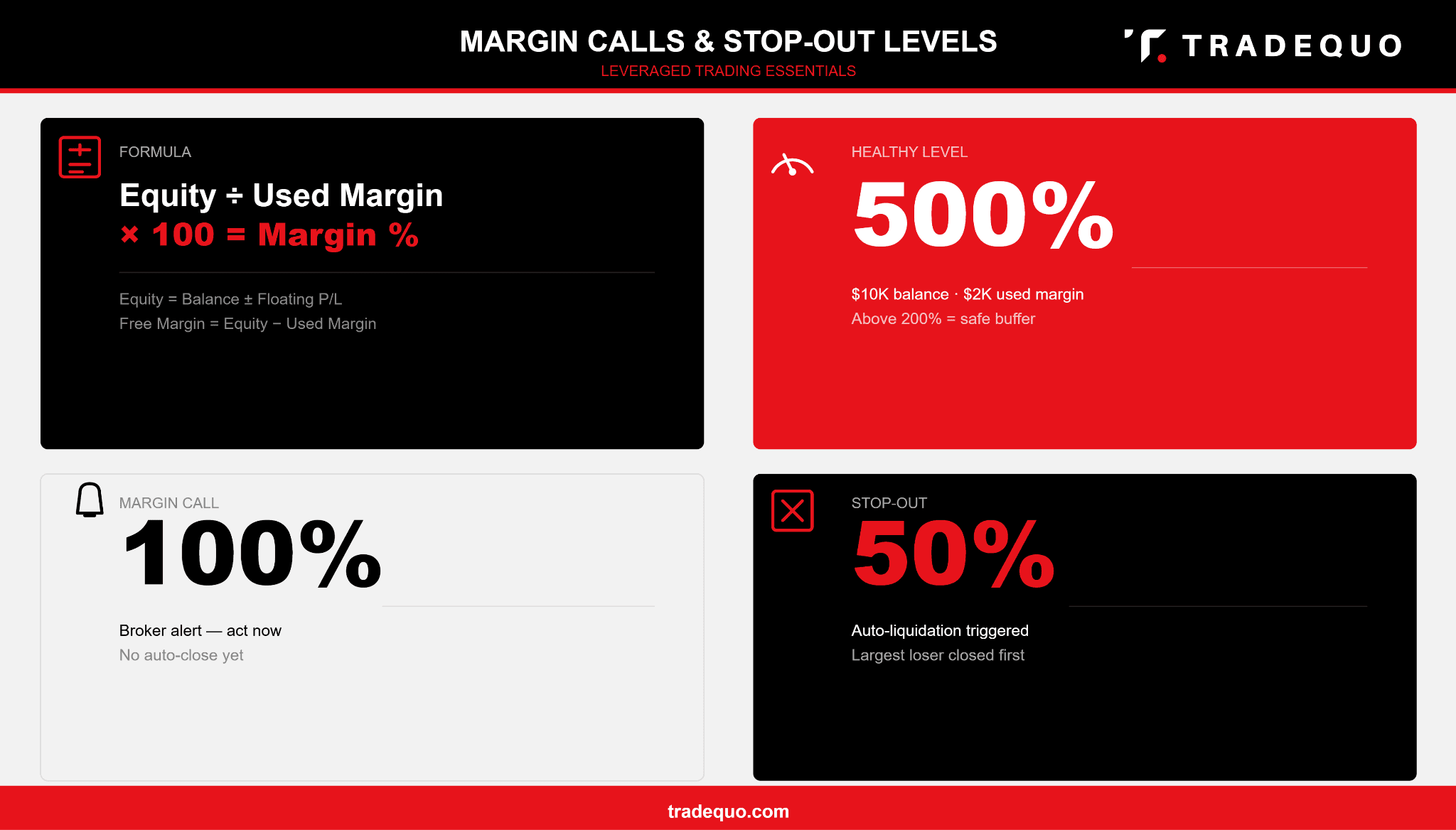
La formula del livello di margine è semplice:
Livello di Margine = (Equity ÷ Margine Utilizzato) × 100
Ogni parte di questa equazione ha un peso reale.
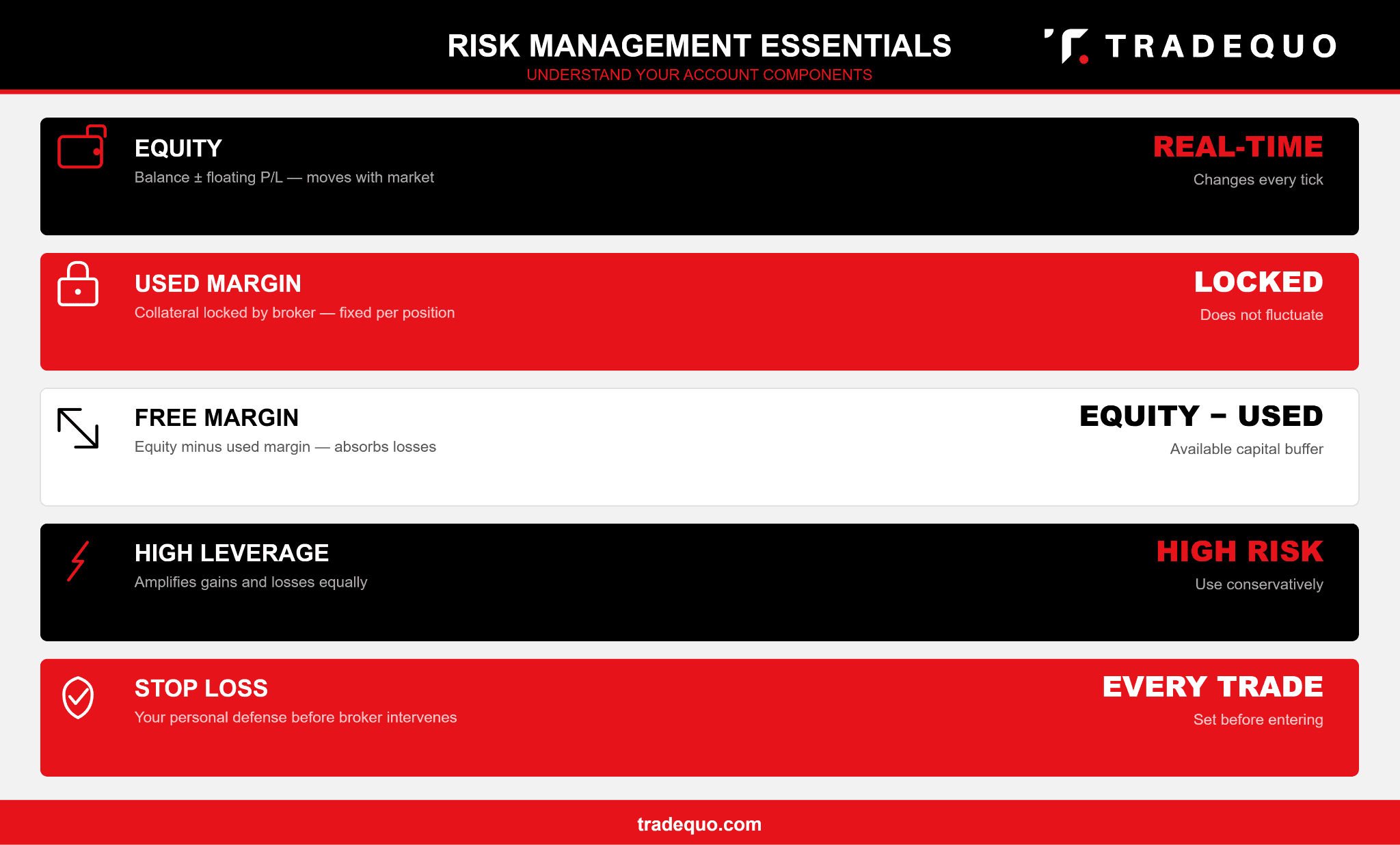
L'equity (patrimonio netto) è il saldo del conto rettificato per le posizioni aperte. Se il tuo saldo è di $5.000 e hai un'operazione aperta attualmente in perdita fluttuante di $200, la tua equity è di $4.800. Si muove costantemente con l'andamento del mercato.
Il margine utilizzato è la quota di fondi che il tuo broker ha bloccato come garanzia per mantenere attive le tue posizioni aperte. Non si muove con il mercato. È un requisito fisso basato sulla dimensione della tua operazione e sulla leva che stai utilizzando.
Il margine libero è ciò che rimane sottraendo il margine utilizzato dall'equity. È il capitale disponibile per aprire nuove operazioni o assorbire ulteriori perdite. (Margine Libero = Equity – Margine Utilizzato)
Ecco un semplice esempio pratico. Supponiamo che tu abbia un conto da $10.000 e apra una posizione che richiede $2.000 di margine utilizzato. Il tuo livello di margine all'inizio è ($10.000 ÷ $2.000) × 100 = 500%. È un valore ottimale. Ora immagina che l'operazione vada contro di te e che la tua equity scenda a $3.000. Il tuo livello di margine è ora ($3.000 ÷ $2.000) × 100 = 150%. È ancora al di sopra delle soglie della maggior parte dei broker, ma la pressione sta aumentando.
Quando il mercato continua a muoversi a tuo sfavore e l'equity scende ulteriormente, quella percentuale continua a calare, ed è allora che le cose si fanno serie.
Cosa Innesca una Margin Call
Una margin call si verifica quando il livello di margine del tuo conto scende al di sotto di una soglia stabilita dal broker. Storicamente, questo significava che il broker contattava il trader per richiedere il deposito di ulteriori fondi, ma sulle moderne piattaforme online di solito funziona come un avviso di sistema piuttosto che come una telefonata reale. È il modo in cui il broker ti comunica che il tuo conto non può più supportare agevolmente le tue posizioni aperte e che è necessaria un'azione.
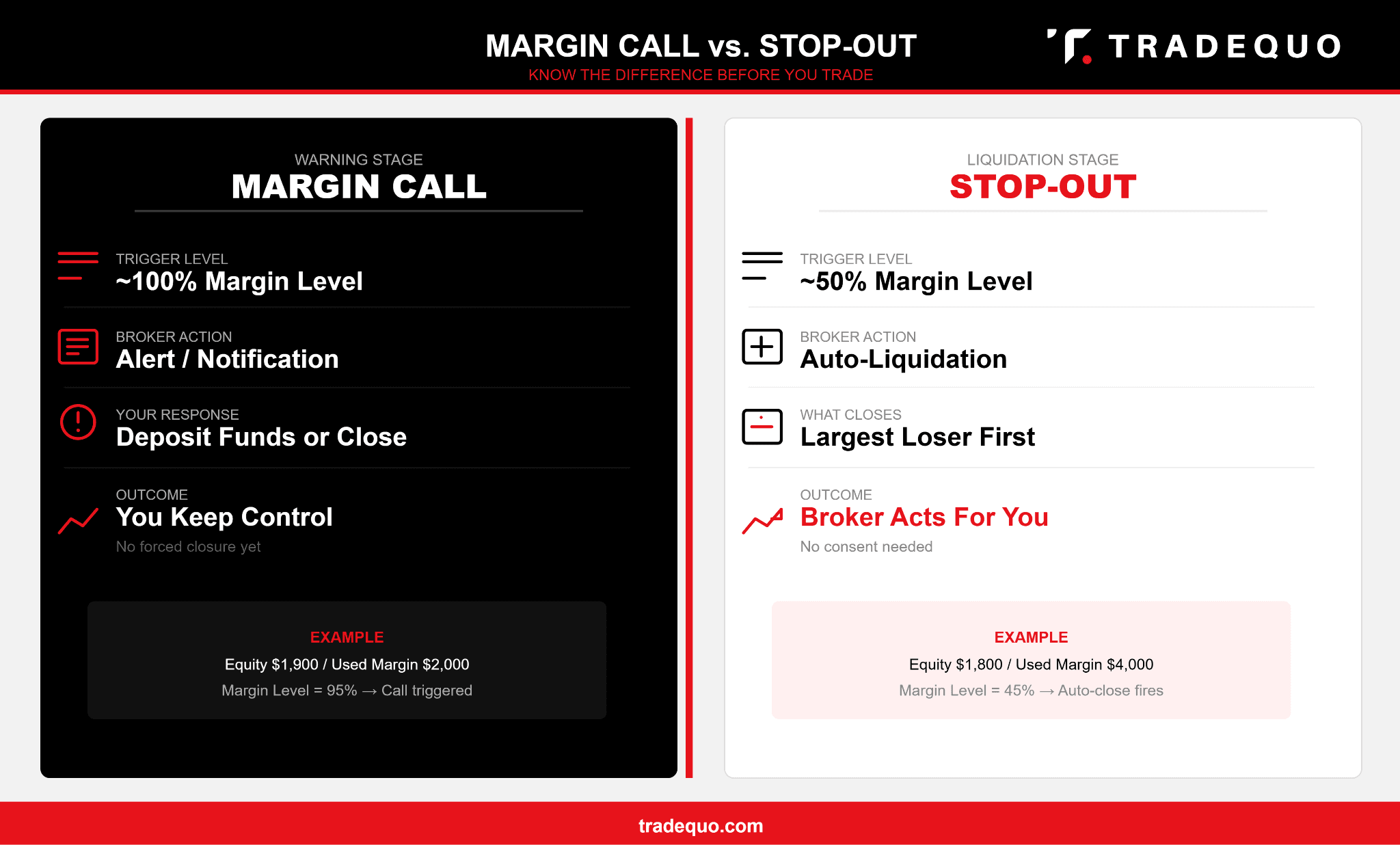
La maggior parte dei broker fissa la soglia di margin call intorno al 100%. Ciò significa che quando il tuo livello di margine scende a o sotto quel livello, in cui la tua equity è uguale al margine utilizzato, il broker ti avviserà. In termini pratici, quell'avviso è la margin call. Non si tratta ancora di una chiusura automatica. È un segnale che devi agire.
Ciò che accade durante una margin call dipende dal broker e dal contratto firmato all'apertura del conto. In genere, ti verrà chiesto di depositare fondi aggiuntivi per riportare la tua equity al di sopra della soglia o di chiudere alcune delle tue posizioni aperte per ridurre il margine utilizzato e riportare il rapporto a un livello più sicuro.
È qui che il concetto di gestione del rischio nel trading a margine diventa fondamentale. I trader sovraesposti o che detengono più posizioni in perdita contemporaneamente sono i più vulnerabili. Un mercato in rapida evoluzione, una notizia imprevista o un'apertura in gap possono far scendere l'equity più velocemente di quanto chiunque possa reagire.
Considera questo esempio. Hai $2.500 di equity con $2.000 di margine utilizzato. Il tuo livello di margine è ($2.500 ÷ $2.000) × 100 = 125%. All'improvviso, il mercato subisce un gap e la tua perdita fluttuante aumenta di $600. La tua equity scende a $1.900. Ora il tuo livello di margine è ($1,900 ÷ $2,000) × 100 = 95%. Sei al di sotto della soglia di margin call del 100%. Il broker invia una notifica e si aspetta una tua risposta. Se non lo fai, o non puoi farlo, scatta automaticamente la fase successiva.
Livelli di Stop-Out e Liquidazione Automatica
Il livello di stop-out è il punto in cui il broker smette di aspettare e inizia ad agire per tuo conto, che tu lo voglia o meno.
Mentre una margin call è un avvertimento, lo stop-out è l'esecuzione. Quando il tuo livello di margine scende alla soglia di stop-out, che varia a seconda del broker ma è comunemente fissata al 50%, 20% o talvolta anche meno, il sistema del broker inizierà automaticamente a chiudere le tue posizioni aperte. Questo processo è noto come liquidazione.
Il broker in genere chiude prima la posizione in perdita più grande, al fine di liberare il margine utilizzato e riportare il livello di margine al di sopra della soglia di stop-out. Se la chiusura di una posizione non è sufficiente, segue la successiva, e così via, fino a quando il conto non si stabilizza.
Per illustrare chiaramente l'intera sequenza da margin call a stop-out fino alla liquidazione, ecco un esempio pratico.
Apri un conto da $10.000 e usi una leva elevata per aprire diverse posizioni, con un margine utilizzato combinato di $4.000. Il tuo livello di margine iniziale è del 250%. Il mercato si gira contro di te nel corso di diverse sessioni. La tua equity scende a $2.500. Il livello di margine è ora del 62,5%. Il livello di margin call del tuo broker è del 100%, quindi quell'avviso è già stato superato. Ora la tua equity scende ulteriormente a $1.800. Livello di margine: ($1.800 ÷ $4.000) × 100 = 45%. Il livello di stop-out del tuo broker è del 50%. Il sistema si attiva automaticamente e chiude la tua posizione in perdita più grande, rilasciando $1.500 di margine utilizzato. Ora il tuo margine utilizzato è di $2.500, la tua equity si è leggermente stabilizzata e il tuo livello di margine risale sopra la soglia.
La differenza fondamentale tra una margin call e uno stop-out: una ti chiede di agire, l'altro agisce per te. Conoscere le percentuali esatte utilizzate dal proprio broker per entrambi è essenziale prima di effettuare anche una sola operazione con leva.
Prevenire le Margin Call Attraverso una Gestione Intelligente del Rischio
La buona notizia è che le margin call e gli stop-out sono quasi sempre prevenibili con il giusto approccio alla gestione del rischio nel forex trading e in altri mercati con leva finanziaria.
Usa una leva prudente. Questa è l'azione singola più efficace che puoi intraprendere. Una leva finanziaria elevata amplifica sia i guadagni che le perdite. I principianti, in particolare, dovrebbero iniziare con rapporti di leva più bassi per mantenere il loro livello di margine comodamente alto anche quando le operazioni si muovono contro di loro. Un livello di margine superiore al 200% offre un significativo margine di manovra.
Imposta gli stop loss prima di inserire una posizione. Uno stop loss non è la stessa cosa di una margin call, ma funge da difesa personale prima ancora che il broker venga coinvolto. Limitando la perdita massima su ciascuna operazione, proteggi la tua equity ed eviti che il tuo livello di margine peggiori senza preavviso.
Monitora attivamente le tue posizioni aperte. I mercati non si muovono sempre gradualmente. Picchi di volatilità, comunicati stampa e gap di liquidità possono spostare l'equity in modo drammatico in pochi minuti. Controllare regolarmente il proprio livello di margine, in particolare l'indicatore del livello di margine su MT4 o strumenti equivalenti su MT5, consente di rimanere informati prima che la situazione degeneri. Su piattaforme come MetaTrader 4 e MetaTrader 5, l'indicatore del livello di margine viene visualizzato direttamente nel terminale di trading.
Mantieni una riserva sul tuo conto. Non impiegare ogni singolo dollaro del tuo saldo in posizioni attive. Mantenere un margine libero al di sopra del margine utilizzato fornisce un cuscinetto che assorbe le perdite fluttuanti senza minacciare immediatamente il livello di margine.
Comprendi le regole specifiche del tuo broker. Non tutti i broker utilizzano la stessa percentuale di margin call o lo stesso livello di stop-out. Alcuni operano al 100% e al 50%, altri a soglie completamente diverse. Molti broker affidabili offrono anche la protezione dal saldo negativo, che impedisce al conto di scendere sotto lo zero anche in condizioni di mercato estreme. Leggi i termini prima di fare trading.
I trader che evitano la liquidazione raramente sono più fortunati degli altri. Sono semplicemente più disciplinati su quanto del loro capitale mettere a rischio in un singolo momento.
Gestire la Leva e il Margine è la Base del Trading a Lungo Termine
Le margin call e i livelli di stop-out non sono punizioni concepite per mettere in difficoltà i trader. Sono tutele strutturali integrate nel sistema di trading con leva per contenere le perdite e proteggere sia il trader che il broker da rischi fuori controllo. Capire come viene calcolato il livello di margine, cosa lo spinge verso una margin call e a che punto scatta lo stop-out automatico ti dà le conoscenze per fare trading con intenzione anziché con ansia. Gestisci la tua leva con attenzione, usa costantemente gli stop loss e mantieni il tuo livello di margine ben al di sopra delle soglie del tuo broker. Queste abitudini, più di qualsiasi strategia o indicatore, sono ciò che separa i trader che durano nel tempo da quelli che non ce la fanno.
FAQ
Cos'è una margin call in parole semplici?
Una margin call si verifica quando il livello di margine del tuo conto scende al di sotto di una soglia stabilita dal tuo broker, di solito intorno al 100%. Si tratta di una notifica che informa che la tua equity non è più in grado di coprire adeguatamente le posizioni aperte e che è necessario aggiungere fondi o ridurre l'esposizione.
Qual è la differenza tra una margin call e un livello di stop-out?
Una margin call è un avvertimento emesso quando il livello di margine scende al di sotto di una percentuale stabilita, con cui si chiede di agire. Un livello di stop-out è una soglia più bassa alla quale il broker chiude automaticamente le posizioni senza attendere una tua risposta.
Si può perdere più del proprio deposito con il trading a margine?
In alcuni casi sì, se il mercato si muove in modo estremamente rapido e le posizioni vengono chiuse a un prezzo peggiore rispetto al livello di stop-out. Tuttavia, molti broker offrono ora la protezione dal saldo negativo, che impedisce al saldo del conto di scendere sotto lo zero.
Quale livello di margine è considerato pericoloso?
La maggior parte dei trader considera qualsiasi valore inferiore al 150% come una zona di allerta. Una volta che il livello di margine si avvicina al 100% o meno, si entra in territorio di margin call. Un valore inferiore al 50% nella maggior parte dei broker innesca la liquidazione automatica.
Come posso evitare una margin call?
I modi più affidabili sono utilizzare una leva finanziaria più bassa, impostare sempre gli stop loss su ogni operazione, monitorare regolarmente le posizioni, mantenere un margine libero extra sul conto ed evitare di sovraccaricare il conto con troppe posizioni aperte contemporaneamente.