Wprowadzenie
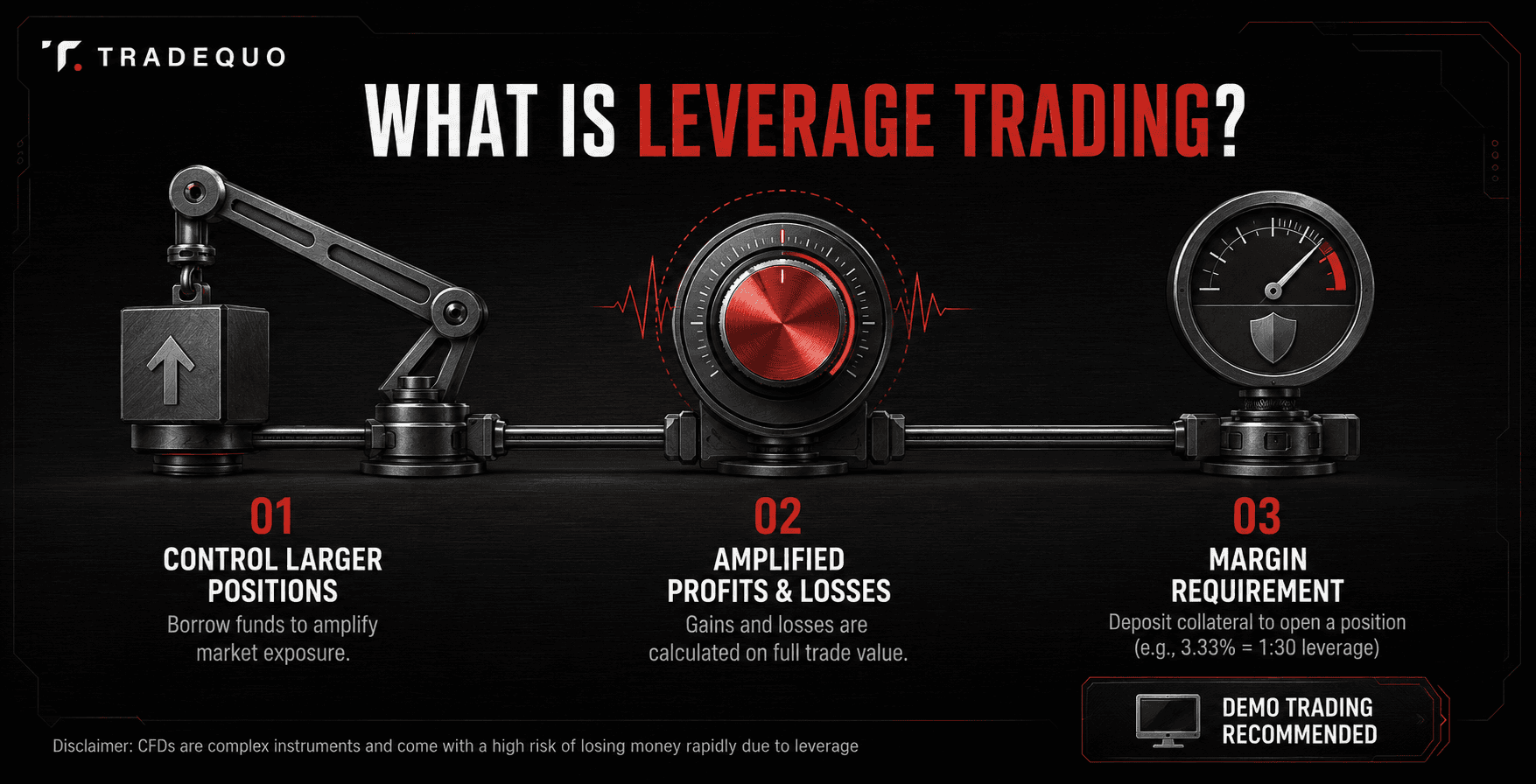
Handel z dźwignią to jeden z najgłośniejszych tematów na rynkach finansowych i nie bez powodu. Pozwala inwestorom kontrolować pozycje znacznie większe niż ich rzeczywiste saldo konta, co brzmi atrakcyjnie, dopóki rynek nie zacznie poruszać się w przeciwnym kierunku. W swojej istocie handel z dźwignią oznacza pożyczanie środków od brokera w celu zwiększenia swojej ekspozycji rynkowej. Inwestor z kapitałem o wartości $1,000 może kontrolować pozycję o wartości $30,000, co jest potężnym narzędziem, gdy jest używane mądrze, i niebezpiecznym, gdy tak nie jest.
Dokładne zrozumienie tego, jak działa dźwignia finansowa, co może zrobić dla Twojego portfela i w którym momencie może pójść coś nie tak, jest niezbędne, zanim zaryzykujesz choćby jednego dolara.
Jak działa dźwignia w handlu
Aby zrozumieć handel z dźwignią, musisz najpierw zrozumieć zależność między depozytem zabezpieczającym (margin) a dźwignią (leverage). Depozyt zabezpieczający to kwota Twoich własnych pieniędzy, którą musisz wpłacić jako zabezpieczenie, aby otworzyć pozycję z dźwignią. Dźwignia jest wyrażana jako stosunek, np. 1:10, 1:50 lub 1:100, i informuje o tym, jak dużą siłę nabywczą w handlu uzyskujesz w stosunku do swojego depozytu zabezpieczającego.
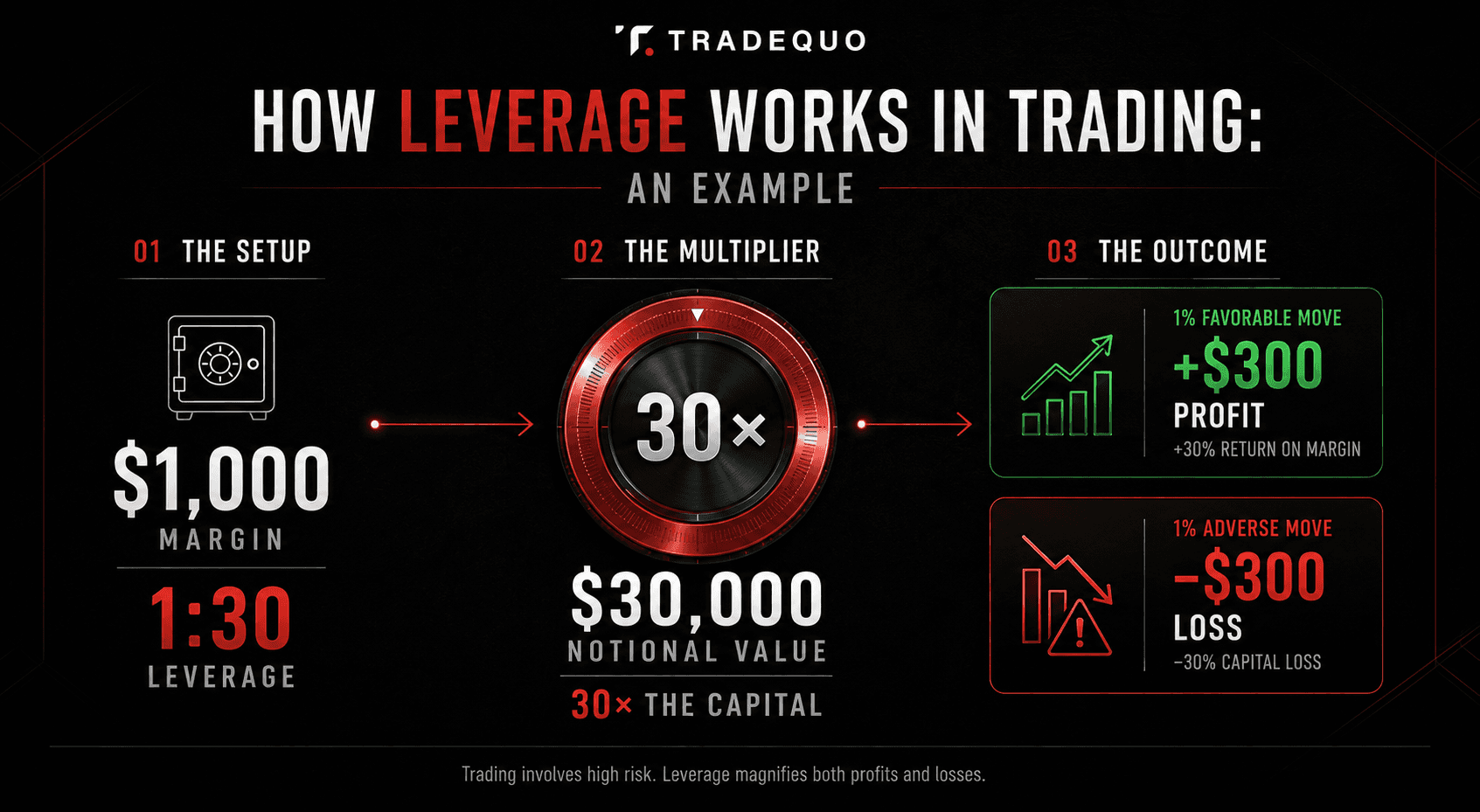
Oto prosty przykład handlu z dźwignią przy użyciu liczb. Załóżmy, że chcesz handlować na parze EUR/USD, a broker oferuje dźwignię 1:30. Oznacza to, że za każdy zdeponowany $1 depozytu zabezpieczającego możesz kontrolować walutę o wartości $30. Jeśli zdeponujesz $1,000, wartość nominalna Twojej transakcji wyniesie $30,000. Nie pożyczasz wprost $29,000 w tradycyjnym sensie, ale przejmujesz pełną ekspozycję na zyski i straty z pozycji o wartości $30,000.
Teraz zobacz, co to oznacza w praktyce. Jeśli kurs EUR/USD przesunie się o 1% na Twoją korzyść, pozycja o wartości $30,000 zyskuje $300. To daje 30% zwrotu z Twojego depozytu zabezpieczającego w wysokości $1,000. Bez dźwigni ten sam ruch o 1% na pozycji o wartości $1,000 przyniósłby zaledwie $10. W ten sposób dźwignia zwielokrotnia zyski.
Jednak ta sama matematyka działa również w drugą stronę. Ruch o 1% przeciwko Tobie pochłania $300, czyli 30% Twojego depozytu zabezpieczającego. Niekorzystny ruch o 3.3% eliminuje cały Twój depozyt w wysokości $1,000. Na szybko zmieniających się rynkach tego rodzaju ruchy mogą nastąpić w ciągu kilku minut.
Właśnie dlatego wskaźnik dźwigni w handlu to nie tylko mnożnik zysków. To mnożnik wszystkiego, w tym Twoich strat.
Jeszcze jednym pojęciem, które należy zrozumieć, jest wymóg depozytu zabezpieczającego. Brokerzy zazwyczaj wyrażają go w procentach. Wymóg depozytu zabezpieczającego na poziomie 3.33% odpowiada dźwigni 1:30. Wymóg depozytu zabezpieczającego na poziomie 2% oznacza dźwignię 1:50. Znajomość wymaganego depozytu zabezpieczającego z góry pomaga dokładnie obliczyć, jaką część kapitału ryzykujesz przed wejściem w transakcję.
Korzyści z handlu z dźwignią
Atrakcyjność dźwigni nie jest irracjonalna. Stosowana ostrożnie i w ramach zdyscyplinowanego podejścia, oferuje kilka realnych zalet, które przyciągają zarówno inwestorów detalicznych, jak i profesjonalnych.
Najbardziej oczywistą korzyścią jest potencjał osiągania większych zysków przy mniejszym kapitale. Inwestor bez dźwigni potrzebowałby $30,000, aby zająć znaczącą pozycję na głównej parze walutowej. Dźwignia pozwala osobie posiadającej $1,000 na dostęp do tej samej transakcji. Demokratyzuje to dostęp do rynków finansowych i umożliwia mniejszym kontom rywalizację na poziomie, który w przeciwnym razie wymagałby znacznie większego kapitału startowego.
Istnieje również zaleta w postaci efektywności kapitałowej. Dzięki dźwigni nie musisz angażować całego swojego portfela w jedną pozycję. Inwestor posiadający $10,000 może przeznaczyć $500 na depozyt zabezpieczający, aby utrzymać jedną pozycję na rynku forex, kolejne $500 na drugą transakcję, a pozostałe $9,000 zachować na inne okazje. Bez dźwigni każda transakcja wymagałaby pełnej kwoty nominalnej, co w praktyce uniemożliwiłoby dywersyfikację na wiele pozycji w przypadku mniejszych kont.
W tym sensie strategia handlowa z wykorzystaniem dźwigni polega częściowo na alokacji kapitału. Doświadczeni inwestorzy używają dźwigni nie po to, by stawiać wszystko na jedną kartę, ale by inteligentnie rozpraszać ryzyko, zachowując jednocześnie znaczącą ekspozycję rynkową na różne pozycje i klasy aktywów.
Dźwignia sprawia również, że krótka sprzedaż z dźwignią staje się łatwo dostępna. Inwestorzy, którzy uważają, że rynek spadnie, mogą otwierać krótkie pozycje z taką samą efektywnością jak pozycje długie, co pozwala im potencjalnie zarabiać na rynkach niedźwiedzia, zamiast po prostu stać z boku.
Ryzyko związane z handlem z dźwignią
Skoro korzyści płynące z handlu z dźwignią są realne, to realne jest również ryzyko. W tym przypadku ryzyko zasługuje na szczególną uwagę.
Najbardziej fundamentalnym problemem jest to, że dźwignia potęguje straty równie skutecznie, jak potęguje zyski. W powyższym przykładzie niekorzystny ruch o 3.3% na pozycji z dźwignią 1:30 usuwa 100% depozytu zabezpieczającego. Na zmiennych rynkach może to nastąpić zanim inwestor zdąży w ogóle zareagować.
W tym miejscu kluczowe znaczenie ma wezwanie do uzupełnienia depozytu zabezpieczającego (margin call). Margin call ma miejsce, gdy kapitał na Twoim koncie spada poniżej wymaganego przez brokera depozytu zabezpieczającego. W tym momencie broker żąda natychmiastowego wpłacenia dodatkowych środków lub grozi automatycznym zamknięciem Twoich pozycji. Jeśli nie możesz odpowiedzieć na wezwanie do uzupełnienia depozytu zabezpieczającego, broker zlikwiduje Twoje pozycje w celu odzyskania środków, często w najgorszym możliwym momencie podczas nagłego skoku na rynku.
Ryzyko likwidacji w handlu z dźwignią jest szczególnie wysokie w okresach dużej zmienności rynkowej. Publikacje danych, komunikaty banków centralnych lub wstrząsy geopolityczne mogą powodować luki cenowe, które przebiją stop-loss inwestora zanim ten zdąży się aktywować. W takich sytuacjach straty mogą całkowicie przekroczyć saldo konta, pozostawiając inwestora z ujemnym saldem i długiem wobec brokera.
Istnieje również wymiar psychologiczny, o którym rzadko mówi się wystarczająco dużo. Obserwowanie, jak pozycja z dźwignią waha się o $500 w dowolnym kierunku w ciągu tej samej godziny, jest nie tylko stresujące finansowo. Wpływa to na podejmowanie decyzji. Inwestorzy pod presją emocjonalną mają tendencję do porzucania swoich planów, przesuwania zleceń stop-loss, odrabiania strat lub utrzymywania stratnych pozycji znacznie dłużej niż powinni. Ta pułapka behawioralna jest jednym z najczęstszych powodów, dla których inwestorzy czyszczą swoje konta, a pozycje z dźwignią sprawiają, że każdy błąd kosztuje znacznie więcej.
Zarządzanie ryzykiem w handlu z dźwignią nie jest zatem opcjonalne. To jedyna rzecz stojąca między zyskowną strategią a wyczyszczonym kontem.
Regulacje i limity dźwigni finansowej
Regulatorzy na całym świecie podjęli działania mające na celu ograniczenie maksymalnej dźwigni dostępnej dla inwestorów detalicznych, częściowo w odpowiedzi na powszechne straty na rachunkach spowodowane nadmiernym korzystaniem z dźwigni.
W Unii Europejskiej Europejski Urząd Nadzoru Giełd i Papierów Wartościowych (ESMA) wprowadził środki interwencji produktowej, które ograniczają dźwignię do 1:30 dla głównych par walutowych, takich jak EUR/USD, 1:20 dla pozostałych par walutowych i złota oraz 1:10 dla towarów innych niż złoto. Limity te mają zastosowanie do klientów detalicznych u wszystkich brokerów regulowanych w UE.
W Stanach Zjednoczonych Commodity Futures Trading Commission (CFTC) oraz National Futures Association (NFA) ustanowiły maksymalny limit na poziomie 1:50 dla głównych par walutowych i 1:20 dla pozostałych par na rynku forex. Są to jedne z najsurowszych limitów dźwigni detalicznej na świecie.
W Wielkiej Brytanii Financial Conduct Authority (FCA) stosuje zasady zasadniczo podobne do tych w UE, gdzie standardowym limitem detalicznym dla głównych par forex jest 1:30. Australijski ASIC również wdrożył limity, które dostosowują ten kraj do innych rynków rozwiniętych.
Ważną rzeczą do zapamiętania jest to, że są to limity maksymalne, a nie rekomendacje. Regulatorzy nie sugerują, że powinieneś handlować z dźwignią 1:30 czy 1:50. Po prostu wyznaczają zewnętrzną granicę tego, co brokerzy mogą legalnie oferować. Inwestorzy profesjonalni z odpowiednią klasyfikacją często mogą uzyskać dostęp do wyższej dźwigni, ale to oznaczenie wiąże się z własnymi wymaganiami i konsekwencjami.
Najlepsze praktyki w handlu z dźwignią
Znajomość ryzyka to jedno. Wiedza o tym, jak w jego ramach funkcjonować, to co innego. Oto praktyczny schemat dla każdego, kto poważnie myśli o handlu z dźwignią.
Zacznij od konserwatywnej dźwigni. Tylko dlatego, że broker oferuje 1:30, nie oznacza to, że musisz z niej korzystać. Wielu doświadczonych inwestorów działa na poziomie 1:5 lub 1:10, nawet gdy dostępna jest wyższa dźwignia. Niższa dźwignia daje Twoim transakcjom więcej przestrzeni i znacznie zmniejsza ryzyko wezwania do uzupełnienia depozytu podczas normalnych wahań rynkowych.
Zawsze ustawiaj stop-loss. Stop-loss przy dźwigni to nie tylko dobry pomysł. To mechanizm, który zapobiega uszkodzeniu całego konta przez jedną nieudaną transakcję. Określ swoją maksymalną akceptowalną stratę przed wejściem w jakąkolwiek pozycję i odpowiednio ustaw stop-loss. Nie przesuwaj go w nadziei, że rynek się odwróci.
Stosuj zasadę jednego do dwóch procent. Zarządzanie ryzykiem w handlu z dźwignią często opiera się na zasadzie ryzykownia nie więcej niż 1% do 2% całkowitego kapitału konta na pojedynczą transakcję. Jeśli Twoje konto wynosi $5,000, Twoje maksymalne ryzyko na transakcję powinno wynosić od $50 do $100. Może to brzmieć skromnie, ale oznacza to, że nawet seria stratnych transakcji nie wyczyści Twojego konta.
Miej oko na swoją ogólną ekspozycję handlową na wszystkich otwartych pozycjach. Wielu inwestorów skupia się na pojedynczych transakcjach, nie biorąc pod uwagę całkowitej wartości nominalnej, którą kontrolują w całym portfelu. Ta skumulowana ekspozycja może być znacznie wyższa, niż sugeruje to jakakolwiek pojedyncza pozycja.
Na koniec skorzystaj z konta demo przed rozpoczęciem handlu na żywo. Większość regulowanych brokerów oferuje symulowane środowiska transakcyjne, w których można ćwiczyć strategie handlu z dźwignią bez ryzykowania realnego kapitału. Spędzenie czasu na koncie demo pozwala zrozumieć, jak współgrają ze sobą depozyt zabezpieczający, zlecenia stop-loss i zmienność rynku, zanim zaczniesz grać na prawdziwe pieniądze.
Podsumowanie
Handel z dźwignią otwiera drzwi do większych zysków, efektywności kapitałowej i szerszego dostępu do rynku. Jednak każda z tych zalet wiąże się z odpowiednim ryzykiem. Zwielokrotnione straty, wezwania do uzupełnienia depozytu i wyczyszczenie konta to nie są rzadkie, skrajne przypadki. Przytrafiają się one inwestorom, którzy lekceważą to, jak szybko poruszają się rynki. Narzędzia, które czynią handel z dźwignią satysfakcjonującym, są tymi sami narzędziami, które czynią go naprawdę niebezpiecznym. Podejdź do tego z planem, utrzymuj konserwatywną dźwignię, zabezpieczaj każdą transakcję zleceniem stop-loss i nigdy nie handluj pieniędzmi, na których stratę nie możesz sobie pozwolić. Jeśli dopiero zaczynasz przygodę z produktami z dźwignią, zacznij od konta demo i potraktuj to poważnie.
FAQ
Czym jest handel z dźwignią w prostych słowach?
Handel z dźwignią oznacza korzystanie ze środków pożyczonych od brokera w celu kontrolowania pozycji większej niż ta, na którą normalnie pozwoliłoby saldo Twojego konta. Na przykład przy dźwigni 1:10 depozyt w wysokości $500 pozwala na zawarcie transakcji o wartości $5,000. Zarówno zyski, jak i straty są naliczane od pełnej kwoty $5,000, a nie tylko od Twoich $500.
Czy handel z dźwignią jest dobry dla początkujących?
Handel z dźwignią wiąże się ze znacznym ryzykiem i generalnie nie jest zalecany dla początkujących, dopóki nie zdobędą oni solidnego zrozumienia tego, jak poruszają się rynki, jak działa depozyt zabezpieczający i jak zarządzać ryzykiem. Rozpoczęcie od konta demo i niskich wskaźników dźwigni to najrozsądniejsza droga dla każdego, kto dopiero zaczyna przygodę z produktami z dźwignią.
Jakie są ryzyka związane z handlem z dźwignią?
Główne ryzyka obejmują zwielokrotnione straty, które mogą przekroczyć Twój początkowy depozyt, wezwania do uzupełnienia depozytu (margin calls), które zmuszają Cię do dopłacenia środków lub zamknięcia pozycji, ryzyko likwidacji w warunkach zmienności rynkowej oraz presję psychologiczną związaną z zarządzaniem dużymi wahaniami cen.
Jaka jest różnica między marginem a dźwignią?
Margin (depozyt zabezpieczający) to rzeczywisty depozyt wymagany do otwarcia pozycji z dźwignią, wyrażony jako procent nominalnej wartości transakcji. Dźwignia (leverage) to wskaźnik określający, o ile Twoja siła nabywcza w handlu zostaje zwiększona w stosunku do tego depozytu. Wymóg depozytu zabezpieczającego na poziomie 2% odpowiada dźwigni 1:50. Są to dwie strony tego samego pojęcia.
Co się stanie, jeśli transakcja z dźwignią pójdzie nie tak?
Jeśli transakcja z dźwignią poruszy się znacząco przeciwko Tobie, Twój broker może wystosować wezwanie do uzupełnienia depozytu zabezpieczającego, wymagając dodatkowych środków w celu utrzymania otwartej pozycji. Jeśli nie możesz odpowiedzieć na to wezwanie, broker zamknie Twoją pozycję w celu pokrycia kosztów. W skrajnych przypadkach straty mogą przekroczyć saldo Twojego konta, pozostawiając Cię z ujemnym saldem należnym brokerowi. Dla własnego spokoju handluj z brokerem, który oferuje ochronę przed ujemnym saldem.
Ostrzeżenie: Kontrakty CFD są złożonymi instrumentami i wiążą się z wysokim ryzykiem szybkiej utraty pieniędzy z powodu dźwigni finansowej. Przed zainwestowaniem powinieneś zastanowić się, czy rozumiesz, jak działają kontrakty CFD.