Зміст
Що таке MT4 та MT5? Швидкий огляд платформ
Графіки та таймфрейми: 9 у MT4 проти 21 у MT5
Типи ордерів та виконання: де MT5 додає реальної гнучкості торгівлі
Радники та автоматизована торгівля: найсильніший аргумент на користь MT4
Покриття активів: чому MT5 перемагає для трейдерів, які працюють з багатьма активами
Хеджування та неттинг: розуміння ключової різниці в режимах рахунків
Тестування стратегій: багатопотокове тестування на історії в MT5 проти однопотокового в MT4
MT4 та MT5 у TradeQuo: що означає цей вибір для вашого рахунку
Копітрейдинг та соціальні функції: перевага MT5, яку упускає більшість посібників
MT4 проти MT5: яка платформа підходить саме для вашого стилю торгівлі?
Чи виводиться MT4 з експлуатації? Що потрібно знати трейдерам у 2026 році
Висновок
Часті запитання (FAQ)
Дебати MT4 проти MT5 є одним із найпопулярніших запитів серед форекс-трейдерів у всьому світі у 2026 році, і відповідь не така проста, як "MT5 новіша, тому використовуйте її". Якщо ви досліджуєте платформи перед тим, як обрати брокера, ви вже ставите правильне запитання. Вибір платформи залежить від вашого стилю торгівлі, активів, якими ви торгуєте, та інструментів, на які ви покладаєтеся.
Цей посібник детально все пояснює, щоб ви могли зробити вибір, який відповідає вашому реальному торговому життю, а не чиємусь контрольному списку функцій.
Що таке MT4 та MT5? Швидкий огляд платформ та ключові відмінності
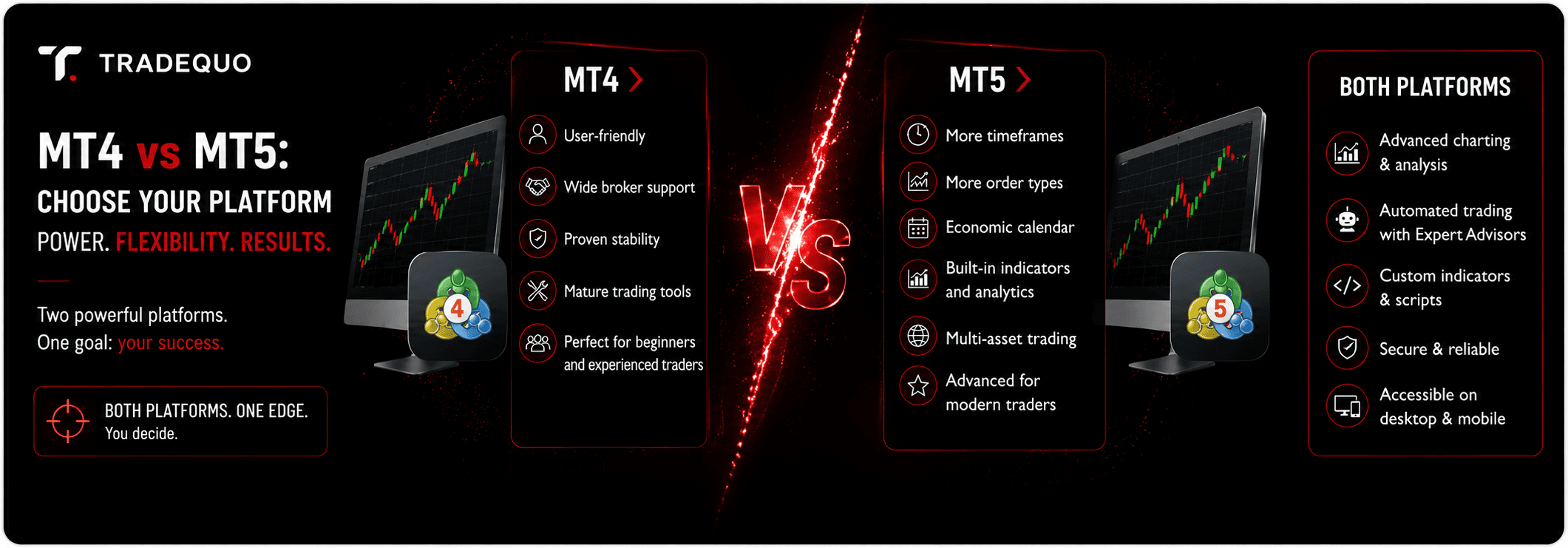
MetaTrader 4 та MetaTrader 5 розроблені корпорацією MetaQuotes Software, але вони створювалися для різних епох торгівлі. MT4 була запущена у 2005 році як платформа, орієнтована на форекс, і швидко стала галузевим стандартом. Поєднання зручного інтерфейсу, низьких системних вимог та відкритої екосистеми для користувацьких індикаторів та радників зробило її вибором за замовчуванням для роздрібних трейдерів та брокерів. Станом на 2026 рік лише з Google Play Store MT4 завантажили понад 10 мільйонів разів.
MT5 з'явилася у 2010 році з ширшими амбіціями. Замість простого оновлення MetaQuotes розробила її як мультиактивну платформу, здатну торгувати валютами, акціями, ф'ючерсами та товарами з єдиного інтерфейсу. Архітектура принципово відрізняється: вона побудована на 64-бітній платформі, яка обробляє більші обсяги даних та забезпечує вищу швидкість роботи. Обидві платформи залишаються активними у 2026 році, але ландшафт змінився. Згідно з аналізом Brokeree, що охопив понад 900 брокерських компаній, близько 68% брокерів зараз пропонують MT5, тоді як близько 40% все ще пропонують MT4. MetaQuotes повністю припинила видачу нових ліцензій MT4 брокерам — тихий сигнал, який має значення, якщо ви думаєте про довгострокову перспективу.
Питання MetaTrader 4 проти MetaTrader 5 полягає не в тому, яка платформа об'єктивно краща. Мова йде про те, яка архітектура відповідає вашим щоденним потребам.
Графіки та таймфрейми: 9 у MT4 проти 21 у MT5
Найбільш помітна щоденна різниця між двома платформами знаходиться прямо на вашому екрані. MT5 пропонує 21 таймфрейм порівняно з 9 у MT4, і для певних стилів торгівлі ця різниця є суттєвою. MT4 надає стандартний набір: 1 хвилина, 5 хвилин, 15 хвилин, 30 хвилин, 1 година, 4 години, щоденний, щотижневий та щомісячний. Цього достатньо для більшості свінг-трейдерів та позиційних трейдерів. Але якщо ви скальпер або інтрадей-трейдер, якому потрібна деталізація між 1-хвилинним та 1-годинним графіками, MT5 заповнює ці прогалини, пропонуючи, серед іншого, 2-хвилинні, 3-хвилинні, 6-хвилинні, 10-хвилинні та 12-хвилинні таймфрейми.
Вбудовані аналітичні інструменти мають схожу структуру. MT4 постачається з 30 технічними індикаторами та 31 графічним об'єктом. MT5 містить 38 індикаторів та 44 графічні об'єкти за замовчуванням. Ці цифри взяті безпосередньо з офіційного порівняння платформ від MetaQuotes. Якщо ви покладаєтеся виключно на вбудований набір, MT5 пропонує ширшу базову комплектацію. Але тут є нюанс, який часто упускають: обидві платформи підтримують користувацькі індикатори. Користувач MT4, який знає свої потреби, може встановити або розробити додаткові інструменти, щоб нівелювати цю різницю. Справжнє питання полягає в тому, чи хочете ви мати ці торгові інструменти вже встановленими, чи вам зручно створювати власне аналітичне середовище з інших джерел.
Типи ордерів та виконання: де MT5 додає реальної гнучкості торгівлі
Різниця між MT4 та MT5 стає очевидною, коли ви дивитеся на те, як кожна платформа дозволяє керувати входом та виходом з угод. MT4 пропонує чотири типи відкладених ордерів: Buy Limit, Sell Limit, Buy Stop та Sell Stop. Вони охоплюють більшість стандартних стратегій входу. MT5 додає ще два: Buy Stop Limit та Sell Stop Limit. Ці умовні ордери дозволяють розмістити стоп-ордер, який після спрацьовування перетворюється на лімітний ордер, а не виконується за ринковою ціною. Для пробійних стратегій, де ви хочете зловити рух, але обмежити прослизання, це дійсно корисно.
Політика виконання — це сфера, де MT5 виривається ще далі вперед. MT4 використовує одну політику виконання під назвою Fill or Kill (Виконати або скасувати), що означає, що ваш ордер або виконується повністю за запитуваною ціною, або не виконується взагалі. MT5 пропонує три варіанти: Fill or Kill, Immediate or Cancel (Негайно або скасувати) та Return (Повернути). Варіант Immediate or Cancel дозволяє забрати будь-яку доступну ліквідність за вашою ціною та скасувати решту, що має значення на швидких ринках. Опція Return повертає невиконані частини вам. Невиконана частина залишається активною для подальшого виконання відповідно до правил виконання брокера. Для більшості трейдерів, які здійснюють прості входи вручну, ці відмінності є незначними. Для системних трейдерів, які використовують автоматизовані складні стратегії в різних умовах ліквідності, це не так.
Радники та автоматизована торгівля: найсильніший аргумент на користь MT4 у торгівлі на форекс
Це розділ, де в чесному порівнянні платформ потрібно віддати належне MT4. Екосистема радників MT4 величезна. За майже двадцять років трейдери та розробники створили тисячі користувацьких індикаторів, торгових роботів та скриптів на MQL4. Якщо ви витратили роки на накопичення або купівлю радників, які приносять прибуток на вашому рахунку, ця бібліотека має реальну цінність, а перехід на іншу платформу коштуватиме значних зусиль. Код MQL4 несумісний безпосередньо з мовою MQL5 платформи MT5, і хоча конвертація можлива, вона вимагає часу на розробку, тестування, а часто й переписування логіки з нуля. Це серйозний бар'єр.
Проте тестер стратегій MT5 об'єктивно кращий. Він є багатопотоковим, тобто може виконувати тестування на історії значно швидше, використовуючи кілька ядер процесора. Він також використовує реальні тикові дані замість змодельованих тиків, що забезпечує суттєво точніші результати, особливо для стратегій, які працюють під час новин або в умовах низької ліквідності. Тестер стратегій MT4 працює в один потік і тестує лише одну валютну пару за раз. Якщо ви створюєте нові автоматизовані стратегії з нуля, MQL5 є надійнішою основою. Він підтримує об'єктно-орієнтоване програмування, нативно працює з багатьма потоками та активно підтримується компанією MetaQuotes. Справедливий висновок такий: трейдери, які захищають свою існуючу бібліотеку радників для MT4, мають законні підстави залишатися на цій платформі. Трейдерам, які вперше починають автоматизовану торгівлю, варто будувати роботу на MT5.
Покриття активів: чому MT5 перемагає для мультиактивних трейдерів на фінансових ринках
MT4 створювалася для спотової торгівлі на форекс та CFD, і хоча вона добре справляється з цими інструментами, платформа ніколи не проектувалася для виходу за їхні межі. Сама база коду обмежує можливості розширення. MT5 з першого дня створювалася як мультиактивна платформа з нативною підтримкою акцій, ф'ючерсів, опціонів, товарів та індексів разом із валютними парами. У 2026 році, коли все більше роздрібних трейдерів диверсифікують свої портфелі за межі форексу в золото та індекси, ця архітектурна різниця стала вирішальним фактором для багатьох.
Якщо ви торгуєте лише основними та другорядними валютними парами, а також кількома екзотичними парами, MT4 повністю задовольняє ваші потреби в інструментах. Платформа виконує те, для чого була створена. Але якщо ваша торгівля розширилася або планує розширюватися на інші класи активів, MT5 є єдиним практичним вибором серед цих двох платформ. Ви не можете торгувати акціями чи ф'ючерсами нативно на MT4. На MT5 це можливо. Оскільки трейдери з часом диверсифікують свої портфелі, сегмент мультиактивних трейдерів зростає, і MT5 — це саме та платформа, яка розвивається разом з ними.
Хеджування та неттинг: розуміння ключової різниці в режимах рахунків
Ця відмінність між MT4 та MT5 викликала серйозні суперечки під час першого запуску MT5, і це непорозуміння досі існує. MT4 за замовчуванням використовує режим хеджування, який дозволяє трейдерам утримувати одночасні позиції на купівлю та продаж по одному й тому самому інструменту. Це стандартна практика в багатьох культурах роздрібної торгівлі, зокрема в Південно-Східній Азії та на Близькому Сході, де стратегії хеджування є невід'ємною частиною управління ризиками.
Коли MT5 тільки з'явилася, вона за замовчуванням пропонувала режим неттингу, тобто лише одну чисту позицію на один символ. Це не влаштовувало величезний сегмент роздрібного ринку, і опір був настільки сильним, що MetaQuotes врешті-додала підтримку хеджування в MT5. У 2026 році MT5 підтримує режими рахунків як з хеджуванням, так і з неттингом, причому конкретна конфігурація визначається брокером. Більшість сучасних форекс-брокерів, включаючи TradeQuo, налаштовують рахунки MT5 із підтримкою хеджування. Історичне заперечення більше не є актуальним для переважної більшості трейдерів. Якщо ваш брокер пропонує MT5 з увімкненим хеджуванням, ви отримуєте звичну гнучкість управління позиціями разом із ширшими можливостями платформи.
Тестування стратегій: багатопотокове тестування на історії в MT5 проти однопотокового в MT4
Інфраструктура тестування на історії мало цікавить трейдерів, які торгують вручну, але для тих, хто використовує автоматизовані стратегії, вона часто стає вирішальним фактором. Тестер стратегій MT4 працює в один потік, тестує один інструмент за раз і використовує змодельовані тикові дані для симуляції руху ціни. Результати є корисними для розуміння загального напрямку, але їм бракує точності, особливо під час волатильних новин або на інструментах із низькою ліквідністю.
Тестер стратегій MT5 є багатопотоковим, що означає, що він розподіляє обчислювальне навантаження на кілька ядер процесора і завершує тестування значно швидше. Що ще важливіше, він використовує реальні тикові дані замість інтерпольованих, забезпечуючи суттєво точнішу симуляцію того, як ваш радник працював би в реальних ринкових умовах. Він також підтримує мультивалютне тестування, тому ви можете тестувати стратегію на корельованих парах одночасно, а не запускати окремі тести та зводити дані вручну. Для трейдерів, які торгують вручну, ця відмінність не має значення. Для алготрейдерів та розробників торгових роботів тестер стратегій MT5 — це не просто незначне оновлення. Це різниця між припущенням та знанням.
MT4 або MT5 у TradeQuo: що означає цей вибір для вашого рахунку

Обидві платформи, MT4 та MT5, доступні для різних типів рахунків TradeQuo у 2026 році, за одним винятком. Рахунок Limitless працює лише на MT5 і доступний в USD; інші валюти тут не підтримуються. Якщо вас приваблює структура кредитного плеча та умови торгівлі рахунку Limitless, MT5 стане вашою платформою за замовчуванням. Крім цього, всі типи рахунків підтримують обидві платформи, включаючи повний спектр базових валют: USD, THB, JPY, EUR та GBP.
Різниця у відкладених ордерах є реальною та важливою. MT5 відкриває доступ до всіх шести типів відкладених ордерів, включаючи Buy Stop Limit та Sell Stop Limit. Якщо ваші торгові стратегії покладаються на умовні входи з контролем прослизання, ці два додаткові типи ордерів доступні лише на платформі MT5. Соціальний трейдинг через систему копіювання угод SocialTrading.AI доступний як для реальних рахунків MT4, так і для MT5, тому користувачі MT4 не позбавлені функцій копітрейдингу. Обидві платформи доступні на Windows, Mac, Android та iOS із повним доступом до понад 1300 фінансових інструментів.
Практичний висновок: якщо у вас є інструменти на MQL4, від яких ви залежите, ви можете без обмежень залишатися на MT4. Якщо ви хочете використовувати рахунок Limitless або повний набір типів ордерів, ваш вибір — MT5.
Копітрейдинг та соціальні функції: перевага MT5, яку упускає більшість посібників
Більшість порівнянь MT4 та MT5 обмежуються індикаторами та типами ордерів, але в MT5 є соціальний рівень, який має щоденне значення. MT5 містить нативний доступ до спільноти MQL5 — маркетплейсу торгових сигналів, радників та копітрейдингу безпосередньо всередині платформи. MT4 не має аналогічної вбудованої соціальної інфраструктури. Якщо ви хочете шукати постачальників сигналів, підписуватися на стратегії або брати участь у маркетплейсі спільноти, ви робите це через MT5.
Інтегрований економічний календар у MT5 — це ще одна функція, яка рідко згадується у специфікаціях, але змінює вашу щоденну роботу. Замість того, щоб тримати відкриту окрему вкладку браузера для новин, календар знаходиться всередині платформи й оновлюється в режимі реального часу. Для трейдерів, які торгують на новинах, це усуває дрібні, але постійні незручності. Брокери MT5, які створюють продукти для копітрейдингу, включаючи інфраструктуру SocialTrading.AI у TradeQuo, за замовчуванням орієнтуються на архітектуру рахунків MT5. Ви можете отримати доступ до копітрейдингу на обох платформах у TradeQuo, але саме MT5 пропонує повнішу екосистему для соціального трейдингу нативно.
MT4 проти MT5: яка платформа підходить саме для вашого стилю торгівлі?
Рішення між MT4 та MT5 має базуватися на вашому профілі трейдера, а не на чиїхось уподобаннях щодо функцій. Ось практична схема використання на 2026 рік.
Обирайте MT4, якщо у вас є готова бібліотека радників на MQL4, на яку ви покладаєтеся і перенесення якої є економічно невигідним. Обирайте MT4, якщо ви торгуєте лише на форекс та CFD і не плануєте переходити на інші класи активів. Обирайте MT4, якщо ви віддаєте перевагу звичному інтерфейсу, не потребуєте додаткових таймфреймів і цінуєте величезну бібліотеку користувацьких індикаторів, уже створених для MQL4. Це вагомі причини, які описують реальний сегмент досвідчених трейдерів, яким цілком комфортно залишатися на цій платформі.
Обирайте MT5, якщо ви починаєте з нуля без застарілих інструментів і хочете працювати на платформі, яку активно розвиває MetaQuotes. Обирайте MT5, якщо ви торгуєте або плануєте торгувати різними класами активів: форекс разом з акціями, індексами чи товарами. Обирайте MT5, якщо хочете відкрити рахунок Limitless у TradeQuo. Обирайте MT5, якщо ви плануєте серйозно тестувати автоматизовані стратегії на історії або використовувати копітрейдинг та соціальні функції. Обирайте MT5, якщо вам потрібен вбудований економічний календар та ширший набір аналітичних інструментів без пошуку сторонніх доповнень.
Використання обох платформ також є цілком прийнятним варіантом. Якщо ваш брокер підтримує це, ви можете залишити MT4 для ваших поточних радників та відкрити рахунок MT5 для мультиактивної торгівлі або доступу до рахунку Limitless. Не існує правила, яке вимагає відданості лише одній платформі.
Чи виводиться MT4 з експлуатації? Що потрібно знати трейдерам у 2026 році
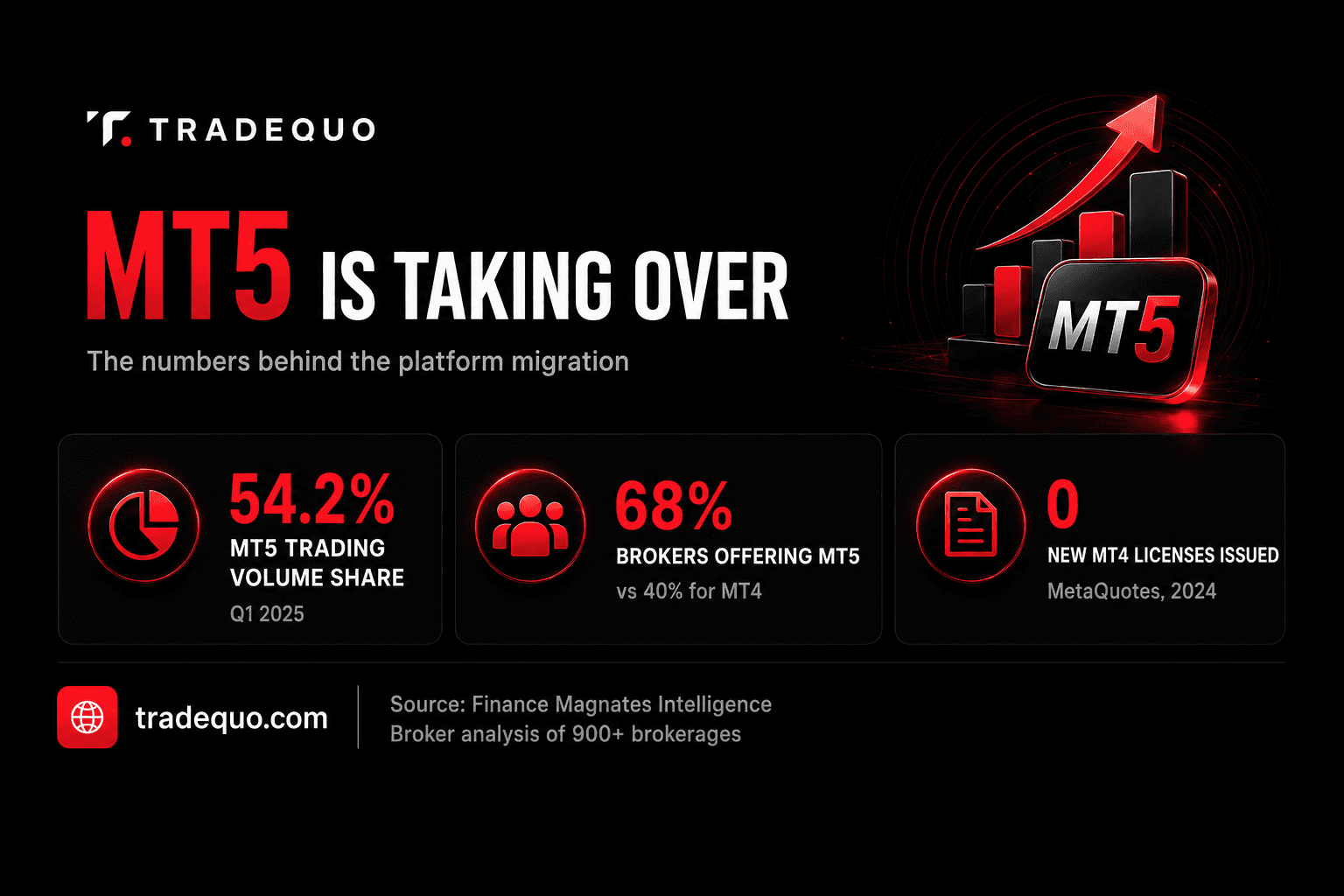
Питання довговічності MT4 — це тема, яку мало хто висвітлює прямо, і вона заслуговує на чесну відповідь. MetaQuotes припинила видачу нових ліцензій white-label для MT4 брокерам. Будь-який новий брокер, який запускається сьогодні, може запропонувати лише MT5. MT4 офіційно перебуває в режимі підтримки: вона не отримує нових функцій та активних оновлень безпеки, окрім критичних патчів. Платформу не закривають, але вона більше не розвивається.
Показники обсягів торгівлі говорять самі за себе. За даними Finance Magnates Intelligence, MT5 випередила MT4 за загальним обсягом торгівлі на платформах MetaTrader у першому кварталі 2025 року, охопивши 54,2% від загального обсягу. Траєкторія очевидна і формувалася роками. MT4 не зникне миттєво. База користувачів занадто велика, екосистема радників занадто вкорінена, і занадто багато брокерів досі підтримують її, щоб платформа раптово зникла. Проте трейдери, які починають з нуля у 2026 році, будують свої навички на платформі, розвиток якої зупинився. Це фактор для довгострокового планування, а не терміновий дедлайн. Його варто враховувати при прийнятті рішення без зайвої паніки.
Висновок
Різниця між MT4 та MT5 зводиться до одного практичного питання: ви захищаєте існуюче торговельне середовище чи створюєте нове? Якщо у вас є накопичені за роки радники на MQL4, перевірений робочий процес і сфера торгівлі, що обмежується форексом та CFD, залишатися на MT4 має сенс. Платформа працює і продовжуватиме працювати в осяжному майбутньому.
Якщо ви починаєте з нуля, торгуєте різними класами активів, цікавитеся рахунком Limitless або плануєте тестувати автоматизовані стратегії з максимальною точністю, MT5 — це вибір на перспективу. Це платформа, в яку MetaQuotes інвестує свої ресурси розробки, для якої видаються нові ліцензії брокерам і куди вже змістилися основні обсяги торгівлі. Обидві платформи, MT4 та MT5, повністю підтримуються у TradeQuo у 2026 році, що означає, що ваш вибір може залежати від ваших реальних потреб, а не від обмежень у доступності платформ.
Часті запитання (FAQs)
Яка основна різниця між MT4 та MT5?
MT4 створена переважно для форексу та CFD, тоді як MT5 підтримує кілька класів активів, включаючи акції, товари та ф'ючерси. MT5 також пропонує більше таймфреймів, індикаторів, швидший тестер стратегій та вбудований економічний календар.
Чи можу я використовувати радники MT4 на MT5?
Радники для MT4 написані на MQL4 і несумісні безпосередньо з MT5, яка використовує MQL5. Деякі радники можна конвертувати, але мови відрізняються структурно, і конвертація вимагає зусиль з розробки, тестування, а іноді й повного переписування. Якщо у вас є велика бібліотека прибуткових радників для MT4, врахуйте витрати на міграцію перед переходом. Якщо ви створюєте нові автоматизовані стратегії з нуля, MQL5 є рекомендованою стартовою точкою. Ця мова потужніша, підтримує об'єктно-орієнтоване програмування та активно підтримується компанією MetaQuotes.
Чи підтримує MT5 хеджування?
Так. MT5 підтримує як хеджування, так і неттинг, залежно від налаштувань рахунку у вашого брокера. Більшість брокерів, включаючи TradeQuo, зараз пропонують рахунки MT5 з увімкненим хеджуванням.
Яка платформа краща для початківців?
У 2026 році MT5 стає все кращою стартовою точкою для нових трейдерів. Історично для початківців рекомендували саме MT4 через її простіший інтерфейс та легше освоєння, але зараз більшість брокерів пропонують MT5 за замовчуванням, а знайомство з платформою, яка активно розвивається та підтримує різні класи активів, готує вас до довгострокового зростання.
Чи підтримується MT4 у 2026 році?
Так. MT4 все ще підтримується багатьма брокерами, включаючи TradeQuo, але вона перебуває в режимі технічної підтримки. MetaQuotes більше не видає нових ліцензій на MT4, зосереджуючи майбутню розробку виключно на MT5.