Чому регульований форекс-брокер — це ваша перша лінія захисту
Кожен трейдер пам'ятає момент, коли ринок розвертається проти нього. Збитки — це частина бізнесу, і більшість досвідчених трейдерів це приймають. Проте жоден трейдер ніколи не повинен миритися з втратою грошей не через невдалу угоду, а через те, що їхній брокер зник за одну ніч, заморозив виведення коштів або виявився працюючим без дійсної ліцензії.
Ось чому вибір регульованого форекс-брокера — це не просто формальність, яку потрібно виконати. Це найважливіше рішення, яке ви приймаєте перед розміщенням будь-якого ордера. Регулювання — це рамка, яка змушує брокерів бути чесними, захищає ваш капітал у разі виникнення проблем і гарантує вам реальний захист у разі виникнення суперечок.
Якщо вам цікаво, чи безпечна торгівля на форекс, чесна відповідь така: це майже повністю залежить від того, з чим ви торгуєте.
Як регулювання форекс насправді захищає ваші гроші
Агентства, що стоять за правилами
Регулювання форекс не працює у вакуумі. Воно забезпечується державними або статутними органами, чиє завдання полягає у встановленні правил, аудиті дотримання вимог та вжитті заходів, коли брокери порушують правила. Розуміння того, хто є цими регуляторами та які їхні вимоги, є основою регулювання форекс, поясненого простими словами.
У Сполучених Штатах Комісія з торгівлі товарними ф'ючерсами (CFTC) та Національна ф'ючерсна асоціація (NFA) спільно контролюють роздрібну діяльність на форекс. Їхні стандарти є одними з найсуворіших у світі. Брокери, зареєстровані в NFA, повинні підтримувати мінімальний чистий капітал, проходити регулярні аудити та дотримуватися лімітів на кредитне плече, які наразі обмежують позиції роздрібного форексу. Мета полягає в тому, щоб запобігти взяттю брокерами на себе ризиків, які можуть знищити кошти клієнтів.
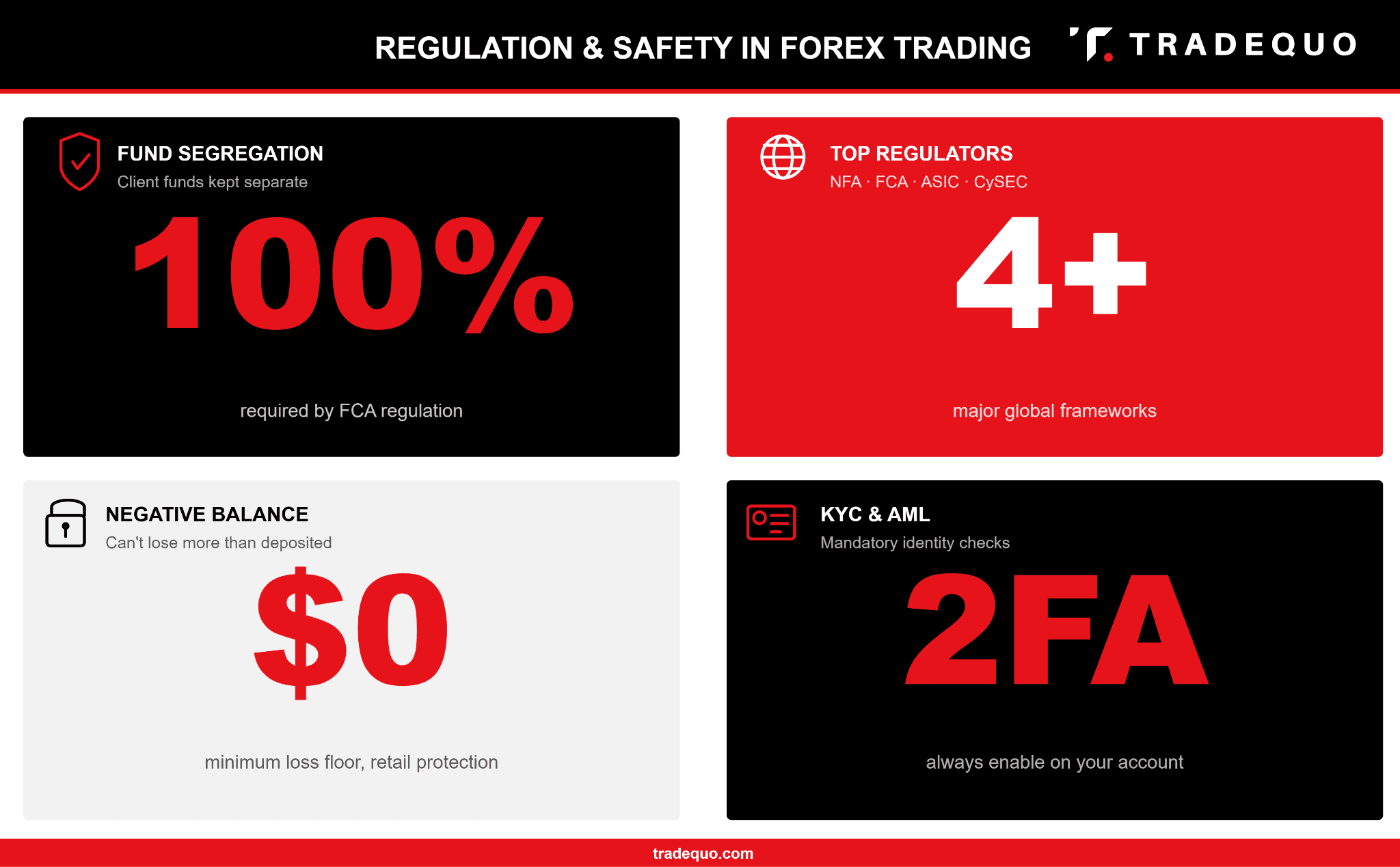
По інший бік Атлантики Управління з фінансового регулювання та нагляду (FCA) у Великій Британії регулює діяльність брокерів на основі захисту інвесторів, цілісності ринку та конкуренції. Брокери, авторизовані FCA, повинні зберігати кошти клієнтів на сегрегованих рахунках, що означає, що ваші кошти тримаються повністю окремо від власного операційного капіталу брокера. Ця сегрегація є надзвичайно важливою. Якщо брокер, що регулюється FCA, стає неплатоспроможним, ваші гроші не об'єднуються з активами компанії.
У Європі регламент MiFID II встановлює загальний стандарт для країн-членів ЄС, тоді як Кіпрська комісія з цінних паперів та бірж (CySEC) стала одним із найвідоміших органів ліцензування брокерів, які обслуговують європейських трейдерів. В Азіатсько-Тихоокеанському регіоні Австралійська комісія з цінних паперів та інвестицій (ASIC) впроваджує суворі вимоги до ліцензування брокерів та стандарти відповідності в торгівлі, які конкурують із вимогами FCA та CFTC.
Що насправді вимагають ці правила
Регулятори 1-го рівня накладають конкретні, обов'язкові до виконання зобов'язання. Брокери повинні підтримувати достатні резерви капіталу для покриття зобов'язань перед клієнтами. Вони повинні впроваджувати протоколи KYC та AML на форекс, перевіряючи особистість клієнтів та відстежуючи підозрілу діяльність. Вони повинні пропонувати захист від негативного балансу в більшості роздрібних юрисдикцій, що означає, що ви не можете втратити більше, ніж внесли на депозит. У деяких юрисдикціях, таких як Великобританія та певні режими ЄС, відповідні клієнти можуть мати доступ до схем компенсації у разі банкрутства авторизованої фірми.
Як перевірити, чи регулюється форекс-брокер
Використання офіційних баз даних регуляторів
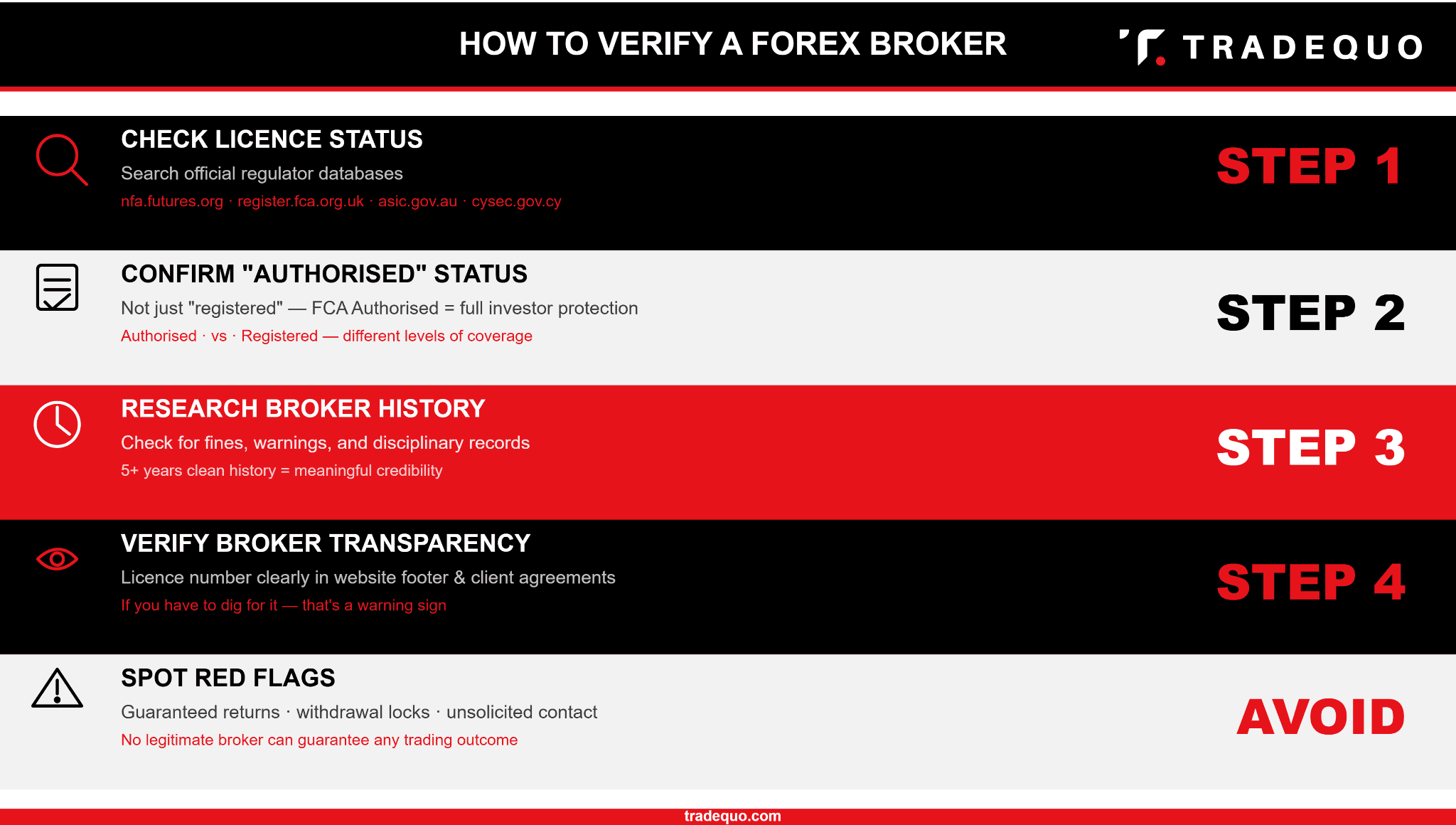
Найбезпечніший спосіб обрати форекс-брокера — це перевірити його ліцензію ще до того, як ви довірите йому хоча б один долар. Кожен надійний регулятор підтримує публічну базу даних, де ви можете здійснювати пошук за назвою брокера, реєстраційним номером компанії або ідентифікатором ліцензії.
У Сполучених Штатах інструмент BASIC від NFA (Інформаційний центр брокерів/радників/своп-дилерів) доступний на сайті nfa.futures.org і дозволяє шукати будь-яку фірму, зареєстровану в NFA. Результат покаже вам статус реєстрації фірми, її історію регулювання та будь-які дисциплінарні стягнення в реєстрі. Чиста репутація — хороший знак. Історія штрафів, попереджень або призупинень діяльності має викликати серйозне занепокоєння.
Для брокерів, які регулюються FCA, Реєстр фінансових послуг на сайті register.fca.org.uk дозволяє здійснювати пошук за назвою компанії або референс-номером. Шукайте статус «Authorised» (Авторизований), а не просто «Registered» (Зареєстрований), оскільки вони передбачають різні рівні захисту. Для Австралії використовуйте професійні реєстри та інструменти пошуку ліцензій ASIC, а ліцензії CySEC можна перевірити безпосередньо на cysec.gov.cy.
Дослідження історії компанії
Перевірка реєстру — це лише початок, а не кінець шляху. Переконавшись у тому, що ліцензія брокера є активною, приділіть час дослідженню його ширшої історії. Шукайте незалежні відгуки на авторитетних форумах, перевіряйте, чи не стикався брокер із публічно зареєстрованими судовими розглядами, та звертайте увагу на те, як довго компанія працює на ринку. Брокер із п’ятирічною чи більшою історією чистого регулювання — це зовсім інша справа порівняно з компанією, яка була заснована минулого року під незнайомим ім'ям.
Прозорість брокера також має значення. Авторитетний брокер чітко відображає свою інформацію про регулювання у футері свого вебсайту, умовах та положеннях, а також у клієнтських угодах. Якщо вам доводиться довго шукати номер ліцензії, вважайте це само по собі попередженням.
Ризики торгівлі з нерегульованими брокерами
Де починаються проблеми
Найбільша помилка, яку роблять трейдери з нерегульованими брокерами, — це припущення, що відсутність регулювання є незначною технічною деталлю. Це не так. Це фундаментальна структурна вразливість, яка ставить під загрозу кожен аспект ваших торгових відносин.
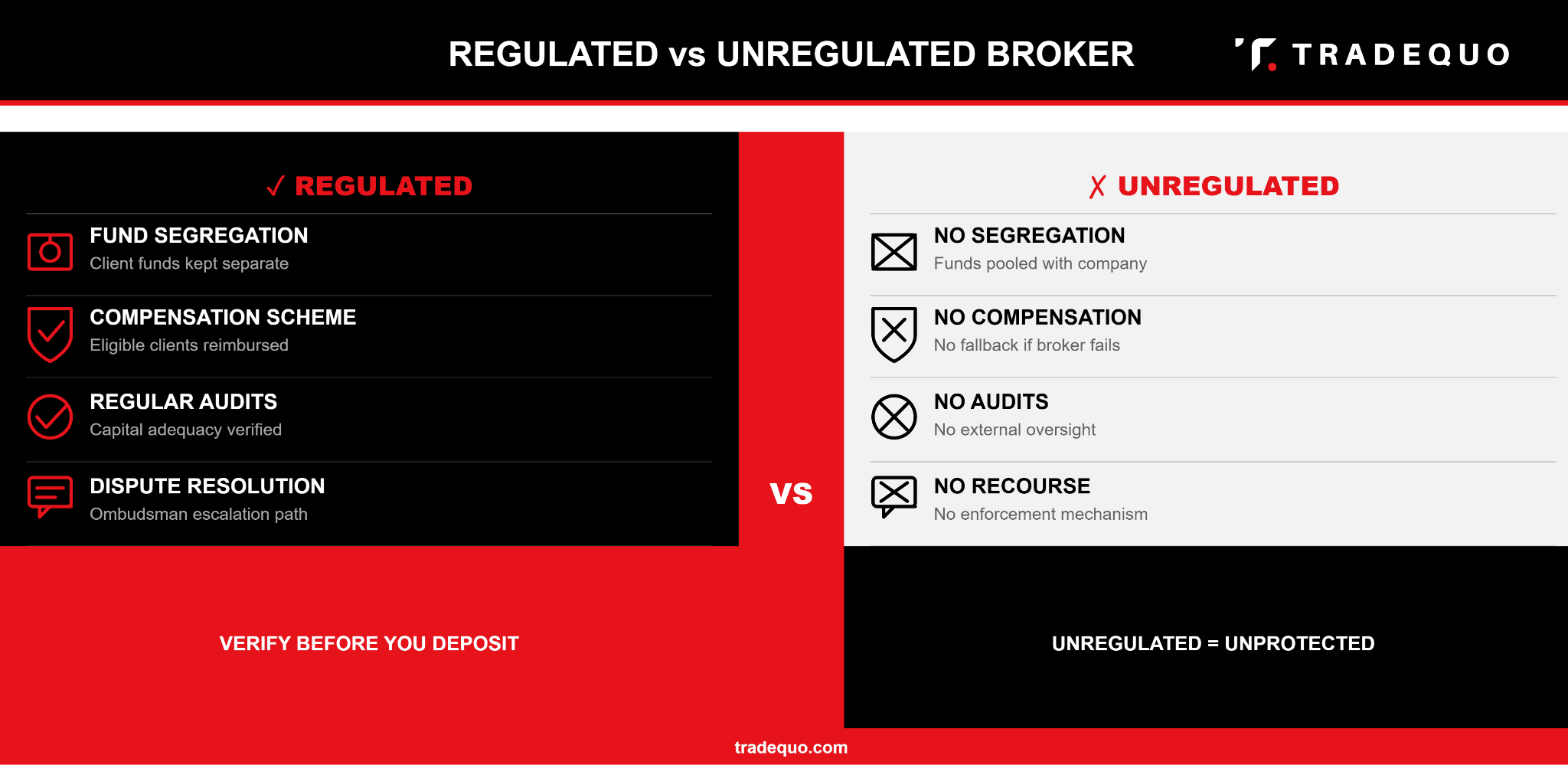
Коли брокер працює поза межами визнаної регуляторної бази, для нього немає обов'язкової вимоги розділяти кошти клієнтів. Ваш депозит може зберігатися разом з операційними коштами компанії, що миттєво піддає його ризику, якщо бізнес зіткнеться з фінансовими труднощами. Немає жодної схеми компенсації, на яку можна було б покластися. Немає омбудсмена, до якого можна було б звернутися зі скаргою. У найгіршому випадку немає механізму примусового виконання, який міг би змусити брокера повернути ваші гроші.
Нерегульовані брокери часто працюють з офшорних юрисдикцій із мінімальним наглядом за фінансовими ринками. Регуляторні стандарти в таких локаціях можуть не вимагати достатності капіталу, можуть не накладати обмежень на кредитне плече та не пропонувати жодних дієвих законів про захист інвесторів. Деякі з них взагалі не вимагають від брокерів проходження зовнішнього аудиту.
Поширені попереджувальні знаки
Ознаки шахрайства на форекс часто помітні ще до реєстрації, якщо знати, на що звертати увагу. Будьте вкрай обережні з будь-яким брокером, який обіцяє гарантований прибуток або торгівлю без ризику. Жоден легітимний брокер не робитиме таких заяв, оскільки результат торгівлі не може бути гарантований. Так само на особливу увагу заслуговують брокери, які застосовують агресивну тактику тиску, здійснюють небажані контакти або пропонують бонуси, які блокують ваші кошти умовами виведення.
Брак прозорості щодо комісій, спредів та політик виконання ордерів — ще один суттєвий тривожний сигнал. Побоювання щодо безпеки офшорних форекс-брокерів посилюються, коли брокер не може або не хоче чітко відповісти на базові питання про те, де зберігаються ваші гроші, як вони захищені та як відбувається процес виведення коштів.
Найкращі практики безпеки для трейдерів
Захист вашого торгового рахунку
Навіть коли ви торгуєте з повністю регульованим брокером, безпека вашого особистого кабінету — це ваша власна відповідальність.
Почніть із базових речей: використовуйте надійний, унікальний пароль для свого торгового рахунку, який ви не використовуєте на жодній іншій платформі. Менеджер паролів робить це практичним, не вимагаючи від вас запам'ятовувати десятки складних комбінацій. Що ще важливіше, увімкніть двофакторну автентифікацію скрізь, де вона доступна. Двофакторна автентифікація додає другий крок перевірки, зазвичай тимчасовий код, надісланий на ваш телефон або згенерований додатком-автентифікатором, що запобігає несанкціонованому доступу, навіть якщо ваш пароль було скомпрометовано.
Оновлюйте свою операційну систему, браузер та будь-яке програмне забезпечення торгової платформи. Патчі безпеки усувають відомі вразливості, а використання застарілого програмного забезпечення є одним із найпоширеніших способів, через які трейдери мимоволі наражають себе на ризик. Будьте так само обережні з мережами, якими користуєтеся. Уникайте доступу до свого торгового рахунку через публічний Wi-Fi без VPN і з особливою обережністю ставтеся до будь-яких небажаних повідомлень, електронних листів або дзвінків від осіб, які видають себе за представників вашого брокера.
Захист ваших персональних даних
Захист персональних даних у контексті торгівлі виходить за рамки вашого пароля. Подумайте, яким стороннім додаткам та сервісам ви надаєте доступ до свого торгового рахунку. Періодично перевіряйте журнал активності вашого акаунта, щоб виявити будь-які сесії або входи, які ви не впізнаєте. Якщо ваш брокер пропонує створення білих списків IP-адрес або сповіщення про вхід, активуйте їх.
Застосовуйте послідовні практики управління ризиками. Встановлюйте розміри позицій, з якими вам комфортно працювати, використовуйте стоп-лосс ордери як повсякденну практику та не піддавайтеся спокусі надмірного кредитного плеча. Надійна безпека торгового рахунку та дисципліноване управління ризиками не є окремими питаннями; разом вони формують повне уявлення про те, як виглядають безпечні торгові платформи та звички на форекс на практиці.
Зобов'язання TradeQuo щодо безпеки клієнтів
Для трейдерів, які хочуть мати гарантію роботи з брокером, що серйозно ставиться до регулювання, TradeQuo працює за регуляторними ліцензіями, які вимагають від компанії відповідати визначеним стандартам достатності капіталу, підтримувати прозоре ціноутворення та дотримуватися зобов'язань щодо чесного ведення бізнесу. Кошти клієнтів зберігаються на сегрегованих рахунках, окремо від операційного капіталу компанії, що гарантує, що ваші кошти залишаються вашими незалежно від фінансового стану компанії. Додатковим рівнем безпеки є підтвердження наявності коштів, перевірене незалежними аудитами, а не внутрішнім сертифікатом, виданим самою компанією.
Процес реєстрації в TradeQuo включає повну відповідність вимогам KYC та AML відповідно до стандартів, що очікуються її регуляторними органами.
Прозорість є невіддільною частиною роботи TradeQuo. Регуляторні реквізити чітко відображені, процеси виведення коштів є простими, а підтримка клієнтів завжди готова відповісти на будь-які запитання щодо безпеки рахунку або захисту коштів. Для трейдерів, які відчували занепокоєння під час роботи з менш прозорими брокерами, така ясність має вирішальне значення.
Підсумок
Фінансова торгівля несе в собі невіддільний ризик. Ціни змінюються, стратегії зазнають невдач, і навіть досвідчені трейдери зазнають збитків. Що ви дійсно можете контролювати, так це середовище, в якому торгуєте. Регульований брокер усуває категорію ризиків, які не мають нічого спільного з самим ринком: ризик шахрайства, нецільового використання коштів та відсутності захисту у разі виникнення проблем.
Перед тим як відкрити будь-який рахунок, перевірте ліцензію. Зазирніть до бази даних регулятора. Ознайомтеся з історією. А вже потім зосередьтеся на торгівлі. Ринок і без того достатньо складний, щоб додавати до рівняння непотрібний ризик брокера. Торгуйте лише з регульованими брокерами, дотримуйтеся безпечних онлайн-звичок і забезпечте собі фундамент, на який заслуговує кожен серйозний трейдер.
FAQs
Чи регулюється торгівля на форекс у кожній країні?
Ні. Регулювання відрізняється залежно від країни. Деякі країни (США, Великобританія, ЄС, Австралія) мають суворий нагляд, тоді як інші мають незначний або взагалі не мають його. Завжди перевіряйте ліцензію брокера, а не просто легальність його роботи.
Як перевірити, чи регулюється форекс-брокер?
Перевірте офіційні бази даних регуляторів (NFA, FCA, ASIC, CySEC). Знайдіть юридичну назву брокера або номер ліцензії та підтвердьте, що вона активна.
Що відбувається, якщо форекс-брокер не регулюється?
Ви не маєте реального захисту — немає обов'язкових правил безпеки коштів, немає схеми компенсації та обмежені можливості правового захисту у разі виникнення проблем.
Яка різниця між регульованим та нерегульованим брокером?
Регульовані брокери повинні дотримуватися суворих правил (сегрегація коштів, аудити, вимоги до капіталу). Нерегульовані брокери не мають таких зобов'язань.
Чи можу я довіряти офшорним форекс-брокерам?
Офшорний брокер не обов'язково є небезпечним, але рівень захисту залежить від якості регулятора, конкретної ліцензованої установи та правил, які застосовуються до вашого рахунку.