شرح نداء الهامش (Margin Call): ما يجب على كل متداول برافعة مالية معرفته
يفتح التداول بالرافعة المالية الباب أمام صفقات أكبر بكسر بسيط من رأس المال، ولكنه يأتي مع مجموعة من القواعد التي يمكن أن تفاجئ المتداولين غير المستعدين تمامًا. اثنان من أهم المفاهيم في هذا المجال هما نداء الهامش ومستوى التصفية الإجبارية (stop-out). إن فهم ما يعنيه هذان المفهومان، وكيف يعملان، وكيف يرتبطان بمستوى الهامش الخاص بك في التداول هو الفارق بين إدارة المخاطر بذكاء ومشاهدة حسابك يُصفى بالكامل أثناء تحرك مفاجئ للسوق.
كيفية حساب مستويات الهامش في التداول
قبل أن تتمكن من فهم نداء الهامش، عليك أولاً أن تفهم ما هو مستوى الهامش فعليًا وكيف يقيسه الوسطاء في الوقت الفعلي.
صيغة حساب مستوى الهامش بسيطة ومباشرة:
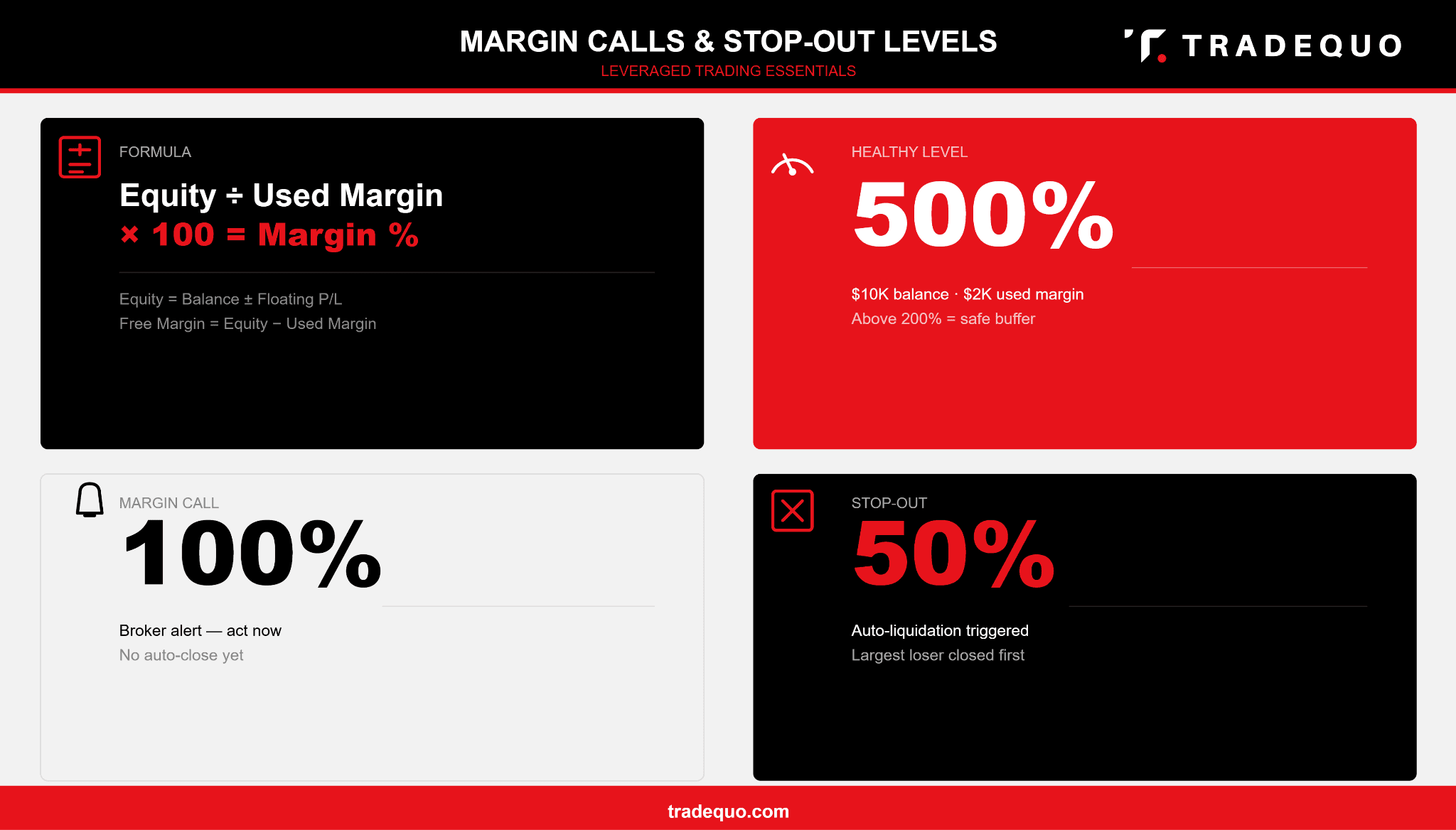
مستوى الهامش = (السيولة الأكاديمية ÷ الهامش المستخدم) × 100
كل جزء من هذه المعادلة يحمل وزنًا حقيقيًا.
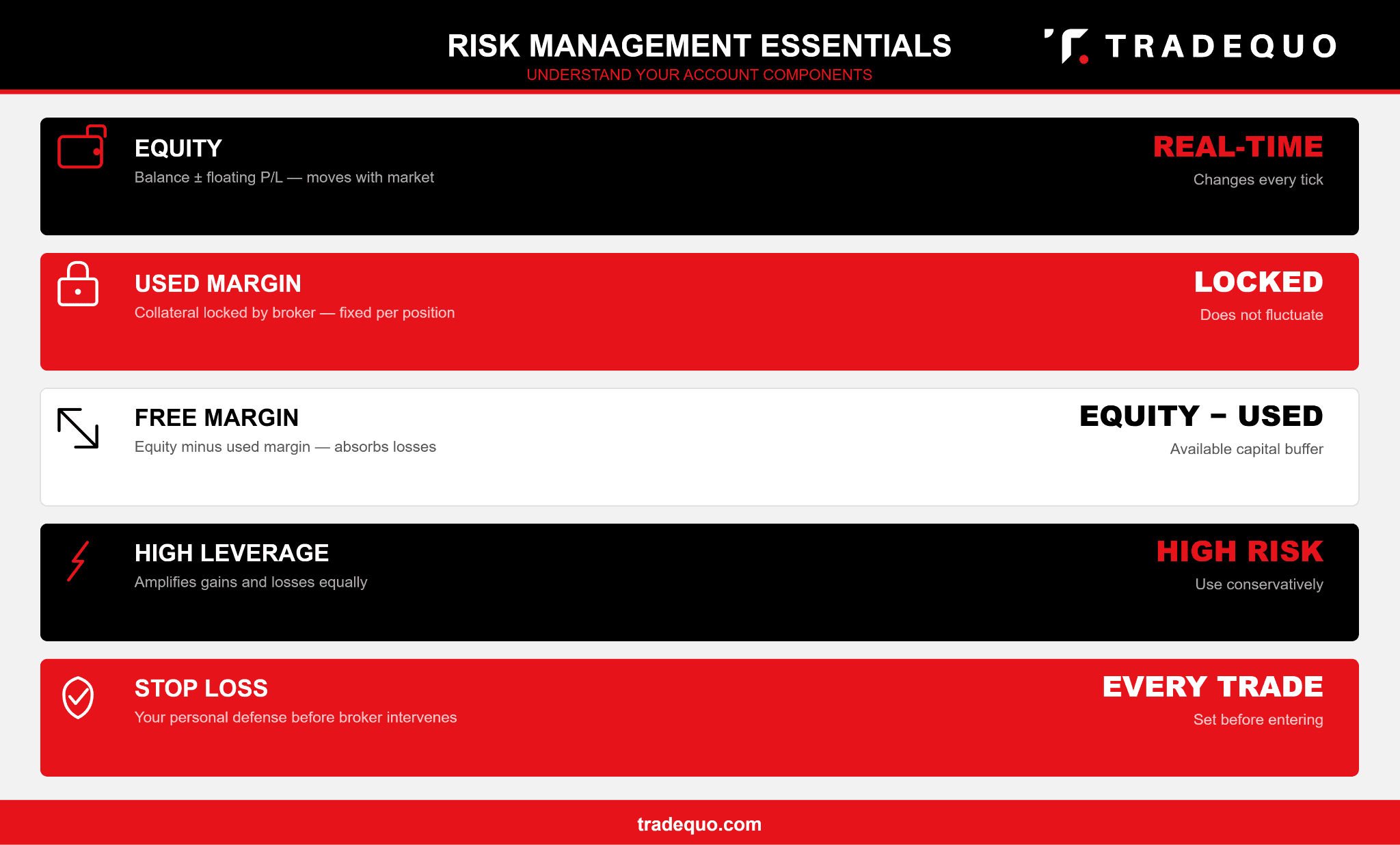
السيولة (Equity) هي رصيد حسابك معدلًا بأي صفقات مفتوحة. إذا كان رصيدك 5000 دولار ولديك صفقة مفتوحة تعاني حاليًا من خسارة عائمة بقيمة 200 دولار، فإن سيولتك هي 4800 دولار. وهي تتحرك باستمرار مع تحرك السوق.
الهامش المستخدم هو جزء من أموالك التي قام وسيطك بحجزها كضمان لإبقاء صفقاتك المفتوحة قيد التشغيل. وهو لا يتحرك مع السوق، بل هو متطلب ثابت يعتمد على حجم صفقتك والرافعة المالية التي تستخدمها.
الهامش المتاح (المنفصل) هو ما يتبقى بعد طرح الهامش المستخدم من السيولة. وهو رأس المال المتاح لفتح صفقات جديدة أو استيعاب المزيد من الخسائر. (الهامش المتاح = السيولة – الهامش المستخدم)
إليك مثالًا بسيطًا لتوضيح ذلك بشكل ملموس. لنفترض أن لديك حسابًا بقيمة 10,000 دولار، وفتحت صفقة تتطلب هامشًا مستخدمًا بقيمة 2,000 دولار. مستوى الهامش الخاص بك في البداية هو (10,000 دولار ÷ 2,000 دولار) × 100 = 500%. هذا مستوى صحي. الآن تخيل أن الصفقة تتحرك ضدك وانخفضت سيولتك إلى 3,000 دولار. مستوى الهامش الخاص بك الآن هو (3,000 دولار ÷ 2,000 دولار) × 100 = 150%. لا يزال أعلى من عتبات معظم الوسطاء، ولكن الضغط بدأ يتزايد.
عندما يستمر السوق في التحرك ضدك، وتنخفض السيولة أكثر، فإن هذه النسبة المئوية تستمر في الانخفاض، وهنا تصبح الأمور خطيرة.
ما الذي يطلق نداء الهامش
يحدث نداء الهامش عندما ينخفض مستوى الهامش في حسابك عن العتبة التي حددها الوسيط. تاريخيًا، كان هذا يعني اتصال الوسيط بالمتداول لإيداع المزيد من الأموال، ولكن في المنصات الإلكترونية الحديثة، يعمل هذا عادةً كتنبيه من النظام بدلاً من مكالمة فعلية. إنها طريقة الوسيط لإخبارك بأن حسابك لم يعد بإمكانه دعم صفقاتك المفتوحة بشكل مريح وأن هناك إجراءً مطلوبًا.
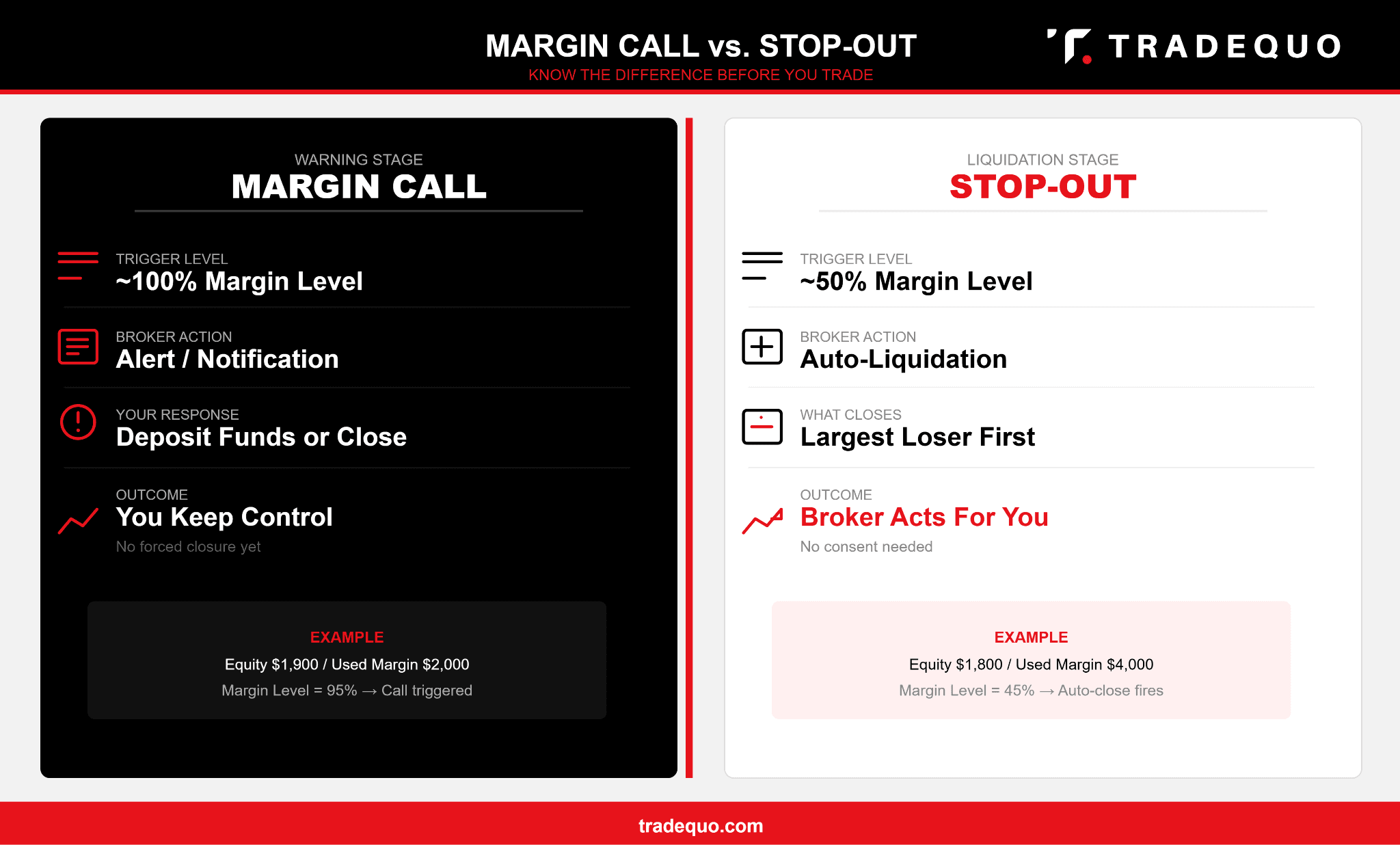
يحدد معظم الوسطاء عتبة نداء الهامش عند حوالي 100%. هذا يعني أنه عندما ينخفض مستوى الهامش لديك إلى هذا المستوى أو أقل منه، حيث تتساوى سيولتك مع الهامش المستخدم، سينبهك الوسيط. من الناحية العملية، هذا التنبيه هو نداء الهامش. وهو ليس إغلاقًا تلقائيًا بعد، بل هو إشارة إلى أنك بحاجة إلى اتخاذ إجراء.
ما يحدث أثناء نداء الهامش يعتمد على الوسيط والاتفاقية التي وقعتها عند فتح حسابك. بشكل عام، سيُطلب منك إما إيداع أموال إضافية لرفع سيولتك مجددًا فوق العتبة أو إغلاق بعض صفقاتك المفتوحة لتقليل الهامش المستخدم وإعادة النسبة إلى مستوى أكثر أمانًا.
هنا يصبح مفهوم إدارة مخاطر تداول الهامش أمرًا بالغ الأهمية. المتداولون الذين يستخدمون رافعة مالية مفرطة أو الذين يحتفظون بصفقات خاسرة متعددة في نفس الوقت هم الأكثر عرضة للخطر. إن حركة السوق السريعة، أو حدثًا إخباريًا غير متوقع، أو فجوة سعرية عند الافتتاح يمكن أن تدفع السيولة إلى الانخفاض بشكل أسرع مما يمكن لأي شخص الاستجابة له.
تأمل هذا المثال. لديك 2500 دولار من السيولة مع 2000 دولار من الهامش المستخدم. مستوى الهامش الخاص بك هو (2500 دولار ÷ 2000 دولار) × 100 = 125%. فجأة، تحدث فجوة سعرية في السوق، وتزداد خسارتك العائمة بمقدار 600 دولار. تنخفض سيولتك إلى 1900 دولار. الآن أصبح مستوى الهامش لديك هو (1900 دولار ÷ 2000 دولار) × 100 = 95%. لقد أصبحت تحت عتبة نداء الهامش البالغة 100%. يرسل الوسيط إشعارًا ويتوقع منك الرد. إذا لم تفعل، أو لم تكن قادرًا على ذلك، فإن المرحلة التالية تبدأ تلقائيًا.
مستويات التصفية الإجبارية (Stop-Out) والتصفية التلقائية
مستوى التصفية الإجبارية (stop-out) هو النقطة التي يتوقف فيها الوسيط عن الانتظار ويبدأ في التصرف نيابة عنك، سواء أردت ذلك أم لا.
بينما يمثل نداء الهامش تحذيرًا، فإن التصفية الإجبارية هي التنفيذ الفعلي. عندما ينخفض مستوى الهامش لديك إلى عتبة التصفية الإجبارية، والتي تختلف من وسيط لآخر ولكنها تُحدد عادةً عند 50% أو 20% أو حتى أقل في بعض الأحيان، سيبدأ نظام الوسيط تلقائيًا في إغلاق صفقاتك المفتوحة. تُعرف هذه العملية بالتصفية (liquidation).
يقوم الوسيط عادةً بإغلاق الصفقة ذات الخسارة الأكبر أولاً، من أجل تحرير الهامش المستخدم ورفع مستوى الهامش مجددًا فوق عتبة التصفية الإجبارية. إذا لم يكن إغلاق صفقة واحدة كافيًا، تتبعها الصفقة التالية، وهكذا، حتى يستقر الحساب.
لتوضيح التسلسل الكامل من نداء الهامش إلى التصفية الإجبارية ثم التصفية التلقائية بوضوح، إليك مثالًا عمليًا.
قمت بفتح حساب بقيمة 10,000 دولار واستخدمت رافعة مالية عالية لفتح عدة صفقات، بهامش مستخدم إجمالي قدره 4,000 دولار. مستوى الهامش الابتدائي الخاص بك هو 250%. يتحول السوق ضدك على مدار عدة جلسات تداول. تنخفض سيولتك إلى 2,500 دولار. أصبح مستوى الهامش الآن 62.5%. مستوى نداء الهامش لدى وسيطك هو 100%، لذا فقد تجاوزت هذا التحذير بالفعل. الآن تنخفض سيولتك أكثر لتصل إلى 1,800 دولار. مستوى الهامش: (1,800 دولار ÷ 4,000 دولار) × 100 = 45%. مستوى التصفية الإجبارية لدى وسيطك هو 50%. يتم تفعيل النظام تلقائيًا ويغلق أكبر صفقاتك الخاسرة، مما يحرر 1,500 دولار من الهامش المستخدم. الآن أصبح الهامش المستخدم لديك 2,500 دولار، واستقرت سيولتك قليلاً، ويتعافى مستوى الهامش الخاص بك فوق العتبة المطلوبة.
الفارق الرئيسي بين نداء الهامش والتصفية الإجبارية (stop-out): الأول يطلب منك التصرف، بينما يقوم الثاني بالتصرف نيابة عنك. إن معرفة النسب المئوية الدقيقة التي يستخدمها وسيطك لكلا المستويين أمر ضروري قبل أن تفتح صفقة واحدة برافعة مالية.
تجنب نداءات الهامش من خلال الإدارة الذكية للمخاطر
الخبر السار هو أنه يمكن دائمًا تجنب نداءات الهامش والتصفية الإجبارية تقريبًا من خلال اتباع النهج الصحيح لإدارة المخاطر في تداول العملات الأجنبية (الفوركس) والأسواق الأخرى ذات الرافعة المالية.
استخدم رافعة مالية متحفظة. هذا هو الإجراء الفردي الأكثر فعالية الذي يمكنك القيام به. الرافعة المالية العالية تضاعف الأرباح والخسائر على حد سواء. ويجب على المبتدئين، على وجه الخصوص، البدء بنسب رافعة مالية أقل للحفاظ على مستوى الهامش لديهم مرتفعًا بشكل مريح حتى عندما تتحرك الصفقات ضدهم. يمنحك مستوى الهامش الذي يزيد عن 200% مساحة أمان كافية.
ضع أوامر إيقاف الخسارة قبل دخول الصفقة. أمر إيقاف الخسارة ليس هو نفسه نداء الهامش، ولكنه بمثابة دفاعك الشخصي قبل أن يتدخل الوسيط على الإطلاق. من خلال تحديد الحد الأقصى للخسارة في كل صفقة، فإنك تحمي سيولتك وتمنع تدهور مستوى الهامش الخاص بك دون سابق إنذار.
راقب صفقاتك المفتوحة بنشاط. لا تتحرك الأسواق دائمًا بشكل تدريجي؛ إذ يمكن أن تؤدي طفرات التقلب، والبيانات الإخبارية، وفجوات السيولة إلى تغيير السيولة بشكل كبير في غضون دقائق. إن فحص مستوى الهامش الخاص بك بانتظام، وخاصة مؤشر مستوى الهامش في MT4 أو الأدوات المماثلة في MT5، يجعلك على دراية بالوضع قبل أن يتفاقم. في منصات مثل MetaTrader 4 و MetaTrader 5، يتم عرض مؤشر مستوى الهامش مباشرة في محطة التداول.
احتفظ بهامش أمان في حسابك. لا تخصص كل دولار من رصيدك في صفقات نشطة. إن الحفاظ على هامش متاح أعلى من الهامش المستخدم يوفر وسادة أمان تمتص الخسائر العائمة دون تهديد مستوى الهامش لديك على الفور.
افهم القواعد المحددة لوسيطك. لا يستخدم كل وسيط نفس النسبة المئوية لنداء الهامش أو مستوى التصفية الإجبارية. فبعضهم يعمل بنسبة 100% و50%، بينما يعمل آخرون عند عتبات مختلفة تمامًا. كما يقدم العديد من الوسطاء الموثوقين حماية من الرصيد السلبي، والتي تمنع حسابك من الانخفاض إلى ما دون الصفر حتى في ظروف السوق القاسية. اقرأ الشروط جيدًا قبل التداول.
نادرًا ما يكون المتداولون الذين يتجنبون التصفية أكثر حظًا من غيرهم، بل هم ببساطة أكثر انضباطًا بشأن حجم رأس المال الذي يعرضونه للمخاطرة في أي وقت.
إدارة الرافعة المالية والهامش هي أساس التداول على المدى الطويل
نداءات الهامش ومستويات التصفية الإجبارية ليست عقوبات مصممة لإيقاع المتداولين، بل هي ضمانات هيكلية مدمجة في نظام التداول بالرافعة المالية لاحتواء الخسائر وحماية كل من المتداول والوسيط من المخاطر الخارجة عن السيطرة. إن فهم كيفية حساب مستوى الهامش، وما يدفعه نحو نداء الهامش، وعند أي نقطة تبدأ التصفية التلقائية يمنحك المعرفة للتداول بوعي وتخطيط بدلاً من القلق. أدر رافعتك المالية بعناية، واستخدم أوامر إيقاف الخسارة باستمرار، وحافظ على مستوى الهامش الخاص بك أعلى بكثير من عتبات وسيطك. هذه العادات، أكثر من أي استراتيجية أو مؤشر، هي ما يميز المتداولين الذين يستمرون في السوق عن الذين يغادرونه.
الأسئلة الشائعة (FAQ)
ما هو نداء الهامش بعبارات بسيطة؟
يحدث نداء الهامش عندما ينخفض مستوى الهامش في حسابك عن العتبة التي حددها وسيطك، والتي تكون عادةً حوالي 100%. وهو إشعار يفيد بأن سيولتك لم تعد قادرة على تغطية صفقاتك المفتوحة بشكل كافٍ، وأنك بحاجة إما إلى إضافة أموال أو تقليل حجم صفقاتك.
ما الفرق بين نداء الهامش ومستوى التصفية الإجبارية (Stop-out)؟
نداء الهامش هو تحذير يتم إصداره عندما ينخفض مستوى الهامش لديك عن نسبة مئوية محددة، ويطلب منك اتخاذ إجراء. أما مستوى التصفية الإجبارية فهو عتبة أقل يقوم عندها الوسيط تلقائيًا بإغلاق صفقاتك دون انتظار رد منك.
هل يمكن أن تخسر أكثر من مبلغ إيداعك في تداول الهامش؟
في بعض الحالات، نعم، إذا تحرك السوق بسرعة فائقة وأُغلقت صفقاتك بسعر أسوأ من مستوى التصفية الإجبارية. ومع ذلك، يقدم العديد من الوسطاء الآن حماية من الرصيد السلبي، والتي تمنع رصيد حسابك من الانخفاض إلى ما دون الصفر.
ما هو مستوى الهامش الذي يُعتبر خطيرًا؟
يتعامل معظم المتداولين مع أي مستوى يقل عن 150% كمنطقة تحذير. وبمجرد اقتراب مستوى الهامش من 100% أو أقل، فإنك تدخل في منطقة نداء الهامش. كما أن الانخفاض إلى ما دون 50% لدى العديد من الوسطاء يؤدي إلى التصفية التلقائية لل صفقات.
كيف يمكنني تجنب نداء الهامش؟
الطرق الأكثر موثوقية هي استخدام رافعة مالية أقل، وتحديد أوامر إيقاف الخسارة دائمًا في كل صفقة، ومراقبة صفقاتك بانتظام، والاحتفاظ بهامش متاح إضافي في حسابك، وتجنب إثقال حسابك بالكثير من الصفقات المفتوحة في وقت واحد.