บทนำ
ในปัจจุบัน นักลงทุนมีช่องทางมากมายในการเข้าถึงหุ้นของบริษัทที่ตนเองเชื่อมั่น บางรายชื่นชอบการซื้อขายหุ้นแบบดั้งเดิม ซึ่งพวกเขาจะซื้อหุ้นของบริษัทและเข้ามามีส่วนร่วมในการเป็นเจ้าของธุรกิจ ในขณะที่บางรายเลือกการเทรด CFD ซึ่งเป็นการเทรดอนุพันธ์รูปแบบหนึ่งที่ช่วยให้สามารถเก็งกำไรจากการเคลื่อนไหวของราคาได้โดยไม่จำเป็นต้องเป็นเจ้าของสินทรัพย์อ้างอิงนั้นจริง ๆ
การทำความเข้าใจความแตกต่างระหว่าง CFD กับการซื้อขายหุ้นถือเป็นเรื่องสำคัญ เนื่องจากทั้งสองวิธีนี้มีหลักการทำงานที่แตกต่างกันอย่างสิ้นเชิง แม้ว่าทั้งคู่จะช่วยให้เข้าถึงตลาดหุ้นและหุ้นทั่วโลกได้ แต่กลไก ความเสี่ยง และต้นทุนนั้นไม่เหมือนกัน ทั้งในเรื่องของสิทธิ์ความเป็นเจ้าของ เลเวอเรจ การเข้าถึงตลาด และระยะเวลาในการถือครองสินทรัพย์
สำหรับเทรดเดอร์บางกลุ่ม ความยืดหยุ่นของการเทรด CFD ทำให้เป็นตัวเลือกที่น่าสนใจสำหรับกลยุทธ์การเทรดระยะสั้นและการตอบสนองต่อสภาวะอารมณ์ของตลาด สำหรับกลุ่มอื่น ๆ การลงทุนในหุ้นแบบดั้งเดิมจะมอบความมั่นคง การสร้างความมั่งคั่งในระยะยาว และสิทธิพิเศษของผู้ถือหุ้น การทราบความแตกต่างที่สำคัญเหล่านี้จะช่วยให้เทรดเดอร์สามารถเลือกแนวทางที่สอดคล้องกับเป้าหมายทางการเงิน สไตล์การเทรด และระดับความเสี่ยงที่ยอมรับได้มากที่สุด
ความเป็นเจ้าของและสิทธิ์ต่าง ๆ
หนึ่งในความแตกต่างที่สำคัญที่สุดระหว่าง CFD และหุ้นก็คือความเป็นเจ้าของ
เมื่อนักลงทุนมีส่วนร่วมในการซื้อขายหุ้น พวกเขาจะซื้อหุ้นจริงของบริษัทผ่านบัญชีซื้อขายหลักทรัพย์ หุ้นเหล่านี้แสดงถึงสิทธิ์ความเป็นเจ้าของในบริษัท แม้ว่าจะมีหุ้นจำนวนไม่มาก แต่นักลงทุนก็ยังมีส่วนได้ส่วนเสียในธุรกิจและได้รับสิทธิพิเศษบางประการของผู้ถือหุ้น
เนื่องจากหุ้นแสดงถึงความเป็นเจ้าของ นักลงทุนจึงอาจได้รับเงินปันผลเมื่อบริษัทจ่ายเงินปันผลให้แก่ผู้ถือหุ้น นอกจากนี้ ยังอาจได้รับสิทธิ์ในการออกเสียงลงคะแนน ซึ่งช่วยให้พวกเขามีส่วนร่วมในการตัดสินใจครั้งสำคัญของบริษัท เช่น การเลือกตั้งคณะกรรมการบริษัท หรือการอนุมัติการดำเนินการสำคัญของบริษัท
การซื้อขายหุ้นแบบดั้งเดิมยังหมายความว่านักลงทุนจะได้รับประโยชน์โดยตรงจากมูลค่าที่เพิ่มขึ้นเมื่อราคาหุ้นสูงขึ้น หากบริษัทดำเนินงานได้ดี รายงานผลประกอบการที่แข็งแกร่ง และมีแนวโน้มของตลาดที่เป็นบวก ราคาหุ้นก็สามารถเพิ่มขึ้นได้ตามกาลเวลา นักลงทุนระยะยาวมักพึ่งพาการปรับตัวขึ้นของราคาหุ้นควบคู่ไปกับเงินปันผลในการสร้างความมั่งคั่ง
ในทางตรงกันข้าม การเทรด CFD คือการเก็งกำไรจากราคาของสินทรัพย์มากกว่าที่จะเป็นเจ้าของสินทรัพย์นั้น เมื่อเทรดเดอร์ CFD เปิดสถานะซื้อขาย พวกเขาจะทำสัญญากับโบรกเกอร์เพื่อแลกเปลี่ยนส่วนต่างของราคาสินทรัพย์ระหว่างเวลาที่เปิดและปิดสถานะ
สิ่งนี้หมายความว่านักลงทุน CFD ไม่ได้มีความเป็นเจ้าของในสินทรัพย์อ้างอิงนั้นจริง ๆ พวกเขาไม่ได้ถือครองหุ้นด้วยตัวเอง ดังนั้นจึงไม่ได้รับสิทธิพิเศษของผู้ถือหุ้น เช่น สิทธิ์ในการออกเสียงลงคะแนน โดยทั่วไปแล้วจะไม่ได้รับเงินปันผลด้วย แม้ว่าโบรกเกอร์อาจปรับสถานะเพื่อสะท้อนถึงการจ่ายเงินปันผลก็ตาม
เนื่องจาก CFD เป็นตราสารอนุพันธ์ เทรดเดอร์จึงทำเพียงแค่คาดการณ์ว่าราคาสินทรัพย์จะปรับตัวสูงขึ้นหรือต่ำลง เทรดเดอร์อาจทำกำไรจากความเคลื่อนไหวของราคาได้ แต่พวกเขาจะไม่ได้เป็นเจ้าของสินทรัพย์นั้นจริง ๆ
สำหรับนักลงทุนที่ให้คุณค่ากับความเป็นเจ้าของในระยะยาว รายได้แบบพาสซีฟ และการมีส่วนร่วมในการตัดสินใจของบริษัท การซื้อขายหุ้นอาจมีความน่าสนใจมากกว่า ส่วนเทรดเดอร์ที่โฟกัสเฉพาะความเคลื่อนไหวของราคา การเทรด CFD ก็อาจเป็นทางเลือกที่ยืดหยุ่นกว่า
เลเวอเรจและความต้องการเงินทุน
ความแตกต่างที่สำคัญอีกประการหนึ่งระหว่างการเทรด CFD กับการลงทุนในหุ้นคือเรื่องของเงินทุนและเลเวอเรจ
ในการซื้อขายหุ้นแบบดั้งเดิม โดยทั่วไปนักลงทุนจะต้องจ่ายเงินเต็มจำนวนของมูลค่าสินทรัพย์เมื่อซื้อหุ้น หากเทรดเดอร์ต้องการซื้อหุ้นมูลค่าหนึ่งหมื่นดอลลาร์ โดยทั่วไปแล้วพวกเขาจะต้องวางเงินเต็มจำนวนของมูลค่าการซื้อขายล่วงหน้า
การลงทุนเริ่มต้นที่สูงขึ้นนี้อาจจำกัดขนาดของสถานะการซื้อขายสำหรับลูกค้ารายย่อยที่มีเงินทุนน้อย อย่างไรก็ตาม วิธีนี้ก็ช่วยลดความเสี่ยงได้เนื่องจากผลขาดทุนจะจำกัดอยู่เพียงแค่จำนวนเงินที่ลงทุนไปเท่านั้น หากหุ้นร่วงลงเหลือศูนย์ นักลงทุนก็จะไม่ขาดทุนเกินกว่าราคาที่ซื้อมา
ในทางตรงกันข้าม การเทรด CFD จะใช้เลเวอเรจ แทนที่จะต้องจ่ายมูลค่าเต็มของสินทรัพย์ เทรดเดอร์จะวางเงินหลักประกันเริ่มต้นจำนวนเล็กน้อย หรือที่เรียกว่า มาร์จิ้น เพื่อควบคุมขนาดสถานะที่ใหญ่ขึ้นได้ ตัวอย่างเช่น เทรดเดอร์อาจต้องการเงินเพียงแค่เศษเสี้ยวของมูลค่าการซื้อขายจริงเพื่อเปิดสถานะ CFD ของหุ้น ซึ่งช่วยให้เทรดเดอร์เข้าถึงตลาดและเปิดสถานะขนาดใหญ่ได้แม้ว่าจะมีเงินทุนค่อนข้างจำกัดก็ตาม
เลเวอเรจสามารถเพิ่มผลกำไรที่อาจเกิดขึ้นได้เมื่อตลาดเคลื่อนไหวไปในทิศทางที่เป็นประโยชน์ต่อเทรดเดอร์ อย่างไรก็ตาม มันก็จะขยายผลขาดทุนให้สูงขึ้นด้วยเช่นกันหากตลาดเคลื่อนไหวไปในทิศทางตรงกันข้าม ด้วยเหตุนี้ การบริหารจัดการความเสี่ยงจึงกลายเป็นสิ่งจำเป็นอย่างยิ่งในการเทรดอนุพันธ์
อีกประเด็นที่สำคัญคือการเทรด CFD อาจทำให้เกิดผลขาดทุนเกินกว่าเงินลงทุนเริ่มต้นได้หากใช้เลเวอเรจอย่างหนักหน่วง โบรกเกอร์บางแห่งมีระบบป้องกันยอดเงินในบัญชีติดลบ (Negative Balance Protection) ให้แก่ลูกค้ารายย่อยเพื่อป้องกันไม่ให้ยอดเงินในบัญชีต่ำกว่าศูนย์ แต่เทรดเดอร์ควรตรวจสอบนโยบายของแพลตฟอร์มการเทรดที่ตนเองเลือกใช้งานเสมอ
ความสามารถในการใช้เลเวอเรจคือเหตุผลหนึ่งที่ทำให้เทรดเดอร์ที่ชอบความเคลื่อนไหวอย่างรวดเร็วเลือกเทรด CFD โดยเฉพาะสำหรับกลยุทธ์การเทรดระยะสั้นที่เน้นการทำกำไรจากความเคลื่อนไหวของราคาเล็กน้อยในตลาดการเงินที่มีความผันผวนสูง
ต้นทุนและค่าธรรมเนียม
โครงสร้างต้นทุนเป็นอีกหนึ่งประเด็นสำคัญที่นี่
ในการซื้อขายหุ้นแบบดั้งเดิม โบรกเกอร์มักจะคิดค่าคอมมิชชั่นสำหรับแต่ละธุรกรรม นักลงทุนจะต้องจ่ายค่าธรรมเนียมนี้เมื่อซื้อหรือขายหุ้นในตลาดหลักทรัพย์ นอกจากนี้ อาจมีค่าใช้จ่ายเพิ่มเติมอื่น ๆ ทั้งนี้ขึ้นอยู่กับโบรกเกอร์และตลาดนั้น ๆ
ในบางประเทศ นักลงทุนอาจต้องเสียภาษีอากรแสตมป์เมื่อซื้อหุ้นด้วยเช่นกัน ภาษีอื่น ๆ เช่น ภาษีจากกำไรส่วนต่าง (Capital Gains Tax) อาจนำมาคำนวณเมื่อนักลงทุนขายหุ้นเพื่อทำกำไร และรายได้จากเงินปันผลอาจต้องเสียภาษีตามกฎระเบียบของแต่ละท้องถิ่น เนื่องจากนักลงทุนต้องซื้อหุ้นเต็มมูลค่า ต้นทุนเริ่มต้นในการเปิดสถานะจึงค่อนข้างสูง
ในการเทรด CFD โครงสร้างต้นทุนจะแตกต่างออกไป แทนที่จะเป็นค่าคอมมิชชั่นแบบดั้งเดิม โบรกเกอร์หลายแห่งจะคิดค่าสเปรด (Spread) แทน ค่าสเปรดแสดงถึงส่วนต่างระหว่างราคาซื้อและราคาขายบนแพลตฟอร์มการเทรด CFD อาจดูเหมือนมีราคาถูกกว่าในช่วงเริ่มต้น เนื่องจากเทรดเดอร์วางเงินเพียงแค่มาร์จิ้นเท่านั้น ไม่ใช่มูลค่าเต็มของสินทรัพย์ อย่างไรก็ตาม ยังมีต้นทุนอื่น ๆ ที่ต้องพิจารณาด้วย
สถานะที่ถือครองข้ามคืนมักจะมีค่าธรรมเนียมการถือครองข้ามคืน (Financing Charges หรือ Swap) เกิดขึ้น ต้นทุนในการกู้ยืมเหล่านี้สะท้อนถึงเลเวอเรจที่ใช้ในสถานะนั้น ยิ่งเปิดสถานะไว้นานเท่าใด ต้นทุนการถือครองข้ามคืนก็อาจยิ่งสูงขึ้นเท่านั้น นี่คือเหตุผลหนึ่งที่เทรดเดอร์ CFD มักเน้นไปที่กลยุทธ์การเทรดระยะสั้น การถือครองสถานะที่ใช้เลเวอเรจเป็นระยะเวลานานอาจทำให้ต้นทุนเหล่านี้สะสมเพิ่มขึ้นอย่างรวดเร็ว
ความแตกต่างทางภาษีอีกประการหนึ่งที่บางครั้งมีการหยิบยกมาพูดถึงคือ CFD อาจได้รับการยกเว้นภาษีอากรแสตมป์ในบางภูมิภาค เนื่องจากเทรดเดอร์ไม่ได้ซื้อหุ้นจริง อย่างไรก็ตาม กฎเกณฑ์ทางภาษีจะแตกต่างกันไปตามแต่ละประเทศ และเทรดเดอร์ควรตรวจสอบกฎระเบียบในท้องถิ่นเสมอก่อนตัดสินใจลงทุน
การขายชอร์ตและความยืดหยุ่น
หนึ่งในความแตกต่างที่ใหญ่ที่สุดระหว่าง CFD และการซื้อขายหุ้นคือเรื่องของการขายชอร์ต (Short Selling)
ในการซื้อขายหุ้นแบบดั้งเดิม นักลงทุนส่วนใหญ่จะเปิดสถานะซื้อ (Long) พวกเขาซื้อหุ้นโดยคาดหวังว่าราคาหุ้นจะปรับตัวสูงขึ้นเมื่อเวลาผ่านไป หากราคาเพิ่มขึ้น พวกเขาก็สามารถขายหุ้นเพื่อทำกำไรได้ การขายชอร์ตหุ้นสามารถทำได้แต่โดยปกติแล้วจำเป็นต้องยืมหุ้นผ่านบัญชีมาร์จิ้น กระบวนการนี้อาจมีกฎเกณฑ์เพิ่มเติม ข้อกำหนดเรื่องหลักประกัน และค่าธรรมเนียมในการยืมหุ้นเข้ามาเกี่ยวข้อง
สำหรับการเทรด CFD การเปิดสถานะขายชอร์ตนั้นทำได้ง่ายกว่ามาก เทรดเดอร์สามารถเปิดสถานะเพื่อทำกำไรจากราคาที่ร่วงลงได้ง่ายพอ ๆ กับสถานะที่ทำกำไรจากราคาที่ปรับตัวสูงขึ้น ความยืดหยุ่นนี้ช่วยให้เทรดเดอร์ CFD มีโอกาสทำกำไรได้ทั้งในช่วงตลาดขาขึ้นและขาลง ในช่วงเวลาที่ตลาดมีความผันผวนสูงหรืออยู่ในสภาวะตลาดขาลง ความสามารถนี้จะมีประโยชน์อย่างยิ่ง
นอกจากนี้ CFD ยังช่วยให้เทรดเดอร์สามารถเก็งกำไรในตราสารทางการเงินที่หลากหลาย รวมถึงดัชนี สินค้าโภคภัณฑ์ และคู่สกุลเงิน (Forex) ในทางตรงกันข้าม การซื้อขายหุ้นจะมุ่งเน้นไปที่หุ้นของบริษัทและกองทุน ETF เป็นหลัก
การเข้าถึงตลาดที่กว้างขวางนี้ทำให้ CFD เป็นที่ดึงดูดใจสำหรับเทรดเดอร์ที่ต้องการเข้าถึงสินทรัพย์หลากหลายประเภทภายในแพลตฟอร์มการเทรดเดียว
การกำกับดูแลและการเข้าถึงตลาด
การกำกับดูแลเป็นอีกข้อแตกต่างที่สำคัญในเรื่อง CFD กับการซื้อขายหุ้นแบบดั้งเดิม
CFD เป็นการซื้อขายแบบนอกตลาด (Over-the-Counter: OTC) ระหว่างเทรดเดอร์และโบรกเกอร์ โดยไม่ได้ทำธุรกรรมโดยตรงบนตลาดหลักทรัพย์ ซึ่งหมายความว่าโบรกเกอร์จะทำหน้าที่เป็นคู่สัญญาในการเทรด เนื่องจากมีเรื่องของเลเวอเรจ หน่วยงานกำกับดูแลในหลายประเทศจึงได้กำหนดข้อจำกัดเกี่ยวกับการเทรด CFD ตัวอย่างเช่น ไม่อนุญาตให้มีการเทรด CFD สำหรับนักลงทุนรายย่อยในสหรัฐอเมริกา
อย่างไรก็ตาม การซื้อขายหุ้นแบบดั้งเดิมนั้นมีให้บริการทั่วโลกและเกิดขึ้นในตลาดหลักทรัพย์ที่ได้รับการกำกับดูแล เช่น ตลาดหลักทรัพย์นิวยอร์ก (NYSE) และตลาดหลักทรัพย์ลอนดอน (LSE) ตลาดหลักทรัพย์เหล่านี้มอบความโปร่งใส เวลาทำการที่เป็นมาตรฐาน และการกำกับดูแลที่ออกแบบมาเพื่อปกป้องนักลงทุน เมื่อนักลงทุนซื้อหุ้นในตลาดหลักทรัพย์ พวกเขาจะกลายเป็นผู้ถือหุ้นที่ได้รับการจดทะเบียนในบริษัท โครงสร้างนี้ให้บันทึกความเป็นเจ้าของที่ชัดเจนและการคุ้มครองนักลงทุนที่เป็นระบบ ในทางกลับกัน การเทรด CFD จะขึ้นอยู่กับความน่าเชื่อถือของโบรกเกอร์เป็นอย่างมากเนื่องจากการซื้อขายเกิดขึ้นแบบนอกตลาด ด้วยเหตุนี้ เทรดเดอร์จึงควรเลือก โบรกเกอร์ที่อยู่ภายใต้การกำกับดูแล และมีชื่อเสียงที่ดีเสมอ
ทั้งสองตลาดยังคงได้รับอิทธิพลจากปัจจัยต่าง ๆ เช่น อารมณ์ของตลาด ข่าวสารทางเศรษฐกิจ ผลประกอบการของบริษัท และรายงานรายได้ การเข้าใจอิทธิพลเหล่านี้เป็นสิ่งจำเป็นสำหรับทุกคนที่เข้าร่วมในตลาดการเงินยุคใหม่
แบบไหนที่เหมาะกับคุณ
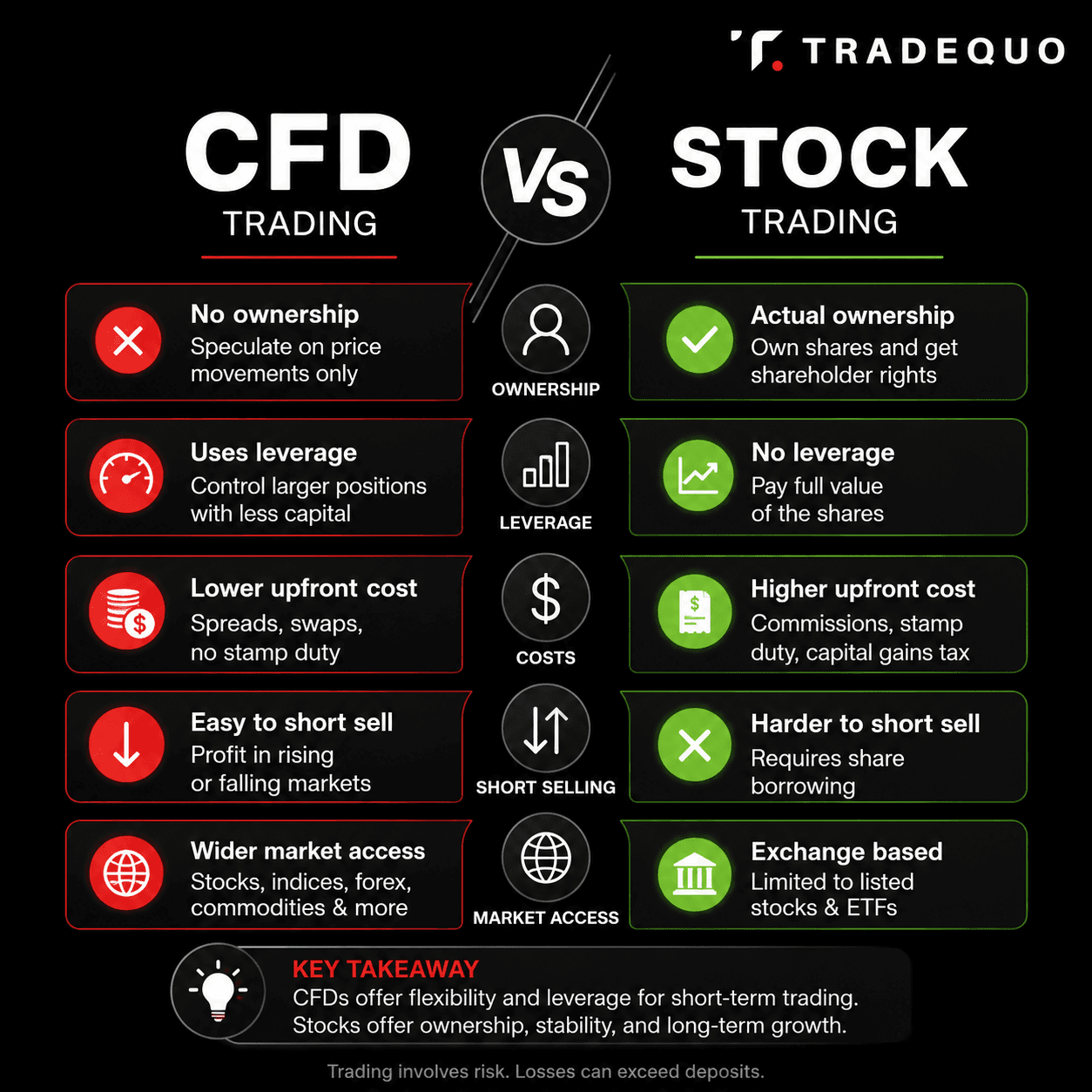
การเลือกระหว่างการเทรด CFD หรือการซื้อขายหุ้นนั้น ท้ายที่สุดแล้วขึ้นอยู่กับเป้าหมายการลงทุน สไตล์การเทรด และระดับความเสี่ยงที่คุณยอมรับได้
นักลงทุนที่เน้นการสร้างความมั่งคั่งในระยะยาวมักชื่นชอบ การลงทุนในหุ้น การซื้อและถือครองหุ้นช่วยให้พวกเขามีส่วนร่วมในการเติบโตของบริษัท ได้รับเงินปันผล และได้รับประโยชน์จากมูลค่าหุ้นที่เพิ่มขึ้นในระยะยาว กลยุทธ์การซื้อและถือ (Buy-and-hold) เหล่านี้มีประสิทธิภาพเมื่อลงทุนในบริษัทที่มีความแข็งแกร่งและมีปัจจัยพื้นฐานที่ดี
ในทางกลับกัน CFD มักเป็นที่ชื่นชอบของเทรดเดอร์ที่ชอบความรวดเร็วและต้องการตอบสนองต่อสภาวะอารมณ์ของตลาดที่เปลี่ยนแปลงไปและความเคลื่อนไหวของราคาระยะสั้น ความสามารถในการใช้เลเวอเรจและเปิดสถานะขายชอร์ตทำให้ CFD มีความน่าสนใจเป็นพิเศษในช่วงที่ตลาดมีความผันผวน
อย่างไรก็ตาม ความยืดหยุ่นที่สูงขึ้นก็มาพร้อมกับความเสี่ยงที่สูงขึ้นเช่นกัน เนื่องจากสถานะที่ใช้เลเวอเรจจะช่วยเพิ่มทั้งผลกำไรและผลขาดทุน เทรดเดอร์จึงต้องเทรด CFD ด้วยการบริหารจัดการความเสี่ยงอย่างรอบคอบและมีความเข้าใจที่ชัดเจนเกี่ยวกับเป้าหมายทางการเงินของตนเอง
เทรดเดอร์มือใหม่ควรคำนึงถึงเงินทุนที่มีอยู่ด้วย หากการใช้เงินทุนเต็มจำนวนในการซื้อหุ้นเป็นเรื่องยาก CFD ก็อาจเป็นช่องทางที่ช่วยให้เข้าถึงตลาดได้ง่ายกว่าด้วยเงินฝากเริ่มต้นจำนวนที่น้อยกว่า ถึงกระนั้น ก็ไม่ควรมองข้ามความเสี่ยงที่เกี่ยวข้องกับเลเวอเรจ ท้ายที่สุดแล้ว ไม่มีทางเลือกใดที่ดีที่สุดสำหรับเทรดเดอร์ทุกคน แนวทางที่ถูกต้องขึ้นอยู่กับว่าคุณต้องการมีส่วนร่วมในตลาดหุ้นอย่างไร และคุณพร้อมที่จะรับความเสี่ยงได้มากแค่ไหน
บทสรุป
ทั้งสองแนวทางต่างก็มีข้อดีและข้อเสียที่เป็นเอกลักษณ์เฉพาะตัว การซื้อขายหุ้นมอบความเป็นเจ้าของ สิทธิพิเศษของผู้ถือหุ้น และศักยภาพในการลงทุนระยะยาว การเทรด CFD มอบความยืดหยุ่น เลเวอเรจ และความสามารถในการทำกำไรได้ทั้งจากตลาดขาขึ้นและขาลง การทำความเข้าใจความแตกต่างที่สำคัญระหว่างวิธีเหล่านี้จะช่วยให้เทรดเดอร์สามารถเลือกเส้นทางที่เหมาะสมกับเป้าหมายทางการเงินและสไตล์การเทรดของตนเองได้ดีที่สุด
FAQ
ความแตกต่างที่สำคัญที่สุดระหว่างการเทรด CFD และการซื้อขายหุ้นคืออะไร?
ความแตกต่างที่สำคัญที่สุดคือความเป็นเจ้าของ ในการซื้อขายหุ้น นักลงทุนจะซื้อหุ้นของบริษัทและได้รับสิทธิ์ความเป็นเจ้าของ เช่น สิทธิ์ในการออกเสียงลงคะแนนและสิทธิ์ในการรับเงินปันผล ในการเทรด CFD เทรดเดอร์จะเก็งกำไรจากความเคลื่อนไหวของราคาโดยไม่ได้เป็นเจ้าของสินทรัพย์อ้างอิงนั้น
เทรดเดอร์ CFD สามารถทำกำไรจากตลาดขาลงได้หรือไม่?
ได้ การเทรด CFD ช่วยให้เทรดเดอร์สามารถเปิดสถานะขายชอร์ตเพื่อทำกำไรจากราคาที่ร่วงลงได้ สิ่งนี้ทำให้ CFD มีประโยชน์ในช่วงที่ตลาดซบเซา ซึ่งเป็นช่วงที่นักลงทุนหุ้นแบบดั้งเดิมอาจประสบความยากลำบากในการทำกำไร
เทรดเดอร์ CFD ต้องจ่ายมูลค่าเต็มของการซื้อขายหรือไม่?
ไม่ใช่ CFD ช่วยให้เทรดเดอร์เปิดสถานะโดยใช้มาร์จิ้นได้ แทนที่จะต้องจ่ายมูลค่าเต็มของการซื้อขาย เทรดเดอร์จะวางเงินหลักประกันเริ่มต้นจำนวนเล็กน้อยเพื่อช่วยให้พวกเขาสามารถเข้าถึงตลาดและเปิดสถานะที่ใหญ่ขึ้นได้