Giới thiệu
Bạn đã bao giờ theo dõi một biểu đồ giao dịch trực tiếp và tự hỏi làm thế nào một số nhà giao dịch dường như có thể mở hàng chục vị thế trong khoảng thời gian bạn uống xong một tách cà phê chưa? Scalping (giao dịch lướt sóng) trong giao dịch là một chiến lược ngắn hạn được xây dựng xoay quanh việc nắm bắt các chuyển động giá rất nhỏ một cách liên tục trong suốt một phiên giao dịch. Các scalper không chờ đợi đợt bứt phá lớn tiếp theo hoặc giữ vị thế qua đêm. Họ vào và ra lệnh trong vòng vài giây hoặc vài phút, tích lũy những chiến thắng nhỏ cho đến khi chúng cộng lại thành một kết quả có ý nghĩa.
Nghe có vẻ đơn giản. Nhưng trên thực tế, nó đòi hỏi một tư duy đặc biệt, các công cụ phù hợp và một nền tảng giao dịch đủ nhanh để bắt kịp tốc độ.
Scalping trong Giao dịch là gì và Hoạt động như thế nào?
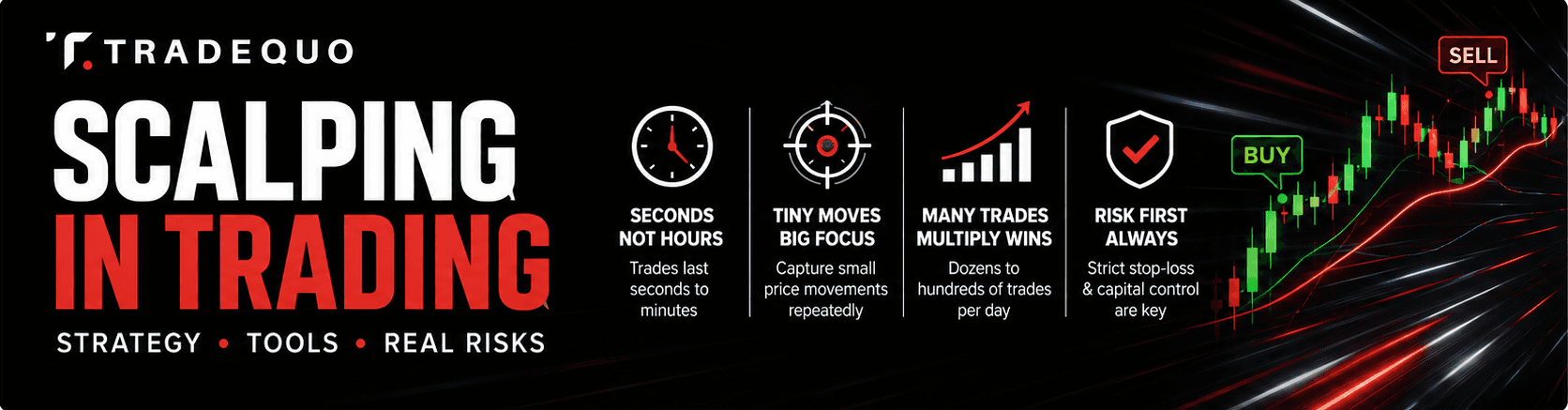
Về cốt lõi, scalping là một chiến lược giao dịch trong ngày nhằm vào các chuyển động vi mô của giá thay vì các xu hướng định hướng lớn hơn. Một nhà giao dịch lướt sóng có thể nhắm đến mức lợi nhuận chỉ vài pip trong forex, một hoặc hai cent trong cổ phiếu, nhưng họ sẽ lặp lại quy trình đó từ mười đến hàng trăm lần trong một ngày duy nhất.
Logic rất đơn giản. Thay vì chờ đợi một chuyển động lớn duy nhất, các scalper phân bổ rủi ro của họ trên nhiều giao dịch nhỏ. Mỗi vị thế riêng lẻ có mức độ rủi ro hạn chế. Kết quả tích lũy, nếu việc thực hiện chuẩn xác và kỷ luật được duy trì, có thể vượt trội hơn các chiến lược chậm hơn trong các thị trường có tính thanh khoản cao.
Vào và Thoát Lệnh
Một scalper vào lệnh khi một tín hiệu kỹ thuật hoặc sự mất cân bằng ngắn hạn xuất hiện trong dòng lệnh, sau đó thoát lệnh ngay khi đạt được mục tiêu nhỏ đó, hoặc sớm hơn nếu vị thế đi ngược lại mong muốn của họ. Thời gian nắm giữ có thể từ vài giây đến vài phút. Không có chỗ cho sự do dự.
Quy mô Vị thế và Lợi nhuận
Vì mục tiêu lợi nhuận trên mỗi giao dịch được cố ý đặt ở mức nhỏ, các scalper thường sử dụng quy mô vị thế lớn hơn để làm cho các con số trở nên đáng giá. Điều này phóng đại cả lợi nhuận lẫn thua lỗ, đó là lý do tại sao việc kiểm soát rủi ro nghiêm ngặt là điều không thể thương lượng. Một chiến lược giao dịch scalping hoạt động mà không có kỷ luật quy mô vị thế phù hợp cuối cùng sẽ trả lại tất cả những gì nó kiếm được.
Các Thị trường Thường Áp dụng Scalping
Scalping hoạt động tốt nhất trong các thị trường thanh khoản cao và chuyển động nhanh. Chiến lược scalping Forex nằm trong số những chiến lược được thực hành rộng rãi nhất vì thị trường ngoại hối cung cấp mức chênh lệch (spread) chặt chẽ và hành động giá gần như liên tục. Chiến lược scalping Cổ phiếu phổ biến ở các cổ phiếu vốn hóa lớn và các quỹ ETF trong các giờ cao điểm của phiên giao dịch khi khối lượng và tính thanh khoản ở mức cao nhất.
Các Công cụ và Chỉ báo mà Mỗi Scalper Nên Biết
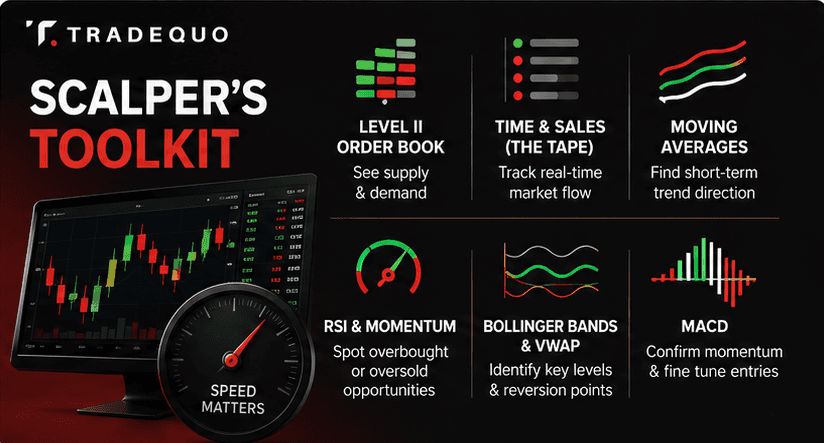
Giao dịch scalping không phải là trò chơi đoán mò. Lợi thế đến từ việc đọc cấu trúc vi mô của thị trường và các tín hiệu động lượng nhanh hơn nhà giao dịch tiếp theo. Dưới đây là các công cụ cốt lõi hỗ trợ một phương pháp scalping nghiêm túc.
Time and Sales (Nhật ký giao dịch thực tế)
Nguồn cấp dữ liệu time and sales, thường được gọi là "the tape" (băng ghi), hiển thị mọi giao dịch được thực hiện trong thời gian thực: giá, khối lượng và hướng giao dịch. Các scalper sử dụng nó để phát hiện các đợt tăng đột biến trong hoạt động mua hoặc bán trước khi những chuyển động đó xuất hiện rõ ràng trên biểu đồ nến. Đọc tốt nhật ký này là một trong những điểm khác biệt rõ ràng nhất giữa các nhà giao dịch lướt sóng có kinh nghiệm và những người mới tham gia.
Sổ Lệnh Level II
Báo giá Level II hiển thị toàn bộ chiều sâu của thị trường, cho thấy tất cả các lệnh mua và bán đang chờ xử lý ở các mức giá khác nhau. Điều này giúp các scalper có cái nhìn về nơi cung và cầu đang tập trung. Nếu một bức tường bán lớn xuất hiện ngay trên mức giá hiện tại, scalper có thể tránh vào lệnh mua hoặc chọn một mục tiêu chốt lời chặt chẽ hơn. Loại bối cảnh này rất cần thiết cho giao dịch scalping cho người mới bắt đầu, những người muốn hiểu tại sao giá lại chững lại hoặc tăng tốc.
Đường Trung bình Động (Moving Averages)
Các đường trung bình động chu kỳ ngắn, đặc biệt là các đường trung bình động lũy thừa (EMA) chu kỳ 9, 20 và 50, là các chỉ báo scalping chủ chốt. Chúng giúp xác định hướng xu hướng trên biểu đồ một phút và năm phút. Các thiết lập scalping với đường trung bình động thường liên quan đến việc vào lệnh khi giá kéo ngược về một đường trung bình động chính và có dấu hiệu tiếp tục xu hướng ngắn hạn.
RSI và Các Chỉ báo Động lượng
Chỉ số Sức mạnh Tương đối được sử dụng rộng rãi trong các thiết lập chiến lược scalping RSI để xác định các điều kiện quá mua hoặc quá bán trên các khung thời gian rất ngắn. Khi RSI đạt đến một mức cực hạn trong khi giá đang kiểm thử một vùng hỗ trợ hoặc kháng cự quan trọng, nó có thể báo hiệu một mục tiêu đảo chiều có xác suất cao cho việc scalping.
Bollinger Bands và VWAP
Bollinger Bands Các thiết lập scalping sử dụng dải trên và dải dưới làm các mục tiêu động và vùng đảo chiều. Scalping với VWAP đặc biệt phổ biến trong thị trường cổ phiếu, nơi giá trung bình gia quyền theo khối lượng đóng vai trò là mức tham chiếu của các tổ chức. Các scalper thường giao dịch ngược lại các chuyển động kéo dài quá xa so với VWAP và tìm kiếm các điểm vào lệnh đảo chiều trung bình.
MACD để Xác nhận Động lượng
Chiến lược scalping MACD sử dụng sự hội tụ và phân kỳ của các đường trung bình động để xác nhận hướng động lượng. Sự giao cắt của MACD trên biểu đồ một phút, được xác nhận bởi hành động giá gần một mức quan trọng, có thể đóng vai trò là điểm kích hoạt chính xác để vào hoặc thoát lệnh.
Ưu và Nhược điểm của Chiến lược Giao dịch Scalping
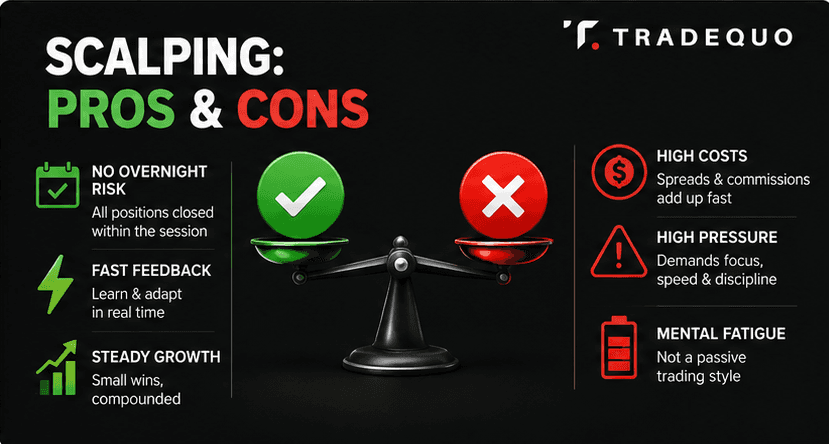
Giống như bất kỳ phương pháp tiếp cận thị trường nào, scalping có những thế mạnh rõ rệt và những hạn chế thực tế. Hiểu rõ cả hai mặt một cách trung thực là một phần của việc học cách giao dịch scalping có trách nhiệm.
Ưu điểm
Một trong những lợi ích được đề cập nhiều nhất của scalping là giảm thiểu rủi ro qua đêm. Vì tất cả các vị thế đều được đóng trong phiên, các scalper không bị ảnh hưởng bởi các sự kiện tin tức, báo cáo thu nhập hoặc diễn biến địa chính trị có thể khiến giá tạo khoảng trống (gap) lớn giữa thời điểm đóng cửa và mở cửa thị trường.
Scalping cũng tạo ra một vòng lặp phản hồi nhanh chóng. Một nhà giao dịch trong ngày sử dụng phương pháp giao dịch swing có thể thực hiện từ năm đến mười giao dịch trong một tuần và phải chờ nhiều ngày để biết liệu nhận định của mình có đúng hay không. Một scalper có thể hoàn thành chu kỳ học hỏi tương tự chỉ trong một buổi sáng. Đối với các nhà giao dịch thích phân tích muốn nhanh chóng mài giũa lợi thế của mình, việc nén phản hồi đó thực sự có giá trị.
Trong các thị trường thanh khoản với mức chênh lệch chặt chẽ, chiến lược giao dịch scalping cũng có thể tạo ra lãi kép gia tăng, nhất quán. Những chiến thắng nhỏ, thường xuyên sẽ xây dựng tài sản một cách đều đặn khi các khoản lỗ được quản lý tốt.
Nhược điểm
Chi phí giao dịch tích tụ rất nhanh. Mỗi giao dịch đều liên quan đến chênh lệch spread, và thường là cả phí hoa hồng. Qua năm mươi hoặc một trăm giao dịch mỗi ngày, những chi phí đó trở thành một lực cản đáng kể đối với lợi nhuận. Các so sánh giữa scalping và giao dịch trong ngày thường nhấn mạnh điểm này: một nhà giao dịch vị thế thực hiện ít giao dịch hơn sẽ trả ít chi phí giao dịch hơn nhiều so với tỷ lệ lợi nhuận của họ.
Các so sánh giữa scalping và giao dịch swing cũng cho thấy một động lực tương tự, trong đó các nhà giao dịch swing chịu nhiều rủi ro định hướng hơn trên mỗi giao dịch nhưng chỉ trả một phần nhỏ chi phí tích lũy.
Đòn bẩy là vấn đề cần được đề cập trực tiếp. Đòn bẩy cao khuếch đại cả lợi nhuận lẫn thua lỗ. Một scalper sử dụng đòn bẩy đáng kể trong một chuỗi giao dịch thua lỗ có thể phải gánh chịu những đợt sụt giảm tài khoản (drawdown) rất khó phục hồi. Tổn thất về mặt tâm lý và tài chính là có thật.
Cuối cùng, scalping đòi hỏi sự chú ý liên tục. Đây không phải là một chiến lược mà bạn có thể chạy thụ động trong khi quản lý các công việc khác. Áp lực tinh thần là rất cao, và mệt mỏi là một rủi ro thực sự trong các phiên giao dịch dài.
Quản lý Rủi ro cho các Nhà giao dịch Scalper
Một chiến lược giao dịch scalping không có khung quản lý rủi ro thì không phải là một chiến lược. Dưới đây là cách các scalper có kỷ luật bảo vệ vốn của họ.
Đặt Lệnh Cắt lỗ (Stop-Loss) Nghiêm ngặt
Mỗi giao dịch scalping nên có một mức cắt lỗ được xác định trước khi vào lệnh. Trong các thị trường chuyển động nhanh, điều này có nghĩa là sử dụng các lệnh cắt lỗ cứng được thực hiện tự động, chứ không phải cắt lỗ bằng tâm lý vốn phụ thuộc vào việc bạn có phản ứng kịp thời hay không. Lệnh cắt lỗ nên được đặt ở mức làm mất hiệu lực nhận định giao dịch, chứ không đơn thuần là ở một con số tròn hoặc khoảng cách tùy tiện.
Giới hạn Rủi ro Vốn trên Mỗi Giao dịch
Hầu hết các scalper có kinh nghiệm rủi ro không quá 0,5 đến 1 phần trăm tổng vốn giao dịch của họ trên bất kỳ vị thế đơn lẻ nào. Tỷ lệ phần trăm này nghe có vẻ thận trọng, nhưng đối với một phong cách giao dịch tần suất cao liên quan đến hàng chục giao dịch mỗi phiên, nó cung cấp một tấm đệm ý nghĩa chống lại các chuỗi thua lỗ mà không làm cháy tài khoản.
Tránh Giao dịch Quá mức (Overtrading)
Một trong những sai lầm phổ biến nhất trong giao dịch scalping là gỡ lỗ bằng cách tăng quy mô vị thế hoặc vào các thiết lập có chất lượng thấp hơn. Việc xác định số lượng giao dịch tối đa hoặc giới hạn mức lỗ hàng ngày và tuân thủ nó sẽ bảo vệ cả vốn lẫn khả năng phán đoán của bạn.
Chọn Nền tảng Phù hợp
Quản lý rủi ro cũng phụ thuộc vào chất lượng thực thi lệnh. Một nền tảng giao dịch thực thi nhanh với độ trễ thấp và khớp lệnh đáng tin cậy không phải là thứ xa xỉ đối với các scalper. Đó là một nhu cầu thiết yếu. Một hệ thống chậm hoặc không đáng tin cậy có thể biến một điểm vào lệnh đã lên kế hoạch thành một mớ hỗn độn bị trượt giá nặng nề, làm hỏng tỷ lệ rủi ro/lợi nhuận dự kiến. Khi đánh giá một môi giới giao dịch spread thấp hoặc môi giới ECN cho mục đích scalping, hãy xác nhận rằng nền tảng đó hỗ trợ các loại lệnh và tốc độ thực thi mà chiến lược của bạn yêu cầu.
Ai Nên Thử Sức với Scalping trong Giao dịch?
Scalping không phù hợp với mọi tính cách, và không có gì đáng xấu hổ khi thừa nhận điều đó. Hiểu được chiến lược này thực sự phù hợp với ai sẽ giúp các nhà giao dịch tránh việc ép buộc bản thân vào một phương pháp tiếp cận gây ra căng thẳng không cần thiết và tổn thất tài chính.
Hồ sơ Tính cách Phù hợp
Scalping phù hợp với các nhà giao dịch giữ được bình tĩnh dưới áp lực, có khả năng đưa ra quyết định trong vài giây mà không do dự, và thực sự quan tâm đến cơ chế cấu trúc vi mô của thị trường. Nó mang lại phần thưởng cho sự thành thạo kỹ thuật, nhận diện mô hình và một cách tiếp cận có phương pháp đối với việc lặp đi lặp lại.
Sự kiên nhẫn nghe có vẻ mâu thuẫn đối với một chiến lược bắn súng nhanh, nhưng nó lại vô cùng cần thiết. Chờ đợi các thiết lập chất lượng cao thay vì ép buộc giao dịch là điều phân biệt các scalper có lợi nhuận với những người chỉ làm tăng phí hoa hồng mà không thu được lợi nhuận ròng.
Mức độ Kinh nghiệm
Scalping thường không được khuyến khích làm điểm khởi đầu cho những người hoàn toàn mới bắt đầu. Đúng là vòng lặp phản hồi rất nhanh, nhưng nó cũng rất tàn nhẫn. Việc phát triển sự hiểu biết cơ bản về các chỉ báo phân tích kỹ thuật, cấu trúc thị trường và quản lý rủi ro thông qua giao dịch swing hoặc giao dịch vị thế trước tiên sẽ mang lại cho các scalper một nền tảng vững chắc hơn để xây dựng.
Kết luận
Scalping trong giao dịch là một trong những chiến lược đòi hỏi khắt khe nhất và có nhịp độ nhanh nhất dành cho các nhà giao dịch cá nhân. Nó mang lại những lợi thế thực sự, bao gồm rủi ro qua đêm tối thiểu, phản hồi nhanh chóng và tiềm năng mang lại lợi nhuận gia tăng nhất quán trong các thị trường thanh khoản. Nhưng nó cũng đòi hỏi kỷ luật, kiểm soát cảm xúc, một nền tảng đáng tin cậy và một phương pháp tiếp cận có tính toán chi phí cho từng giao dịch đơn lẻ.
Nếu giao dịch scalping phù hợp với bạn, hãy bắt đầu ở chế độ demo.
Kiểm thử các thiết lập của bạn, theo dõi kết quả một cách trung thực và tinh chỉnh phương pháp của bạn trước khi cam kết vốn thực. Thị trường sẽ luôn ở đó khi bạn đã sẵn sàng.
FAQ
Scalping trong giao dịch là gì, và nó khác với giao dịch trong ngày như thế nào?
Scalping là một nhánh con của giao dịch trong ngày nhưng hoạt động trên khung thời gian ngắn hơn nhiều. Trong khi các nhà giao dịch trong ngày có thể giữ vị thế từ vài giờ đến vài ngày, các scalper thường chỉ nắm giữ trong vài giây đến vài phút, nhắm mục tiêu vào các chuyển động giá rất nhỏ thông qua nhiều giao dịch mỗi phiên.
Các scalper thực hiện bao nhiêu giao dịch mỗi ngày?
Điều này thay đổi tùy theo phong cách và thị trường, nhưng các scalper năng nổ có thể thực hiện từ 10 đến hơn 100 giao dịch trong một phiên duy nhất. Số lượng phụ thuộc vào điều kiện thị trường, chiến lược được sử dụng, cũng như năng lượng và sự tập trung của nhà giao dịch trong suốt cả ngày.
Khung thời gian nào tốt nhất cho scalping?
Hầu hết các scalper hoạt động chủ yếu trên biểu đồ một phút và năm phút, sử dụng khung thời gian cao hơn, chẳng hạn như biểu đồ 15 phút hoặc hàng giờ, để thiết lập bối cảnh và hướng xu hướng trước khi đi sâu vào tìm kiếm các điểm vào lệnh.
Giao dịch scalping có mang lại lợi nhuận không?
Scalping có thể mang lại lợi nhuận, nhưng tỷ lệ thành công phụ thuộc lớn vào chất lượng thực thi lệnh, quản lý chi phí và kỷ luật. Chi phí giao dịch cao và việc ra quyết định dựa trên cảm xúc là hai yếu tố phổ biến nhất làm xói mòn lợi nhuận scalping. Những nhà giao dịch quản lý tốt các yếu tố này có xu hướng đạt được kết quả nhất quán nhất.
Các chỉ báo nào tốt nhất cho scalping?
Các chỉ báo scalping được sử dụng phổ biến nhất bao gồm các đường trung bình động chu kỳ ngắn, RSI, Bollinger Bands, VWAP và MACD. Sổ lệnh Level II và nguồn cấp dữ liệu time and sales cũng là những công cụ quan trọng để đọc cấu trúc vi mô của thị trường trong thời gian thực.