Elon Musk has said Full Self-Driving is up to 10 times safer than a human driver. The workers who spend their days reviewing its footage have a very different opinion, and most of them won't get in the car.
A Reuters investigation spoke with nine former Tesla data labelers, a former self-driving engineer, and 11 road-safety researchers. What they found was a serious disconnect between Tesla's public messaging and what its own workforce actually sees.
That "10x Safer" Claim Has a Problem
Tesla CFO Vaibhav Taneja first floated the 10x safety figure last July. Board Chair Robyn Denholm echoed it at a November shareholder meeting. Musk himself showed up to that same meeting with a chart claiming "85% less crashes."
When researchers took a closer look at how those numbers were put together, the picture got complicated. Tesla measures airbag-deployment crashes within its own fleet and compares them to a federal crash rate that tracks far less severe accidents. On top of that, they're comparing their cars, which average around four years old, to the average U.S. vehicle, which is about 12 years old. Newer cars simply crash less, regardless of the driver. Once researchers adjusted for vehicle age and crash severity, that 10x safety advantage shrank to roughly 3x. Ten out of 11 researchers who reviewed Tesla's methodology concluded it was misleading marketing, not a credible safety analysis.
What's Actually on the Footage
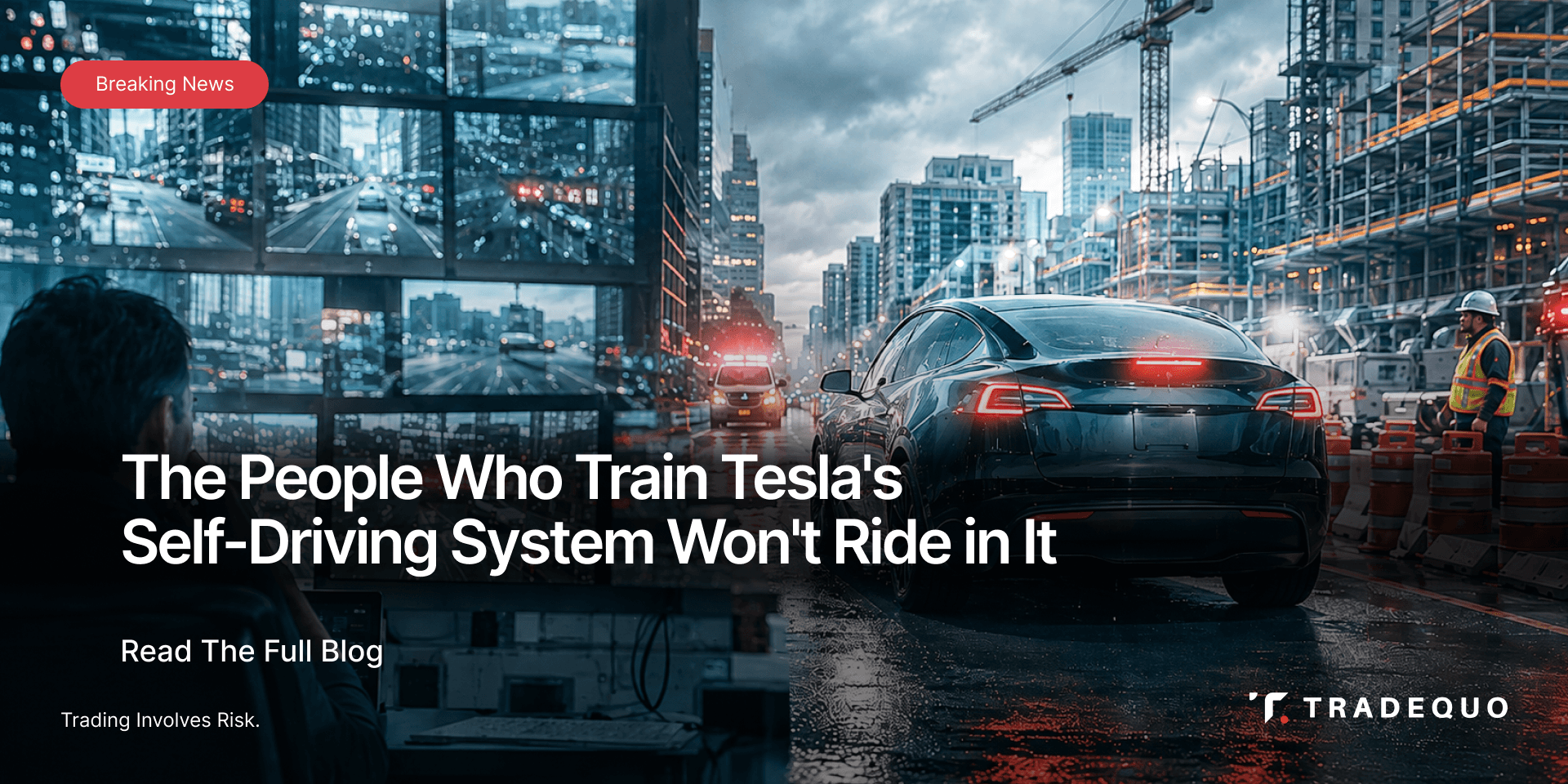
Tesla's data labelers, mostly working out of a Utah office, review video captured by the eight exterior cameras on FSD-equipped vehicles. They described watching the system routinely struggle with things that should be straightforward: pulling over for emergency vehicles, giving motorcycles enough room, braking properly on freeway off-ramps, and getting through construction zones without incident. In one case, a Tesla drove straight into a construction zone and came close to hitting workers.
After Tesla rolled out a more aggressive driving mode, labelers also reported seeing FSD regularly driving 20 to 30 mph over the speed limit - one vehicle was clocked at 60 mph in a 25-mph zone.
There was also a dedicated team in Palo Alto, known internally as the "trauma team," whose entire job was reviewing near-misses involving pedestrians and children, cases where a driver grabbed the wheel just in time.
Seven of the nine former labelers said they wouldn't trust FSD to drive them around. One put it plainly: he wouldn't ride in a Tesla robotaxi "if you fucking paid me." A veteran self-driving engineer who had spent years reviewing Tesla crash data called the company's safety claims "bullshit" and added: "Definitely, don't trust Elon on this."
What Was Really Happening Behind Those "Autonomous" Demos
Perhaps the most revealing part of the investigation involves how Tesla prepared for its big public moments. Ahead of both the October 2024 Cybercab unveiling and the June 2025 Austin robotaxi launch, former employees say the company quietly put intensive safeguards in place - filming and mapping limited service areas for months so the software could reliably handle those specific routes.
In the weeks before the Cybercab event at the Warner Bros. studio lot, staff tested prototypes every night from 6 p.m. to dawn, recording video of the exact paths the cars would take. Data labelers then spent hundreds of hours annotating curbs and road markings. The same thing happened before Austin.
This is worth noting because Musk has long argued that Tesla's approach is better than competitors' precisely because it skips the detailed local mapping they rely on. The demos, it turns out, depended on exactly that.
How Tesla Compares in Texas
Texas regulatory data puts Tesla's authorized driverless vehicle count at 42, alongside Waymo's 577, Avride's 317, and Zoox's 35. Tesla's Austin robotaxi fleet has been tied to 17 documented incidents between July 2025 and April 2026, two of which involved minor injuries.
Federal regulators have issued recalls on over two million Tesla vehicles over Autopilot concerns and opened several investigations into crashes involving emergency vehicles and low-visibility conditions. The NHTSA specifically called out FSD's habit of rolling through stop signs and behaving unpredictably at intersections.
Back in 2019, Musk said autonomous driving was "basically a solved problem." More than six years later, the people paid to watch it operate every day still don't trust it with their kids.