Chắc hẳn bạn đã từng gặp cụm từ "thị trường hôm nay tăng điểm" theo sau là một con số dường như đại diện cho toàn bộ nền kinh tế Hoa Kỳ trong cùng một hơi thở. Thường thì con số đó chính là S&P 500. Nhưng chính xác thì S&P 500 là gì, và tại sao nó lại có tầm ảnh hưởng lớn như vậy trong các cuộc thảo luận về cổ phiếu, tài khoản hưu trí và thậm chí là giao dịch CFD?
Hãy cùng khám phá xem chỉ số này thực sự đo lường điều gì, cách hoạt động của nó và ý nghĩa của nó đối với bất kỳ ai đang cân nhắc giao dịch nó.
S&P 500 Là Gì?
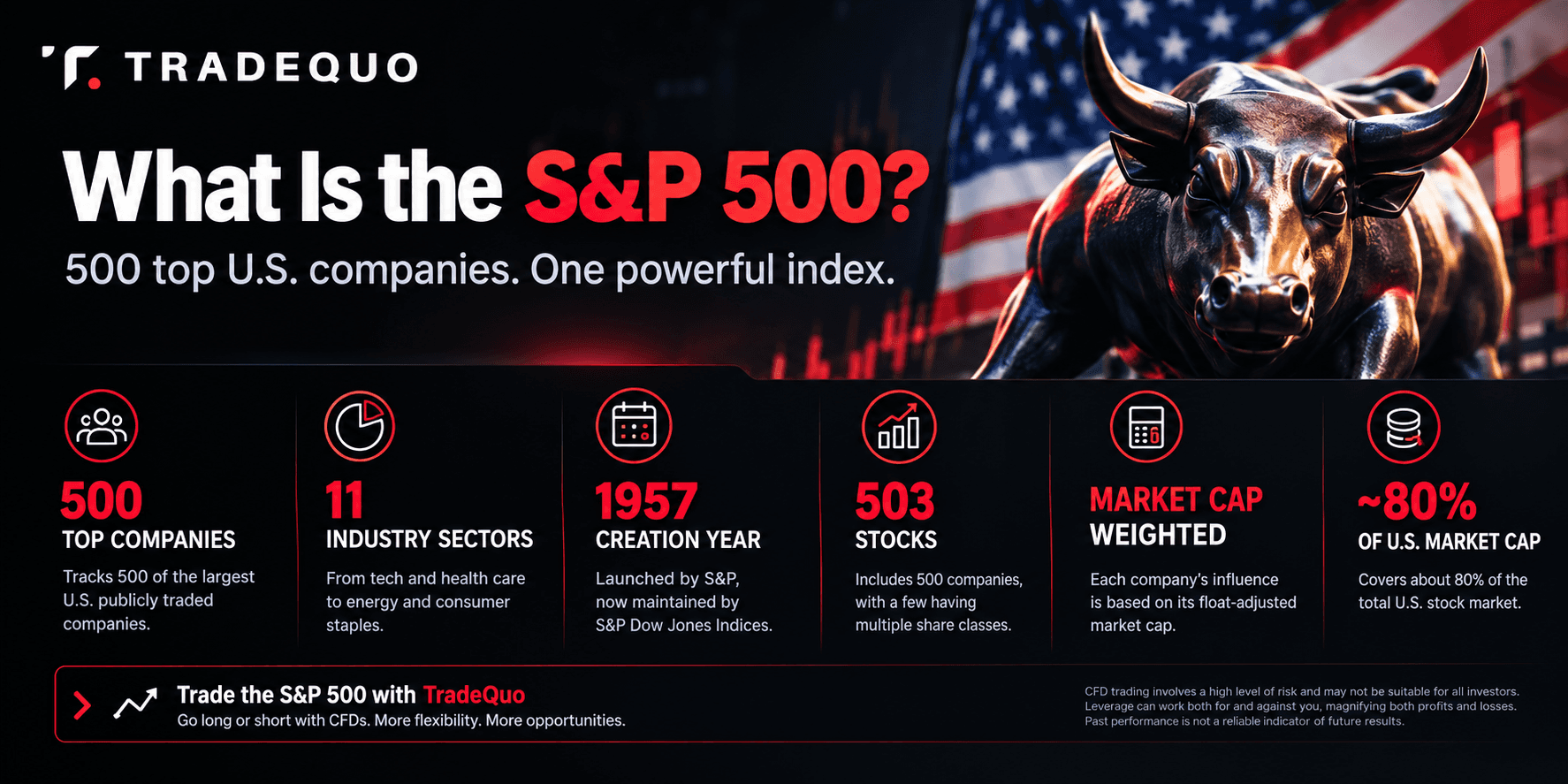
S&P 500 là một chỉ số thị trường chứng khoán theo dõi 500 công ty giao dịch công khai lớn nhất tại Hoa Kỳ. Nó bao phủ hầu hết mọi ngành công nghiệp lớn, từ công nghệ và chăm sóc sức khỏe đến hàng tiêu dùng thiết yếu và dịch vụ tiện ích, và được coi là một trong những thước đo tốt nhất về hiệu suất của các cổ phiếu vốn hóa lớn của Mỹ tại bất kỳ thời điểm nào. Vì nó nắm bắt một phần lớn thị trường cổ phiếu như vậy, chỉ số này thường được sử dụng làm chuẩn so sánh cho hiệu suất cổ phiếu riêng lẻ, quỹ tương hỗ và danh mục đầu tư so với thị trường chung.
Điều làm cho S&P 500 có sức ảnh hưởng lớn như vậy là quy mô. Các công ty có mặt trong chỉ số chiếm khoảng 80% tổng vốn hóa thị trường của cổ phiếu Mỹ, nghĩa là khi mọi người nói về "thị trường", họ thường nói về chỉ số này cho dù họ có nhận ra hay không.
S&P 500 Viết Tắt Của Từ Gì, Và Được Tạo Ra Khi Nào?
S&P 500 là viết tắt của Standard & Poor's 500, được đặt tên theo công ty dịch vụ tài chính đã tạo ra nó. Standard & Poor's đã ra mắt chỉ số này vào tháng 3 năm 1957, dựa trên nhiều thập kỷ theo dõi cổ phiếu trước đó mà công ty đã thực hiện dưới các định dạng khác nhau. Ngày nay, chỉ số này được quản lý bởi S&P Dow Jones Indices, một liên doanh cũng giám sát Chỉ số Trung bình Công nghiệp Dow Jones.
Kể từ khi được tạo ra, S&P 500 đã trở thành một biểu tượng viết tắt cho sức khỏe của các doanh nghiệp Mỹ. Lịch sử theo dõi lâu dài của nó cung cấp cho các nhà kinh tế, nhà phân tích và nhà đầu tư cá nhân một cách nhất quán để đo lường sự tăng trưởng theo thời gian. Lịch sử lâu dài này mang lại cho các nhà đầu tư và nhà phân tích một chuẩn so sánh nhất quán để so sánh hiệu suất của cổ phiếu vốn hóa lớn của Hoa Kỳ qua các thời kỳ.
Có Bao Nhiêu Công Ty Trong S&P 500, Và Gồm Những Ai?
Một câu hỏi phổ biến là có bao nhiêu công ty trong S&P 500. Bất chấp cái tên, về mặt kỹ thuật, chỉ số này bao gồm 503 cổ phiếu. Đó là bởi vì một số ít công ty, chẳng hạn như những công ty có các loại cổ phiếu khác nhau về quyền biểu quyết, được niêm yết nhiều hơn một lần. Vì vậy, mặc dù chỉ số này được xây dựng xung quanh 500 công ty lớn của Mỹ, tổng số cổ phiếu riêng lẻ thực tế sẽ cao hơn một chút.
Các công ty tạo nên S&P 500 trải dài trên tất cả 11 lĩnh vực của nền kinh tế, bao gồm công nghệ, tài chính, chăm sóc sức khỏe, công nghiệp, năng lượng và hàng tiêu dùng thiết yếu, cùng nhiều lĩnh vực khác. Sự hiện diện rộng rãi này là một phần lý do tại sao chỉ số này thường xuyên được sử dụng làm đại diện cho toàn bộ thị trường chứng khoán hơn là bất kỳ ngành đơn lẻ nào.
Làm Thế Nào Một Công Ty Được Lọt Vào S&P 500?
Việc lọt vào S&P 500 không phải là tự động, ngay cả đối với các công ty lớn. Một hội đồng tại S&P Dow Jones Indices sẽ xem xét và lựa chọn từng thành viên bổ sung dựa trên một bộ tiêu chí đủ điều kiện. Một công ty nhìn chung cần phải là một công ty của Hoa Kỳ, đáp ứng các yêu cầu về vốn hóa thị trường vốn hóa lớn của chỉ số, có đủ thanh khoản và tỷ lệ cổ phiếu tự do chuyển nhượng, đáp ứng các yêu cầu về khả năng tài chính và đóng góp vào sự cân bằng của ngành.
Ngoài quy mô, các công ty cần thể hiện tính thanh khoản mạnh mẽ, nghĩa là cổ phiếu của họ được giao dịch tích cực. Các công ty cũng phải đáp ứng các yêu cầu về khả năng tài chính của S&P, bao gồm lợi nhuận báo cáo dương trong quý gần nhất và tổng lợi nhuận dương trong bốn quý liên tiếp gần nhất. Hội đồng cũng cân nhắc mức độ đại diện của một công ty đối với lĩnh vực của mình, vì chỉ số này nhằm phản ánh nền kinh tế rộng lớn hơn chứ không chỉ là một tập hợp các tên tuổi lớn. Để giữ cho danh sách luôn cập nhật, chỉ số này được tái cơ cấu hàng quý, vào tháng 3, tháng 6, tháng 9 và tháng 12, khi các công ty có thể được thêm vào hoặc loại bỏ dựa trên các tiêu chuẩn này.
S&P 500 Được Tính Như Thế Nào?
S&P 500 là chỉ số trọng số vốn hóa thị trường, cụ thể hơn là chỉ số điều chỉnh theo lượng cổ phiếu tự do chuyển nhượng. Điều này có nghĩa là mức độ ảnh hưởng của mỗi công ty đối với chỉ số dựa trên vốn hóa thị trường đã điều chỉnh theo lượng cổ phiếu tự do chuyển nhượng của công ty đó, tức là giá trị của các cổ phiếu thực sự có sẵn để giao dịch công khai, không bao gồm các cổ phiếu do cổ đông nội bộ hoặc chính phủ nắm giữ.
Trong thực tế, điều này có nghĩa là các công ty lớn hơn sẽ tác động đến chỉ số nhiều hơn các công ty nhỏ hơn. Một sự biến động đáng kể của một công ty có vốn hóa thị trường khổng lồ có thể làm thay đổi toàn bộ chỉ số, trong khi một chuyển động tương tự về tỷ lệ phần trăm ở một công ty thành viên nhỏ hơn hầu như không được nhận thấy. Tất cả các giá trị đã điều chỉnh của các công ty được cộng lại với nhau và chia cho một ước số chỉ số, một con số giúp giữ cho mức S&P 500 nhất quán ngay cả khi các công ty được thêm vào, loại bỏ hoặc số lượng cổ phiếu của họ thay đổi.
Tại Sao S&P 500 Lại Quan Trọng?
Bởi vì nó đại diện cho một phần lớn của thị trường cổ phiếu Hoa Kỳ, S&P 500 đóng vai trò là điểm tham chiếu cho hầu hết mọi đối tượng tham gia đầu tư, từ các nhà đầu tư cá nhân đến các nhà đầu tư tổ chức lớn quản lý các quỹ hưu trí. S&P DJI ước tính có hơn 20 nghìn tỷ USD được lập chỉ mục hoặc lấy làm chuẩn theo S&P 500 vào cuối năm 2024, làm nổi bật vai trò của chỉ số này như một chuẩn so sánh toàn cầu.
S&P 500 cũng phản ứng với các lực lượng kinh tế vĩ mô. Mùa báo cáo kết quả kinh doanh của doanh nghiệp, các quyết định chính sách của Cục Dự trữ Liên bang và các đợt công bố dữ liệu kinh tế quan trọng đều có thể gây ra chuyển động đáng kể trong chỉ số, đôi khi chỉ trong một ngày giao dịch duy nhất. Sự nhạy cảm này đối với các sự kiện thực tế là một phần lý do khiến nó trở thành một phong vũ biểu được theo dõi chặt chẽ về tâm lý nhà đầu tư và các điều kiện kinh tế rộng lớn hơn.
Giao Dịch S&P 500 Với TradeQuo
Mặc dù bạn không thể mua trực tiếp S&P 500 vì nó là một chỉ số chứ không phải là một chứng khoán, nhưng có một số cách để tiếp cận với nó. Nhiều nhà đầu tư chọn các quỹ ETF hoặc quỹ chỉ số được thiết kế để mô phỏng hiệu suất của nó.
Đối với các nhà giao dịch tìm kiếm một cách tiếp cận chủ động hơn, CFD cung cấp một con đường khác. Với TradeQuo, các nhà giao dịch có thể đầu cơ trên các chuyển động giá của S&P 500 mà không cần sở hữu bất kỳ cổ phiếu cơ sở nào. Giao dịch CFD cho phép mở cả vị thế mua và bán, nghĩa là các nhà giao dịch có thể có khả năng kiếm lời bất kể chỉ số tăng hay giảm. Vì CFD sử dụng đòn bẩy, các vị thế có thể được mở với số tiền trả trước nhỏ hơn so với yêu cầu đầu tư truyền thống, mặc dù điều này cũng làm tăng rủi ro. Cần lưu ý rằng các vị thế CFD giữ qua đêm có thể phát sinh phí tài trợ, và do có liên quan đến đòn bẩy, các sản phẩm CFD được coi là có rủi ro cao và không phù hợp với mọi nhà giao dịch.
Kết Luận
S&P 500 không chỉ đơn thuần là một con số chạy trên bảng tin tức tài chính. Đó là một chỉ số được xây dựng cẩn thận, đại diện cho 500 công ty lớn nhất, có ảnh hưởng nhất tại Hoa Kỳ, được tính toán thông qua hệ thống trọng số vốn hóa thị trường được điều chỉnh theo lượng cổ phiếu tự do chuyển nhượng đã đứng vững trước thử thách của thời gian kể từ năm 1957. Cho dù bạn là nhà đầu tư dài hạn đang cân nhắc các quỹ chỉ số hay một nhà giao dịch khám phá CFD với TradeQuo, việc hiểu cách thức hoạt động của S&P 500 là một nền tảng vững chắc để đưa ra các quyết định sáng suốt trên thị trường.
FAQ
S&P 500 viết tắt của từ gì?
S&P 500 là viết tắt của Standard & Poor's 500. Đây là một chỉ số gồm khoảng 500 công ty lớn của Mỹ do Standard & Poor's tạo ra, và hiện do S&P Dow Jones Indices quản lý.
Có bao nhiêu công ty trong S&P 500?
S&P 500 có khoảng 500 công ty. Nó niêm yết nhiều cổ phiếu hơn con số đó một chút vì một vài công ty có nhiều hơn một loại cổ phiếu. Danh sách này không cố định, vì hội đồng chỉ số sẽ thêm và bớt các công ty theo thời gian.
Làm thế nào một công ty được lọt vào S&P 500?
Một hội đồng sẽ lựa chọn từng công ty, vì vậy không có công ty nào tự động đủ điều kiện. Một công ty phải có trụ sở tại Hoa Kỳ, được niêm yết trên một sàn giao dịch lớn của Hoa Kỳ, có giá trị thị trường lớn, được giao dịch tích cực, được nắm giữ rộng rãi bởi công chúng và có lãi. Hội đồng cũng xem xét mức độ đại diện của công ty đối với lĩnh vực của mình.
Bạn có thể mua trực tiếp S&P 500 không?
Không. S&P 500 là một chỉ số, một thước đo của các công ty lớn của Mỹ, vì vậy nó không phải là thứ bạn có thể mua. Các quỹ và ETF nắm giữ cổ phiếu của các công ty này để theo dõi chỉ số, và CFD cho phép các nhà giao dịch đầu cơ trên giá của nó mà không cần sở hữu cổ phiếu.
Chỉ số S&P 500 được tính như thế nào?
S&P 500 được tính theo trọng số vốn hóa thị trường đã điều chỉnh theo lượng cổ phiếu tự do chuyển nhượng. Trọng số của mỗi công ty là giá trị cổ phiếu có sẵn công khai của công ty đó chia cho tổng số của tất cả các công ty thành viên, và giá trị kết hợp được chia cho một ước số chỉ số. Ước số này giữ cho mức chỉ số nhất quán khi các công ty được thêm vào, loại bỏ hoặc thay đổi số lượng cổ phiếu của họ.
Tuyên bố miễn trừ trách nhiệm: Giao dịch CFD, bao gồm dầu và các hàng hóa khác, có mức độ rủi ro cao và có thể không phù hợp với tất cả các nhà đầu tư. Đòn bẩy có thể hoạt động theo cả hai hướng có lợi và bất lợi cho bạn, phóng đại cả lợi nhuận và thua lỗ. Hiệu suất trong quá khứ không phải là một chỉ báo đáng tin cậy cho các kết quả trong tương lai. Vui lòng đảm bảo rằng bạn hiểu rõ các rủi ro liên quan và tìm kiếm lời khuyên tài chính độc lập nếu cần thiết trước khi giao dịch.